
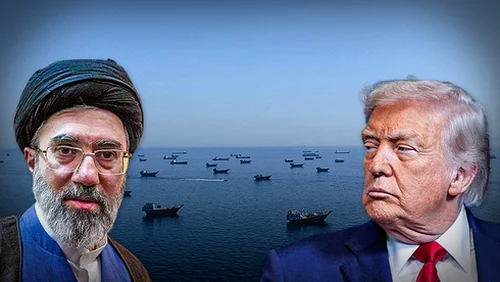
In a geopolitical landscape marked by fluidity and persistent ambiguity, President Trump announced late Tuesday that discussions with Iran were "moving along very nicely." This statement, however, stands in stark contrast to the Iranian position, which steadfastly maintains that direct peace or ceasefire negotiations with the United States are not underway. Instead, Tehran insists its current diplomatic engagements are solely bilateral talks with Oman, focused exclusively on the technical modalities of reopening and managing the critical Strait of Hormuz. This divergence in narrative underscores the precarious nature of the diplomatic efforts unfolding amidst the backdrop of "Operation Epic Fury," now approaching its six-month mark.
The Contested Narrative: US vs. Iran on Engagement
President Trump’s optimistic pronouncements, echoing sentiments expressed by his Treasury Secretary a day prior, suggest significant progress. "It could happen. Tomorrow or the next day," he stated during a fundraising event in Los Angeles, adding, "A lot of progress has been made." In an interview with Fox, the President claimed "very good discussions" were ongoing with Iranian officials as part of an "all-day negotiation," confidently asserting that the Strait of Hormuz "is going to be open very soon." He also reiterated a warning, "If they back out again, they are going to get hit really hard," a threat he had previously issued and then retracted.
Conversely, the Iranian side, as reported by state broadcaster IRIB via Al Jazeera, firmly rejects any direct engagement with Washington. Iranian officials assert that their talks with Oman, which center on the reopening and management of the Strait, "have nothing to do with the United States." This position aligns with Tehran’s consistent demand that any broader discussions, particularly concerning the nuclear issue, can only commence after the cessation of hostilities and the establishment of a peaceful environment.
Adding another layer of complexity, Washington is attempting to frame the emerging agreement as a "US-Oman deal" for the Strait’s reopening, despite its fundamental genesis as an Iranian-Omani proposal. This diplomatic branding effort highlights the struggle for credit and influence in the highly sensitive regional dynamics. Bloomberg further fueled speculation by reporting that "The US, Iran and Oman are preparing to announce a 60-day agreement on shipping through the Strait of Hormuz," an assertion that the Iranian side has yet to officially affirm. The fundamental dispute remains: Tehran claims to be driving the Oman talks with Washington sidelined, while the White House insists on its direct involvement in shaping the outcome.
The Strategic Lifeline: Understanding the Strait of Hormuz
The Strait of Hormuz is not merely a waterway; it is a global economic artery, a choke point through which a significant portion of the world’s oil supply transits. Located between Oman and Iran, it connects the Persian Gulf with the Arabian Sea and the broader Indian Ocean. Approximately one-fifth of the world’s total oil consumption and a quarter of the global liquefied natural gas (LNG) supply passes through this narrow 21-nautical-mile-wide channel daily. Its strategic importance cannot be overstated, directly impacting global energy prices, international trade, and geopolitical stability.
For decades, the Strait has been a flashpoint for regional tensions. Incidents involving tankers, naval confrontations, and threats to close the waterway have periodically rattled global markets and underscored its vulnerability. Any disruption to shipping here can have immediate and far-reaching economic consequences, affecting energy security for major economies worldwide, particularly in Asia, Europe, and North America. The current conflict, "Operation Epic Fury," has only amplified the Strait’s strategic significance, transforming it into a central bargaining chip in the protracted standoff between Iran and the United States.
Proposed Mechanics of the Hormuz Deal
Despite the differing narratives regarding the talks’ participants, there appears to be a consensus among all parties that the technical details and operational mechanics of a potential deal are actively being refined. According to outlines reported by CBS and Axios, the proposed agreement involves a structured approach to maritime traffic management:
- Inbound Traffic: Ships entering the Strait would utilize the channel closest to the Iranian coast, with Iran assuming responsibility for coordinating inbound vessel movements. This grants Iran a significant degree of operational control over a key aspect of maritime passage.
- Outbound Traffic: Vessels exiting the Strait would use the Omani side of the channel, with Muscat managing outbound traffic. This division of labor aims to create a regulated flow, though the implications of Iran controlling inbound traffic are substantial.
- Service Fees: The proposal includes the implementation of a "service fee" for transiting vessels, with the revenue generated to be split between Iran and Oman. While Axios initially reported that "no tolls or fees would be charged during the 60-day period," this appears to be a semantic distinction. Iranian and Omani officials have consistently advocated for fund collection under various headings such as "safe navigation," "logistics," and "environmental protection." These fees, regardless of nomenclature, would provide a new revenue stream for both nations and solidify their roles in managing the waterway.
- Demining Operations: The agreement also reportedly includes provisions for demining operations. Within a proposed 30-day timeframe, parties would work on clearing naval mines from the median lane of the Strait. This crucial aspect addresses immediate safety concerns and is indicative of efforts to normalize shipping.
Sources suggest that the broad outlines of this proposal have largely been agreed upon, with current discussions focusing on the intricacies of implementation and timing. The urgency to finalize these technical details reflects the pressing need to restore full, secure maritime transit through the Strait.
Chronology of Recent Tensions and Diplomatic Efforts (August 2026)
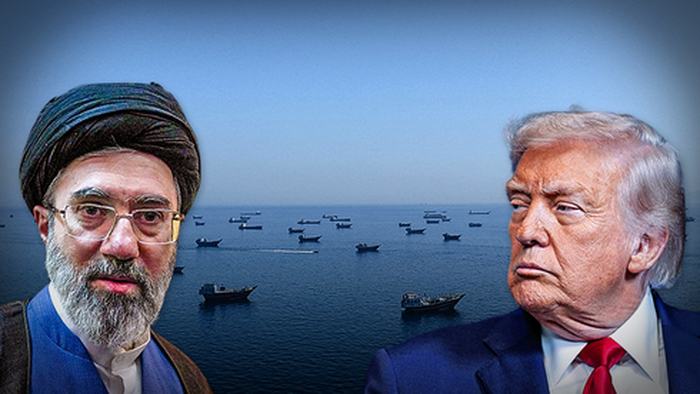
The current round of intensive negotiations and public statements has unfolded rapidly within the first week of August 2026, building upon months of simmering tensions and the ongoing "Operation Epic Fury":
- Late July 2026: Reports begin to surface of indirect contacts between US and Iranian officials, primarily facilitated by Omani mediation, focusing on de-escalation in the Persian Gulf and the status of the Strait of Hormuz.
- August 3, 2026: The New York Times reports that Iran and Oman are "closing in on an agreement to reopen shipping traffic in the Strait of Hormuz," citing Iranian and American officials. This report highlights the potential "high price" of the deal for the international community.
- August 4, 2026: The US Treasury Secretary makes a statement suggesting that talks with Iran are progressing and that an agreement could be imminent. President Trump echoes this sentiment later in the day.
- August 5, 2026 (Morning): President Trump publicly declares that talks with Iran are "moving along very nicely" and that the Strait of Hormuz will be open "very soon." He mentions "very good discussions" and an "all-day negotiation."
- August 5, 2026 (Mid-day): Iranian state broadcaster IRIB, cited by Al Jazeera, counters Trump’s narrative, insisting that talks are exclusively with Oman over the Strait and "have nothing to do with the United States." They deny any peace or ceasefire talks with the US.
- August 5, 2026 (Afternoon): Bloomberg reports that the "US, Iran and Oman are preparing to announce a 60-day agreement on shipping through the Strait of Hormuz," detailing proposed traffic management and demining.
- August 5, 2026 (Evening): Reports from Axios and CBS further detail the proposed mechanics of the Strait agreement, including inbound/outbound traffic coordination by Iran and Oman, respectively, and the introduction of a "service fee." Axios adds that Iranian leadership, including Supreme Leader Mojtaba Khamenei and the Supreme National Security Council, has reportedly completed its approval process for the interim deal.
- Ongoing: Despite the perceived progress on the Strait, Iran continues to link any broader discussions, especially on the nuclear issue, to the prior removal of the American naval blockade and an end to the current conflict. US officials, conversely, insist on resolving the nuclear issue as a prerequisite for full normalization.
This timeline illustrates the rapid diplomatic maneuvers and the conflicting interpretations of the nature and scope of the discussions.
Official Responses and Broader Implications
The divergent narratives from Washington and Tehran are not merely semantic; they reflect profound geopolitical maneuvering. For President Trump, securing an agreement to reopen the Strait of Hormuz, even a temporary one, could be presented as a significant foreign policy achievement, potentially allowing for an extrication of American forces from the "deepening quagmire" of "Operation Epic Fury" before the conflict’s six-month anniversary. It could be framed as a step towards de-escalation and stability, potentially boosting his administration’s image domestically.
From Iran’s perspective, the deal, if implemented as proposed, would be widely perceived as a substantial victory. As the New York Times admitted, such an accord could come at a "high price" for international maritime norms, effectively "ratifying Tehran’s control over what, before the war, was an open, international waterway." Iranian officials have explicitly stated their intent to design the accord to solidify their capacity to control the Strait, thereby retaining "strategic leverage that they did not employ before the war." This would fundamentally alter the geopolitical balance of power in the region, granting Iran unprecedented influence over global energy transit. It could also provide a much-needed financial injection through service fees, helping to mitigate the impact of international sanctions.
Oman’s role as a neutral mediator is crucial. Its consistent diplomatic efforts have provided a backchannel for communication between Washington and Tehran, preventing a full breakdown in dialogue. For Oman, facilitating such a deal reinforces its status as a regional peacemaker and safeguards its own economic interests, which are intrinsically linked to the stability of the Strait.
However, other regional players, particularly Saudi Arabia and the UAE, are likely to view any deal that bolsters Iranian control with apprehension. These nations have long been wary of Iranian expansionism and increased influence. While stability in the Strait is desirable for all, a perceived Iranian "victory" could heighten their security concerns and lead to a re-evaluation of regional alliances and defense postures. International shipping organizations and energy markets, while welcoming the prospect of a reopened Strait, would closely scrutinize the terms, particularly the implications for freedom of navigation and the potential for new bureaucratic hurdles or costs.
Remaining Obstacles and Future Outlook
Despite the apparent progress on the technical aspects of the Strait of Hormuz deal, significant obstacles remain toward achieving a lasting peace or a full normalization of relations. The most prominent is the nuclear issue. Senator Marco Rubio, among others, has reminded the world that Washington still insists on resolving Iran’s nuclear program, a demand that Tehran continues to assert can only be broached after the conflict ends and peace is established. This fundamental disagreement on the sequencing of negotiations poses a formidable challenge.
Furthermore, the contrasting interpretations of the deal’s permanence create fragility. US officials cited in reports have described the Hormuz scheme as "temporary," suggesting it is merely a provisional arrangement. This clashes with Iran’s apparent intent to use the accord to cement long-term control and leverage. The very nature of this "interim maritime arrangement, inside a Memorandum of Understanding, within a ceasefire," as described by Ali Vaez, highlights its complexity and inherent instability – a "diplomatic turducken" of nested agreements.
The Iranian side also emphasizes the precondition of the removal of the American naval blockade for a full reopening of the Strait. This demand, if not met, could derail the entire agreement, irrespective of the technical details. The ongoing presence of US naval assets in the region, intended to ensure maritime security, is viewed by Tehran as a hostile act impeding their sovereignty.
If the reported agreement comes into force, markets would likely breathe a collective sigh of relief, anticipating reduced risks to oil supplies. However, the geopolitical cost would be substantial. Tehran, having weathered "Operation Epic Fury" and seemingly emerging with enhanced control over a vital global artery, would find itself in a significantly stronger strategic position. This outcome would necessitate a profound re-evaluation of US foreign policy in the Middle East and could embolden Iran in future regional engagements. The apparent urgency of the Trump administration to extricate itself from the conflict may inadvertently grant Iran a significant strategic advantage, reshaping the regional power dynamics for years to come. The coming weeks will reveal whether this tenuous agreement can truly pave the way for de-escalation or if it merely marks a new, more complex phase in the enduring US-Iran rivalry.

