
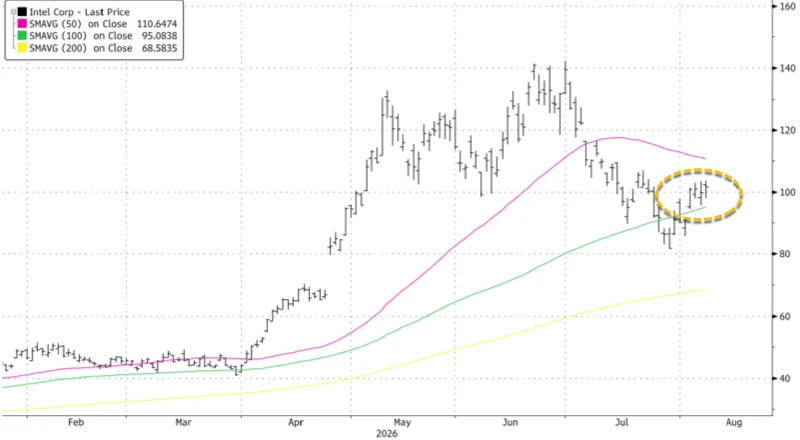
San Jose, CA – In a significant move reflecting the escalating financial demands of the artificial intelligence revolution, Intel Corporation announced Monday its plan for a $15 billion underwritten public offering of common stock. This strategic capital raise is aimed at bolstering the company’s balance sheet and providing substantial funding for its ambitious investments across critical AI-related domains, including AI compute, custom silicon development, advanced packaging technologies, expansion of its external foundry services, and fostering growth in the burgeoning physical-AI economy. The announcement underscores a broader trend emerging across the technology sector, where the unprecedented scale of AI capital expenditures—projected to reach $1 trillion this year alone—is compelling major players to diversify their financing mixes, increasingly turning to equity markets alongside traditional free cash flow and debt.
The Shifting Landscape of AI Investment Financing
The sheer magnitude of capital required to build out the global AI infrastructure is fundamentally reshaping corporate finance strategies within the technology industry. Historically, tech giants, particularly the "megacap hyperscalers," have largely relied on robust free cash flow generation and access to relatively inexpensive debt markets to fund their extensive capital expenditures (capex). However, the current AI boom, characterized by a voracious demand for high-performance computing, advanced data centers, and sophisticated semiconductor manufacturing capabilities, is pushing many companies beyond these traditional funding mechanisms.
While some hyperscalers like Microsoft, Amazon, and Meta continue to primarily leverage their strong cash flows, debt issuances, leases, and structured financing arrangements, others are proactively tapping equity markets. Alphabet, for instance, has been notably aggressive in this regard, reportedly raising significant capital through equity offerings, including a substantial "at-the-market" (ATM) program, to finance its own AI-driven expansion. Intel’s latest announcement signals its formal entry into this evolving financing paradigm, aligning itself with a trend that recognizes the limitations of internal capital generation and traditional debt in meeting the exponential growth in AI-related investment.
Intel’s Strategic Imperative: Fueling IDM 2.0 and AI Leadership
For Intel, this $15 billion offering is deeply intertwined with its "IDM 2.0" strategy, a comprehensive roadmap spearheaded by CEO Pat Gelsinger aimed at revitalizing the company’s technological leadership and manufacturing prowess. At its core, IDM 2.0 seeks to re-establish Intel as a premier semiconductor manufacturer, not only for its own products but also as a major foundry service provider for other chip designers, directly competing with industry giants like TSMC and Samsung.
The capital infusion from this offering is critical for several key areas central to Intel’s future:
- AI Compute: Investing in the research, development, and production of next-generation AI accelerators and processors, such as its Gaudi line, to challenge Nvidia’s dominant position in the AI chip market. This includes advancements in CPU and GPU architectures optimized for AI workloads.
- Custom Silicon: Expanding capabilities to design and manufacture specialized chips tailored for specific customer needs, particularly in the rapidly evolving AI and cloud computing sectors.
- Advanced Packaging: Developing and deploying cutting-edge packaging technologies like Foveros and EMIB, which are crucial for integrating diverse chiplets (e.g., compute, memory, I/O) into high-performance, power-efficient packages essential for advanced AI systems.
- External Foundry Services (Intel Foundry): A significant portion of the capital is earmarked for building out and upgrading manufacturing facilities (fabs) to support Intel Foundry, its dedicated business unit providing chip manufacturing services to external clients. This requires massive investments in equipment, cleanroom facilities, and process technology development.
- Emerging Physical-AI Economy: Funding innovations at the intersection of AI and the physical world, encompassing areas like robotics, autonomous systems, edge AI, and smart infrastructure, which demand highly integrated and power-efficient computing solutions.
Intel stated its intention to use the net proceeds for general corporate purposes, including capital expenditures and working capital. The company emphasized that the offering is designed to "further enable Intel to pursue the growth opportunities ahead while maintaining a strong balance sheet and its commitment to an investment-grade rating." This dual objective highlights the delicate balance Intel seeks to strike: aggressively investing for future growth while preserving financial stability and investor confidence.
Understanding the Offering Mechanics: Underwritten Public Offering
The $15 billion capital raise will be executed as an underwritten public offering of common stock. It is crucial to distinguish this from an "at-the-market" (ATM) program, which allows a company to sell shares incrementally into the market "from time to time" at prevailing market prices. In contrast, an underwritten public offering typically involves a syndicate of investment banks (the underwriters) who commit to purchasing a specified number of shares from the issuer at a set price, and then resell those shares to the public.
For this offering, a powerful consortium of financial institutions will serve as joint bookrunners: JPMorgan, Goldman Sachs, Morgan Stanley, and Citigroup. These underwriters play a pivotal role in determining the offering price, marketing the shares to institutional and retail investors, and ensuring the successful placement of the stock. They also bear the risk of not being able to sell all the shares.
As part of the standard terms for such offerings, the underwriters are expected to receive a 30-day option to purchase up to an additional $2.25 billion of shares. If this option is fully exercised, the total size of the offering could increase to an impressive $17.25 billion, further augmenting Intel’s financial war chest. It is important to note that, as of the initial announcement, this is a proposed offering; the shares have not yet been priced or sold, and the final pricing and closing will be contingent on prevailing market conditions.
Market Reaction and Share Performance Context
The announcement of such a substantial equity offering often elicits a mixed reaction from the stock market. On one hand, a capital raise of this magnitude signals a company’s commitment to growth and its ability to attract significant investment. On the other hand, it can trigger concerns about dilution for existing shareholders, as the issuance of new shares increases the total number of outstanding shares, potentially reducing earnings per share and per-share ownership.
Following the news on Monday, Intel’s shares experienced a modest slip of 3%. This immediate downturn is a common response to dilution concerns, despite the strategic necessity of the capital. However, it’s essential to contextualize this dip against Intel’s robust performance leading up to the announcement. Through Friday’s close, Intel shares had surged by more than 175% year-to-date, reflecting growing investor optimism about its turnaround strategy, its position in the PC market, and its potential role in the broader AI ecosystem. This significant appreciation in share price likely provided an opportune window for Intel to execute a large-scale equity offering more favorably.
The Broader Economic Landscape: A Trillion-Dollar AI Buildout
The scale of Intel’s offering is best understood within the context of the burgeoning AI infrastructure buildout, which represents an unprecedented wave of capital expenditure across the tech industry. Current estimates suggest that AI-related capital expenditures will hit a staggering $1 trillion this year alone. Looking ahead, Goldman Sachs analysts project that hyperscalers’ capital expenditures could soar even higher, potentially topping $1.4 trillion by 2027.

This exponential growth in investment is driven by the insatiable demand for processing power, data storage, and networking capabilities required to train and deploy increasingly complex AI models, particularly generative AI applications. Data centers, specialized AI chips, advanced cooling systems, and vast energy resources are all part of this massive infrastructure expansion.
However, this explosive growth is also creating financial pressures. The article highlights a crucial point: "Hyperscalers have a free-cash-flow problem." While some, like Microsoft, still maintain positive free cash flow, the sheer pace and scale of investment required by AI are straining the internal financial resources of many companies. Free cash flow, typically a measure of a company’s financial health and its ability to generate cash after accounting for operating expenses and capital expenditures, is becoming increasingly challenging to sustain in the face of these enormous AI investments. This dynamic is precisely why companies are broadening their financing strategies, moving beyond internal cash generation and debt to include significant equity raises.
The implication is clear: the AI industry’s aggressive infrastructure buildout will necessitate substantial capital injections from both equity and debt markets for the foreseeable future. This creates opportunities for investors willing to back the foundational technologies of the AI era, but also introduces potential risks related to overinvestment or market saturation.
Implications for Intel and the Semiconductor Industry
For Intel, the successful completion of this offering will provide crucial financial flexibility. It enables the company to accelerate its strategic initiatives without unduly straining its existing cash reserves or piling on excessive debt. This is particularly vital in the highly capital-intensive semiconductor manufacturing business, where multi-billion-dollar investments are required for each new fabrication plant and process technology node. By fortifying its balance sheet, Intel aims to maintain its competitive edge against formidable rivals like TSMC and Samsung in foundry services, and Nvidia and AMD in the AI chip space. It also helps preserve its investment-grade credit rating, ensuring continued access to favorable debt markets if needed in the future.
More broadly, Intel’s move sets a precedent and signals a growing trend across the semiconductor and wider technology industries. As the AI arms race intensifies, other companies facing similar capital demands for R&D, manufacturing expansion, and data center buildouts may increasingly follow suit, turning to equity markets to fund their ambitious growth plans. This could lead to a wave of secondary offerings and other equity-linked financing mechanisms, reshaping the capital structure of the tech sector.
The unprecedented demand for AI infrastructure also carries significant implications for supply chains, energy consumption, and environmental sustainability. The immense scale of investment points to continued strong demand for raw materials, manufacturing equipment, and skilled labor. Furthermore, the energy requirements of advanced AI data centers are escalating rapidly, posing challenges and opportunities for energy providers and innovators in sustainable computing.
In conclusion, Intel’s $15 billion public offering is more than just a corporate finance transaction; it is a powerful indicator of the profound economic shifts being driven by artificial intelligence. It highlights the staggering capital intensity of the AI revolution, the evolving financing strategies of major tech players, and the strategic imperative for companies like Intel to secure substantial funding to remain at the forefront of this transformative technological era. As the AI buildout continues its exponential trajectory, the interplay between innovation, investment, and financial markets will remain a critical narrative in the global economy.

