
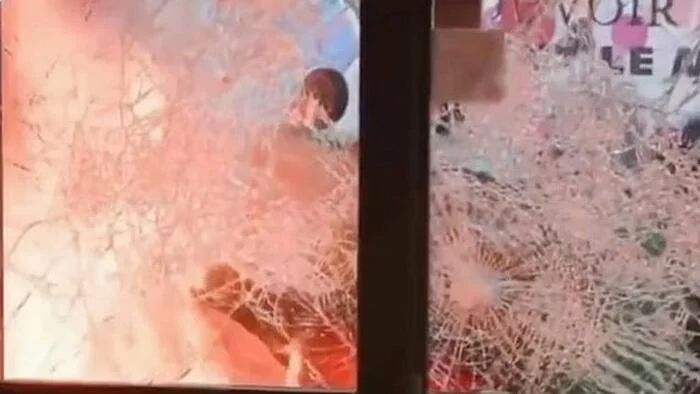
Masked assailants ignited fires at the entrances of a vocational high school in Paris on Monday, effectively trapping approximately 100 students and staff inside as nationwide student protests over educational conditions escalated into another week of unrest across France. The incident at Nicolas-Louis Vauquelin High School in the 13th arrondissement marked a severe intensification of demonstrations that have already seen thousands arrested and hundreds injured, drawing sharp condemnation from government officials and highlighting a deepening crisis in the French education system.
A Morning of Terror at Vauquelin High School
The harrowing events at Vauquelin High School unfolded around 7:50 a.m. as students were arriving for classes. Principal Carole Zerbib recounted to BFMTV that a group of roughly 10 individuals, clad in hoods, masks, and black attire, approached the school with alarming speed and determination. Their swift, organized movements immediately signaled to staff that dialogue would be impossible. "We immediately understood that we were not going to be able to talk with them," Zerbib stated, conveying the palpable sense of threat.
The attackers swiftly commenced their assault, using full trash bins and other readily available flammable materials to barricade the main entrance. A sofa and several bicycles were then piled against the doors, further sealing off escape routes. The assailants shattered glass panels with crutches, creating dangerous debris, and then ignited the accumulated material using a flammable liquid, engulfing the entrance in flames. The inferno created a perilous barrier, preventing anyone inside from exiting and obstructing any immediate attempts at intervention from outside.
During the chaotic scene, a staff member inside the school was struck in the face by a shard of flying glass, underscoring the immediate physical danger posed by the attackers. As firefighters and police units arrived on the scene to confront the blaze and secure the perimeter, they were reportedly met with a barrage of mortar fire, further complicating their efforts and indicating a premeditated level of aggression from the rioters. A video team from BFMTV captured the terrifying moments, showing significant flames at the entrance and describing how staff members attempting to use fire extinguishers were physically blocked by the rioters, who prevented them from accessing the fire. Inside, the principal could be heard instructing the confined students to retreat to the first floor, away from the immediate danger of smoke and fire. "The school staff was unable to put out the fire. The rioters blocked them just as the extinguisher nozzle came out; they blocked the exit," a BFMTV host reported, detailing the "terrifying attempted murder." The staff inside confirmed they were "under siege."
Following the ordeal, with the fires eventually brought under control and the school evacuated, Principal Zerbib described the experience as "terrible for the students and the staff, who witnessed an outburst of violence… I think we had rarely seen violence this strong in front of us." She emphasized the attackers’ sophisticated planning, noting they "were quite organized and had prepared their move," and revealed that she had received prior warnings from students and teachers about social media calls to burn the school. Significantly, she distinguished the perpetrators from her student body, asserting, "These aren’t my students. These are groups." All courses for the day were cancelled, and the school remained closed for further assessment and security measures.
Principal Zerbib’s Stance and Media Scrutiny
In the aftermath, as Principal Zerbib addressed reporters outside the damaged school, a revealing moment occurred that underscored broader tensions within French society and its media landscape. When approached by a journalist, she paused to ask, "Which outlet is that?" Upon being informed it was CNews, a prominent French news channel known for its conservative editorial line, she immediately declined to comment, stating, "Oh no, I had said no." When the journalist reiterated that it was the press, Zerbib firmly responded: "I don’t agree. Because I don’t agree with CNews’s editorial line. I think you don’t do any good. You don’t do any good for young people." This public refusal to engage with a specific media outlet, based on its editorial stance, highlighted the deep divisions and ideological battles playing out not only in the streets but also in public discourse. Her earlier comments to other reporters had expressed a cautious hope that police presence would ensure safety, though she acknowledged it was "not impossible that they come back, since they want to strike at the symbols of the state."
Escalating Nationwide Protests: A Week of Unrest
The incident at Vauquelin High School is not isolated but rather a stark manifestation of a broader, increasingly violent wave of student protests sweeping across France. The unrest, which began in the Paris region in mid-September, has now spread nationwide, with organizers calling for a further "day of action" on Tuesday, labeled "Act III" by student unions.
The grievances driving these protests are multifaceted, primarily stemming from perceived deteriorating conditions within the national education system. Students and the Union syndicale lycéenne (High School Student Union) cite several key issues: reduced teaching staff, leading to larger class sizes; overcrowded classrooms; excessively long schedules; the Parcoursup university admissions system; and dilapidated school buildings.
Parcoursup, introduced in 2018, is a post-baccalaureate admissions platform designed to streamline applications to higher education. While intended to improve transparency and reduce selection bias, it has faced consistent criticism from students and educators. Opponents argue that Parcoursup, despite its stated goals, effectively introduces selective criteria, creating a more competitive and potentially inequitable system for university entry. They contend that the platform’s algorithms and "motivational letters" lead to opaque decision-making, disproportionately affecting students from disadvantaged backgrounds and those from less academically rigorous high schools. This perception of increased selectivity and reduced access to higher education has been a recurring flashpoint for student anger, reminiscent of past protests against similar reforms.
The current protests also reflect broader frustrations among young people regarding public service funding, the quality of their educational environment, and their future prospects. The perceived decline in resources for public education, exacerbated by austerity measures and demographic pressures, contributes to a sense of neglect and disillusionment among students.

A Rising Toll: Casualties and Arrests
The human cost of these protests has been significant and continues to climb. Education Minister Édouard Geffray reported on Sunday that 78 education staff members had been injured since the unrest began, with "some of them by high schoolers." Additionally, 170 students have been hurt in the clashes. Geffray condemned the violence, asserting that "far-left activists had ‘hijacked’ the movement," steering it away from its initial, more legitimate concerns.
The scale of disruption to the education system is alarming. Geffray confirmed that classes would be fully or partly suspended on Monday at 400 to 500 of France’s approximately 3,700 high schools because safety conditions could not be met. Even more concerning, he stated that 24 schools had been either burned or ransacked since the protests spread from the Paris region.
Law enforcement agencies have responded with a massive deployment and numerous arrests. Interior Minister Laurent Nuñez revealed that more than 5,000 people had been arrested since the previous Monday, an astonishing figure, with approximately 85 percent of those detained being minors. The sheer volume of arrests underscores the youth-driven nature of the movement and the government’s firm stance on maintaining public order. Nuñez also reported that over 300 police officers and gendarmes have been injured in confrontations with protesters, highlighting the intense and often violent nature of the clashes. On Friday alone, police recorded 1,747 arrests, a stark indicator of the daily confrontations. Nuñez has described the situation as a "slide into riot and urban violence," emphasizing the criminal dimension of many of the acts.
A Litany of Violence: Incidents Across France
The incident at Vauquelin High School is unfortunately part of a broader pattern of escalating violence and destructive acts targeting educational institutions and personnel across France:
- Rouen Arson: On October 1, Blaise Pascal High School in the French city of Rouen became another target of arson. Footage from Remix News showed the entire entrance of the school engulfed in flames, with staff members reportedly helpless to extinguish the blaze as it consumed the entryway.
- La Ciotat Teacher Assault: A particularly brutal incident occurred on October 2 in La Ciotat, where a 59-year-old physics teacher was assaulted. While attempting to extinguish a fire lit by students near a tree, the teacher was struck and then doused with gasoline. French news reports indicated he was temporarily blinded when the gasoline was thrown into his eyes, after which youths reportedly began kicking him. A 16-year-old was detained on Sunday in connection with this assault. This incident followed a similar attempted arson in Marseille the previous day, where youths are being investigated for attempted murder after dousing a principal and a vice-principal with gasoline during an attack outside a high school administrative office.
- Belfort Police Officer Beating: In Belfort, a 17-year-old was arrested on suspicion of attempted homicide after a plainclothes police officer was severely beaten and rendered unconscious during student riots. The gravity of this charge reflects the serious injuries sustained by the officer and the intent attributed to the assailant.
- Tours Protester Injury: The violence has also resulted in severe injuries among protesters. In Tours, prosecutors confirmed that a young demonstrator lost sight in one eye during clashes with police, underscoring the dangers inherent in these confrontations for all parties involved.
These incidents paint a grim picture of a movement that, while rooted in legitimate grievances for some, has been significantly marred by severe violence, arson, and assaults on individuals, including educators and law enforcement.
Official Reactions and the Path Forward
The French government has consistently condemned the violence while acknowledging some of the underlying concerns. Junior Interior Minister Jean-Didier Berger, speaking on BFMTV after the Vauquelin fires were extinguished and the school evacuated, called the images "particularly shocking." He asserted that "These are criminal acts that fall under the law and must be repressed in the harshest way," signaling the government’s intent to pursue legal action against those responsible for the violence.
Education Minister Geffray, while acknowledging some student complaints as legitimate, has maintained that the movement has been "hijacked" by radical elements. This narrative suggests a distinction between genuine student activism and criminal opportunism, a view echoed by Principal Zerbib’s assertion that the attackers were "not my students."
The government faces a delicate balancing act: addressing the valid concerns about educational conditions that fuel the initial protests, while simultaneously confronting the escalating violence and maintaining public order. Critics of the government’s approach argue that a heavy-handed police response risks further alienating students and exacerbating tensions, potentially pushing more individuals towards radicalization. Conversely, a perceived lack of firm action could embolden those resorting to violence and arson.
Student unions, while condemning the most extreme acts of violence, continue to press their demands for systemic changes within the education system. They argue that the government has not adequately addressed their concerns regarding Parcoursup, underfunding, and declining school infrastructure. The "Act III" call for further demonstrations suggests that the movement shows no signs of abating, despite the increasing risks.
The ongoing unrest highlights a significant challenge for President Emmanuel Macron’s administration, which has previously faced major social movements like the "Yellow Vest" protests. The current wave of student activism, with its blend of legitimate grievances and destructive acts, poses a threat to social cohesion and public safety, potentially undermining the government’s reform agenda and further eroding public trust.
The long-term implications for the French education system are also profound. Beyond the immediate disruption and property damage, the trauma experienced by students and staff, the erosion of trust within school communities, and the deepening polarization could have lasting negative effects on learning environments and the well-being of those within them. The incident at Vauquelin High School, where students and staff were deliberately trapped by fire, serves as a chilling reminder of the extreme and dangerous turn these protests have taken, demanding an urgent and multifaceted response from all sectors of French society.

