
Recent congressional hearings have intensified scrutiny on Dr. Anthony Fauci’s tenure as Director of the National Institute of Allergy and Infectious Diseases (NIAID) and his pivotal role in the U.S. response to the COVID-19 pandemic. The focus of these inquiries includes his involvement in gain-of-function research funding, his guidance on public health measures, and allegations of discouraging scientific debate surrounding the virus’s origins. These developments come alongside the public release of thousands of pages from Fauci’s professional diaries, offering a glimpse into his internal deliberations and external communications during the pandemic’s critical phases.
Renewed Scrutiny and Congressional Hearings
Dr. Fauci, who served as NIAID Director for 38 years and as a chief medical advisor to seven U.S. presidents, faced extensive questioning from the House Select Subcommittee on the Coronavirus Pandemic and the Senate Homeland Security Committee. Lawmakers pressed him on various aspects of the pandemic response, including the scientific basis for lockdowns, mask mandates, and vaccine policies, as well as the federal government’s funding of research at the Wuhan Institute of Virology (WIV) in China.
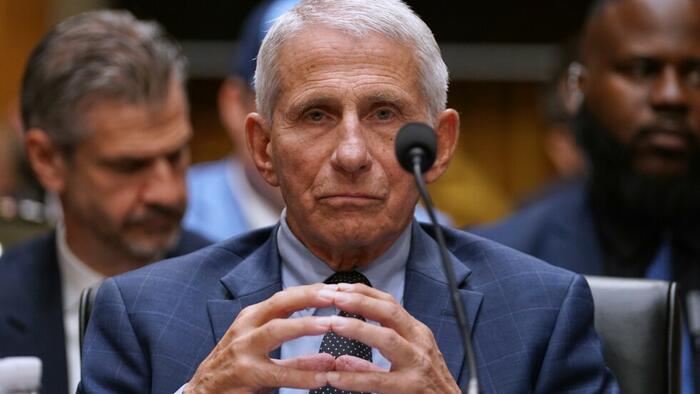
During a public hearing on June 3, 2024, Dr. Fauci was questioned for several hours, addressing allegations that he downplayed the lab leak theory of COVID-19’s origin and that his agency funded controversial research. He maintained that his actions were based on the best available scientific evidence at the time and aimed at protecting public health. He also affirmed that he had not invoked his Fifth Amendment right against self-incrimination during any of his testimonies or transcribed interviews. The intensity of these hearings reflects a persistent demand from some congressional factions for greater transparency and accountability regarding the pandemic’s handling and origins.
The Origin Debate and Gain-of-Function Research
A central point of contention revolves around the origins of SARS-CoV-2, the virus that causes COVID-19, and the nature of research funded by the National Institutes of Health (NIH), specifically through NIAID. For years, the prevailing scientific consensus, initially championed by many public health officials including Dr. Fauci, leaned towards a natural zoonotic spillover event, where the virus jumped from animals to humans. However, the hypothesis that the virus originated from a laboratory incident, possibly at the Wuhan Institute of Virology (WIV), has gained increasing traction and is now considered plausible by several U.S. intelligence agencies.
This shift in perspective has brought gain-of-function research into sharp focus. Gain-of-function research involves modifying a pathogen to enhance its transmissibility, virulence, or host range, often to better understand potential threats and develop countermeasures. Critics argue that such research carries inherent risks of accidental release and could inadvertently contribute to a pandemic.
The NIH, through EcoHealth Alliance, provided grants to the Wuhan Institute of Virology for bat coronavirus research. This funding, totaling at least $1.4 million between 2014 and 2021 according to a Government Accountability Office (GAO) review, has become a key subject of investigation. In 2024 congressional testimony, Acting NIH Director Lawrence Tabak acknowledged that some of the research conducted at WIV with NIH funding met a "generic" definition of gain-of-function, a statement that contradicted earlier denials from Dr. Fauci and others. This admission has fueled accusations that the NIH was not transparent about the nature of the research it supported.
Fauci’s Diaries and Their Implications
The recent public release of 1,141 pages of Dr. Anthony Fauci’s professional diaries, covering December 2019 to December 2022, has provided new insights into his perspective and actions during the pandemic. These documents, obtained through congressional requests, detail his communications with various government officials, scientists, and media figures.
According to interpretations by some congressional investigators and critics, the diaries suggest Dr. Fauci was deeply involved in the government’s policy apparatus, serving as a primary advisor to the White House and a key public representative. They indicate his direct influence over decisions concerning lockdowns, mandates, and vaccine campaigns. Furthermore, some analyses of the diaries suggest that Fauci actively steered scientific discourse away from the lab leak theory in the early stages of the pandemic, even as a significant number of virologists privately considered it plausible.
One notable instance cited is Fauci’s involvement in organizing and participating in discussions that led to the influential "The proximal origin of SARS-CoV-2" paper, published in Nature Medicine in March 2020. This paper concluded that a laboratory-based scenario was "not plausible" and strongly favored a natural spillover origin. Critics argue that Fauci’s role in promoting this narrative, while simultaneously having knowledge of NIH-funded research that could be linked to a lab leak, constitutes a conflict of interest or an attempt to control the scientific narrative. Fauci has consistently maintained that he was open to all avenues of research into the virus’s origins and that his positions evolved with scientific understanding.
A Chronology of Key Events and Debates

- 2014-2021: NIH funding, channeled through EcoHealth Alliance, supports bat coronavirus research at the Wuhan Institute of Virology. This research included experiments that some later classified as gain-of-function.
- October 2019: Event 201, a high-level pandemic exercise hosted by the Johns Hopkins Center for Health Security in partnership with the World Economic Forum and the Bill & Melinda Gates Foundation, simulates a global coronavirus outbreak originating in bats and spreading to humans.
- December 2019: The first cases of a novel coronavirus emerge in Wuhan, China.
- January 2020: The virus rapidly spreads. Early media reports, and some alternative media outlets, begin questioning the natural origin theory and suggest a possible lab leak, citing the presence of high-level biohazard labs in Wuhan. These suggestions are widely dismissed by mainstream media and public health officials as "conspiracy theories."
- January 2020 (Late): Dr. Fauci’s diaries begin, documenting his involvement in the U.S. government’s emerging pandemic response.
- February 2020: Dr. Fauci participates in discussions leading to the "Proximal Origin" paper.
- March 2020: The "Proximal Origin of SARS-CoV-2" paper is published in Nature Medicine, concluding a lab origin is "not plausible." Global lockdowns and public health measures begin to be implemented worldwide. Initial Infection Fatality Rate (IFR) estimates are around 3%, leading to widespread fear.
- Late 2020-Early 2021: The actual IFR of COVID-19 is refined to be significantly lower, closer to 0.23% on average, meaning a large majority of infected individuals survive. This data point is largely overshadowed by the ongoing focus on case numbers and severe outcomes.
- 2021: As evidence mounts and public pressure increases, the lab leak theory begins to gain more credibility within scientific and intelligence communities.
- 2023-2024: Congressional committees, including the House Select Subcommittee on the Coronavirus Pandemic and the Senate Homeland Security Committee, launch or intensify investigations into the pandemic’s origins, the U.S. response, and Dr. Fauci’s role.
- January 2024: Dr. Fauci undergoes a 14-hour transcribed interview with the House Select Subcommittee on the Coronavirus Pandemic.
- March 2024: Acting NIH Director Lawrence Tabak acknowledges in congressional testimony that NIH-funded research at WIV met a "generic" definition of gain-of-function.
- June 2024: Dr. Fauci testifies publicly before congressional committees, facing intense questioning. His professional diaries are released to the public.
Official Responses and Broader Implications
Dr. Fauci has consistently defended his actions, stating that his advice and decisions were based on the evolving scientific understanding of the virus and aimed at mitigating a global health crisis. He has maintained that he did not intentionally mislead the public or Congress and that the scientific process involves continuous learning and adaptation. He also asserts that the NIH’s funding of bat coronavirus research was intended to prevent future pandemics by understanding potential threats, not to create them.
However, critics, particularly within conservative and alternative media circles, argue that the revelations from the hearings and diaries confirm their long-held suspicions regarding a lack of transparency and accountability from federal health officials. They allege that a "bureaucratic system" protects individuals like Fauci from legal repercussions, hindering efforts to investigate potential wrongdoing and learn from past mistakes. The assertion that a "sweeping pardon" was issued by President Biden for Fauci, however, lacks credible verification and has been widely refuted.
The implications of these ongoing investigations extend beyond Dr. Fauci himself. They raise fundamental questions about the oversight of scientific research, particularly high-risk gain-of-function studies, and the ethical responsibilities of scientists and public health officials. The debates also highlight concerns about government transparency, the influence of unelected bureaucrats, and the mechanisms of accountability within federal agencies. The public’s trust in scientific institutions and government guidance has been significantly tested throughout the pandemic, and these inquiries aim to address the perceived gaps in information and decision-making.
Ultimately, the congressional examinations into Dr. Fauci’s role, the origins of COVID-19, and the broader pandemic response are part of a larger effort to understand the unprecedented events of the past few years. The goal, as stated by many lawmakers, is to ensure that lessons are learned, accountability is established, and future public health crises are handled with greater transparency and effectiveness. The process continues to underscore the deep divisions and persistent questions surrounding one of the most impactful global events in modern history.

