

The financial landscape has undergone a dramatic transformation, as interest rates, long anchored near historic lows, have abruptly climbed to levels not seen in over two decades. This significant shift, following a period of remarkable stability that characterized the global financial system for nearly fourteen years, marks a new chapter for economies worldwide, prompting widespread reevaluation of financial strategies and future expectations.
A Decades-Long Period Concludes: The Rise from Near Zero
For an extended period stretching back to the 2008 financial crisis, central banks, most notably the U.S. Federal Reserve, maintained benchmark interest rates at or near zero. This era of "easy money" was primarily a response to economic downturns, designed to stimulate borrowing, investment, and consumer spending. From approximately 2011, a time some informally refer to as the "Dawn of Mustachianism" for its focus on financial independence, until early 2022, interest rates remained remarkably subdued. This environment fostered a boom in various sectors, including real estate and venture capital, as the cost of borrowing was exceptionally low.

The Federal Reserve, acting as the primary steward of the U.S. economy’s monetary policy, utilized interest rates as a key lever to influence economic activity. For much of the past two decades, successive Fed chairpersons and their teams kept this "gas pedal" firmly pressed, injecting liquidity into the system through near-zero rates. This policy made mortgage financing highly accessible, enabling a surge in home purchases and construction, which in turn propelled demand across related industries. Similarly, businesses found capital cheap, leading to increased investment, entrepreneurial ventures, new company formations, and robust job creation. This sustained period of growth contributed to two decades of prosperity, technological innovation, and rising living standards in many developed economies.
However, the prolonged period of accommodative monetary policy eventually contributed to an imbalance: too much money chasing too few goods, particularly evident in the housing market. This dynamic ignited a trend of accelerating inflation, which became unacceptably fast by late 2021 and early 2022. The Consumer Price Index (CPI) in the U.S., for instance, peaked at over 9% year-over-year in June 2022, a level not witnessed in forty years.
The Federal Reserve’s Response: Taming Inflation
Recognizing the escalating inflationary pressures, Federal Reserve Chairman Jerome Powell and the Federal Open Market Committee (FOMC) initiated a series of aggressive interest rate hikes starting in March 2022. The objective was clear: to cool down an overheating economy and bring inflation back down to the Fed’s target of 2%. By significantly raising the federal funds rate, the Fed aimed to increase the cost of borrowing across the economy, thereby reducing demand and slowing price growth.
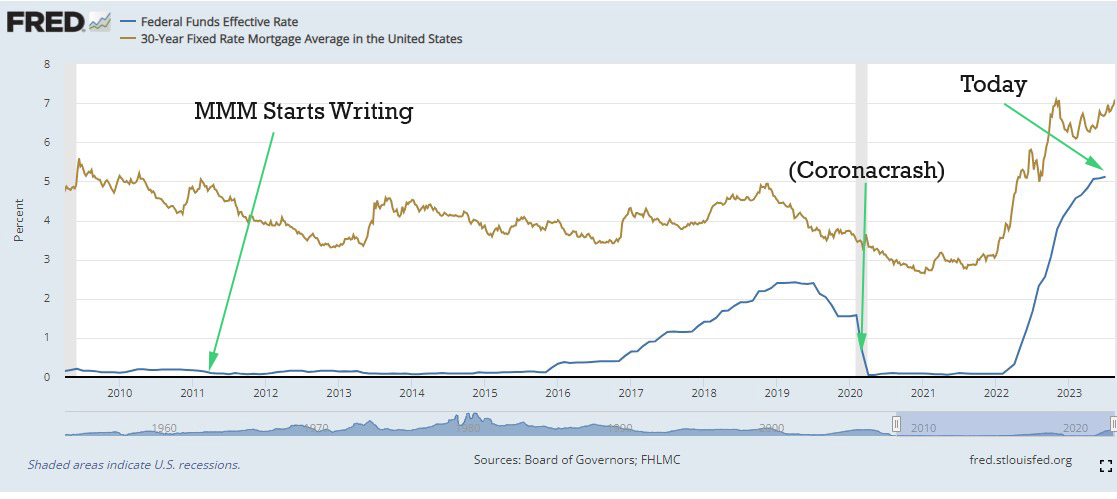
This shift in monetary policy has had far-reaching consequences. Mortgages have become considerably more expensive, dampening housing demand and prompting many prospective buyers to postpone their plans. Corporate borrowing costs have risen, leading businesses to scale back expansion projects, reconsider new factory constructions, and in some cases, implement hiring freezes or layoffs. Tech giants like Facebook (Meta) and Amazon, for example, announced significant workforce reductions in late 2022 and early 2023, shedding tens of thousands of jobs as they adjusted to higher capital costs and a more cautious economic outlook.
Furthermore, the rapid tightening of monetary policy contributed to a miniature banking crisis in early 2023, with the collapse of several mid-sized banks, including Silicon Valley Bank and Signature Bank. These failures, largely attributed to mismatches between their long-term, low-interest assets and short-term, interest-sensitive liabilities, briefly sparked fears of a broader financial contagion, though swift regulatory intervention helped contain the immediate fallout.
Economic Paradox: High Rates Amidst Robust Employment
Despite these tightening conditions and the challenges faced by certain sectors, the broader economic picture has presented a surprising paradox. While many media outlets and political commentators frequently highlight "hard economic times" and a perceived national decline, key economic indicators suggest a different reality. The U.S. unemployment rate, for instance, has remained near 50-year lows, hovering between 3.4% and 3.8% through much of 2023. This robust labor market, coupled with resilient consumer spending, has defied many economists’ predictions of an imminent recession.

This resilience suggests that the economy is undergoing a necessary rebalancing act, rather than a catastrophic downturn. The current period can be viewed as the economy "digesting" the sugar rush of prolonged easy money, returning to a more sustainable growth trajectory. Such adjustments are a normal part of economic cycles, typically occurring every decade or two, and do not inherently signal a fundamental collapse.
Implications for Investors: Navigating Volatility
The stock market has naturally reacted to the interest rate shifts. Following a peak in late 2021 and early 2022, the overall U.S. market, as measured by indices like the S&P 500, experienced a correction. From its high at the beginning of 2022 to mid-2023, the market saw an approximate 10% decline. Alternatively, it remained relatively flat since June 2021, with gains largely limited to total dividends of around 3%.
For long-term investors, the fundamental advice remains consistent: attempting to "time the market" by predicting short-term fluctuations is generally unproductive. Historical data consistently demonstrates that the stock market tends to appreciate over the long run, despite unpredictable downturns and periods of volatility. Market corrections, such as the recent 10% dip, can be viewed as opportunities for long-term investors to acquire assets at a discount.

The rise in interest rates has also made cash and fixed-income investments more attractive. With savings accounts and money market funds offering rates of 4.5% or higher, and short-term Treasury bills yielding even more, investors face a more complex decision matrix. While stocks historically offer higher returns over extended periods, a risk-free return of 5% or more presents a compelling alternative, particularly for those with shorter investment horizons or a lower risk tolerance. The decision between equities and high-yield savings often boils down to an individual’s investment horizon, risk appetite, and the relative value of current market prices. When stocks are "on sale" during a downturn, their potential future appreciation might outweigh the immediate security of higher savings rates. Many financial advisors recommend a balanced approach, maintaining a diversified portfolio that includes both equities for long-term growth and high-yield cash equivalents for liquidity and stability.
The Housing Market: A New Reality
Perhaps the most palpable impact of rising interest rates is on the housing market. Financing a home with a mortgage has become significantly more expensive. For potential rental property investors, the economics have shifted, making such ventures less profitable in the short term. Conversely, homeowners with existing, locked-in mortgages at historically low rates (e.g., 3%) are now less inclined to sell, contributing to a tight housing supply.
Consider the dramatic change in mortgage costs. Assuming an average 10% down payment on a median U.S. home price of approximately $416,000 (as of mid-2023, per National Association of Realtors data), the monthly principal and interest payment for a 30-year fixed mortgage has surged. If rates were 3% in early 2022, the monthly payment would be around $1,570. With rates climbing to 7.5% by mid-2023, that same payment jumps to roughly $2,620, representing an increase of over $1,000 per month or more than 67%. This substantial increase in monthly housing costs significantly reduces affordability for many prospective buyers.

The objective of these higher interest rates is to cool the housing market by:
- Making mortgages prohibitively expensive for some, thus reducing buyer demand.
- Incentivizing current homeowners with low-rate mortgages to stay put, which reduces new inventory.
- Increasing the cost of construction financing, potentially slowing the pace of new housing developments.
The net effect is expected to be a stabilization or even a decline in home prices in many areas, as demand wanes and supply-side pressures ease.
When Will House Prices Adjust?
The trajectory of house prices is complex, influenced by fundamental supply and demand dynamics. While the current environment suggests a slowdown, the extent and timing of any price corrections remain uncertain. Key factors influencing housing supply and, by extension, prices include:
- Cost of Construction: Materials, labor, and land acquisition costs directly impact the feasibility and pricing of new homes. Technological advancements in construction, such as prefabrication and advanced tools, can potentially lower costs over time, but these are often offset by other inflationary pressures.
- Population Growth and Migration: Demographic shifts and population increases in desirable areas naturally drive demand for housing.
- Local Regulatory and Zoning Policies: Restrictive zoning, complex permitting processes, and "Not In My Backyard" (NIMBY) sentiments can severely limit the supply of new housing, driving up existing home prices. Many cities face increasing bureaucratic hurdles for new construction, leading to housing shortages despite technological efficiencies in building.
While construction costs can benefit from technological progress, regulatory burdens have been a significant inflationary factor in recent times. The layering of complex codes, zoning restrictions, and lengthy approval processes in many municipalities has deterred new construction, exacerbating housing shortages and pushing prices upward. However, some forward-thinking cities, like Tempe, Arizona, are adopting more favorable policies, encouraging the development of "car-free" communities that are more affordable to construct and operate.
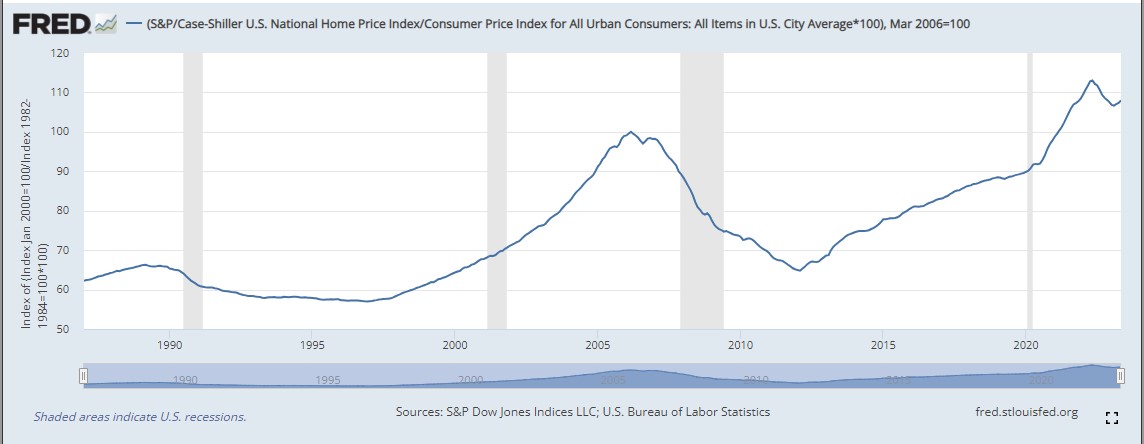
Overall, inflation-adjusted U.S. house prices are currently near all-time highs. While some analysts predict a potential easing of prices by 10-25% to levels seen in 2020, others suggest that prices may simply stagnate for an extended period, effectively becoming cheaper relative to future incomes and inflation. The outcome will likely vary significantly by region, depending on local economic conditions, population trends, and regulatory environments.
The Future of Interest Rates: An Inverted Yield Curve’s Signal
The current "high" interest rates are, from a broader historical perspective, closer to the long-term average than the exceptionally low rates of the past two decades. Zooming out over the last seventy years reveals that current rates fall within a normal range, challenging the perception that they are extraordinarily elevated.
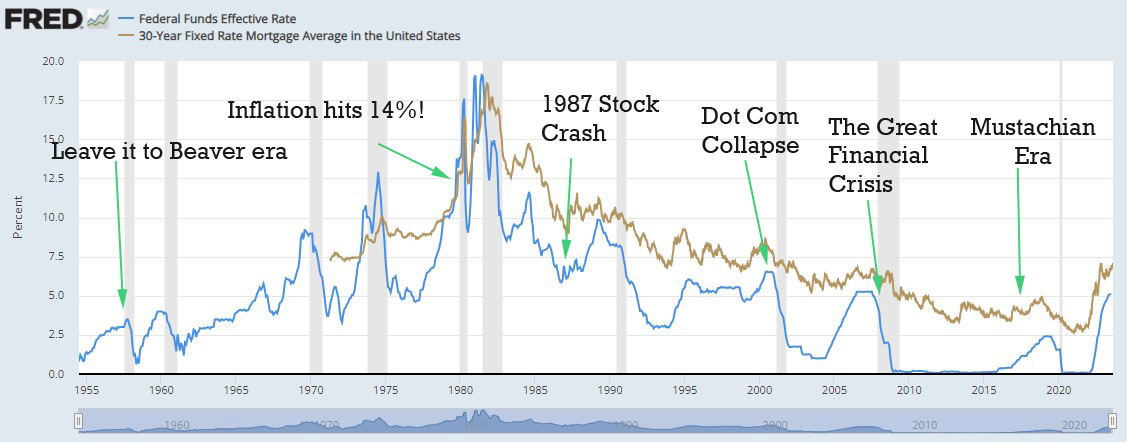
The question of when interest rates will decline depends heavily on the Federal Reserve’s assessment of the economy. Rates are likely to be lowered when the Fed determines that the economy is slowing excessively, requiring another boost from the "gas pedal" – typically in response to signs of a genuine recession, such as sustained low inflation and rising unemployment. As of mid-2023, these recessionary signals have been largely absent from weekly economic data, contributing to the Fed’s cautious stance on rate cuts.
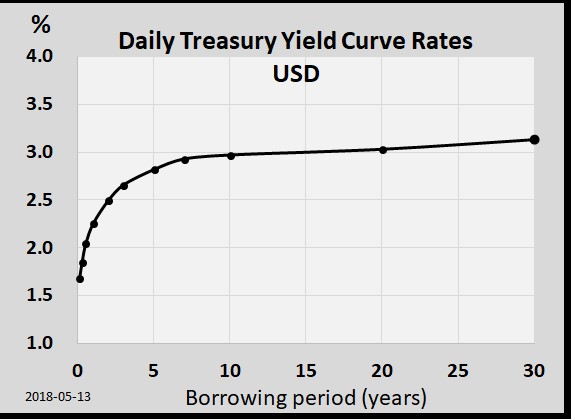
A key indicator for future interest rate movements is the U.S. Treasury Yield Curve. Normally, this curve slopes upward, meaning lenders receive a higher yield for locking up their money for longer periods. For example, in 2018, the market expected interest rates to average around 3.0% over the next 30 years. However, the current environment presents an unusual phenomenon: an inverted yield curve.
In an inverted yield curve, short-term Treasury yields are higher than long-term yields. As of mid-2023, for instance, a one-year Treasury bond might offer a 5.4% interest rate, while a ten-year bond pays only 4.05%. This inversion signals that bond market participants anticipate interest rates will almost certainly drop in the future, beginning perhaps within a year. Historically, an inverted yield curve has been a remarkably accurate predictor of economic slowdowns or recessions, having preceded ten of the last eleven U.S. recessions over the past 75 years. This market sentiment suggests that investors are forecasting an economic contraction in the relatively near future, potentially prompting the Fed to ease monetary policy within 18-24 months.
Navigating the New Economic Landscape
For individuals, the current economic climate underscores the importance of sound financial planning and resilience. While interest rate fluctuations and housing market dynamics are largely beyond individual control, personal financial choices remain paramount. Maintaining a lean and happy lifestyle, focusing on earning and saving, and making thoughtful decisions about where to live are critical.
Achieving financial independence, often characterized by minimal debt and substantial savings, provides a significant advantage in volatile economic periods. Owning a home and a car mortgage-free, for instance, insulates individuals from rising borrowing costs. Furthermore, having substantial cash reserves empowers individuals to capitalize on potential opportunities, such as a future downturn in the housing market, without being beholden to prevailing interest rates. The ability to purchase assets outright, or to choose to take a mortgage only if rates are favorable, provides a position of strength rather than stress.
In conclusion, the surge in interest rates marks a significant recalibration of the global economy after a prolonged period of extraordinary monetary accommodation. While it introduces new challenges for borrowers and certain sectors, it also represents a necessary step in combating inflation and fostering more sustainable economic growth. For individuals, maintaining a long-term perspective, adhering to sound financial principles, and focusing on personal financial discipline will continue to be the most effective strategies for navigating these evolving economic waters. The larger forces of interest rates and market fluctuations, while impactful, ultimately become secondary to robust personal financial health.

