

The United States economy is experiencing a profound transformation as interest rates have rapidly ascended to levels not seen in over two decades, fundamentally altering the financial landscape after more than fourteen years of near-zero borrowing costs. This dramatic shift, orchestrated by the Federal Reserve, marks a decisive pivot from an era characterized by easily accessible capital to one where money carries a significantly higher price, impacting everything from housing affordability to corporate investment and consumer spending.
The End of an Era: From Zero Bound to Rapid Ascent
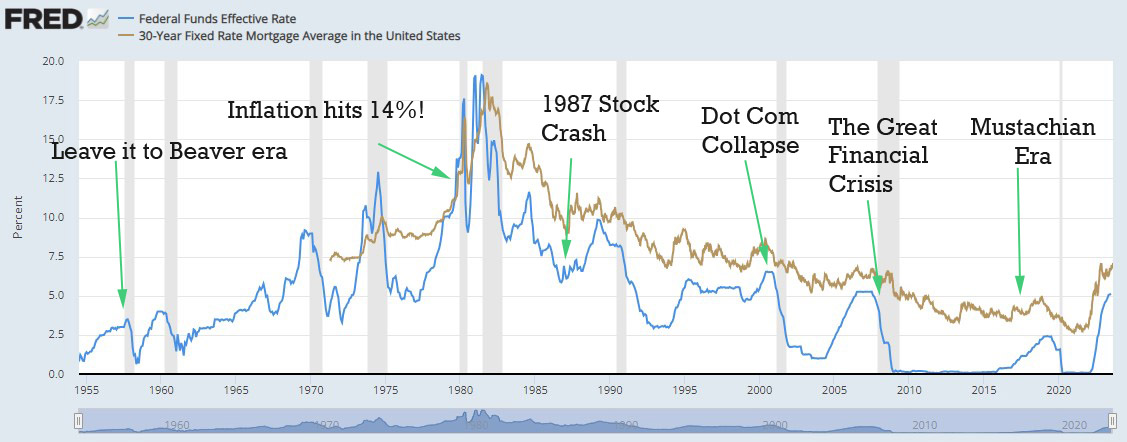
The period following the 2008 global financial crisis and extending through the COVID-19 pandemic saw the Federal Reserve maintain exceptionally low interest rates, often hovering near the zero-bound. This strategy was designed to stimulate economic recovery, encourage borrowing, investment, and consumer spending by making capital cheap and readily available. For over a decade, this "easy money" policy became the prevailing norm, fostering robust growth in certain sectors, particularly housing and technology, and contributing to record-low unemployment rates.

Under this prolonged low-rate regime, consumers found mortgages more affordable, leading to increased demand for housing and new construction. Businesses benefited from inexpensive borrowed capital and venture funding, fueling entrepreneurial activity, job creation, and economic expansion. This environment contributed to a period of sustained prosperity and innovation.
However, the unprecedented fiscal and monetary stimulus deployed during the pandemic, coupled with persistent global supply chain disruptions and strong consumer demand, ignited significant inflationary pressures. By early 2022, inflation, as measured by the Consumer Price Index (CPI), had soared to multi-decade highs, reaching a peak of 9.1% year-over-year in June 2022. This surge significantly outpaced the Federal Reserve’s long-term target of 2%, prompting an urgent and aggressive policy response to restore price stability.
The Federal Reserve’s Hawkish Pivot and Chronology of Hikes
Under the leadership of Chairman Jerome Powell, the Federal Reserve’s Federal Open Market Committee (FOMC) initiated a series of steep interest rate increases, beginning in March 2022. The primary objective was to cool down an overheated economy and bring inflation back under control, even if it meant risking a slowdown in economic activity. The mechanism for this adjustment is the federal funds rate, a benchmark rate that influences other borrowing costs throughout the economy.
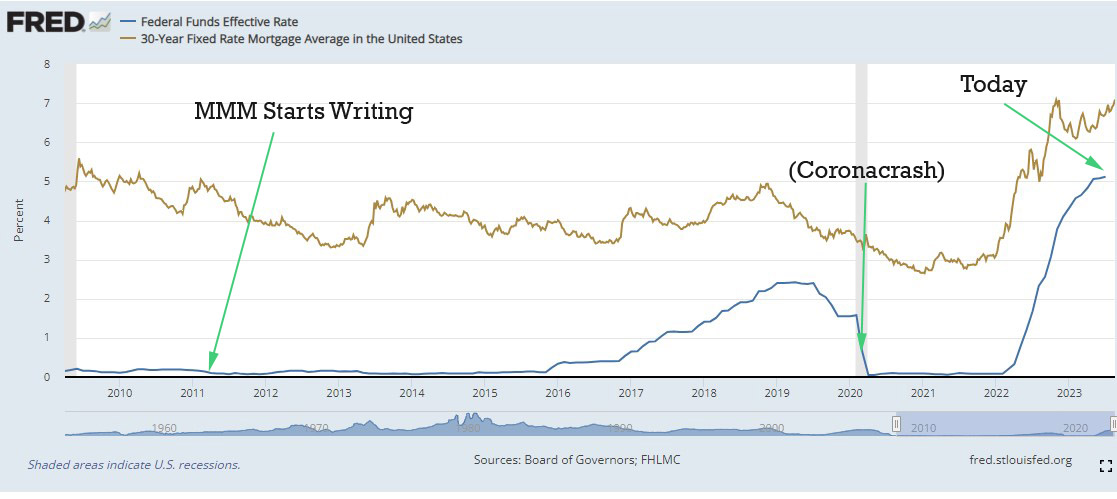
The pace and magnitude of these rate hikes were historically rapid, demonstrating the Fed’s commitment to prioritizing price stability. The chronology of the tightening cycle unfolded as follows:
- March 2022: The FOMC raised the federal funds rate by 25 basis points (0.25%) for the first time since 2018, signaling the end of the ultra-low rate environment.
- May 2022: A 50-basis point hike followed, marking a more aggressive stance.
- June, July, September, November 2022: The Fed implemented four consecutive 75-basis point increases, an unprecedented acceleration in monetary tightening. This pushed the federal funds rate to a range of 3.75% to 4.00% by year-end.
- February, March, May, July 2023: Further 25-basis point increases continued into 2023, eventually bringing the federal funds rate to a range of 5.25% to 5.50% by July. This marked its highest level since 2001, effectively reversing more than a decade of near-zero rates in just 18 months.
The cumulative effect has been a dramatic repricing of capital across all sectors of the economy, fundamentally altering financial calculations for individuals and corporations alike.
Far-Reaching Economic Impacts
The swift shift in monetary policy has sent ripples throughout the U.S. and global economies, creating both significant challenges and some new opportunities.

A. The Housing Market Reconfiguration
Perhaps no sector has felt the immediate impact of rising rates more acutely than real estate. The average 30-year fixed-rate mortgage, which had hovered around 3% for much of 2020 and 2021, surged past 7% in 2022 and remained elevated through 2023. This increase has severely eroded housing affordability. For instance, a $400,000 mortgage at 3% interest would entail a monthly principal and interest payment of approximately $1,686. At 7.5%, that same mortgage would cost around $2,800 per month—a nearly 66% increase, making homeownership unattainable for many prospective buyers, particularly first-time entrants.
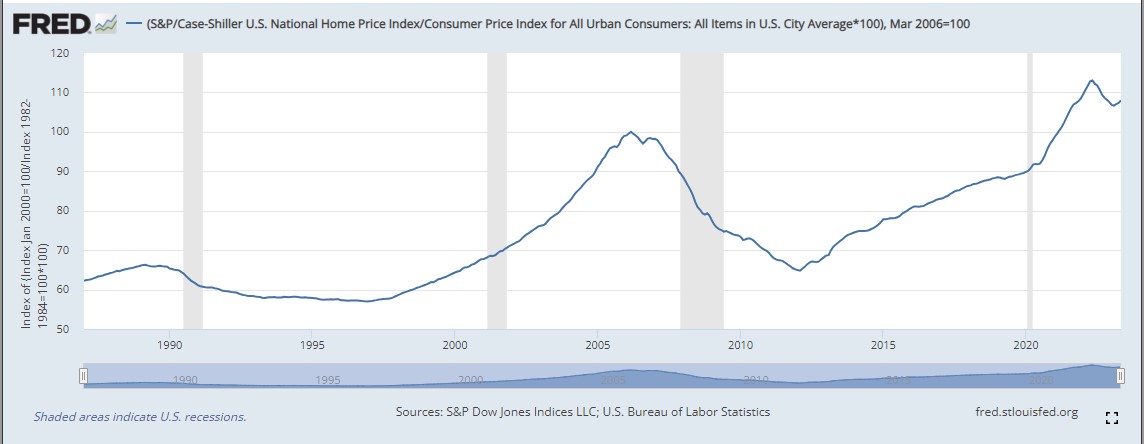
The consequences have been a marked slowdown in home sales, a decline in mortgage applications, and a deceleration in home price appreciation. Data from the National Association of Realtors (NAR) indicated a substantial drop in existing home sales year-over-year, often exceeding 20-30% in monthly comparisons. While outright price crashes have been localized rather than widespread, many markets have seen significant price corrections or prolonged periods of stagnant values. Builder sentiment, as measured by the NAHB/Wells Fargo Housing Market Index, has also waned due to higher borrowing costs for construction loans and reduced buyer demand, leading to a slowdown in new housing starts. This dynamic creates a challenging environment for both buyers facing high costs and sellers experiencing reduced market activity.
B. Business Investment and Employment Dynamics
Higher interest rates translate directly into increased borrowing costs for businesses, affecting everything from expansion plans to inventory management. Companies, particularly those heavily reliant on debt financing or venture capital, have begun to scale back investments in new projects, research and development, and hiring. The technology sector, which thrived in the low-rate environment with access to cheap capital, has been particularly affected. Major companies like Meta (Facebook) announced layoffs of over 10,000 employees, and Amazon shed more than 27,000 across its divisions in late 2022 and early 2023. This trend reflects a broader corporate deleveraging and a more cautious approach to growth in response to higher capital costs.

Despite these targeted layoffs, the broader U.S. labor market has shown remarkable resilience. The unemployment rate has remained near 50-year lows, hovering around 3.5-3.8% through 2023, consistently confounding economists who predicted a more significant weakening. Job growth, while moderating, has continued to be positive, and wage growth, though decelerating, has remained firm. This suggests that while some sectors are contracting, others continue to expand or maintain robust hiring, indicating a complex and uneven economic adjustment rather than a widespread downturn.
C. Consumer Finance and Savings
For consumers, the cost of credit card debt, auto loans, and personal loans has risen in tandem with the federal funds rate. Average credit card Annual Percentage Rates (APRs) have climbed to over 20%, exacerbating financial strain for households carrying balances. Auto loan rates have also seen significant increases, making new vehicle purchases more expensive.
Conversely, savers have benefited from higher yields on savings accounts, money market funds, and Certificates of Deposit (CDs), with many reputable banks and financial institutions offering rates of 4.5% or more—a welcome change after years of negligible returns. This has prompted some reallocation of funds from equity markets to more stable, interest-bearing assets, as the opportunity cost of holding cash has significantly decreased.

D. The 2023 Banking Crisis
The rapid ascent of interest rates also exposed vulnerabilities within the U.S. banking sector. In March 2023, the U.S. experienced a "miniature banking crisis" with the sudden collapse of Silicon Valley Bank (SVB), followed by Signature Bank and, later, First Republic Bank. These failures were largely attributed to interest rate risk mismanagement: many regional banks had invested heavily in long-duration, low-yield bonds (like U.S. Treasuries and mortgage-backed securities) during the low-rate era. As the Federal Reserve aggressively raised rates, the market value of these existing bonds plummeted, creating significant unrealized losses on bank balance sheets.
When depositors, particularly in the concentrated tech sector for SVB, began withdrawing funds rapidly, these banks faced severe liquidity crises, leading to classic bank runs and subsequent failures. The Federal Deposit Insurance Corporation (FDIC) and the Federal Reserve swiftly intervened to backstop deposits and provide emergency liquidity, preventing wider contagion across the financial system. This episode highlighted the systemic risks inherent in rapid monetary tightening and the need for robust risk management within financial institutions.
Economic Outlook and the Inverted Yield Curve
The immediate future of interest rates and the broader economy remains a subject of intense debate among economists and policymakers. The Federal Reserve has consistently stated that future rate decisions will be data-dependent, focusing on inflation trends, labor market conditions, and global economic developments. Their goal is to achieve a "soft landing"—a scenario where inflation returns to target without triggering a severe recession—but the path to this outcome is narrow and uncertain.
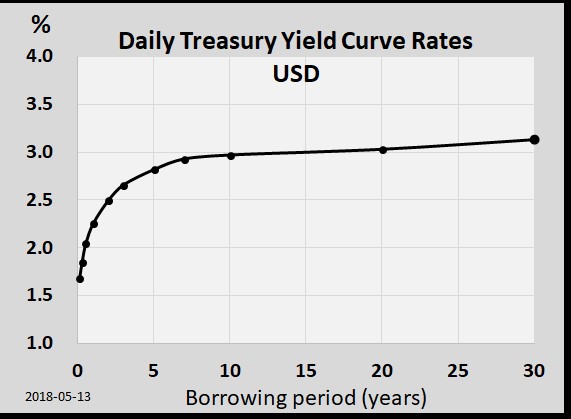
One of the most closely watched indicators for economic forecasting is the U.S. Treasury yield curve. Typically, longer-term bonds offer higher yields than shorter-term bonds to compensate investors for locking up their money for extended periods. However, since late 2022, the yield curve has been "inverted," meaning short-term Treasury yields (e.g., 1-year or 2-year) are higher than long-term yields (e.g., 10-year or 30-year). For example, as of August 2023, the 1-year Treasury yield might be around 5.4%, while the 10-year yield is closer to 4.05%.
An inverted yield curve is widely considered a reliable predictor of future economic slowdowns or recessions. Historically, it has preceded ten of the last eleven U.S. recessions over the past 75 years, often with a lead time of 12 to 18 months. This phenomenon suggests that bond market participants anticipate a future decline in interest rates, typically driven by the Fed’s response to an economic contraction. While not a perfect indicator, its consistent track record lends significant weight to forecasts of an economic downturn or at least a notable deceleration in the coming 18-24 months, which would likely prompt the Fed to begin cutting rates.
Economists from various institutions offer differing perspectives. Some, like those at Goldman Sachs, have raised the probability of a soft landing due to the resilience of the labor market. Others, including analysts at JPMorgan and the International Monetary Fund (IMF), maintain a more cautious outlook, emphasizing the lagged effects of monetary policy and the persistent risk of recession. The overall consensus is that while the economy has shown surprising strength, the path forward remains fraught with challenges, and the Fed’s delicate balancing act continues.
Strategic Considerations for Individuals and Businesses
In this evolving economic climate, individuals and businesses are re-evaluating their financial strategies to adapt to the new normal of higher interest rates.
A. Investing in a Higher-Rate Environment
For long-term investors, the fundamental principles of diversification and consistent investing (dollar-cost averaging) remain paramount. While higher savings rates offer attractive short-term returns, historical data consistently demonstrates that equities tend to outperform cash and bonds over extended periods. The current equity market, having experienced some corrections from its 2021-2022 peaks, may present buying opportunities for long-term growth. Financial advisors generally advise against attempting to "time the market" by moving in and out of stocks based on short-term rate fluctuations, as such strategies often fail to capture market rebounds and can lead to missed gains. A balanced portfolio aligned with one’s risk tolerance and investment horizon remains the most prudent approach.
B. Managing Debt
With borrowing costs elevated, prioritizing debt reduction, especially high-interest consumer debt like credit cards, becomes even more critical. Consumers with adjustable-rate mortgages (ARMs) or other variable-interest loans should carefully assess their financial situation and consider refinancing into fixed-rate options if feasible and advantageous, to secure payment stability. Businesses are also focusing on optimizing their capital structures, deleveraging, and managing debt loads more conservatively to mitigate the impact of increased financing expenses.
C. Housing Market Decisions
Prospective homebuyers face a challenging market with high mortgage rates and, in many areas, still elevated home prices. For those with existing low-rate mortgages (e.g., 3% or below), the incentive to sell and purchase a new home with a significantly higher interest rate is diminished, contributing to low inventory levels. This dynamic suggests that housing prices may stabilize or decline gradually rather than precipitously, as existing homeowners are less likely to move unless necessary. For those considering buying, careful financial planning, including stress-testing affordability at current and potentially higher future rates, is essential. The potential for future rate cuts could offer refinancing opportunities down the line, but this remains speculative.
D. The Importance of Financial Resilience
Regardless of market conditions, maintaining a robust emergency fund (typically three to six months of living expenses) and a lean financial lifestyle provides a critical buffer against economic uncertainties. Having liquid savings reduces reliance on high-interest borrowing, offers flexibility to seize opportunities (such as a potential dip in asset prices or a compelling real estate deal), and minimizes stress during periods of economic volatility. This proactive approach ensures that individuals and businesses are better positioned to navigate the unpredictable currents of interest rate cycles and broader economic shifts, rather than being reactive to external forces.
Conclusion
The rapid recalibration of U.S. interest rates represents a significant turning point for the economy, moving away from an era of historically cheap money. While the Federal Reserve’s aggressive stance has been effective in taming inflation, it has introduced new complexities and challenges across sectors, from housing and consumer credit to corporate investment and banking stability. The ongoing tug-of-war between persistent inflationary pressures and the risk of an economic downturn will continue to shape monetary policy and economic performance. As the economy adapts to this new normal, understanding these dynamics and adopting prudent financial strategies will be crucial for navigating the evolving landscape. The current environment underscores the cyclical nature of economic forces and the enduring importance of sound financial management in both periods of expansion and contraction.

