
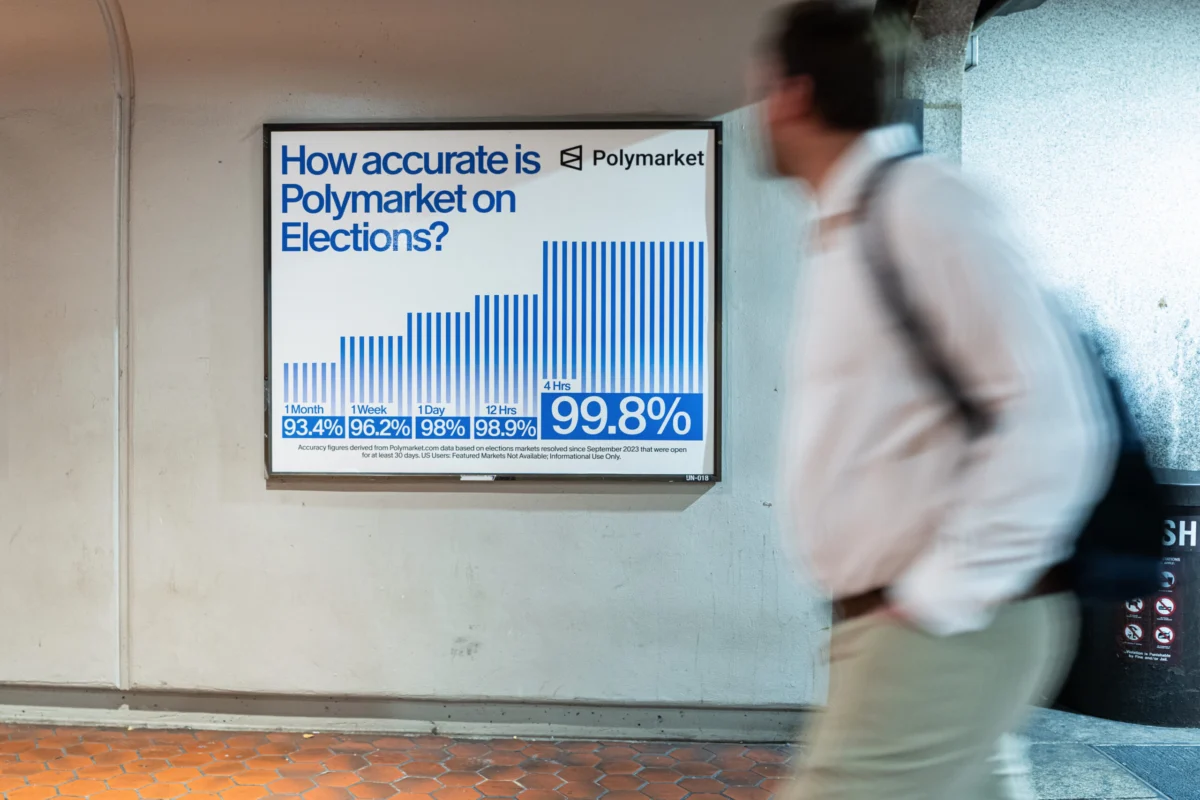
Prediction market platform Polymarket has announced a significant financial milestone, surpassing $1.8 billion in annualized revenue, a figure the company disclosed to CNBC on Tuesday. This latest achievement represents a substantial increase from its previously reported annual revenue run rate of over $1 billion in June, a surge largely attributed to the robust performance of its U.S. domestic exchange, which launched in May. The rapid expansion positions Polymarket as a major player in the evolving landscape of event-based forecasting, even as it navigates a complex web of regulatory investigations and heightened political scrutiny.
The Rise of Prediction Markets: A New Frontier in Information Aggregation
Prediction markets are platforms where users can bet on the outcome of future events, ranging from political elections and economic indicators to sports results and scientific breakthroughs. Unlike traditional betting, these markets often aim to aggregate information and provide a collective probability of an event occurring, with contract prices reflecting the market’s consensus on likelihood. Participants buy "shares" in a particular outcome, and if that outcome occurs, their shares pay out at a predetermined value, typically $1. The trading activity and price fluctuations on these platforms are believed by some to offer a more accurate forecast than polls or expert opinions, as they incentivize participants with financial rewards for accurate predictions.
The concept itself is not entirely new, with precursors like the Iowa Electronic Markets (IEM) having operated for decades, primarily for academic research. However, the advent of blockchain technology and decentralized finance (DeFi) has injected new life into the sector, enabling more transparent, efficient, and globally accessible platforms. Polymarket, initially built on blockchain technology, epitomizes this modern iteration, offering a diverse array of event contracts to a global user base. The allure of prediction markets lies in their potential to harness the "wisdom of the crowd," providing real-time, dynamic probabilities that adapt to new information. This characteristic has drawn interest from various sectors, including financial analysis, corporate strategy, and even public policy, where accurate forecasting can inform critical decisions.
Polymarket’s Journey: From Decentralized Roots to U.S. Market Dominance
Polymarket’s trajectory has been marked by both rapid innovation and significant regulatory challenges. Founded with a vision to democratize access to prediction markets, its initial platform operated within the decentralized finance (DeFi) ecosystem, allowing users worldwide to participate in a wide range of event contracts. However, operating in the largely unregulated DeFi space soon brought it into conflict with U.S. financial regulators.
- Early Regulatory Hurdles (Pre-2022): In its nascent stages, Polymarket’s international platform, accessible globally, also saw participation from U.S. residents. This exposure to U.S. customers, coupled with the nature of the event contracts offered, attracted the attention of the Commodity Futures Trading Commission (CFTC), the primary U.S. regulator for derivatives markets. The CFTC views many prediction market contracts as "swaps" or "futures contracts" under its jurisdiction, requiring platforms to be registered as designated contract markets (DCMs) or operate under specific exemptions.
- The 2022 Settlement: In January 2022, Polymarket reached a settlement with the CFTC, agreeing to pay a $1.4 million civil monetary penalty and to cease offering unregistered markets to U.S. persons. The CFTC order found that Polymarket had offered event contracts to U.S. residents that constituted illegal off-exchange commodity options, swaps, or futures, and that it was operating an unregistered facility for trading or processing swaps. This settlement was a pivotal moment, forcing Polymarket to re-evaluate its strategy for the U.S. market and leading to the eventual creation of a separate, compliant domestic entity.
- May 2026: Launch of the U.S. Domestic Exchange: In a strategic move to re-enter the lucrative U.S. market while adhering to regulatory frameworks, Polymarket launched its U.S. domestic exchange in May 2026. This platform operates as a distinct trading venue, separate from its decentralized international counterpart, and is designed to comply with U.S. regulations, likely operating under specific state-by-state licenses or as a registered entity with relevant federal authorities. This move was crucial, as it provided a legal pathway for U.S. residents to participate, unlocking a vast pool of potential users and capital.
- June 2026: Breaking the Billion-Dollar Barrier: Just a month after its U.S. launch, Polymarket announced an annualized revenue run rate exceeding $1 billion. This early success underscored the pent-up demand for legally accessible prediction markets in the United States and validated the company’s compliance-focused approach for the domestic market.
- Summer 2026: World Cup Boost: The summer months saw a significant boost in trading activity, largely fueled by major global events. The FIFA World Cup, a quadrennial international football tournament, proved to be a massive draw for users, with contracts on match outcomes, tournament winners, and even individual player performances generating substantial volume. This period demonstrated the platform’s ability to capitalize on high-profile cultural and sporting events.
- August 2026: Valuation Soars: Amidst its burgeoning revenue, Polymarket initiated a fresh $1 billion funding round in August 2026, targeting an impressive valuation of $21 billion. This valuation, typically reserved for established tech giants or rapidly expanding unicorns, signaled strong investor confidence in Polymarket’s business model and its future growth potential, despite the inherent regulatory complexities of the prediction market space.
- September 2026: NFL Season and Combo Contracts: The momentum continued into the fall with the commencement of the NFL season. American football consistently ranks as one of the most popular sports for betting and prediction in the U.S., and Polymarket’s platform saw a corresponding surge in activity. A key innovation driving this volume was the increasing popularity of "Combo event contracts," which function similarly to multi-leg parlays offered by traditional sportsbooks. These contracts allow users to combine multiple predictions into a single wager, offering higher potential payouts but also increased risk. On a recent Sunday, these Combo contracts accounted for over 70% of the platform’s traded volume, highlighting a significant user preference for more complex and potentially more rewarding prediction structures.
- October 2026: $14.5 Billion Notional Volume: The U.S. domestic exchange recorded more than $14.5 billion in notional volume in October, a dramatic increase from $4 billion in June, according to data analytics platform TickerTracker. This exponential growth in trading volume directly translated into the company’s annualized revenue surpassing $1.8 billion, cementing its position as a leading force in the prediction market industry.
The Engine of Expansion: U.S. Domestic Exchange and Market Dynamics
The U.S. domestic exchange’s remarkable growth is the primary driver behind Polymarket’s revenue surge. Unlike its international DeFi platform, which operates with minimal regulatory oversight in certain jurisdictions, the U.S. exchange is designed to function within a more structured and compliant environment. This distinction is critical, as it allows Polymarket to tap into the vast American market while attempting to mitigate regulatory risks. The success of the U.S. platform suggests that a regulated, accessible prediction market model can thrive, offering a compelling alternative to offshore or illicit betting sites.
The surge in notional volume—the total value of all contracts traded—from $4 billion in June to $14.5 billion in October reflects a rapidly expanding user base and increasing liquidity. This robust liquidity is crucial for any market, as it ensures efficient price discovery and allows users to enter and exit positions without significant price impact. The growth has been directly correlated with major cultural and sporting events, which serve as catalysts for user engagement. For instance, during the FIFA World Cup, users engaged in contracts predicting everything from specific match winners and scorelines to the overall champion and individual player accolades, generating intense trading activity. Similarly, the NFL season brings a weekly cadence of high-interest events, from game outcomes to player performance metrics, sustaining engagement over several months.
The innovation of "Combo event contracts" has also played a pivotal role in boosting volume. By allowing users to link multiple predictions, these contracts cater to a segment of the market that seeks higher risk-reward profiles, similar to how parlays operate in traditional sports betting. For example, a user might bet on the outcome of three separate NFL games, requiring all three predictions to be correct for a payout. This structure amplifies potential returns, making them highly attractive to experienced traders and casual users alike. The fact that these contracts accounted for over 70% of Sunday’s volume indicates a strong market preference for these sophisticated betting mechanisms, which enhance engagement and drive larger notional values.
Navigating Regulatory Scrutiny: A Cloud on the Horizon
Despite its impressive financial performance, Polymarket faces significant near-term headwinds, primarily stemming from intense regulatory and political scrutiny. The Commodity Futures Trading Commission (CFTC) is currently conducting a broad investigation into the company, raising concerns about its advertising practices and potential violations of its 2022 settlement with the agency.
- CFTC’s Broad Investigation: The ongoing CFTC probe extends beyond specific past actions, delving into Polymarket’s current operational practices. Regulators are reportedly examining whether Polymarket’s advertising campaigns are misleading or inappropriately target specific demographics. Concerns about advertising often revolve around ensuring clarity regarding the risks involved, distinguishing prediction markets from traditional investments, and preventing the promotion of unregulated activities.
- Alleged Violation of 2022 Settlement: A more serious aspect of the investigation involves whether Polymarket has, in the past, violated the terms of its 2022 settlement. That agreement explicitly barred the company from allowing U.S. residents to access its international, decentralized exchange. If evidence emerges that Polymarket failed to adequately enforce this ban or found loopholes to permit U.S. access, it could lead to severe consequences, including substantial new fines, stricter operating injunctions, and significant reputational damage. The CFTC views such violations seriously, as they undermine the integrity of regulatory agreements and challenge the agency’s authority. The CFTC’s mandate includes preventing market manipulation and ensuring fair and transparent trading, and any practices that obscure these principles are subject to rigorous examination.
- Congressional Oversight and Political Scrutiny: Polymarket also faces the prospect of increased scrutiny from a Democratic-controlled Congress. This intensified political interest is partially fueled by the involvement of Donald Trump Jr., son of former President Donald Trump, as an advisor to the company. The presence of a high-profile political figure in an advisory role for a prediction market platform, particularly one that often features contracts on political events, raises questions among lawmakers. Concerns could include potential for market manipulation, the blurring of lines between political discourse and financial speculation, and the broader implications for election integrity. Democrats may view prediction markets with skepticism, potentially categorizing them closer to gambling than legitimate financial forecasting, and could push for more stringent regulations or even outright bans on certain types of contracts, especially those related to political outcomes.
- Polymarket’s Response: In response to these mounting pressures, Polymarket has publicly stated its commitment to transparency and cooperation. A company spokesperson previously told CNBC, "We welcome scrutiny," indicating an intent to work with lawmakers and regulators to help them understand the evolving prediction market industry. This proactive stance aims to legitimize the sector and demonstrate Polymarket’s dedication to operating within established legal and ethical boundaries, despite the inherent tension between rapid technological innovation and slow-moving regulatory frameworks.
Broader Implications and The Future of Prediction Markets
Polymarket’s remarkable financial ascent, juxtaposed with intense regulatory and political challenges, highlights a critical juncture for the entire prediction market industry. The company’s $21 billion valuation, sought during its latest funding round, signifies robust investor confidence in the long-term potential of these platforms as tools for information aggregation and entertainment. This validation could spur further investment and innovation in the sector, attracting new players and fostering technological advancements.
However, the regulatory crackdown underscores the urgent need for a clear, consistent, and comprehensive regulatory framework for prediction markets in the United States and potentially globally. The ongoing debate centers on whether these platforms should be treated as legitimate financial instruments, akin to futures or options, or as forms of gambling. The CFTC’s stance often leans towards the former, emphasizing consumer protection, market integrity, and preventing manipulation. A lack of clarity creates an environment of uncertainty, hindering sustained growth and potentially pushing innovative platforms into legal gray areas or offshore jurisdictions.
The political dimension, particularly the involvement of figures like Donald Trump Jr., adds another layer of complexity. It elevates prediction markets from a niche financial topic to one with broader political and ethical implications. Lawmakers will likely grapple with questions concerning the impact of these markets on public discourse, the potential for political influence, and the protection of democratic processes. The industry will need to demonstrate its value beyond mere speculation, perhaps by showcasing its utility in accurate forecasting for public good or providing robust mechanisms against manipulation and insider trading.
For Polymarket, the path forward involves not only sustaining its impressive growth but also demonstrating unwavering commitment to compliance and transparency. Proactive engagement with regulators, clear communication about its operational safeguards, and possibly self-regulatory initiatives could be crucial in shaping a more favorable regulatory environment. The success of its U.S. domestic exchange offers a blueprint for how prediction markets can thrive under a more regulated structure, but the company must prove its ability to navigate the complexities without compromising market integrity or consumer trust. The outcome of the current investigations will undoubtedly set precedents for the entire industry, determining whether prediction markets evolve into a mainstream financial and informational tool or remain a contentious, tightly regulated niche.
Disclosure: CNBC and Kalshi have a commercial relationship that includes customer acquisition and a minority investment.

