

In the current landscape of the American Northeast, mid-career professionals are increasingly finding themselves at a crossroads between robust career earnings and the persistent pressure of consumer debt and rising housing costs. A recent comprehensive financial analysis of a household in central Connecticut, comprising 34-year-olds Brian and Michael, highlights the systemic challenges faced by the "millennial" demographic as they attempt to transition from high-end rentals to permanent homeownership. Despite a combined gross annual household income exceeding $167,000, the couple remains encumbered by approximately $28,259 in high-interest consumer debt, a situation exacerbated by a volatile rental market and unexpected emergency expenses. This case study serves as a microcosm of the broader economic pressures within the state of Connecticut, where high utility rates and a competitive real estate market necessitate rigorous fiscal discipline.

Financial Profile and Household Composition
The household is anchored by two stable careers within the state’s public and behavioral health sectors. Brian serves as a quality assurance manager for a state-run hospital, a position that affords him a "triple crown" of retirement benefits, including a 403(b), a 457(b) plan, and a state pension. Michael operates as a project coordinator for a state behavioral health agency focused on youth services, supplemented by a secondary role as a disability leadership coordinator and advocate. Their professional stability provides a net annual income of $109,455.42 after taxes and pre-tax retirement deductions.
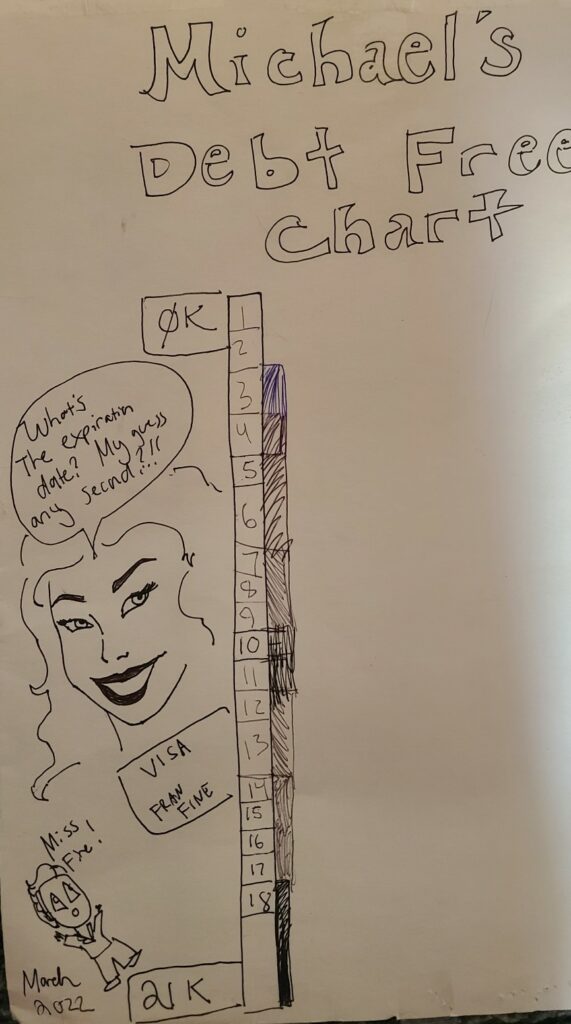
Despite this solid income base, the couple’s balance sheet reflects a significant reliance on credit. As of late 2023, their total debt stands at $28,259, distributed across three primary credit vehicles: a $16,057 balance on a Visa card with a 0% introductory rate set to expire in November 2023, a $9,700 balance on a Visa Platinum card with a 10.99% interest rate, and a $2,503 balance on a Navy Federal Visa with a 0.99% rate also expiring in November. Their total assets are valued at $91,250, though the vast majority of this capital is locked in retirement accounts, leaving them with only $9,000 in liquid emergency savings—a sum that covers barely one month of their current $8,035 monthly expenditure.

Chronology of Financial Destabilization (2022–2023)
The current financial strain is the result of a series of compounding events that occurred over an eighteen-month period. Prior to August 2022, the couple resided in a 600-square-foot studio apartment with a monthly rent of $945. This low overhead allowed for aggressive debt repayment, including Brian’s successful elimination of $58,000 in student loans. However, two primary catalysts disrupted this trajectory:
- Housing Displacement: An unplanned departure from their long-term residence forced the couple into a volatile 2022/2023 rental market. After a three-and-a-half-month search, they relocated to a two-bedroom, two-bathroom luxury apartment in a refurbished industrial mill. While the new space provided necessary room for professional home offices, the rent increased by over 110%, rising to $2,000 per month.
- Veterinary Emergencies: Concurrent with the move, the household adopted two kittens that required significant medical intervention. The resulting veterinary bills, combined with the logistical costs of uprooting an eight-year residency, led to the accumulation of the current $28,000 consumer debt load.
By the third quarter of 2023, the couple reported a sense of "financial shame," noting that despite their professional achievements, they felt behind their peers in terms of asset accumulation and the milestone of homeownership.

Supporting Economic Data and State Context
The challenges faced by Brian and Michael are reflective of broader economic trends in Connecticut. According to data from the Missouri Economic Research and Information Center (MERIC), Connecticut consistently ranks among the top ten states for the highest cost of living, particularly regarding utilities and housing. The couple’s electricity expenditure of $235 per month, despite attempts to utilize third-party suppliers, underscores the high-rate environment of the New England energy grid.
Furthermore, the "millennial debt cycle" identified in this case—where periods of aggressive repayment are followed by "lifestyle creep" or emergency-driven borrowing—is a documented phenomenon. A 2023 report on consumer credit suggests that mid-career professionals often struggle with the "famine or feast" mentality, where the psychological relief of paying off one debt leads to lowered inhibitions regarding discretionary spending on "treasures" or home goods.

Strategic Debt Mitigation and Expense Categorization
To address the impending interest rate hikes on their credit cards, financial analysts recommend a rigorous "spending detox." By categorizing expenses into Fixed, Reducible, and Discretionary, the household can identify immediate liquidity.
Fixed and Essential Costs
The couple’s fixed costs, including rent ($2,000), Brian’s essential car repairs and commuting costs ($1,064), and pet maintenance ($517), total roughly $3,581. These are non-negotiable for maintaining their current employment and household health.
Reducible Expenses
Areas such as groceries ($469) and internet ($107) offer moderate opportunities for optimization. In high-cost regions like Connecticut, shifting grocery habits toward bulk purchasing or discount retailers can often shave 10-15% off monthly food costs.
Discretionary Spending Analysis
The most significant opportunity for debt elimination lies in the $1,150 currently spent on discretionary items, including dining out ($200), gifts ($260), home goods ($200), personal care ($180), and various entertainment subscriptions. Analysts suggest that by temporarily eliminating these costs, the couple could increase their monthly debt-payoff capacity to $4,456. At this accelerated rate, the $28,259 debt could be liquidated in approximately 6.5 months, effectively insulating the couple from the 17.99% interest rates scheduled to trigger in November.

Long-Term Implications for Retirement and Asset Diversification
A critical component of this case study is the role of public sector employment in long-term financial security. Brian’s access to a state pension and dual tax-advantaged accounts (403b and 457) provides a safety net that is increasingly rare in the private sector. The 457(b) plan, in particular, offers a unique advantage: it allows for penalty-free withdrawals upon separation from service, regardless of age, making it an ideal vehicle for those considering early retirement or a career pivot.
However, the analysis suggests that homeownership should remain a secondary priority until two conditions are met:

- Elimination of Consumer Debt: Carrying high-interest debt while taking on a mortgage creates a "debt-on-debt" scenario that can lead to foreclosure in the event of a job loss.
- Establishment of a Robust Emergency Fund: With a current monthly burn rate of $8,035, a standard six-month emergency fund would require $48,210 in liquid cash. The current $9,000 balance is insufficient to protect against the "predictable emergencies" of homeownership, such as roof repairs or HVAC failure.
Professional Development and the "Master’s Degree Trap"
The case also touches upon the common professional dilemma of pursuing advanced education. Brian expressed interest in a master’s degree to achieve "academic success." From a purely journalistic and financial perspective, the ROI (Return on Investment) on graduate degrees is highly variable. Current labor market data suggests that unless a degree is a prerequisite for a specific salary grade increase within the state system, the "opportunity cost"—the combination of tuition fees and lost time—often outweighs the benefits. For a household already struggling with consumer debt, further educational debt could prove catastrophic to their goal of owning rural land.
Broader Impact and Conclusion
The financial trajectory of Brian and Michael serves as a vital lesson in the importance of "middle-path" economics. The transition from a studio apartment to a luxury mill reflects a desire for "age-appropriate" living, yet the timing of this transition, coupled with a lack of liquid reserves, created a vulnerability that was exploited by unplanned life events.

The path forward for this Connecticut couple—and many like them—requires a shift from reactive financial management to proactive, goal-aligned spending. By leveraging their high household income and unique state benefits, they are well-positioned to achieve debt freedom by mid-2024. However, the lasting legacy they seek will depend on their ability to resist the "feast and famine" cycle and instead adopt a sustainable, moderate lifestyle that prioritizes asset accumulation over discretionary consumption. As the regional housing market remains tight, the ability to deploy cash quickly will be the determining factor in whether they can move from their "industrial treasure" of an apartment to the "earth of their own" they desire.

