
The global stock market currently exhibits a pronounced surge, driven significantly by the burgeoning field of Artificial Intelligence (AI). This rapid ascent to unprecedented valuations has sparked considerable debate and apprehension among investors and economic observers, drawing comparisons to historical market frenzies and potential "bubbles." The central question resonating across financial circles is whether the current AI-fueled boom is sustainable or portends an impending, significant market correction. This article delves into the dynamics of the current market climate, examines historical precedents, and explores the psychological underpinnings of investor behavior amidst periods of intense technological disruption and speculative growth.

The Genesis of the AI Boom and Market Enthusiasm
The current AI phenomenon is characterized by several key developments. Firstly, there has been an extraordinary proliferation of advanced AI models, notably large language models (LLMs) and generative AI, which have demonstrated capabilities far exceeding previous iterations. These models are not only performing complex tasks but are also creating content, code, and insights with remarkable speed and accuracy. Secondly, the market has witnessed a surge in investment and innovation across the AI sector, attracting massive capital into both established technology giants and nascent startups. Companies developing AI hardware, software, and services are experiencing exponential growth in valuation. Thirdly, and perhaps most significantly, there is a widespread societal recognition of AI’s transformative potential. Experts and enthusiasts alike foresee AI revolutionizing industries ranging from healthcare and finance to manufacturing and creative arts, promising unprecedented gains in efficiency and productivity.

This confluence of technological advancement, investment fervor, and broad societal anticipation has propelled the stock market to record highs. However, this bullish sentiment is tempered by a pervasive concern: is the market’s enthusiasm for AI too much, too fast? Many fear that the current valuations reflect a speculative bubble, akin to the dot-com boom of the late 1990s, which ultimately culminated in a severe market downturn in the early 2000s. For those who experienced that period, the parallels evoke a sense of déjà vu, raising anxieties about the potential for a similar, if not larger, market collapse.
Historical Context: Lessons from Past Bubbles and Market Cycles

Market history is replete with examples of technological revolutions driving periods of intense speculation, followed by corrections. Understanding these cycles is crucial for contextualizing the current AI-driven market.
The Dot-Com Bubble (Late 1990s – Early 2000s): This era saw a dramatic surge in internet-related companies, many with unproven business models or minimal revenue, attracting exorbitant valuations. Investors poured capital into anything with ".com" in its name, driven by the belief that the internet would fundamentally change commerce. The NASDAQ Composite Index soared, peaking in March 2000. However, the bubble burst shortly thereafter, leading to a prolonged bear market where countless internet companies failed, and billions in investor wealth evaporated. The subsequent crash highlighted the dangers of speculative excess and the importance of fundamental value.
The Housing Bubble and Great Financial Crisis (Mid-2000s): Just a few years later, another significant economic crisis emerged from a different sector: real estate. Fueled by lax lending standards, subprime mortgages, and complex financial instruments, housing prices escalated unsustainably. The belief in perpetually rising home values led to excessive borrowing and speculation. When the housing market eventually turned, it triggered a cascade of defaults, leading to the collapse of major financial institutions and the deepest recession since the Great Depression. This period underscored the interconnectedness of financial markets and the systemic risks posed by unchecked speculation and leverage.
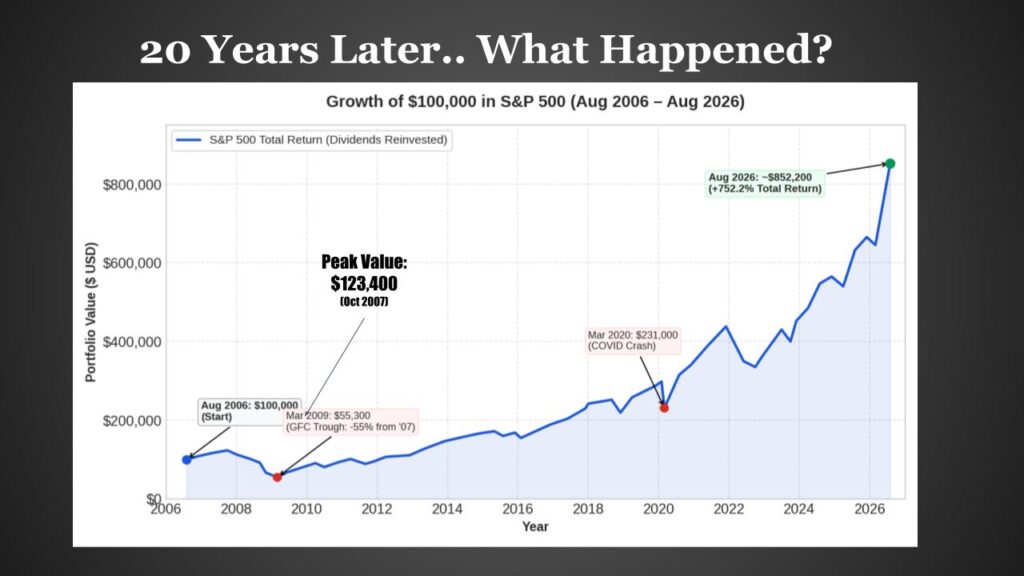
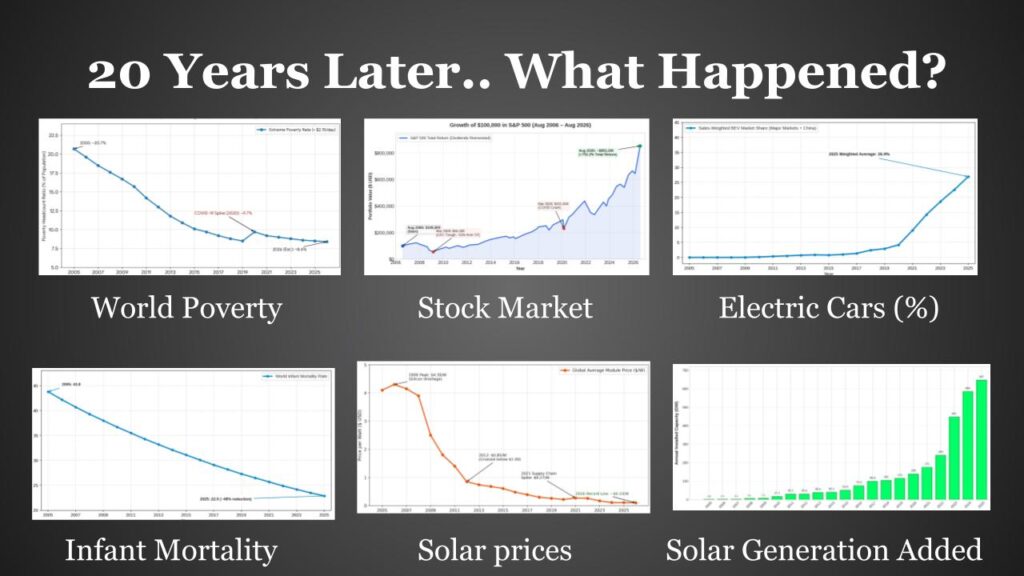
Despite the severity of these crises, a long-term perspective reveals a remarkable resilience in the broader market. For instance, a hypothetical $100,000 investment in a diversified market index in 2006, even accounting for the Great Financial Crisis and the subsequent COVID-19 pandemic-induced crash of 2020, would have significantly appreciated over the ensuing two decades, illustrating the market’s capacity for recovery and sustained growth over time.
Beyond Financial Worries: Global Progress and Human Resilience
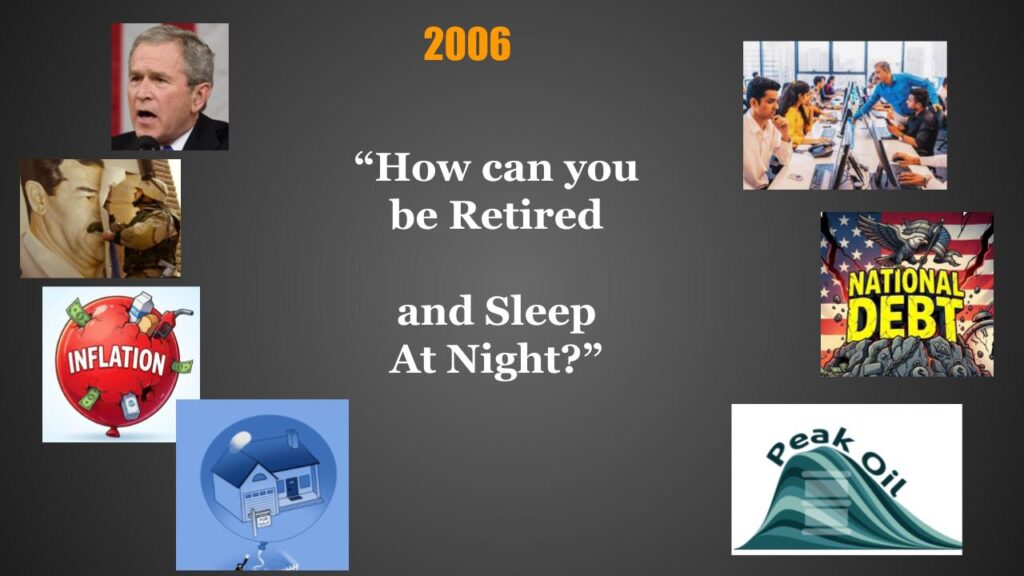
The narrative of perpetual worry often overlooks the significant advancements in global well-being that have occurred concurrently with market fluctuations. Concerns about political instability, inflation, national debt, and various geopolitical conflicts are ever-present. For example, in 2006, prevalent anxieties included leadership figures like George W. Bush and Saddam Hussein, the Iraq War, rising national debt, and the housing bubble. A unique concern of that era was "Peak Oil," a theory positing that global oil production would reach a maximum and then decline, leading to energy scarcity and economic collapse. Ironically, technological innovations in extraction and the rise of renewable energy sources largely mitigated these fears, with the world moving towards greater energy independence and cleaner alternatives.
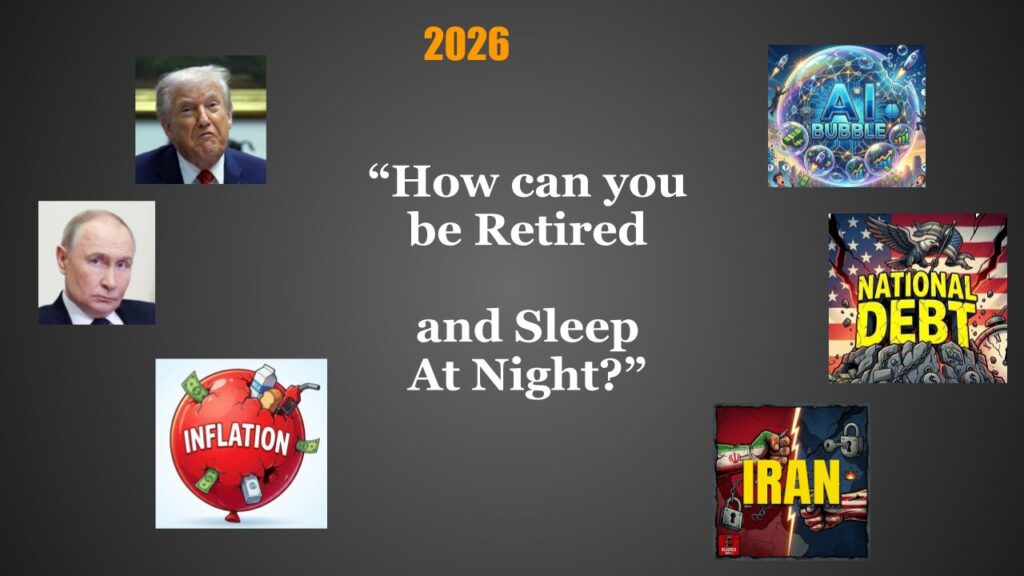
Fast forward twenty years, and while the specific threats have evolved (e.g., Trump, Putin, AI bubble, Ukraine war), the underlying human tendency to focus on potential dangers remains constant. Yet, alongside these anxieties, significant global progress has been achieved:
- Poverty Reduction: The proportion of people living in extreme poverty globally plummeted from approximately 20% in 2005 to around 8% two decades later, a testament to economic development and targeted interventions.
- Health Improvements: Infant mortality rates (deaths in the first year of life) were halved during the same period, reflecting advances in healthcare, sanitation, and nutrition.
- Clean Energy Revolution: Solar panel costs decreased by an estimated 40-fold, making solar energy increasingly competitive. In recent years, solar power has accounted for the vast majority of new electricity generation capacity added worldwide, equivalent to hundreds of nuclear power plants in peak capacity.
- Electric Vehicle Adoption: Sales of pure electric vehicles, virtually non-existent in 2005, now constitute roughly a quarter of all new cars sold globally, with some nations like Norway approaching 100% adoption, signaling a major shift in transportation.
These broad trends underscore a fundamental principle often obscured by short-term financial anxieties: real prosperity and progress are rooted in human ingenuity, innovation, and increased productivity. Financial systems, while critical for capital allocation, are ultimately constructs that reflect underlying economic activity. Even in the event of a significant market downturn, the physical and intellectual capital that drives innovation and productivity remains.
Productivity: The Unseen Engine of Prosperity
At the core of sustained economic growth and rising living standards lies productivity. Prosperity is not merely a function of financial markets or abstract numbers on computer screens; it is derived from the real work of individuals, the development of new tools, and the continuous improvement of processes. When society invents tools that enable more output with the same or less input, it generates wealth. The current AI revolution is poised to be a significant driver of productivity. Analogized as a "Cognitive Nail Gun," AI offers an unprecedented ability to automate complex cognitive tasks, enhance decision-making, and accelerate innovation across virtually all sectors.

While AI’s disruptive potential, including job displacement in areas like entry-level office work, driving, and even some creative fields, is a legitimate concern, history suggests that technological revolutions also create new industries, new job categories, and ultimately, a higher overall standard of living through cheaper goods and services. The internet, smartphones, and mobile applications, for instance, initially displaced some traditional jobs but subsequently spawned entirely new multi-trillion-dollar industries and millions of new employment opportunities. The challenge lies in managing the transition and ensuring that the benefits of increased productivity are broadly distributed. Currently, the rewards of AI innovation tend to concentrate among the owners of these technologies and their shareholders, including many diversified investors.
The Psychology of Fear and Rationality in Investment
Amidst the enthusiasm and trepidation surrounding the AI boom, human psychology plays a critical role. Fear, an evolutionary trait designed for survival, often manifests as a "danger detection machine" in modern life, frequently overriding rational thought. This inherent bias can lead investors to make suboptimal decisions, such as selling during downturns or avoiding investment during periods of perceived high risk, thereby missing out on long-term gains.
This fear is often amplified by media narratives, which tend to prioritize alarming stories over long-term positive trends, contributing to a "doom-scrolling" mentality. To counteract this, a conscious effort is required:

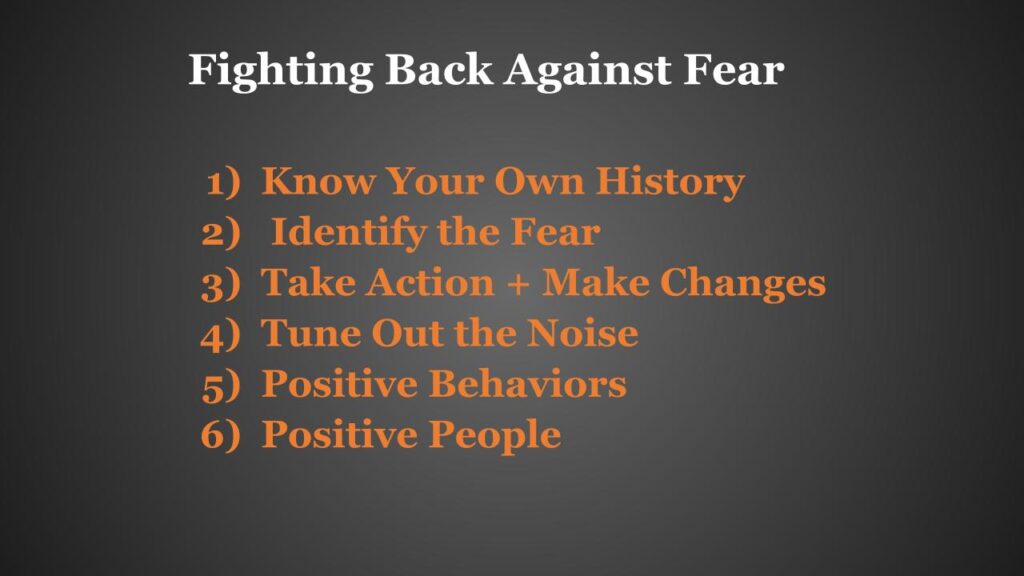
- Self-Awareness: Understanding personal biases and past experiences (e.g., childhood scarcity, trauma) that might fuel irrational financial fears.
- Fear Identification and Analysis: Articulating specific fears and examining worst-case scenarios often reveals that perceived outcomes are less catastrophic than initially imagined.
- Action as an Antidote: Proactive learning and taking calculated steps (e.g., diversifying investments, building emergency funds) can build confidence and "resilience," diminishing the power of fear.
- Curated Information Diet: Minimizing exposure to sensationalist news and seeking out well-researched, objective information from reliable sources can mitigate psychological distress.
- Positive Social Engagement: Surrounding oneself with optimistic, solution-oriented individuals can foster a more constructive mindset.
Ultimately, approaching significant changes like the AI era with a mindset of "Everything is an Experiment" can transform fear into fascination and opportunity. This perspective encourages learning, adaptation, and proactive engagement rather than paralysis. For investors, this translates into focusing on long-term goals, maintaining diversified portfolios, and understanding that market fluctuations are an inherent part of the investment landscape, rather than signals of impending doom.
Conclusion: A Balanced Outlook for the Future
The current AI boom, with its dizzying valuations and transformative potential, presents a complex challenge for investors. While the specter of a market bubble looms large, drawing parallels to historical events like the dot-com bust and the housing crisis, a comprehensive view necessitates acknowledging both the cyclical nature of markets and the underlying resilience of human ingenuity and progress.
Real prosperity stems from productivity, and AI, as a powerful new tool, is poised to dramatically enhance human capabilities and drive future economic growth. While it will undoubtedly bring disruption and require societal adaptation, the long-term trajectory of technological advancement suggests a future of increased efficiency and innovation.

For individuals, navigating this landscape requires not only financial prudence but also psychological fortitude. By understanding the historical context of market cycles, focusing on the fundamental drivers of prosperity, and consciously managing fear through self-awareness and proactive engagement, investors can adopt a more balanced and optimistic outlook. The journey through any significant technological or economic shift is inherently an experiment, but one that, informed by history and tempered by rational thought, offers considerable potential for growth and improved well-being. The greatest barriers to seizing future opportunities often lie not in external circumstances, but in the internal landscape of our fears.

