

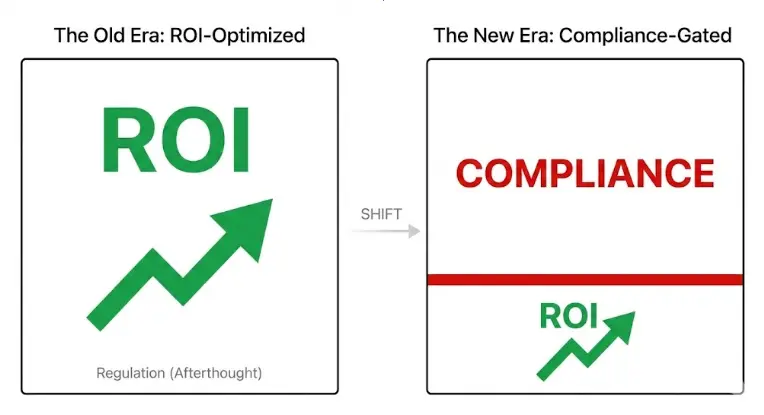
For nearly a decade, the short-term rental (STR) investment landscape operated under a model akin to a digital gold rush. Investors meticulously optimized for nightly rates, occupancy curves, and the intricate algorithms of booking platforms. If the projected financial numbers aligned, the deal was deemed viable, with regulatory considerations often relegated to a secondary concern, a mere checkbox to be ticked somewhere between securing financing and furnishing the property. This era, characterized by a focus on maximizing yield with a de-emphasis on legal frameworks, has decisively concluded.
Today, STR regulation has transcended its status as a minor legal hurdle, evolving into a terminal underwriting risk. A single vote by a city council can overnight eliminate non-owner-occupied rentals, a critical segment for many investors. The imposition of a newly enforced permit cap can instantly freeze the introduction of new supply into a market, drastically altering the competitive landscape. Furthermore, an aggressive enforcement cycle can quietly but effectively collapse occupancy rates across an entire zip code, rendering previously profitable ventures unviable. In this dynamic and increasingly regulated environment, the pursuit of yield without a foundational layer of legality is a precarious illusion. This fundamental shift profoundly impacts PropTech platforms, marketplaces, analytics dashboards, and STR lending engines. Compliance can no longer be a peripheral consideration addressed through blog posts or manual research; it must be integrated as a programmatic underwriting input.
The API as a Policy Enforcement Engine
In the context of real estate compliance, an Application Programming Interface (API) functions as far more than a simple conduit for data exchange. It serves as the essential infrastructure for automated policy enforcement. When discussions turn to "staying compliant by city," the imperative is to translate the complex and often voluminous local municipal codes into a single, executable logic gate that can be applied systematically across numerous properties and markets. This programmatic approach is vital for managing the inherent complexities of diverse and ever-changing regulatory landscapes.
Deterministic vs. Probabilistic Data: The Compliance Threshold
A critical distinction within real estate technology lies in the difference between probabilistic modeling and deterministic data. Historically, most PropTech platforms have relied on probabilistic data, which involves estimations, inferred classifications, and Automated Valuation Models (AVMs). While such data can be acceptable for return on investment (ROI) calculations where a degree of estimation is permissible, it presents a significant liability when applied to compliance.
Probabilistic data operates on "likelihoods." For instance, it might infer that a property is a single-family home based on its square footage or its neighborhood profile. However, if a city ordinance explicitly bans STRs in multi-family units while permitting them in single-family homes, a "likely" classification is insufficient and carries substantial risk.
Conversely, deterministic data is underpinned by authoritative records such as tax assessments, deed filings, and official land-use codes. For a platform to function as a true underwriting tool, its API must provide these deterministic metadata points. Compliance demands a binary "Yes" or "No" determination based on legal truth. When a platform relies on inferred data for compliance, it exposes its users to catastrophic capital risk. If an institutional investor deploys tens or hundreds of millions of dollars into a market based on "probable" eligibility, and that metadata proves incorrect, the entire portfolio’s cash flow can be eradicated by a single enforcement letter. The potential for such outcomes has grown as regulatory bodies become more sophisticated in their enforcement mechanisms.
The "Ghost Listing" Problem and Enforcement Signals
Standard real estate APIs also struggle to address the "Ghost Listing" problem. In markets undergoing aggressive regulatory crackdowns, thousands of listings may remain "active" on booking platforms even after their legal permits have been revoked. This can create a misleading impression of a robust market.
If a platform solely tracks active listings, it might report a healthy, thriving market. In reality, that market could be experiencing a significant "supply contraction" driven by regulatory actions. A compliance-aware API must provide more than a static snapshot; it must offer insights into historical performance trends. By cross-referencing a sudden drop in supply with sustained demand, platforms can detect an "enforcement signal."
For example, if the number of active rentals in a specific zip code declines by 40% within a single quarter, while nightly rates remain high, it is rarely indicative of market failure. Instead, it strongly suggests a widespread regulatory "clean sweep." Platforms capable of programmatically identifying these signals empower their users to avoid entering markets where the "door is closing," even if the current ROI appears attractive on the surface. This predictive capability is becoming increasingly valuable as regulatory environments become more volatile.
Turning Ordinances Into Logic
To automate compliance effectively, platforms must translate complex and often ambiguously worded legal language into structured, queryable data. At a practical level, most STR regulations can be categorized into three core operational "guardrails":
-
Zoning & Property-Type Restrictions
Many municipalities impose restrictions on STRs based on building classification. By utilizing property-level metadata, a platform can automatically flag ineligible property classes or exclude restricted asset types from search results. This ensures that users are presented only with legally viable inventory, significantly reducing the risk of investing in non-compliant properties. This is particularly crucial in cities with intricate zoning laws that may differentiate between single-family homes, duplexes, or apartment buildings, each with its own set of STR permissibility.
-
Residency & Ownership Mandates
A growing number of cities are implementing regulations that permit STRs only if the property is owner-occupied. By leveraging ownership indicators within the property dataset, a platform can transition from purely "ROI modeling" to "operational viability modeling." This represents a fundamental shift: the difference between a tool that tells you what you could earn and a tool that tells you what you’re allowed to earn. For example, a property might appear highly profitable based on rental income projections, but if it fails the owner-occupancy test in a key market, its actual earning potential is zero under that specific ordinance. -
Market Saturation & Permit Caps
Some cities regulate STRs through strict permit caps, effectively limiting the total number of available licenses. While ordinance databases define the official limits, performance trends can reveal the real-world enforcement patterns and the practical impact of these caps. This is where a platform moves beyond static data to provide predictive risk modeling. Understanding not just the stated cap but also the rate at which permits are issued and revoked, or the historical data on permit availability, offers crucial foresight into market dynamics and potential future restrictions. For instance, knowing that a permit cap is at 100 units and 95 are currently issued is less informative than knowing that the last 5 permits were issued over a year ago, indicating market saturation and potential difficulty in acquiring new permits.
Technical Architecture: Building the Compliance Layer with Mashvisor
If compliance is to be an integral underwriting input, it must reside within the platform’s core architecture. By leveraging structured data from sources like Mashvisor, platforms can feed their own validation frameworks with the necessary intelligence.
A compliance-aware underwriting engine can be constructed by integrating various API endpoints that expose deterministic property metadata and historical rental performance data. This layered approach ensures that multiple facets of compliance are addressed systematically.
Phase 1: The Eligibility Filter (Property Info)
The foundational data pull involves querying an endpoint like GET /v1.1/client/property. When a user selects a listing, the platform retrieves the comprehensive "Property Object." This object contains critical deterministic attributes such as property_type (e.g., single-family, condo, multi-family), occupancy_status (e.g., primary residence, vacation home, vacant), and zoning_classification. These data points are directly mapped to common STR ordinance requirements, allowing for an immediate programmatic assessment of basic eligibility. This initial filter is crucial for quickly eliminating properties that are inherently non-compliant based on their fundamental characteristics, thereby saving significant time and resources.
Phase 2: Ownership & Residency Screening (Property Ownership)
Where cities mandate primary residence status for STR operations, the platform needs to evaluate ownership indicators. An endpoint such as GET /v1.1/client/owner/contact can provide essential information, including the owner’s mailing address. By comparing this mailing address with the property’s address, the system can determine if the owner is likely an absentee owner, which is often a disqualifying factor in owner-occupied STR regulations. This programmatic verification is vital for scaling operations, especially for institutional investors evaluating large portfolios where manual checks are impractical and prone to error. The deterministic nature of this data ensures a reliable basis for decision-making.
Phase 3: Regulatory Pressure Detection (Rental Activity Data)
Static rules, codified in ordinances, capture what is written. However, trend data captures what is actually happening on the ground. An endpoint like GET /v1.1/client/rento-calculator/historical-performance provides access to this crucial dynamic data. This includes metrics such as the number of active listings, occupancy rates, nightly rates, and revenue trends over time for a given market or sub-market. By analyzing these historical performance trends, platforms can identify "enforcement signals"—sudden shifts in supply or demand that often correlate with increased regulatory scrutiny or enforcement actions. This provides a forward-looking perspective, allowing investors to anticipate potential regulatory shifts rather than merely reacting to them. For example, a sudden drop in available listings alongside sustained demand and high pricing can indicate a wave of permit revocations or new restrictions.
Case Study: Institutional Underwriting for a Multi-Market REIT
Consider a Real Estate Investment Trust (REIT) targeting the Florida market, specifically Miami, a city known for its dynamic STR ordinances that carry significant fiduciary implications. For a REIT, compliance is not merely a legal objective; it is a paramount capital markets requirement. Their investment committee (IC) mandates an audit-traceable risk framework before any institutional capital is deployed.
Step 1: The Metadata "Gateway"
The underwriting workflow commences by querying GET /v1.1/client/property to retrieve the high-fidelity Property Object. In a traditional workflow, an analyst would spend hours manually sifting through a city’s GIS website and various municipal databases. Programmatically, the system assesses critical fields like property_type and occupancy_status within milliseconds. If the property is flagged as a "Second Home" in a zone that strictly requires primary residency for STR operations, the potential investment is immediately disqualified, preventing it from consuming further analyst resources.
Step 2: Ownership & Residency Verification
Next, the platform verifies the owner’s details via GET /v1.1/client/owner/contact. The system extracts the mailing address of the owner and cross-references it with the subject property’s address. For a REIT, this programmatic check is essential for achieving the necessary scale of due diligence. Evaluating a portfolio of 50 properties would be logistically impossible through manual verification. The API provides the deterministic proof required for the IC memo, substantiating the residency status of the owner in accordance with local regulations.
Step 3: Market Contraction & Enforcement Analysis
The platform then queries GET /v1.1/client/rento-calculator/historical-performance. If the data reveals a sharp and unexplained decline in active listing counts over recent quarters, the REIT identifies a significant "Regulatory Pressure" signal. This proactive identification allows the REIT to pivot its capital allocation towards more stable micro-markets or to re-evaluate its investment strategy in the affected area, thereby preserving capital in the face of municipal volatility and potential regulatory crackdowns. This data-driven approach mitigates the risk of investing in markets on the cusp of significant regulatory change.
Step 4: Output — The Unified Underwriting Score
The platform aggregates these Mashvisor data points into its proprietary decision engine, generating a comprehensive underwriting score.
| Metric | Mashvisor API Source | Value |
|---|---|---|
| Projected ROI | Investment Analysis | 8.2% |
| Zoning Match | Property Info (property_type) |
Pass (Single Family) |
| Residency Match | Property Ownership (mailing_address) |
Fail (Absentee Owner) |
| Market Pressure | Historical Performance Trends | High (Supply contraction observed) |
The Result: The system generates a definitive "No-Buy" signal. This fully automated and programmatic workflow ensures that every potential deal in the pipeline rigorously adheres to the REIT’s stringent fiduciary standards for operational certainty and legal compliance. This level of automated due diligence is no longer a luxury but a necessity for institutional capital.
Compliance as a Fiduciary Guardrail
As short-term rentals mature from opportunistic retail plays into a recognized institutional asset class, the demand for repeatable risk frameworks has shifted from a "nice-to-have" feature to a fundamental capital markets requirement. For institutional funds, compliance serves as the ultimate fiduciary guardrail, protecting both the fund’s assets and its investors’ capital.
Lenders and capital partners are increasingly sensitive to "regulatory drift"—the phenomenon where an asset is purchased under one legal framework but subsequently becomes "orphaned" by a new or evolving one. In this high-stakes environment, a platform’s reliance on manual research or vague "best-effort" disclaimers is no longer acceptable. Institutional underwriting demands an audit-traceable data lineage that can withstand rigorous scrutiny.
By leveraging deterministic property metadata and real-time performance signals, platforms can provide a digital paper trail for every investment decision. When a lender inquires about the rationale behind approving a specific asset for a high-leverage loan, the platform can precisely point to the specific Mashvisor-backed occupancy_status and property_type indicators that demonstrably matched the city’s ordinance at the time of underwriting. This transforms compliance from a mere legal burden into a critical liquidity feature, making assets demonstrably more attractive to risk-averse institutional buyers who prioritize certainty and defensibility in their investment decisions. This transparency and audibility are key to unlocking institutional capital.
Conclusion: From ROI to Operational Viability
The short-term rental market has decisively moved past its "growth at all costs" phase. In this new, more mature landscape, the most sophisticated calculation is no longer how much a property could generate in revenue, but rather whether it is legally allowed to operate. For PropTech platforms, this represents a fundamental evolution in their product category and value proposition.
By integrating deterministic property metadata and real-time performance signals directly into the underwriting workflow, platforms transcend their role as simple ROI calculators. They become essential risk infrastructure, tools that actively protect capital, ensure fiduciary compliance, and provide the operational certainty that institutional investors increasingly demand. As regulatory scrutiny continues to tighten and evolve globally, the platforms that embed legality into their technical architecture will not merely survive; they will define the next era of real estate investing, setting new standards for operational integrity and capital preservation. The ability to demonstrate and guarantee compliance programmatically will be a key differentiator in this evolving market.
Scaling Compliance in Your Real Estate Data Stack?
If you are evaluating how to integrate structured property metadata into your underwriting engine or seeking to transition from manual research processes to a programmatic compliance workflow, we encourage you to explore how to pressure-test your current architecture.
Book a short introductory call with our data team to walk through your specific use case, technical requirements, and to understand how to leverage Mashvisor’s API to build a robust compliance-aware roadmap for your platform.

