
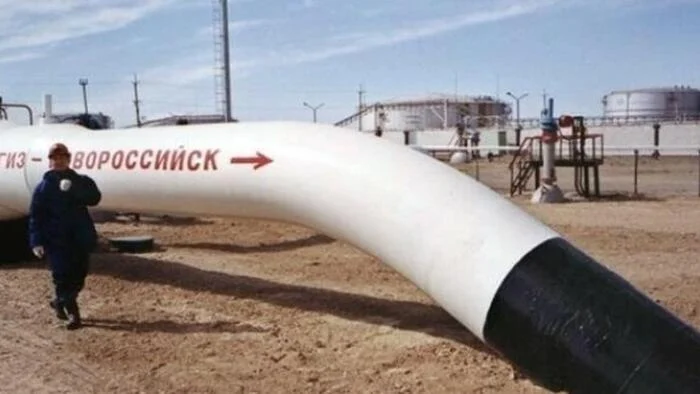
Kazakhstan has successfully resumed crude oil exports through the Caspian Pipeline Consortium (CPC) on Monday, bringing an end to a week-long suspension that had significantly disrupted global energy supplies. The crucial Black Sea marine terminal, a vital gateway for Kazakh crude to international markets, has reopened and recommenced accepting oil from producers, following a period of operational halt triggered by a series of drone attacks. This development, first reported by Kazakhstan’s Astana Times and subsequently confirmed by OilPrice.com citing the Kazakh Energy Ministry, signals a cautious return to normalcy for one of the world’s most significant oil transit routes.
The resumption of operations saw two tankers immediately begin loading crude from the Chevron-led Tengizchevroil project at the Novorossiysk terminal. Concurrently, producers across Kazakhstan, who had been forced to curb output, recommenced delivering oil into the vast CPC pipeline system. The Kazakh Energy Ministry, while confirming the restart, underscored that export operations would proceed "subject to ongoing security assessments," highlighting the persistent vigilance required in the current geopolitical climate. This caveat reflects the heightened awareness of the vulnerabilities exposed by the recent incidents.
A Week of Disruption and Resumption
The week-long suspension had been initiated in response to repeated drone attacks targeting vessels operating at or in close proximity to the Novorossiysk facility. These incidents prompted the CPC operator to halt crude intake and tanker loadings, prioritizing the safety of personnel and infrastructure. The immediate consequence for Kazakhstan, a landlocked nation heavily reliant on oil exports, was a directive to its producers to drastically curb output. This measure was necessary to prevent storage facilities from overflowing after access to the critical export system was suddenly severed.
The impact on Kazakhstan’s production was stark and immediate. Industry data, as cited by Reuters, revealed a precipitous drop in the country’s oil and gas condensate output. On Sunday, production plummeted to 133,200 metric tons, equivalent to approximately 1 million barrels per day (bpd). This represented a near 50% reduction from the average daily production of 2.16 million bpd recorded in June, underscoring the profound and immediate economic shock the disruption inflicted. Major oilfields, including the massive Tengiz field, were forced to operate at significantly reduced capacities, leading to substantial deferred production.
The CPC consortium itself confirmed the resumption of pipeline operations at 12:28 p.m. Moscow time on Monday. However, the Kazakh Energy Ministry refrained from providing an immediate timeline for when production would return to pre-suspension levels. The process of ramping up production from reduced rates can be gradual, influenced by technical considerations, logistical challenges, and, critically, the ongoing security evaluations. The Chevron-chartered Suezmax tanker Asia was observed positioned at the terminal on Monday, according to LSEG vessel-tracking data cited by Reuters, indicating the immediate commencement of loading activities. Chevron acknowledged monitoring the situation at CPC but declined further comment, a standard industry response during sensitive operational periods.
The Lifeline of Kazakh Oil Exports: The CPC Pipeline
The Caspian Pipeline Consortium (CPC) pipeline is an indispensable artery for Kazakhstan’s economy, serving as the primary conduit for its vast crude oil reserves to global markets. Stretching approximately 1,500 kilometers (932 miles), the pipeline originates from Kazakhstan’s giant Tengiz oilfield, traverses southern Russia, and culminates at the Black Sea port of Novorossiysk. This formidable infrastructure is responsible for transporting more than 80% of Kazakhstan’s total crude exports, making its uninterrupted operation paramount for the nation’s economic stability.
The Tengiz oilfield, one of the world’s largest, is a cornerstone of Kazakhstan’s hydrocarbon sector. Operated by Tengizchevroil (TCO), a consortium involving Chevron (50%), ExxonMobil (25%), KazMunayGas (20%), and LukArco (5%), the field produces a significant volume of crude that is predominantly exported via the CPC. Other major international producers, including ExxonMobil, also rely heavily on this route to move their production from Kazakh fields to eager global buyers. The pipeline’s average annual throughput typically exceeds 60 million tons (approximately 1.2 million bpd), highlighting its immense capacity and strategic importance.
The CPC’s unique structure, a multinational consortium involving government entities and major oil companies from Kazakhstan, Russia, and international players, underscores its geopolitical significance. While the pipeline’s terminal is located in Russia, its majority ownership and operational focus are dedicated to facilitating Kazakh crude exports, providing a degree of insulation from direct Russian domestic policy shifts. This arrangement, however, does not entirely shield it from regional instabilities or security threats emanating from the wider Black Sea area, as evidenced by the recent drone incidents. The pipeline has, on occasion, faced disruptions due to maintenance, weather conditions, or, less frequently, geopolitical events, each time drawing significant attention from global energy markets.
Economic Fallout and Global Market Implications
The recent disruption briefly removed over 1 million bpd of Kazakh production from the market, sending ripples through the global energy landscape. In a market already grappling with a delicate supply-demand balance and a multitude of geopolitical risks, this sudden removal of significant volume exacerbated concerns over global oil supply stability. Oil prices, particularly benchmarks like Brent crude, which is sensitive to Black Sea disruptions, likely registered the increased supply risk, contributing to upward price pressure during the suspension. The resumption, conversely, is expected to temper some of these immediate concerns, albeit with an underlying current of caution.
For Kazakhstan, a nation whose economy is heavily reliant on oil and gas revenues, the week-long suspension carried substantial financial implications. Hydrocarbon exports typically account for over half of the country’s export earnings and contribute significantly to its Gross Domestic Product (GDP) and state budget. A sustained reduction in production and exports translates directly into lost revenue, impacting government spending plans, investment in other sectors, and overall economic growth projections. The government’s swift action to order output cuts, while necessary to prevent infrastructure overload, represents a direct economic cost in terms of foregone sales.

Beyond the immediate financial hit, the incident serves as a potent reminder of the inherent vulnerabilities in the global energy supply chain. The Black Sea region has emerged as a critical flashpoint, with ongoing conflicts and heightened military activity posing persistent threats to maritime transport and energy infrastructure. This adds to a complex web of supply risks that already includes disruptions affecting Middle Eastern shipping routes, such as those through the Red Sea. The cumulative effect of these various pressures places a premium on energy security and diversification of supply, prompting nations and energy companies to re-evaluate their risk mitigation strategies.
Heightened Security Concerns and Future Resilience
The repeated drone attacks on the Novorossiysk terminal and nearby vessels represent a significant escalation in threats to critical energy infrastructure in the Black Sea region. While the precise origin or affiliation of the drones was not explicitly stated in the initial reports, the context points to the broader geopolitical tensions and ongoing conflict in the area. These incidents underscore the increasing sophistication of threats to maritime and coastal facilities, challenging existing security protocols and demanding advanced protective measures.
The Kazakh Energy Ministry’s insistence on "ongoing security assessments" is a clear indication that the immediate resumption of exports does not signify a complete return to pre-incident levels of confidence. It suggests that heightened vigilance, possibly involving enhanced surveillance, anti-drone technologies, and stricter operational procedures, will be a permanent fixture for the foreseeable future. For the CPC consortium, a key imperative will be to demonstrate its resilience and capacity to protect its vital assets against evolving threats. This may involve collaborations with regional security forces, investment in advanced defense systems, and adaptive operational strategies.
Kazakhstan has long pursued strategies to diversify its oil export routes to mitigate risks associated with over-reliance on a single pathway. While routes through China and the Caspian Sea (via Azerbaijan) exist, their combined capacity remains a fraction of what the CPC pipeline can transport. The recent events will undoubtedly intensify discussions within Kazakhstan and among its international partners about accelerating efforts to develop and expand these alternative routes, even if such projects are capital-intensive and time-consuming. However, given the CPC’s established capacity and logistical advantages, it is likely to remain the dominant export channel for the foreseeable future, making its security paramount.
Official Statements and Stakeholder Reactions
Throughout the crisis, official communications from key stakeholders provided crucial updates. The Kazakh Energy Ministry’s statements were central to confirming the operational status of exports and outlining the country’s response, including the production cuts. Their emphasis on "ongoing security assessments" post-resumption reflects a cautious optimism tempered by realism regarding regional threats.
The Caspian Pipeline Consortium (CPC) itself issued timely confirmations regarding the cessation and subsequent resumption of pipeline operations. As the operator of the critical infrastructure, CPC’s primary focus would have been on ensuring the safety of its personnel and assets, conducting damage assessments (if any), and implementing necessary security enhancements before authorizing the restart. Their adherence to a strict operational timeline, noting the precise time of resumption, underscores the methodical approach taken in such situations.
Major international oil companies with significant investments in Kazakhstan, such as Chevron and ExxonMobil, would have been closely monitoring the situation. Chevron, as the lead operator of Tengizchevroil, would have been directly impacted by the terminal closure and the subsequent output curtailment at the Tengiz field. While declining specific comments, the company’s acknowledged monitoring reflects the intense stakeholder interest and the need for continuous assessment of risks to their significant assets and production volumes in the region. For these multinational corporations, the incident highlights the complex interplay of geopolitical risk, operational security, and market supply stability that defines their global operations.
Geopolitical Undercurrents and Energy Security
The incident at the Novorossiysk terminal transcends mere operational disruption; it is deeply embedded in the broader geopolitical dynamics of the Black Sea region. This vital maritime area has become a focal point of international tensions, directly impacting global trade routes, maritime security, and energy flows. The vulnerability of a critical energy export terminal like Novorossiysk underscores how regional conflicts can have far-reaching consequences for global energy security.
Kazakhstan, as a key energy producer situated in Central Asia, plays a delicate balancing act in navigating the complex geopolitical landscape. While maintaining strong economic ties with Russia, it also seeks to assert its sovereignty and diversify its international partnerships. The reliance on the CPC pipeline, which transits Russian territory, necessitates careful diplomacy and a focus on ensuring the stability of its primary export artery. Any disruption to this pipeline not only impacts Kazakhstan’s economy but also draws international attention to the fragility of energy supply lines in contested regions.
The episode serves as a stark reminder to the international community about the imperative of safeguarding critical energy infrastructure. In an era where energy security is intrinsically linked to national and global stability, the protection of pipelines, terminals, and shipping lanes from both conventional and unconventional threats has become a paramount concern. The swift response to resume operations at CPC, while reassuring, does not diminish the strategic implications of the attack, which will undoubtedly influence future energy policy, infrastructure investment, and security planning across the globe.
In conclusion, the resumption of crude exports through the CPC pipeline marks a significant relief for Kazakhstan and global energy markets. However, the week-long hiatus, precipitated by drone attacks, has served as a potent reminder of the inherent vulnerabilities of critical energy infrastructure in volatile regions. As Kazakhstan’s Energy Ministry continues its "ongoing security assessments," the incident is poised to fuel further discussions on enhancing operational resilience, diversifying export routes, and bolstering security measures to protect the vital arteries of global energy supply. The lessons learned from this disruption will undoubtedly shape future strategies for navigating the complex interplay of energy, economics, and geopolitics in the Black Sea region and beyond.

