
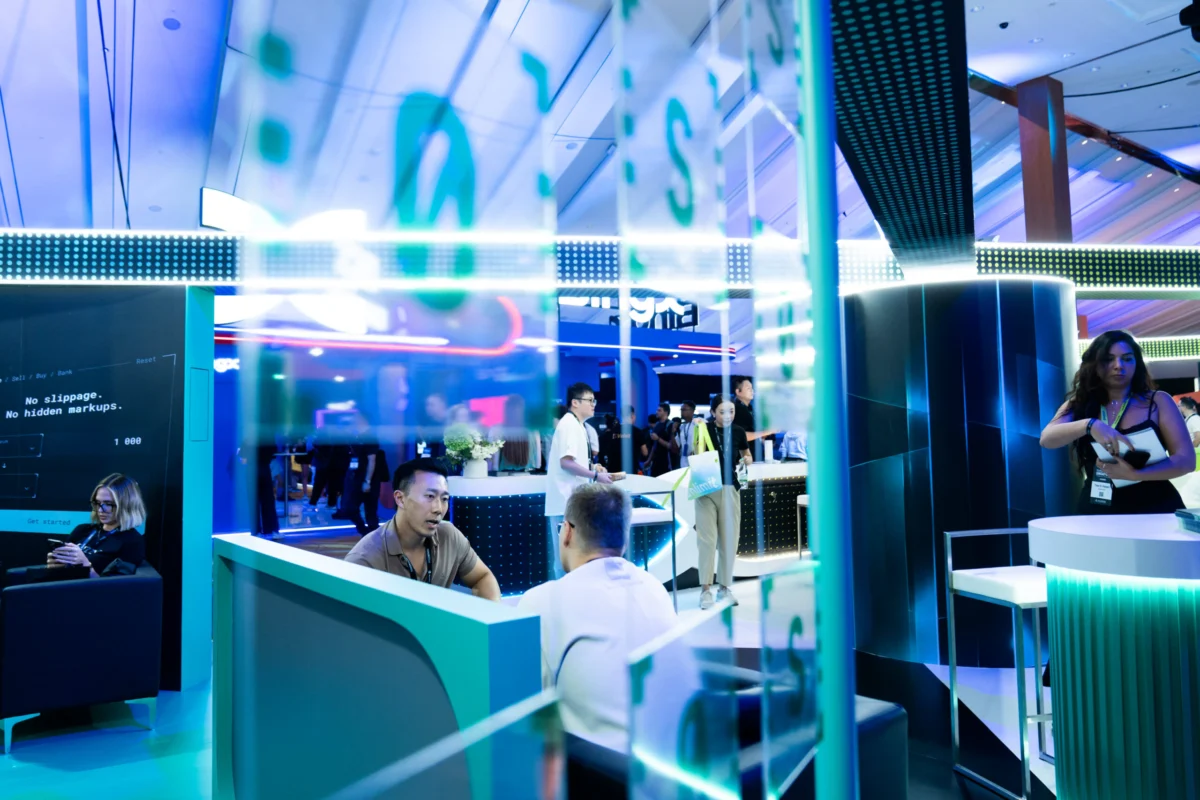
Singapore – The global financial system stands on the precipice of a significant transformation, with tokenization poised to free up tens of billions of dollars in capital currently immobilized as collateral, according to Nasdaq CEO Adena Friedman. Speaking at the TOKEN2049 conference in Singapore on Thursday, October 8, 2026, Friedman underscored the profound implications of tokenizing traditional assets and the underlying flow of money, suggesting it could usher in an era of unprecedented liquidity and continuous market operations. Her insights, delivered to CNBC’s Joanna Ossinger, managing editor and head of APAC Digital News, painted a compelling vision for the future where financial instruments are digitized, enabling round-the-clock trading and enhanced global accessibility.
The TOKEN2049 conference, a prominent gathering in the cryptocurrency and blockchain calendar, served as a crucial platform for industry leaders to discuss the evolving landscape of digital assets. Held in Singapore, a burgeoning hub for financial technology and innovation, the event attracted a diverse array of participants, from crypto-native founders and investors to traditional finance executives exploring the integration of blockchain technology. The conference, which concludes today, has become a barometer for the health and direction of the digital asset space, fostering discussions on regulation, technological advancements, and market adoption.
Unlocking Capital Through Tokenization: A Paradigm Shift
Friedman elaborated on the transformative power of tokenization, a process that converts rights to an asset into a digital token on a blockchain. This mechanism, she explained, could fundamentally alter how collateral is managed across the global financial system. By tokenizing assets such as U.S. Treasuries, equities, and money market funds, along with the very flow of money itself, collateral could become "very fluid." This fluidity implies a dramatic reduction in settlement times, lower operational costs, and the ability to re-deploy capital more efficiently, thereby maximizing its utility and reducing systemic risk.
Currently, vast amounts of capital are tied up in various forms of collateral, essential for securing financial transactions, derivatives, and lending agreements. This capital often remains static for extended periods due to the inefficiencies of traditional, siloed financial infrastructures. Tokenization offers a potential remedy by creating digital representations of these assets that can be instantly transferred, settled, and re-used, much like digital cash. Industry estimates suggest that improving collateral efficiency could unlock anywhere from tens to hundreds of billions of dollars globally, a figure that resonates with Friedman’s projections and highlights the immense economic potential.
The concept of tokenization is not entirely new, but its institutional adoption has accelerated significantly in recent years. Friedman noted a marked increase in institutional interest over the past year, attributing this momentum partly to clearer regulatory signals. She specifically cited the passage of the Genius Act in the U.S. as a pivotal development. This legislation, by establishing a clearer regulatory framework for stablecoins, has provided a crucial level of certainty that encourages traditional financial institutions to explore and invest in blockchain-based solutions. "If we can tokenize money, then we can tokenize the flow of capital," Friedman asserted, emphasizing the interconnectedness of digital currency and digital assets. This regulatory clarity is often cited by market participants as a prerequisite for mainstream adoption, reducing the perceived risks associated with innovative technologies.
The Convergence of Retail and Institutional Demand
Beyond institutional interest, Friedman highlighted a fascinating convergence with long-standing retail investor demand. Retail investors, she observed, have for over a decade sought the ability to trade financial instruments around the clock. The retail crypto ecosystem, in particular, has demonstrated the viability and demand for 24/7 trading, operating continuously without traditional market closures. "The retail ecosystem ‘has been about 10 years ahead’," Friedman stated, acknowledging the foresight of individual investors and the crypto community in pushing for continuous market access. This persistent demand from retail participants, coupled with the growing institutional recognition of tokenization’s benefits, creates a powerful impetus for fundamental shifts in market structure. The aspiration to bridge these two worlds – the always-on, digitally native retail environment and the robust, yet historically constrained, institutional framework – is a key driver behind the push for continuous trading.
The Push Toward 24/7 Trading: An Operational Overhaul
Moving to a fully 24/7 market environment, while appealing, represents a monumental undertaking for the financial industry. Friedman acknowledged that "the easiest part is the exchange infrastructure," indicating that the technological capability to run trading platforms continuously is largely within reach. The real challenge, she explained, lies in overhauling the intricate web of operational processes that underpin traditional markets.
Historically, financial institutions have relied on periods of market closure to perform critical functions such as system updates, reconciliation, risk calculations, and collateral management. In a 24/7 system, these processes would need to occur continuously and in real-time. "Everything has to be real time all the time," Friedman stressed. This requires a complete reimagining of back-office operations, settlement procedures, and risk management frameworks. For instance, risk engines would need to constantly monitor positions and exposures, margin calls would need to be executed instantly, and liquidity pools would need to be accessible around the clock. The current batch processing systems prevalent in many financial institutions would need to be replaced by continuous processing architectures, demanding significant investment in technology and operational redesign.
Artificial Intelligence: The Linchpin for Continuous Operations
To navigate this complex transition, Artificial Intelligence (AI) is emerging as a critical enabler. Friedman detailed Nasdaq’s proactive approach, having launched a series of digital agents within its risk management platform. These AI-powered tools initially provide recommendations, assisting human operators in making faster, more informed decisions. Over time, as confidence in their capabilities grows and regulatory frameworks adapt, these AI agents could evolve to take more direct, autonomous action, automating significant portions of risk and collateral management.
"AI is critical for 24/7," Friedman declared, highlighting its indispensable role in handling the immense data volumes and rapid decision-making required for continuous market operations. AI can identify anomalies, predict market movements, optimize collateral allocation, and automate compliance checks in real-time, far surpassing human capabilities in speed and scale. This integration of AI is not merely an efficiency upgrade but a foundational necessity for a truly always-on financial ecosystem. The ability of AI to learn from continuous data streams and adapt to evolving market conditions will be crucial in maintaining stability and integrity in a 24/7 environment.
Bridging Crypto and Traditional Finance: A Global Perspective
The interest in tokenization and expanded market access extends beyond U.S. borders. Arjun Sethi, co-CEO of cryptocurrency exchange Kraken, echoed this sentiment in a separate discussion with CNBC, noting significant interest from companies outside the U.S. in leveraging tokenization to access American capital markets. Sethi cited an example of a company generating approximately $25 million in revenue exploring avenues to tap into capital markets, as well as larger international entities keen on both tokenization and U.S. public listings. This demonstrates a clear global demand for more efficient and accessible capital raising mechanisms, a gap that tokenization is uniquely positioned to fill.
Tokenization, Sethi explained, could democratize access to capital markets for businesses worldwide, potentially lowering the barriers to entry for smaller and medium-sized enterprises (SMEs) that traditionally struggle to attract institutional investment or undertake costly public offerings. By fragmenting ownership into digital tokens, companies can potentially reach a broader investor base, including retail investors, and raise capital more flexibly. This could significantly boost economic growth in developing markets and foster innovation globally.
However, Friedman also offered a pragmatic caveat regarding the universal applicability of 24/7 trading. While acknowledging its potential, she cautioned that "not every asset is liquid enough to support a 24/7 environment." Illiquid assets, or those with very low trading volumes, might not benefit from continuous trading and could even experience increased volatility or wider spreads if forced into an always-on model. The market infrastructure would need to be intelligently designed to differentiate between asset classes, ensuring that the benefits of 24/7 operations are applied where they are most suitable and beneficial.
Despite these considerations, the broader vision remains one of greater connectivity across the global financial system. Friedman concluded that this enhanced connectivity could unlock access to asset classes previously out of reach for certain investors, further democratizing finance and fostering a more inclusive global marketplace. This could mean easier access to alternative investments, private market assets, or even fractional ownership of high-value assets for a wider range of participants.
Regulatory Landscape and Future Outlook
The regulatory environment plays an indispensable role in the widespread adoption of tokenization and 24/7 markets. The Genius Act, mentioned by Friedman, represents a crucial step in the U.S. towards providing regulatory clarity for stablecoins, which are often seen as the "on-ramp" for broader tokenization initiatives. Other jurisdictions are also actively developing their own frameworks, with Singapore, the host of TOKEN2049, being a leader in fostering a regulated environment for digital assets and DLT. Harmonization of these diverse regulatory approaches will be critical to realizing a truly global, interconnected, and continuously operating financial system. Disparate rules across borders could create fragmentation and hinder cross-border capital flows.
The timeline for a fully integrated, 24/7 tokenized financial system remains a subject of ongoing debate. While the technological capabilities are advancing rapidly, the operational shifts, regulatory adaptations, and behavioral changes required across a vast ecosystem of banks, exchanges, custodians, and investors will take time. Industry experts project that a gradual rollout, starting with specific asset classes and jurisdictions, is more likely than a sudden, comprehensive overhaul. The next five to ten years are expected to see significant pilot programs, increased institutional adoption, and a clearer pathway towards a more liquid, efficient, and accessible global financial market powered by tokenization and AI. The discussions at TOKEN2049 highlight that the momentum for this transformation is undeniable, with key players like Nasdaq at the forefront of shaping this future.

