
Yemen’s Houthi movement has issued a significant and alarming warning, placing Egypt, Turkey, and Pakistan on notice as potential targets in the ongoing Saudi-Yemen conflict. This grave development comes as Riyadh intensifies its diplomatic efforts to galvanize military support from regional partners against the Ansar Allah movement, the official name for the Houthis. The explicit threat was reported by Iran’s state-affiliated Nour News, a media outlet closely associated with the country’s Supreme National Security Council, which cited a Houthi official stating that these three nations, perceived as Saudi allies, "will likely be targeted in the next stages" of the conflict.
The Houthi official’s statement carried a broader implication, asserting that "The targeting of Iran by the enemies will not be limited to the country’s borders and, according to him, the next efforts will be to target Egypt, Turkey and Pakistan." This declaration signals a potential expansion of the conflict beyond its current geographical confines, indicating a strategic shift by the Houthi movement and its allies to deter perceived aggression against Iran by extending the conflict’s reach to nations seen as collaborators with Saudi Arabia and, by extension, the broader "enemies" of Iran.
Escalating Tensions and Recent Houthi Aggression
The warning arrives amidst a period of heightened Houthi aggression against Saudi Arabian targets. The movement has recently claimed responsibility for several sophisticated attacks on critical Saudi infrastructure, including vital Saudi Aramco facilities and fuel depots located in close proximity to Riyadh’s international airport. In a significant escalation, the Houthis confirmed sending ballistic missiles towards the Saudi capital, marking the first such incident of the war, which occurred on a Friday night into Saturday. These attacks demonstrate an evolving Houthi capability to strike deep within Saudi territory, employing advanced missile and drone technologies, allegedly supplied by Iran, to bypass Saudi air defenses.
Further underscoring the severity of the situation, an Iranian-backed militia attack on the key Saudi East-West pipeline preceded the Houthi threats. A U.S. official indicated that this particular assault was launched from Iraq, highlighting the multi-front nature of the regional tensions and the potential involvement of various non-state actors operating with Iranian backing. These incidents collectively paint a picture of a conflict rapidly expanding in scope and intensity, pushing the region closer to a broader confrontation.
The Strategic Rationale Behind the Threats
According to the Iranian media report, the Houthi official articulated a strategic rationale for targeting Egypt, Turkey, and Pakistan. He reportedly emphasized the "power and influence" of these three countries within the Islamic world, suggesting that their capabilities could potentially "be an obstacle to the Zionist regime’s plans." The official further posited that a broader plan exists to push Egypt, Turkey, and Pakistan "towards wars and internal conflicts," with Saudi Arabia playing a role in this process. Such a scenario, he warned, "could lead to the erosion of capabilities, weakening, and disintegration of the internal social fabric of these countries."
This reasoning suggests a calculated effort to destabilize nations perceived as aligned with the Saudi-led bloc, thereby weakening a potential front against Iran and its regional proxies, including the Houthis. By framing the potential targeting as a counter-measure against "Zionist regime’s plans" and internal destabilization, the Houthis and their Iranian backers aim to imbue their threats with a broader ideological and geopolitical context, appealing to anti-Western and anti-Israeli sentiments in the region.
Egypt: A Key Regional Player
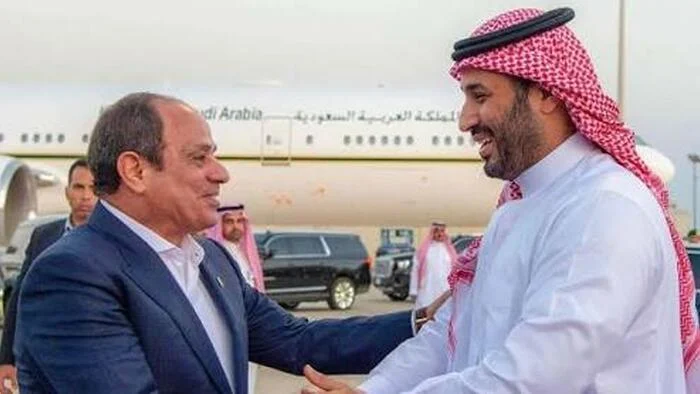
Egypt, a cornerstone of Arab and Islamic influence, holds immense strategic importance. Its geographical location, controlling the Suez Canal – a vital global shipping artery – and proximity to the Red Sea, makes it indispensable for regional security. Egypt has long maintained strong political, economic, and military ties with Saudi Arabia, often aligning on regional issues, including counter-terrorism efforts and opposition to the Muslim Brotherhood. The recent visit by Saudi Crown Prince Mohammed bin Salman (MbS) to Cairo, where he met with Egyptian leader Abdel Fattah El-Sisi, underscores this alliance. A significant focus of their discussions was regional security, particularly in the context of the escalating conflict in Yemen and Riyadh’s desire for broader support against the Houthis.
Economically, Egypt relies heavily on Saudi investments and financial aid, further cementing their alliance. Any direct targeting of Egypt would represent an unprecedented escalation, threatening the stability of North Africa and the Eastern Mediterranean. While Egypt has historically been wary of direct military intervention in Yemen due to past experiences, its commitment to Gulf security, particularly the protection of critical shipping lanes and Saudi interests, remains a core tenet of its foreign policy. The Houthi threat places Egypt in a precarious position, potentially forcing a more overt stance in the ongoing conflict.
Turkey: An Ambivalent but Influential Power

Turkey’s position in the regional dynamic is complex. Under President Recep Tayyip Erdoğan, Turkey has sought to assert itself as a major power, often navigating a delicate balance between alliances and independent foreign policy objectives. While Ankara has historically had strained relations with Saudi Arabia, recent years have seen efforts to mend fences and forge new strategic partnerships. This rapprochement culminated in the "Mecca Defense Pact," an agreement designed to enhance security cooperation between Saudi Arabia, Turkey, and Pakistan.
Although Turkey has yet to officially ratify the pact (expected in October), its recent participation in the Saudi-led Multinational Maritime Defense Alliance has raised concerns about its potential entanglement in the Yemen conflict. The commentary last week highlighted that "Turkey’s new commitments to Saudi Arabia under the Mecca defence pact could increase the risk of Ankara being drawn into a confrontation with Yemen’s Houthis, a development that could have significant consequences for Turkish supply lines to the Horn of Africa." A confrontation with the Houthis could jeopardize Turkish economic interests and strategic projections in the Red Sea and East Africa, regions where Ankara has been actively expanding its influence. The Houthi threat against Turkey directly challenges Ankara’s balancing act, forcing it to weigh its regional ambitions against the potential for direct conflict.
Pakistan: A Crucial Muslim Ally
Pakistan, a nuclear-armed Muslim-majority nation, shares deep historical, religious, and military ties with Saudi Arabia. For decades, Pakistan has provided security assistance and military training to Saudi forces, and a significant Pakistani diaspora contributes to the Saudi economy. The Kingdom also serves as a crucial source of financial aid and oil for Pakistan. Despite these strong bonds, Pakistan has generally maintained a policy of non-intervention in the Yemen conflict, primarily due to domestic political sensitivities and a desire to avoid sectarian entanglements. In 2015, Pakistan’s parliament voted against joining the Saudi-led coalition in Yemen, a decision that initially strained relations with Riyadh but was later smoothed over through diplomatic efforts and continued security cooperation.
However, the "Mecca Defense Pact" and Riyadh’s persistent calls for support place renewed pressure on Islamabad. The pact, emphasizing mutual defense and security cooperation, could implicitly or explicitly draw Pakistan into broader regional security frameworks. The Houthi threat, if materialized, could force Pakistan to reconsider its non-interventionist stance, potentially leading to significant internal debate and external pressure from both Saudi Arabia and Iran, with whom Pakistan also seeks to maintain balanced relations. The economic implications of alienating Saudi Arabia are substantial for Pakistan, making its position particularly sensitive.
The Broader Regional Security Context
The Houthi threats are not isolated but rather indicative of a rapidly deteriorating regional security environment. The internationally recognized Sanaa government is rapidly losing ground to the Houthis, whose territorial gains have emboldened the movement and its Iranian patrons. Saudi Arabia, facing a determined and increasingly capable adversary, is actively seeking to shore up its alliances and galvanize military assistance. The Crown Prince’s regional visits are part of this broader diplomatic push.
Meanwhile, the United States has appeared to adopt a more hands-off approach. While President Trump was reportedly "ready to pull the trigger" against the Houthis at one point, he was subsequently "TACO’d by close of the weekend," indicating a reluctance for direct military engagement or a shift in policy. This perceived U.S. disengagement, or at least a less aggressive posture, may further embolden the Houthis and Iran, creating a vacuum that regional powers are attempting to fill.
Risk of a Full-Blown Regional War
The most significant and alarming implication of these Houthi threats is the heightened risk of the entire situation spiraling into a full-on regional war. Such a conflict would almost certainly further fuel U.S.-Iran confrontation, potentially drawing in other regional actors, including Israel, which views Iranian expansionism as an existential threat. The intertwining of various proxy conflicts, direct state-on-state tensions, and ideological divides creates a volatile environment ripe for widespread destabilization.
A major conflict would have catastrophic global economic consequences, particularly for energy markets. Crucially, it would likely lead to the closure or severe disruption of key maritime choke points. The Houthis have already declared the Bab Al-Mandab Strait, a critical gateway between the Red Sea and the Gulf of Aden, off-limits to Saudi and Israeli-linked ships. The pervasive fear is that the group could, at any moment, expand its assaults to target all international shipping, mirroring the ongoing crisis and threats to navigation in the Strait of Hormuz, another vital oil transit route. This would severely impact global trade, supply chains, and energy prices, triggering an international economic crisis.
The Houthis and their Iranian backers are acutely aware of the strategic leverage they possess over these critical maritime passages. They appear to be intentionally slow-playing their hand, using these threats and limited actions as a form of coercive diplomacy, ready to pull the trigger on the next potential round of escalation with the perceived U.S.-Saudi-Israeli axis. The situation underscores the urgent need for de-escalation and diplomatic solutions, yet the current trajectory suggests a deepening of conflict with far-reaching and perilous consequences for the Middle East and beyond.

