
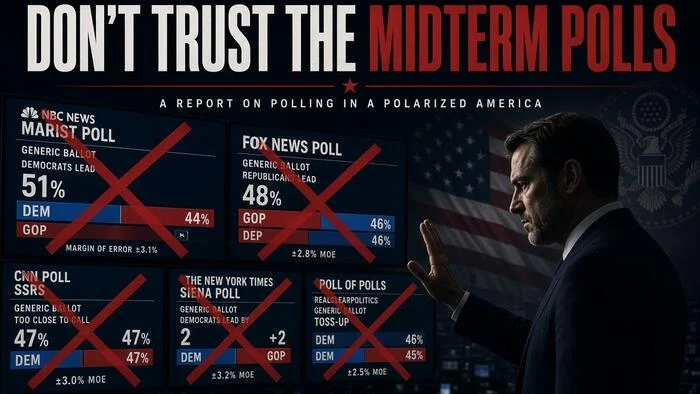
As the United States approached a critical midterm election, just under 80 days away at the time of initial analysis, political observers presented a complex and often contradictory landscape. While historical trends traditionally favored the party out of power, certain strategic shifts, evolving campaign dynamics, and underlying voter sentiment suggested a far less predictable outcome than many early polls indicated. This period was characterized by a palpable sense of anticipation, with both major parties strategizing intently to secure control of Congress.
The Conventional Wisdom: Democratic Confidence and Historical Headwinds
Historically, midterm elections have rarely been kind to the party occupying the White House. Statistical analysis of the past 41 midterms reveals that in 39 instances, the president’s party lost seats in Congress. This formidable historical precedent fueled significant confidence within Democratic circles, who, despite holding a slim majority in both the House and Senate, anticipated capitalizing on this pattern. The prevailing sentiment among Democrats suggested an expansion of their legislative power, leading to early discussions about their post-election agenda, including potential renewed scrutiny of the Trump family, their business associates, and various financial dealings, particularly in cryptocurrency and foreign investments. This pre-emptive planning, often described colloquially as "measuring their drapes," highlighted a perceived certainty of victory and a clear intention to wield their investigative powers.
Critics, however, quickly pointed out what they perceived as a partisan double standard, noting a perceived lack of similar investigative zeal regarding the Biden family or Hunter Biden’s business dealings during the current administration. Nevertheless, the prospect of extensive congressional investigations into former President Trump and his allies, potentially leading to prolonged impeachment inquiries, loomed large as a key objective for a Democrat-controlled Congress, effectively aiming to disrupt the "MAGA agenda" for the foreseeable future.
Donald Trump’s Unconventional Strategy: The "Anaconda" Approach and Economic Focus
In stark contrast to the historical headwinds and Democratic optimism, former President Donald Trump reportedly exuded an unusual confidence regarding the midterm prospects for the Republican Party. His strategy, which some analysts dubbed the "Anaconda Strategy," appeared to be a multi-pronged approach combining assertive foreign policy with a renewed emphasis on domestic economic issues, largely sidelining traditional military engagements.
The "Anaconda Strategy" on Iran: Economic Squeeze After Kinetic Action
A significant component of this strategy, as described by observers, centered on Iran. Following a period of intense military pressure, characterized as "kinetic 40 days of bombing" which allegedly left Iran’s nuclear military-industrial complex in disarray, the focus shifted to an unprecedented economic squeeze. Unlike previous embargoes, blockades, or asset freezes targeting Iranian officials, this strategy involved extending sanctions to third-party nations. The Trump administration, as inferred from the strategy, aimed to isolate any country—including major trading partners like China, Russia, and European nations—that continued to engage economically with Iran, even as the U.S. bore the burden of "defanging a potential nuclear renegade nation." The explicit threat was a cessation of U.S. business relations with any entity or nation that continued trade with Tehran.
Iranian officials, in response, reportedly condemned these actions as "colonialist," but the cumulative effect of sustained military damage followed by renewed, severe economic pressure was said to be proving difficult for the regime to withstand. The strategic premise was that "time is actually on our side," suggesting that the long-term economic suffocation would eventually force Iran’s capitulation or foster internal opposition.
De-escalating Military Engagements and Prioritizing the Economy
The second crucial element of Trump’s strategy involved a deliberate de-emphasis on military intervention. The approach advocated for avoiding ground troops and limiting further bombing campaigns unless there were egregious attacks on U.S. allies or naval assets. The perceived success in managing regional stability, particularly keeping key maritime passages mostly open and limiting the operational capacity of Iranian proxies like Hamas, the Houthis, and Hezbollah (evidenced by reduced financial flows and a diminished ability to threaten Gulf States or Israel with rockets), allowed for this shift. With the immediate military threat seemingly contained, the strategy pivoted to concentrate almost entirely on domestic economic issues.
Former President Trump, alongside figures like JD Vance, embarked on a nationwide campaign, focusing on manufacturing investments and economic revitalization. This shift aimed to tap into voter concerns about inflation, job security, and industrial decline, particularly in swing states.
Challenging the Polling Narrative: Primary Results as Harbingers
Despite generic ballot polls frequently showing a 7 percent Democratic advantage and betting odds suggesting a Republican loss of the House, Trump’s strategists reportedly dismissed these figures as "worthless." Their skepticism stemmed from recent primary elections that had defied polling predictions.
For instance, in Michigan, Abdul El-Sayed, a Democratic senatorial candidate, was reportedly polling 10 points ahead but ultimately won by a narrow 1.5-point margin. Similarly, Francesca Hong, a Democratic candidate for governor in Wisconsin, had enjoyed a substantial 10-20 point lead in polls but suffered a decisive loss. In Florida, Mr. Alexander Vindman, running for Senate, was also polling ahead but lost to Ms. Angie Nixon, described as a democratic socialist. These discrepancies fueled the Republican argument that conventional polling methods were failing to capture the true sentiment of the electorate, particularly among a segment of voters less likely to respond to traditional surveys or whose intentions were not accurately reflected. This suggested a "shy voter" effect or a significant underestimation of Republican grassroots energy.
Potential Game Changers for the Midterms
Several factors were identified as potential game-changers that could defy historical trends and reshape the midterm outcome:
-
Resolution of the Iran Conflict: If the intense pressure on Iran led to a significant breakthrough or the regime’s collapse within the 60-70 days leading up to the midterms, it would represent a monumental foreign policy achievement. The original analysis tragically noted 17 American lives lost but at a "tolerable cost in blood and treasure" for potentially resolving a "50-year problem" that seven previous presidents deemed existential. Such a victory could profoundly impact voter perception of Trump’s leadership and the Republican Party’s foreign policy prowess.
-
Redistricting and Electoral Map Shifts: The ongoing process of redistricting, particularly in "red states," combined with Supreme Court prohibitions on racial gerrymandering, was projected to potentially yield an additional four to five seats for Republicans. Strategic redrawing of congressional districts could solidify Republican advantages in key areas, making certain races less competitive for Democrats regardless of national sentiment.
-
Campaign Finance and Financial Firepower: The financial aspect of the campaign was also seen as a significant advantage for Republicans. Former President Trump reportedly commanded a war chest of approximately $400 million, which he intended to deploy through his political action committees (PACs) to bolster Republican candidates nationwide. Furthermore, Elon Musk, a prominent figure in technology and finance, had reportedly pledged to match, dollar for dollar, any substantial donations made by "Democratic oligarchic class" to Democratic candidates. This potential influx of Republican-aligned funding could neutralize the traditional fundraising advantages often enjoyed by the Democratic Party, ensuring robust advertising and ground game efforts.
-
The Evolving Democratic Party Platform and Its Perceived Extremism: Perhaps the most significant "game changer" identified was the perceived ideological shift within the Democratic Party. The analysis contended that "democratic socialists" had effectively absorbed the mainstream Democratic apparatus, with prominent figures like Nancy Pelosi, Hakeem Jeffries, and Chuck Schumer reportedly expressing no opposition to their influence, embracing a "big tent party" approach.
However, the concern for Republicans was that once the "money, effort, and attention" highlighted the core tenets of the democratic socialist agenda, it would prove deeply unpopular with a broader electorate. This agenda was characterized by:
- Defunding the Pentagon and Police: Policies advocating for reallocating defense and law enforcement budgets.
- Open Borders and Mass Amnesties: Loosening immigration controls and providing pathways to citizenship for undocumented immigrants.
- Warring on Fossil Fuels: Aggressive policies aimed at transitioning away from traditional energy sources, potentially impacting energy prices and jobs.
- Isolationist Foreign Policy: A perceived withdrawal from global engagement in favor of domestic priorities.
- Transgender Issues: Specifically, the re-opening of the debate around biological men competing in women’s sports, framed as a statutory allowance.
- Constitutional and Institutional Reforms: Calls to dismantle the Senate and the Electoral College, pack the Supreme Court, eliminate the filibuster, and admit new "blue states" like Washington, D.C., and Puerto Rico to gain more Senate seats.
- Anti-American Sentiment: Concerns that some elements within this wing expressed "anti-Semitic venom" and "anti-Israel venom," and fundamentally questioned the legitimacy of the U.S. government, its foundational principles (Declaration of Independence, separation of powers), and its historical traditions, branding them as "flawed at their origins," worsened over time, and "god-awful right now."
The Republican strategy posited that as these specific policy positions and critiques became more widely understood and attributed to the broader Democratic Party, they would alienate centrist and independent voters, ultimately proving to be a "not winning message." The argument was that the mainstream Democratic Party, by not opposing these elements, would become "culpable or responsible for what these people say."
Conclusion: An Unpredictable Electoral Landscape
The confluence of these factors suggested that the upcoming midterms were far from a foregone conclusion. Contrary to historical precedent and early polling data, there remained a significant possibility that Republicans could retain or even gain control of both the Senate and the House of Representatives. The election was poised to be a complex interplay of historical patterns, strategic foreign policy maneuvers, economic anxieties, substantial campaign funding, and a deep ideological divide within the American political landscape, making its outcome genuinely "up in the air." The focus on distinct policy platforms and the perceived shift within one of America’s major parties promised a contentious and closely watched election season.

