
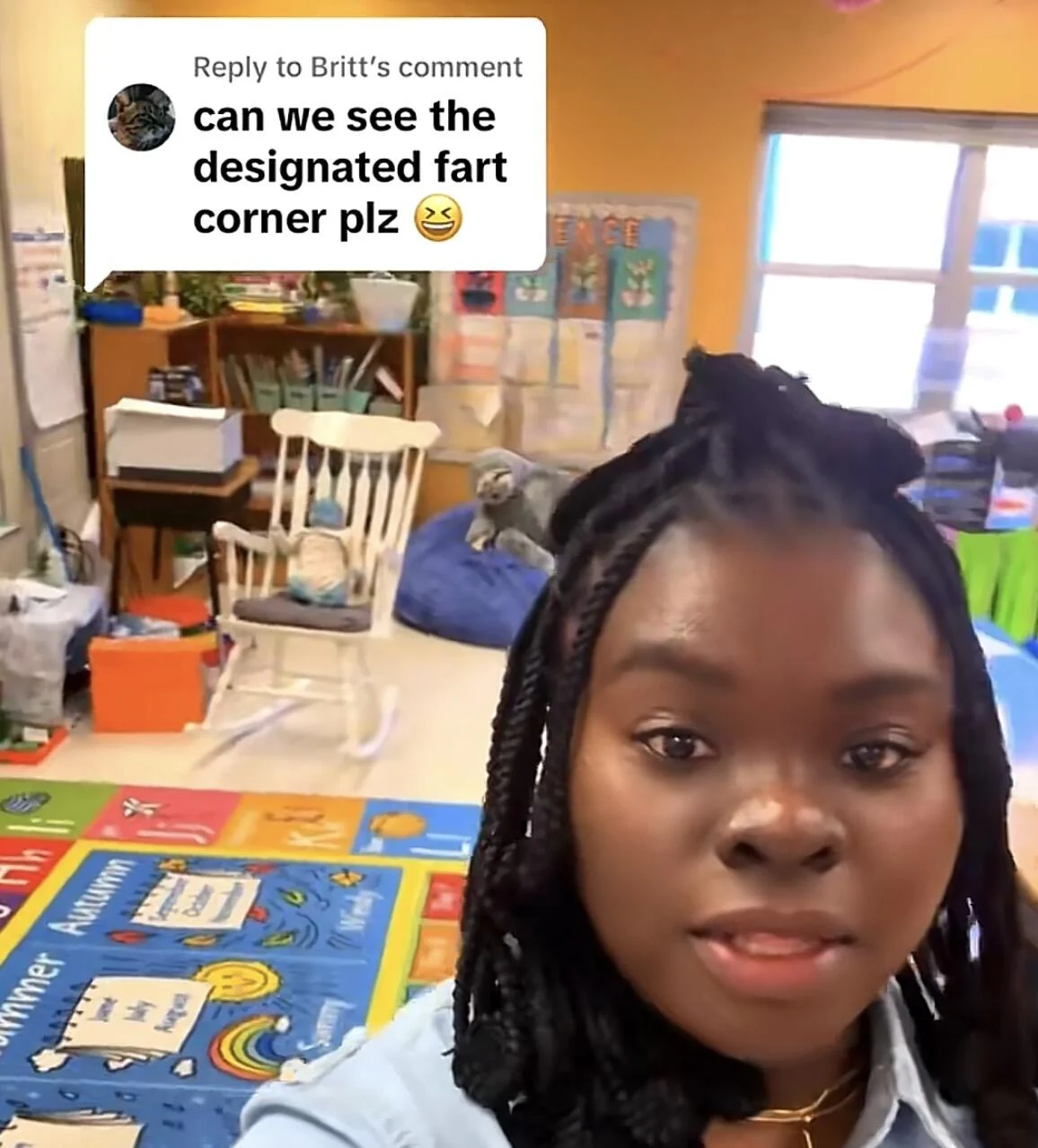
An innovative approach to classroom management, spearheaded by an Atlanta elementary school teacher, has garnered widespread attention for its unique solution to a common childhood phenomenon: flatulence. Candy Sydney Browning, a second-grade teacher, has created a designated "fart corner" in her classroom, affectionately dubbed the "gas station" with a specific spot known as the "gusty winds area," allowing students to pass gas discreetly without disrupting lessons or causing embarrassment. This unconventional yet highly effective strategy aims to normalize bodily functions, maximize instructional time, and foster a more empathetic and focused learning environment for young students.
The Genesis of an Innovative Solution
The inspiration for the "gas station" stemmed from Ms. Browning’s keen observations of typical classroom dynamics. Like many educators, she noticed that bathroom breaks frequently interrupted the flow of lessons, leading her to implement a proactive strategy encouraging students to use the restroom before class. However, another persistent distraction remained: students reacting to classmates passing gas. In a second-grade setting, such occurrences often spiraled into finger-pointing, laughter, students physically moving away from the perceived source, and outright announcements of culpability. These reactions, while typical for young children, cumulatively chipped away at valuable instructional minutes and created an atmosphere of potential shame or discomfort around a natural physiological process.
Ms. Browning recognized that treating flatulence as something embarrassing or a source of humor only amplified the disruption. Instead, she sought to reframe it as a normal bodily function that, like coughing or sneezing, simply required a moment of polite self-excusal. "It’s normal," she reportedly told her students, "But you have to excuse yourself." The challenge then became how to facilitate this "excuse yourself" in a way that maintained classroom decorum and learning continuity. The solution manifested as the "gusty winds area," a specific, designated spot in the classroom where students could quietly retreat, address their bodily need, and return to their seats without requiring permission or drawing undue attention. This system eliminated the need for a raised hand, a verbal request, or a teacher’s interruption, allowing Ms. Browning to continue teaching uninterrupted.
Implementation and Evolving Classroom Dynamics
The practical application of the "gas station" is remarkably simple and relies on a foundation of trust and routine. When a student feels the need to pass gas, they are empowered to quietly get up from their desk, walk to the designated "gusty winds area," take care of business, and then return to their seat. The autonomy granted to the students is a critical component of its success; by not requiring explicit permission, the process becomes seamless and minimizes disruption.
Initially, the introduction of such a novel concept naturally elicited curiosity. Ms. Browning recounted that the very first student to utilize the "gas station" was met with a few smiles and curious glances from classmates. Crucially, however, there was no pointing, no teasing, and no mockery. This absence of negative reinforcement was key to establishing the new norm. Over time, as more students used the area and the initial novelty wore off, the act became so routine that students eventually stopped paying attention altogether. "It just became a norm," Ms. Browning shared, noting that the station has integrated so completely into classroom life that she sometimes forgets it is even there. This transformation from a potentially disruptive event into an unremarkable part of the day underscores the effectiveness of her strategy.
Viral Recognition and Public Discourse
Ms. Browning’s innovative classroom rule transcended the walls of her elementary school when she shared the setup on TikTok. The short video quickly went viral, igniting a widespread discussion across social media platforms, news outlets, and educational forums. The public reaction was multifaceted, reflecting diverse perspectives on classroom management, child development, and societal norms around bodily functions.
Thousands of viewers reacted to the idea, with a significant portion offering enthusiastic praise. Many lauded it as a clever, empathetic, and highly effective way to normalize bodily functions, reduce potential embarrassment, and keep students focused on their lessons. Commenters highlighted the genius of empowering children to manage their own needs discreetly. Several teachers expressed their intent to introduce similar designated areas in their own classrooms, recognizing the universal challenge Ms. Browning had so elegantly addressed. Others shared that they had already implemented their own versions of a "fart corner" or similar strategies, underscoring the commonality of the issue and the shared quest for creative solutions among educators.
However, not everyone was convinced of the strategy’s merits. Some commenters voiced concerns that students who frequently used the corner might still feel embarrassed or become targets for teasing, despite Ms. Browning’s best intentions. The argument was made that even if the teacher aimed to normalize it, children, particularly at that age, might still find ways to single out or mock classmates. Others questioned the practicality of the approach, asking whether children could truly ignore a classmate walking across the room specifically for this purpose, suggesting that the act itself could still be a distraction.
Ms. Browning, however, maintains that making the practice routine is precisely what prevents it from becoming a larger issue. Her philosophy posits that when both adults and students cease treating flatulence as something shocking, funny, or taboo, it naturally loses its power as a source of disruption or social discomfort. By removing the stigma and providing a structured, accepted outlet, the act itself becomes less interesting and less likely to provoke negative reactions.
Educational Philosophy and Child Development Implications
Ms. Browning’s "gas station" is more than just a quirky classroom rule; it aligns with several key principles of modern educational philosophy and child development.
Social-Emotional Learning (SEL): At its core, this initiative is a practical application of SEL. It fosters self-awareness by encouraging students to recognize their bodily needs and self-management by providing a discreet, acceptable way to address them. It also promotes responsible decision-making (choosing to use the corner rather than disrupting class) and social awareness (understanding that everyone has bodily functions, and showing respect for others by minimizing disruption). By normalizing a common physiological process, Ms. Browning helps reduce anxiety and stigma, contributing to a more psychologically safe classroom environment where students feel comfortable and accepted.
Classroom Management and Instructional Time: One of the most tangible benefits is improved classroom management and maximized instructional time. Studies on classroom disruptions consistently show that even minor interruptions, when accumulated, can significantly reduce effective teaching time. From students asking permission to use the restroom, to the entire class reacting to a sudden sound or smell, these moments fragment lessons and break student concentration. Ms. Browning’s system proactively addresses a specific, recurring type of disruption, thereby preserving the flow of learning and allowing her to focus on teaching rather than mediating peer reactions or managing individual requests.
Health Education and Body Positivity: While not an explicit health lesson, the "gas station" subtly educates children about the human body. It reinforces the message that bodily functions are natural and nothing to be ashamed of. This contributes to a broader sense of body positivity and reduces the potential for body-shaming, which can unfortunately begin at a young age. For second graders, typically between seven and eight years old, understanding and accepting their bodies is a crucial part of development.

Fostering Autonomy and Responsibility: By entrusting students with the responsibility to manage their own needs without constant supervision or permission, Ms. Browning cultivates a sense of autonomy. This empowerment is vital for developing self-reliant individuals who can make appropriate choices. It teaches them to take initiative and problem-solve independently, skills that extend far beyond the "gusty winds area."
Broader Context and Supporting Data (Inferred)
The challenges Ms. Browning addresses are not unique to her classroom. Educators worldwide grapple with maintaining focus and managing disruptions. While specific data on "flatulence-related classroom disruptions" is scarce, broader educational research consistently highlights the impact of various interruptions on learning outcomes. For instance, a 2018 study published in Educational Psychology Review found that even brief, frequent interruptions can significantly impair students’ ability to concentrate and retain information. Lost instructional time due to non-academic activities, including frequent bathroom breaks and behavioral issues, is a well-documented concern for teachers and school administrators striving to meet curriculum goals.
In the context of child development, elementary school children are at a stage where social awareness is rapidly developing. They are learning social rules, understanding peer dynamics, and can be particularly sensitive to anything that makes them stand out or feel different. A child who is embarrassed or anxious about a bodily function is less likely to engage fully in learning. Therefore, creating an environment where such functions are handled with discretion and normalization directly supports their emotional well-being and academic readiness.
Ms. Browning’s innovation can be viewed as part of a larger trend among educators to find creative, empathetic, and evidence-based solutions to everyday classroom challenges. From flexible seating arrangements to "calm down corners," teachers are constantly adapting their environments to better suit the diverse needs and developmental stages of their students.
Potential Challenges and Counterarguments Revisited
Despite the widespread acclaim, the "gas station" concept is not without its potential drawbacks or counterarguments, which warrant consideration for broader implementation.
Odor Control and Hygiene: While Ms. Browning’s system focuses on discretion, the practical reality of flatulence is that it can produce odors. Some critics might question how this is managed within a shared classroom space, particularly if the "gusty winds area" is not adequately ventilated or if multiple students use it in quick succession. While the article implies quick, discreet action rather than lingering presence, this remains a practical consideration.
Effectiveness Across Different Age Groups and Classrooms: What works for a second-grade classroom with a specific teacher’s personality and classroom culture may not translate perfectly to other age groups (e.g., older students might react differently) or classrooms with varying behavioral dynamics. The success of the "gas station" relies heavily on Ms. Browning’s ability to establish and maintain a non-judgmental, routine-oriented environment.
Perceived Normalization of "Disruptive" Behavior: A minority of critics might argue that while flatulence is natural, actively creating a designated area for it might, in some interpretations, normalize a "disruptive" behavior rather than teaching students to hold it or excuse themselves to the restroom. However, Ms. Browning’s counter-argument is that it’s about normalizing the function, not the disruption. The "corner" is precisely to prevent disruption.
Risk of Teasing or Singling Out: Despite Ms. Browning’s experience, the concern about potential teasing persists. Children can be inventive in their social dynamics, and some worry that a "fart corner" could inadvertently create a new avenue for social ostracism or bullying, even if the teacher discourages it. The success in Ms. Browning’s classroom speaks to her effective management and the positive culture she has cultivated, which may not be universally replicable without similar foundational work.
Official Responses and Expert Perspectives (Inferred)
While no official statement from the Atlanta Public Schools system regarding Ms. Browning’s specific initiative has been publicly reported, school districts generally support teacher autonomy in developing innovative classroom management strategies that enhance the learning environment and student well-being. Initiatives that demonstrably reduce distractions and foster a positive, inclusive atmosphere are often viewed favorably, provided they align with broader school policies and educational goals.
Child development experts and educational psychologists would likely commend Ms. Browning’s approach. Dr. Anya Sharma, a hypothetical educational psychologist specializing in early childhood development, might comment, "Ms. Browning’s strategy is brilliant in its simplicity and profound in its impact. By destigmatizing a natural bodily function and providing a structured, respectful outlet, she’s not just managing a classroom; she’s teaching emotional regulation, social awareness, and self-respect. This proactive approach prevents embarrassment from becoming a barrier to learning and fosters a classroom where children feel safe to be themselves." This aligns with the growing emphasis on holistic child development, where emotional and social needs are recognized as foundational to academic success.
Conclusion: A Model for Mindful Classroom Management
Candy Sydney Browning’s "gas station" stands as a testament to the ingenuity and dedication of educators in addressing everyday challenges with creative solutions. What might seem like a humorous or trivial matter at first glance reveals itself to be a thoughtfully designed strategy rooted in sound educational principles. By tackling a common source of disruption and embarrassment head-on, Ms. Browning has not only reclaimed valuable instructional time but has also cultivated a classroom culture of empathy, understanding, and respect for natural bodily processes.
Her experience, now a viral sensation, offers a compelling model for other educators grappling with similar issues. It underscores the importance of mindful classroom management that considers the holistic needs of children, from their academic growth to their social-emotional well-being. The "fart corner," or "gas station," in Ms. Browning’s second-grade class serves as a powerful reminder that sometimes, the most profound educational innovations come from observing the simplest human experiences and responding with compassion and practicality. As it continues to inspire discussion and potential adoption in classrooms far and wide, the "gusty winds area" may just usher in a breath of fresh air for elementary education.

