

Crypto-linked stocks experienced a significant downturn on Tuesday following the US Senate’s failure to advance the CLARITY Act, a pivotal piece of legislation aimed at establishing a comprehensive regulatory framework for the digital asset market. The setback sent shares of major industry players plummeting, with Circle and Coinbase each shedding approximately 10% of their value. The ripple effect was also felt by companies holding substantial Bitcoin reserves and by Bitcoin miners, underscoring the market’s sensitivity to regulatory developments.
The sharp decline in crypto-related equities was directly attributed to the Senate’s vote on a cloture motion intended to bring the CLARITY Act to the Senate floor for a full debate and vote. The motion fell short of the required 60 votes, effectively stalling the legislation’s progress in the current congressional session. This outcome has cast a shadow of uncertainty over the future of digital asset regulation in the United States, a development that market participants had been keenly anticipating.
Market Reaction: A Steep Sell-off Across the Board
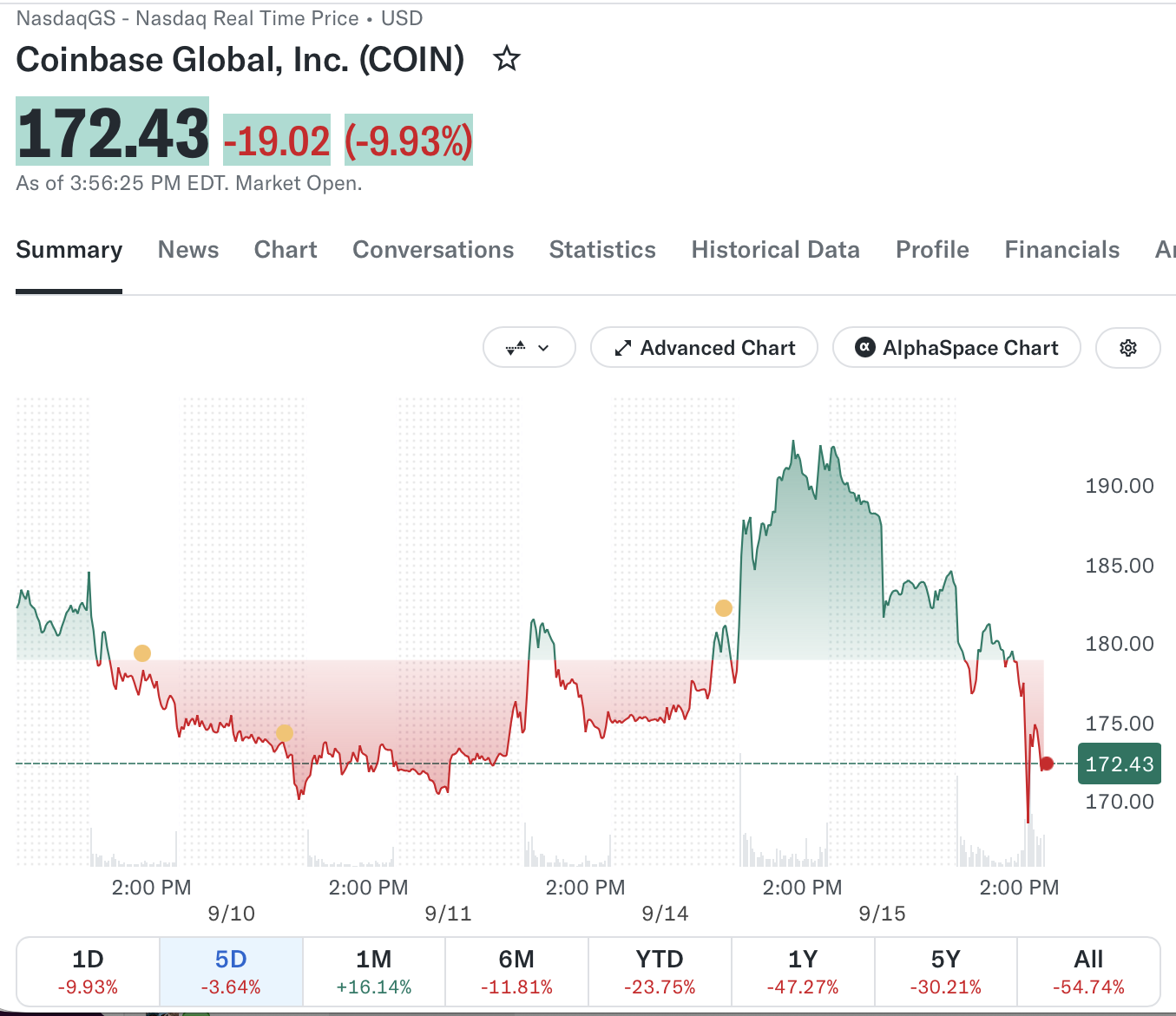
The immediate aftermath of the failed vote saw a broad-based sell-off in the crypto-linked stock market. Coinbase (COIN), a prominent cryptocurrency exchange, experienced a significant drop of 9.9% by the close of trading on Tuesday, reflecting investor concerns about the lack of regulatory clarity. Similarly, Circle, the issuer of the USDC stablecoin, saw its shares decline by approximately 10%.
Companies with substantial Bitcoin treasuries also bore the brunt of the market’s negative reaction. American Bitcoin (MSTR), a company known for its significant holdings of the digital currency, saw its stock price fall by around 8%. Other Bitcoin treasury companies, including Strategy and Strive, each experienced declines of about 5%, according to data compiled by Yahoo Finance.
The sell-off extended to Bitcoin miners, a sector heavily reliant on the price and accessibility of cryptocurrencies. Riot Platforms (RIOT) recorded a decline of approximately 6%. CleanSpark (CLSK) also saw its shares fall by nearly 5%, while Hut 8 (HUT) and IREN (IRBT) each experienced drops of more than 4% and almost 4%, respectively. This widespread impact highlights the interconnectedness of the digital asset ecosystem and its sensitivity to regulatory news.

The CLARITY Act: A Crucial Regulatory Framework
The CLARITY Act was designed to provide much-needed definition and structure to the burgeoning digital asset market in the United States. A key objective of the legislation was to delineate clear jurisdictional boundaries between regulatory bodies, specifically the Commodity Futures Trading Commission (CFTC) and the Securities and Exchange Commission (SEC). Such a division of authority was widely seen as essential for fostering innovation while also ensuring investor protection and market integrity.
For years, the lack of a clear regulatory roadmap has created an environment of uncertainty for crypto businesses operating in the U.S. This ambiguity has often led to legal challenges, compliance burdens, and a perceived disadvantage compared to jurisdictions with more defined regulatory frameworks. The CLARITY Act represented a significant bipartisan effort to address these concerns and provide a predictable operating environment for the industry.
Timeline of Events and Preceding Advocacy
The Senate’s vote on Tuesday marked the culmination of months of legislative efforts and intense industry advocacy. Throughout the preceding weeks and months, key figures within the crypto industry had actively lobbied for the CLARITY Act’s passage.
Coinbase CEO Brian Armstrong emerged as one of the most vocal proponents of the legislation. As early as May, Armstrong expressed optimism about the bill’s prospects, stating that it had never been in a "stronger or more bipartisan position." His public statements often highlighted the potential for the CLARITY Act to foster U.S. innovation in the digital asset space.
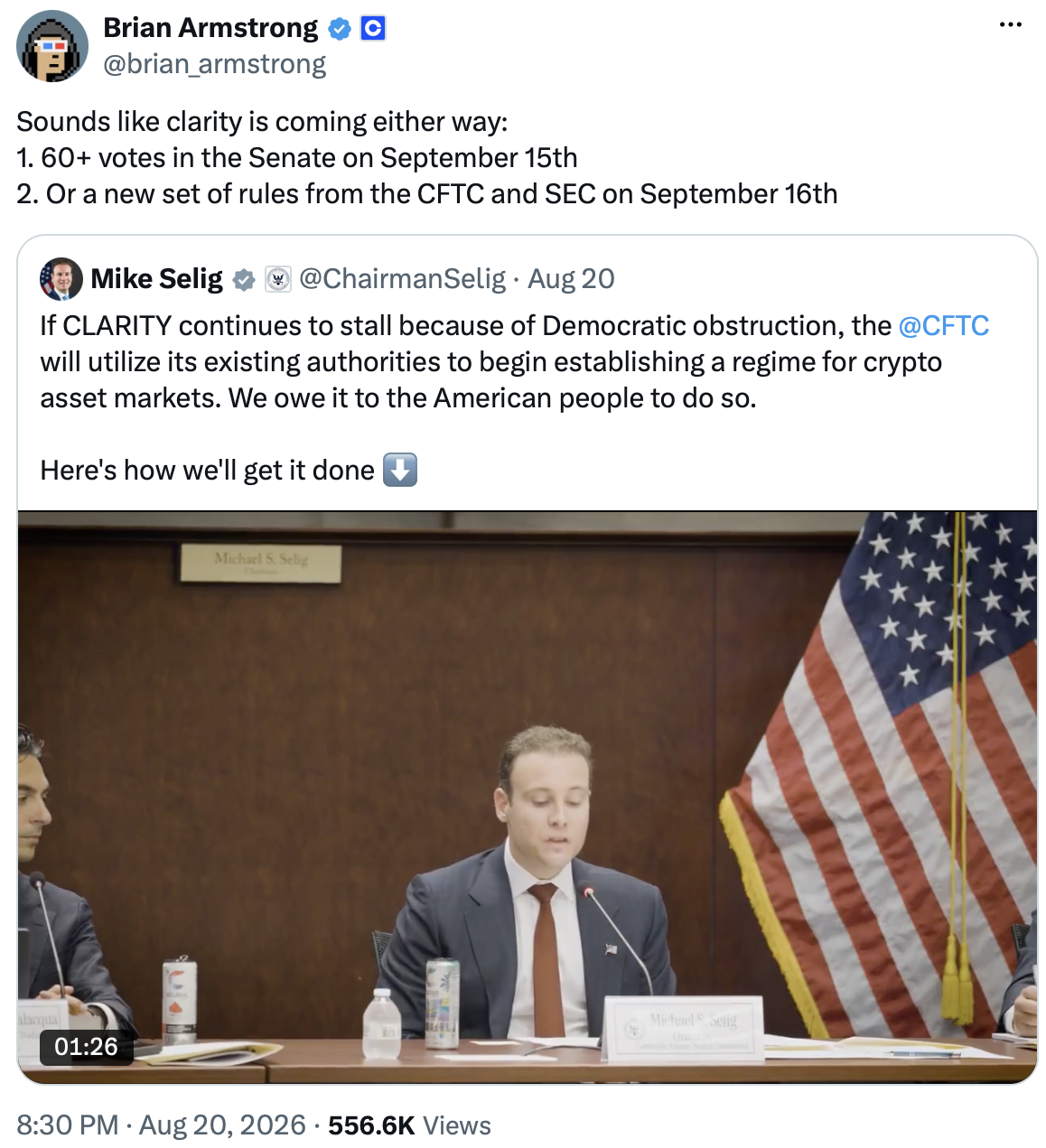
In August, Armstrong further elaborated on his expectations, predicting either a significant Senate vote of "60+ votes on September 15th" or the implementation of new rules by the CFTC and SEC on September 16th if the bill failed to advance. He articulated this sentiment on X (formerly Twitter), writing, "Sounds like clarity is coming either way." This prediction underscored the urgency and anticipation surrounding the legislative process.
Leading up to Tuesday’s critical vote, Armstrong continued his advocacy, urging senators to support the CLARITY Act. He framed the decision as a choice between promoting American leadership in crypto innovation and allowing other nations to gain a competitive edge. His impassioned plea, posted on X, stated, "History – and the crypto voter – won’t forget."
The failure of the CLARITY Act to advance is particularly significant given the limited legislative calendar remaining in the current Congress. With fewer than 36 legislative days left before a new Congress is sworn in following the November midterm elections, the window for such a complex piece of legislation to gain traction has narrowed considerably. This makes the outcome of Tuesday’s vote a substantial blow to proponents of a swift regulatory resolution.
Bitcoin’s Price Volatility Post-Vote
The immediate impact of the failed vote was also visible in the price of Bitcoin. The flagship cryptocurrency briefly dipped below the $75,000 mark following the Senate’s decision. However, by the time of reporting, Bitcoin had shown some resilience, climbing back to trade around $76,000, according to data from CoinGecko. This brief dip and subsequent partial recovery illustrate the market’s sensitivity to regulatory news, as well as its underlying strength and potential for recovery.
Industry Reactions and Divergent Views
While many in the crypto industry expressed disappointment with the legislative setback, some articulated different perspectives on the path forward. Following the failed vote, Michael Saylor, co-founder of Strategy, offered a more focused view on regulatory clarity. He posted on X, "The only clarity you need is Bitcoin," suggesting that for him, the inherent properties and established presence of Bitcoin offer sufficient direction, independent of comprehensive legislative action. This viewpoint reflects a segment of the market that prioritizes the fundamental nature of decentralized digital assets over regulatory frameworks.
The CLARITY Act’s journey through the legislative process has been complex, involving various stakeholders with differing interests and priorities. Reports indicated that Democrats had pushed back on an earlier offer from Republicans concerning the CLARITY Act, proposing their own counterproposal, as detailed by Politico. This suggests that achieving consensus on the specifics of digital asset regulation has been a challenging endeavor.
Broader Implications for the U.S. Digital Asset Market
The failure to advance the CLARITY Act carries significant implications for the U.S. digital asset market.
- Increased Regulatory Uncertainty: The immediate consequence is a continuation of the ambiguous regulatory landscape. This uncertainty can deter institutional investment, hinder the development of new products and services, and potentially lead to further capital flight to more crypto-friendly jurisdictions.
- Competitive Disadvantage: As other nations move to establish clearer regulatory frameworks, the U.S. risks falling behind in the global race for digital asset innovation and adoption. Companies may choose to establish or expand their operations in countries offering greater regulatory certainty.
- Potential for Agency Action: While legislative clarity has been delayed, the SEC and CFTC may continue to assert their existing authorities, potentially leading to further enforcement actions or the development of new rules through administrative processes. This could result in a more fragmented and potentially less predictable regulatory environment than a comprehensive legislative act would provide.
- Market Volatility: The sharp price movements observed on Tuesday underscore the market’s sensitivity to regulatory news. Investors will likely remain on edge, with potential for further volatility as the regulatory landscape continues to evolve.
- Impact on Innovation: For startups and established companies alike, the lack of clear rules makes long-term strategic planning more difficult. This can stifle innovation as businesses become more cautious about investing in new technologies and business models without a predictable regulatory environment.
The path forward for digital asset regulation in the United States remains uncertain. While the CLARITY Act has been stymied for now, the underlying demand for regulatory clarity persists. The upcoming midterm elections could potentially shift the political landscape, and future legislative efforts may emerge. However, for the time being, the industry must continue to navigate a complex and evolving regulatory environment, with the consequences of Tuesday’s vote likely to be felt for some time to come.
This article is produced in accordance with Cointelegraph’s Editorial Policy and is intended for informational purposes only. It does not constitute investment advice or recommendations. All investments and trades carry risk; readers are encouraged to conduct independent research.

