
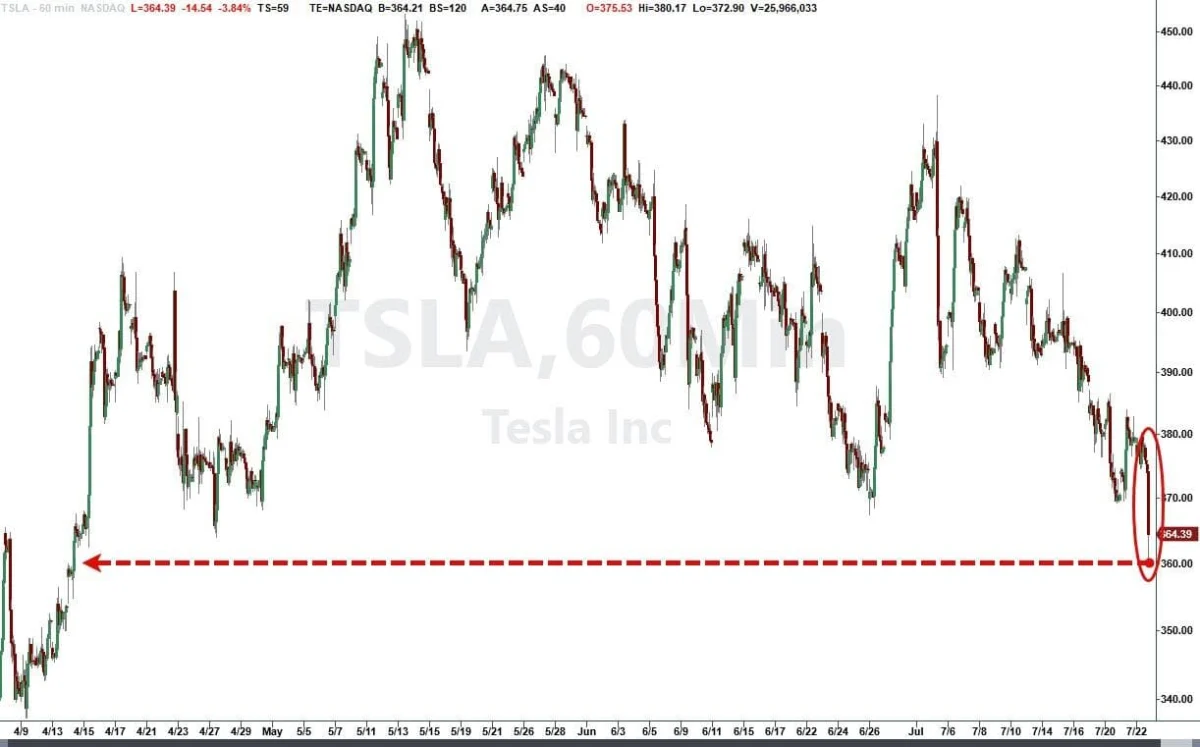
After a challenging period marked by weakening demand, falling sales, and brand perception concerns attributed in part to CEO Elon Musk’s public activities, Tesla’s path to recovery presents a complex picture following its second-quarter 2026 financial report. While the electric vehicle giant showcased impressive delivery figures and robust revenue growth, its profitability was notably impacted by substantial investments in artificial intelligence and research and development, leading to an earnings per share miss that tempered investor enthusiasm. The market’s immediate reaction saw Tesla shares decline in after-hours trading, underscoring the tension between the company’s ambitious long-term vision and its short-term financial realities.
Navigating the Financial Landscape: A Tale of Two Metrics
Tesla’s Q2 2026 performance delivered a dichotomy of results, painting a picture of a company simultaneously excelling in market penetration and grappling with the costs of aggressive future-proofing. The quarter saw the company report an impressive 480,126 vehicle deliveries, marking approximately a 25 percent increase compared to the second quarter of 2025. This strong delivery performance translated into substantial top-line growth, with revenue soaring to $28.2 billion. This figure represents a significant 28 percent increase year-over-year and comfortably surpassed analysts’ expectations of $26.4 billion, indicating strong underlying demand for its automotive products despite broader market headwinds. Furthermore, Tesla achieved a notable milestone, recording $100 billion in trailing twelve-month revenue for the first time in its history, a testament to its expanding global footprint and product appeal.
However, this revenue triumph was juxtaposed with a less favorable profitability outlook. Earnings per share fell 18% compared to Q2 2025, landing at $0.33, well below the anticipated $0.51 per share. The company’s net income for the quarter stood at $1.11 billion. Tesla attributed the dip in profitability primarily to higher spending on artificial intelligence initiatives and research and development, areas deemed crucial for its future growth but exerting immediate pressure on the bottom line. Automotive gross margins, a key indicator of the profitability of its core business, stood at 16.3% in Q2 2026. While this marked an improvement from 15% in Q2 2025, it represented a sequential decline from 19.2% in Q1 of this year, suggesting that aggressive pricing strategies and increased operational costs continue to influence the automotive segment’s financial health.
The Broader Context: Two Years of Headwinds and Strategic Adjustments

The mixed Q2 results come after what the company described as a "dismal two years," characterized by a confluence of macroeconomic and internal challenges. The global electric vehicle market, once a runaway train, has experienced a notable slowdown in demand, partly due to persistent high interest rates making vehicle financing more expensive for consumers. Increased competition has also played a significant role, with traditional automotive giants accelerating their EV offerings and a surge of new, often more affordable, electric models emerging from manufacturers, particularly in China. This intensified competitive landscape has often necessitated price cuts across Tesla’s model lineup to maintain market share, directly impacting its automotive gross margins.
Beyond market dynamics, the company has also faced scrutiny regarding its brand perception. Observers and market analysts have noted that controversies surrounding CEO Elon Musk’s public statements and social media activities have at times drawn criticism, leading to discussions among consumers and investors regarding potential impacts on brand loyalty and the company’s public image. While difficult to quantify precisely, such factors can contribute to a more cautious market sentiment. In response to these pressures, Tesla has undertaken significant strategic adjustments, including optimizing production efficiency, expanding its product portfolio, and, crucially, making massive investments in technologies it believes will define its next decade.
Pivoting to the Future: AI, Robotics, and Autonomous Mobility

A central theme of Tesla’s Q2 report was its unwavering commitment to an ambitious future driven by artificial intelligence and robotics, effectively signaling a deeper pivot beyond its identity as solely an automotive manufacturer. This long-term vision is evident across several key initiatives:
Optimus Bot: The company reported significant progress on its humanoid robot, Optimus. First-generation production lines are currently being installed, with the company anticipating production to commence "soon" in 2026. Optimus is envisioned to eventually perform dangerous, repetitive, or dull tasks, potentially transforming manufacturing and logistics, both within Tesla’s operations and as a commercial product. The transition from conceptual development to production line installation marks a critical step in realizing this ambitious project.
Full Self-Driving (FSD) and AI Compute: Tesla’s Full Self-Driving software continues its rapid expansion. Active FSD subscriptions reached 1.48 million in the second quarter, representing a robust 56% year-over-year increase and a significant jump from 1.28 million reported in the first quarter. This growth underscores the increasing adoption of Tesla’s advanced driver-assistance features and its potential as a recurring revenue stream. To support the sophisticated AI required for both vehicle autonomy and humanoid robotics, Tesla dramatically scaled its computing infrastructure. The company more than doubled its onsite compute capacity in Texas (measured in megawatts of compute) during the first half of 2026. This expansion includes the Cortex 2 platform, designed to underpin the development of advanced autonomy software for both vehicles and robots. Tesla affirmed its plans to further ramp up these compute resources throughout the remainder of the year, emphasizing the need for sufficient processing power to achieve its AI ambitions.

Cybercab (Robotaxi): A significant update for the quarter concerned the Cybercab, Tesla’s highly anticipated autonomous taxi service. The company announced that the Cybercab is now officially "in production," a notable advancement from its previous statement last quarter that it expected "volume production this year." This implies that the initial manufacturing phases have begun, bringing the vision of widespread robotaxi deployment closer to reality. The Cybercab represents a potentially disruptive force in urban transportation, promising to leverage Tesla’s FSD technology for a fully autonomous ride-hailing network.
Tesla Semi: The heavy-duty electric truck, Tesla Semi, is currently in the "commissioning" phase, and the company reiterated its commitment to achieving volume production by the end of 2026. The Semi is poised to address the significant carbon footprint of the commercial trucking industry, offering a sustainable alternative with impressive range and performance capabilities. Its successful rollout could open up substantial new revenue streams and reinforce Tesla’s leadership in electrification across various vehicle segments.
Energy Storage and Diversification:
Beyond its core automotive and burgeoning AI ventures, Tesla’s energy storage division demonstrated a strong rebound, showcasing the company’s diversified revenue streams. Revenue from energy storage increased by 13% year-over-year, recovering from a slight dip in the first quarter. More impressively, Tesla deployed 13.5 gigawatt-hours (GWh) of storage in Q2, an increase of more than 50% from the prior three months. This surge is largely attributed to the escalating demand from data centers, which require reliable battery storage solutions to regulate power flows and ensure faster connections to the grid. The growth in this segment highlights Tesla’s strategic positioning within the broader energy transition, leveraging its battery technology expertise to address critical infrastructure needs.

Capital Expenditure and the Long-Term Gamble
The ambitious scope of Tesla’s future-oriented projects, particularly in AI and robotics, is directly reflected in its capital expenditures. The company spent $5.8 billion in CapEx during the second quarter, bringing its total for the first half of 2026 to approximately $8.28 billion. While this represents a significant ramp-up in spending over the past three months, it still places the company behind the pace required to meet CEO Elon Musk’s aggressive forecast of $25 billion in capital outlays for the entirety of 2026. This massive investment underscores the company’s "aggressive infrastructure cycle," as noted by industry analysts.
David Wagner, portfolio manager at Aptus Capital Advisors, succinctly captured the prevailing sentiment: "Tesla’s earnings tonight highlight a core tension between short-term financial realities and an ambitious long-term AI vision. While recent delivery rebounds demonstrate steady vehicle volume, heavy margin pressure from global price cuts and massive capital expenditure – projected at over $25 billion this year for AI compute, chips, and infrastructure – are squeezing free cash flow." Wagner further elaborated, "Ultimately, Tesla is asking investors to fund an aggressive infrastructure cycle: if its pivot into autonomous fleets and physical AI succeeds, the long-term upside is massive, but any regulatory or technological delays leave the stock vulnerable if judged solely on its core automotive margins." This analysis perfectly encapsulates the high-stakes gamble Tesla is undertaking, prioritizing future dominance in AI and autonomy over immediate, maximized profitability in its established automotive sector.

Investor Reaction and Outlook
The market’s immediate reaction to Tesla’s Q2 2026 report was one of caution. Despite the impressive revenue and delivery figures, the earnings miss weighed heavily on shares in after-hours trading, pushing them to test three-month lows. Investors were clearly more focused on the impact of high AI and R&D spending on profitability, as well as the sequential decline in automotive gross margins, rather than solely on the top-line growth. The earnings conference call, with Elon Musk at the helm, was highly anticipated, with investor focus expected to center on detailed updates regarding robotaxis, Optimus robots, capital spending projections, and further insights into the company’s AI strategy.
Despite the immediate financial headwinds and the market’s cautious response, Tesla’s leadership expressed profound optimism. The company stated, "We have never been more optimistic about the future," signaling an unwavering belief in its long-term strategic direction. This statement encapsulates the dual narrative of Tesla: a maturing automotive company facing stiff competition and profitability pressures, simultaneously transforming into a technology powerhouse making massive, capital-intensive bets on AI, robotics, and autonomous services that promise to redefine multiple industries. The coming quarters will be critical in determining whether these ambitious investments begin to translate into sustainable, diversified profitability, or if the "core tension" between short-term financials and long-term vision continues to dominate the narrative.

