

The global financial system has witnessed a dramatic shift in interest rates, with benchmark figures reaching their highest levels in approximately two decades. This abrupt reversal follows an extended period of nearly fourteen years characterized by exceptionally low, near-zero interest rates, fundamentally altering economic dynamics and prompting widespread reevaluation of financial strategies for individuals, businesses, and investors alike. The sudden recalibration by central banks, most notably the U.S. Federal Reserve, marks a decisive pivot from an era of easy money, underscoring a commitment to combat persistent inflationary pressures that have become a defining challenge of the post-pandemic recovery.
The End of an Era: A Prolonged Period of Ultra-Low Rates

For the better part of a decade and a half, central banks globally, including the U.S. Federal Reserve, maintained an accommodative monetary policy, primarily characterized by near-zero interest rates and extensive quantitative easing (QE). This policy stance was largely initiated in response to the 2008 global financial crisis, aimed at stimulating economic growth, fostering employment, and averting deflationary spirals. The Federal Funds Rate, a key benchmark influencing borrowing costs across the economy, largely remained below 1% from late 2008 until 2015, and again from March 2020 through early 2022 following the onset of the COVID-19 pandemic.
This prolonged period of inexpensive credit had profound effects. It made mortgages historically affordable, fueling robust demand in housing markets and spurring new construction. Businesses benefited from low borrowing costs, encouraging significant capital investment, expansion, and job creation. Venture capital flowed freely, incubating new companies and fostering innovation. This environment, while fostering two decades of growth and prosperity, also contributed to an accumulation of liquidity in the system, laying the groundwork for future inflationary challenges.
The Genesis of Inflation and the Fed’s Aggressive Response
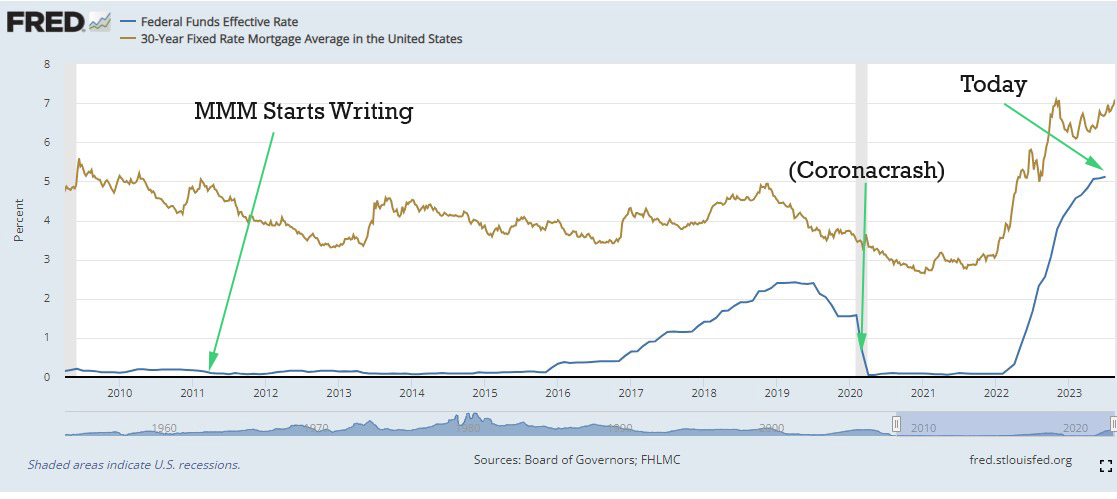
The seeds of the current inflationary environment were sown during and immediately after the COVID-19 pandemic. Unprecedented fiscal stimulus packages, coupled with a surge in consumer demand as economies reopened, collided with significant supply chain disruptions. This imbalance—too much money chasing too few goods—led to an unacceptable acceleration of inflation. The Consumer Price Index (CPI) in the U.S., for instance, peaked at 9.1% year-over-year in June 2022, a level not seen in over four decades.
Initially, central banks, including the Federal Reserve, characterized these inflationary pressures as "transitory," expecting them to dissipate as supply chains normalized. However, as inflation proved more persistent and broad-based, the Fed recognized the need for decisive action. Under the leadership of Chairman Jerome Powell, the Federal Reserve embarked on an aggressive campaign of monetary tightening, beginning in March 2022. The Federal Funds Rate, which was near zero, was systematically raised in a series of consecutive meetings, reaching a range of 5.25%-5.50% by August 2023. This rapid escalation marked the fastest pace of rate hikes since the early 1980s, signaling the Fed’s unwavering commitment to restore price stability, even at the risk of economic slowdown.
Interest Rates Soar: A Historical Perspective

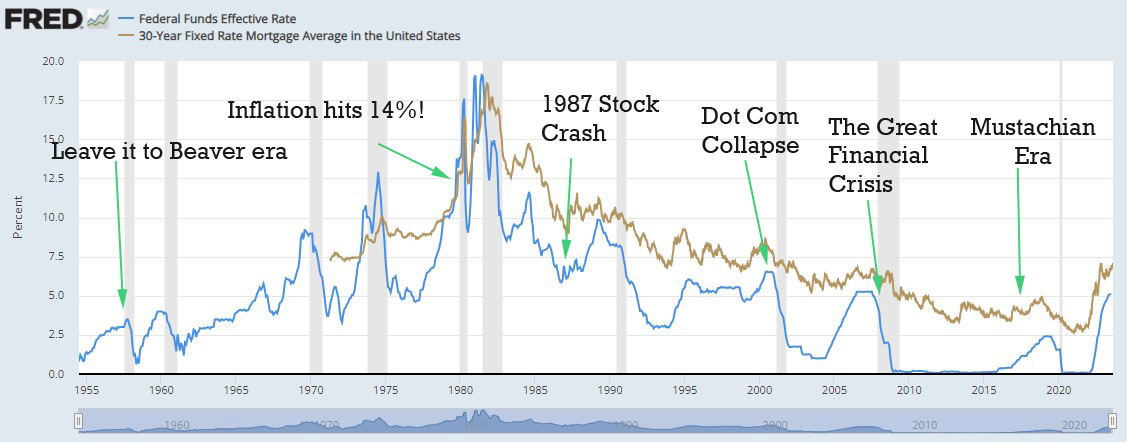
The current interest rate environment, while feeling unprecedented to those who have only experienced the post-2008 era, actually represents a return to historical norms. The 30-year fixed mortgage rate, which dipped below 3% in late 2020 and early 2021, has since climbed to over 7.5% by late summer 2023. Similarly, the Federal Funds Rate, now above 5%, aligns more closely with the average rates observed over the past 70 years, rather than the anomalous lows of the last decade and a half.
A broader historical view reveals that interest rates fluctuate significantly over economic cycles. The period from 2009 to 2022, characterized by near-zero rates, was an exception rather than the rule. The current levels, while a sharp contrast to recent memory, are well within the typical range observed across multiple generations, suggesting that the economy is adjusting to a more conventional cost of capital.
Economic Repercussions Across Sectors

The dramatic increase in interest rates has rippled through various sectors of the economy, initiating a cooling effect intended to curb inflation.
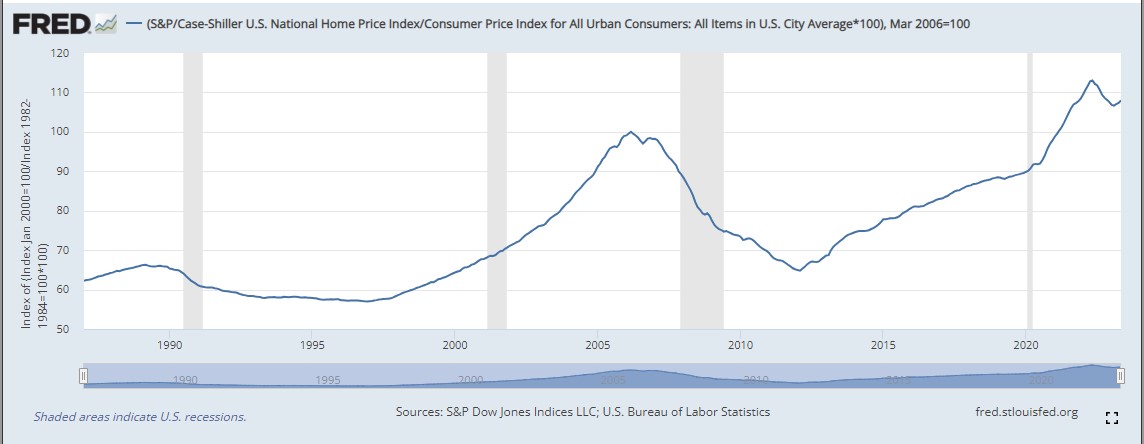
- Housing Market: The most immediate and significant impact has been felt in the housing sector. Higher mortgage rates have substantially increased the monthly cost of homeownership, leading to a noticeable drop in buyer demand. For instance, a $400,000 home with a 10% down payment, financed at 3% interest, would incur a monthly principal and interest payment of approximately $1,519. The same home financed at 7.5% would see that payment jump to about $2,517—a staggering 65% increase. This reduced affordability has led to a deceleration in home price appreciation, increased housing inventory in many areas, and in some markets, modest price declines. Construction of new homes has also slowed as developers face higher borrowing costs and diminished demand.
- Corporate Investment and Employment: Businesses are also recalibrating their strategies. With borrowing money becoming significantly more expensive, companies are scaling back plans for new capital expenditures, factory expansions, and ambitious projects. This has translated into a more cautious approach to hiring, with some large technology companies, such as Meta (Facebook) and Amazon, implementing significant layoffs (e.g., 10,000 at Meta, 27,000 at Amazon) in response to rising costs and a tightening economic outlook.
- Banking Sector: The rapid ascent of interest rates also exposed vulnerabilities within the banking system, culminating in a "miniature banking crisis" in early 2023. Several mid-sized U.S. banks, including Silicon Valley Bank and Signature Bank, failed partly due to the depreciation of their bond portfolios, which had been purchased when rates were low and lost value as rates rose. This episode triggered concerns about broader financial stability, prompting swift intervention by regulators to shore up confidence and liquidity.
- Consumer Spending and Credit: Consumers are also experiencing the pinch. Variable-rate debt, such as credit cards and some personal loans, has become more expensive. While overall consumer spending has remained relatively resilient, the higher cost of borrowing for major purchases like cars and homes is beginning to exert a dampening effect on demand, a key objective of the Fed’s policy.
Despite these headwinds, the U.S. labor market has demonstrated remarkable resilience, with unemployment rates remaining near 50-year lows (e.g., 3.8% in August 2023). This underlying strength, often cited by economists, suggests that the economy is navigating a complex period of adjustment, rather than facing an imminent collapse, though the path ahead remains uncertain.
Investment Strategies in a New Rate Environment

The shift in interest rates necessitates a reevaluation of investment strategies, though core principles of long-term investing remain paramount.
- Equities (Stock Market): For stock market investors, the period of rising rates has coincided with increased volatility. From its peak in early 2022 through August 2023, the overall U.S. market (as measured by indices like the S&P 500) experienced a decline of approximately 10%, effectively flattening gains since mid-2021. Financial advisors generally counsel against market timing, emphasizing that attempting to "dance in and out" of the market based on short-term rate movements is rarely successful. Instead, a consistent dollar-cost averaging strategy, continuing to invest in diversified index funds, is often recommended. A market downturn can be viewed as an opportunity to acquire assets at a lower price, potentially yielding higher returns when the market eventually recovers, as it historically has over the long term.
- Fixed Income (Savings Accounts, Bonds): The new rate environment has made cash and fixed-income investments significantly more attractive. High-yield savings accounts and money market funds are now offering yields of 4.5% or more, a stark contrast to the sub-1% rates of previous years. Short-term Treasury bonds and Certificates of Deposit (CDs) also present compelling, low-risk options for capital preservation and modest returns. While these yields may seem appealing, especially compared to the volatility of equities, investors must weigh them against the long-term growth potential of stocks, particularly when the stock market itself may be "on sale." A balanced approach, considering individual risk tolerance and financial goals, often involves allocating funds across both equities and higher-yielding fixed-income instruments.
The Enigma of the Yield Curve and Future Outlook
Predicting the future trajectory of interest rates is inherently complex, yet market indicators offer valuable insights. A critical tool for this is the U.S. Treasury Yield Curve, which plots the yields of Treasury bonds across different maturities. Typically, a normal yield curve slopes upwards, meaning lenders demand higher returns for locking up their money for longer periods.
However, the current environment presents an "inverted yield curve," a highly unusual phenomenon. As of late summer 2023, short-term Treasury bills (e.g., 1-year) offered yields around 5.4%, while longer-term bonds (e.g., 10-year) yielded closer to 4.05%. This inversion signals that bond market participants anticipate interest rates to decline in the future, often interpreted as a forecast for an economic slowdown or even a recession. Historically, an inverted yield curve has been a remarkably accurate predictor, preceding 10 of the last 11 U.S. recessions over the past 75 years.
Based on this historical precedent and current economic data, many economists and market analysts project that interest rates may begin to moderate within the next 18-24 months. This potential easing would likely be triggered by clear signs of economic cooling, such as sustained lower inflation, a rise in unemployment, and a general deceleration in economic activity, which would prompt the Federal Reserve to loosen its monetary policy.
Navigating the Landscape: Expert Advice
In this evolving economic landscape, a robust personal financial strategy remains the most reliable defense against market volatility and uncertainty. Key tenets of financial resilience include:
- Debt Management: Prioritize paying down high-interest debt, as the cost of carrying such debt has increased significantly.
- Emergency Savings: Maintain a robust emergency fund, ideally covering 3-6 months of living expenses, to weather potential economic downturns or personal financial shocks.
- Diversified Investments: Continue to invest consistently and maintain a diversified portfolio aligned with long-term goals, rather than attempting to time market fluctuations.
- Focus on Fundamentals: Emphasize personal choices related to income generation, disciplined saving, and mindful consumption. These controllable factors often exert a greater influence on individual financial well-being than external market forces.
The current shift in interest rates represents a return to a more normalized monetary environment after an extended period of extraordinary accommodation. While the transition may bring challenges and necessitate adjustments, it is a necessary step in the ongoing effort to maintain economic stability. For individuals and businesses, the emphasis remains on sound financial planning, adaptability, and a long-term perspective, allowing them to navigate the ripples of market change rather than being overwhelmed by them.

