
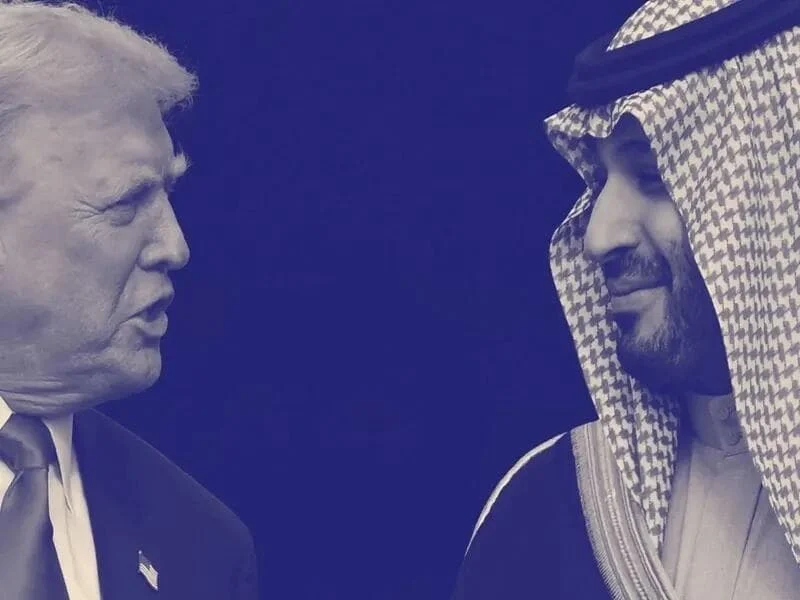
Recent developments have cast a spotlight on the complex and often contentious relationship between the United States and Saudi Arabia, particularly following demands made by former President Donald Trump. Despite Saudi Arabia’s significant strategic value and its deep-seated alliance with the US, Riyadh has faced unexpected pressure, including a recent precondition for recognizing Israel to finalize a crucial nuclear energy deal. This demand, reportedly not part of the initial agreement, follows earlier instances of perceived mistreatment, such as Trump’s public assertion that Crown Prince Mohammed Bin Salman (MBS) had been "kissing my ass" for rejuvenating the US economy. These incidents highlight a curious dynamic where Washington, despite its reliance on the Kingdom in multiple critical areas, appears to take Saudi partnership for granted. This article delves into five key areas where Saudi Arabia holds substantial, yet often unexercised, leverage over the United States, exploring the historical context, current implications, and the strategic calculus behind Riyadh’s likely reluctance to fully deploy these advantages.
The Shifting Sands of US-Saudi Relations: A Recent Chronology
The alliance between the United States and Saudi Arabia, forged in the aftermath of World War II, has historically been characterized by an "oil for security" pact. The US guaranteed the Kingdom’s security and stability, while Saudi Arabia ensured a steady flow of oil, priced in dollars, bolstering the petrodollar system and global energy markets. However, the dynamics of this relationship have evolved significantly, particularly in the 21st century, with growing US domestic energy production, Saudi Arabia’s Vision 2030 economic diversification plan, and a more assertive Saudi foreign policy under Crown Prince Mohammed Bin Salman.
A Timeline of Recent Tensions:
- 2017: Trump’s First Presidential Trip to Saudi Arabia: In May 2017, then-President Trump chose Riyadh for his first international visit, signaling the importance of the alliance. During this visit, Saudi Arabia pledged a staggering $600 billion in investments into the US economy over several years, including significant arms purchases. This period was marked by an apparent strengthening of ties, particularly against perceived Iranian regional expansion.
- Early 2024 (Approximate): "Kissing My Ass" Remark: Reports surfaced that Donald Trump, speaking publicly, claimed that Crown Prince Mohammed Bin Salman had been "kissing my ass" due to the perceived economic benefits Saudi Arabia derived from his presidency. Such a public and undiplomatic remark, even if made in a political rally context, was widely seen as a humiliation for the Saudi leadership, challenging the traditional respect accorded to a key ally.
- Late 2024 / Early 2025 (Inferred): Nuclear Energy Deal and Israel Recognition Demand: More recently, discussions around a US-Saudi civilian nuclear energy cooperation deal gained traction. This deal, crucial for Saudi Arabia’s ambitious energy diversification and climate goals, would involve the US providing technology and expertise. However, former President Trump reportedly introduced a new precondition: Saudi Arabia must recognize Israel as part of the agreement. This demand, if confirmed, represents a significant deviation from the prior understanding and adds a complex geopolitical layer to an already sensitive bilateral negotiation. The timing of this demand aligns with ongoing efforts to expand the Abraham Accords, which saw several Arab nations normalize ties with Israel, and reflects a broader US foreign policy goal to integrate Israel further into the regional security architecture.
These events underscore a growing perception in Riyadh that Washington might be underestimating the depth of Saudi Arabia’s strategic importance and its potential leverage.
Five Strategic Pillars of Saudi Leverage
Despite these instances of diplomatic friction, the United States remains profoundly reliant on Saudi Arabia in several critical domains. These areas of interdependence form the bedrock of Saudi Arabia’s leverage, even if seldom fully exercised.
1. Indirectly Projecting US Influence Across The Ummah
Saudi Arabia holds an unparalleled position within the global Muslim community, or Ummah, primarily due to its role as the Custodian of the Two Holy Mosques, Mecca and Medina. This religious authority grants the Kingdom immense soft power and diplomatic influence across Muslim-majority nations worldwide. For decades, Saudi Arabia has leveraged this influence, often aligning its foreign policy with that of the United States.
By consistently supporting US geopolitical objectives, whether in counter-terrorism efforts, promoting regional stability, or advocating for certain political stances, Saudi Arabia effectively amplifies American influence in regions where the US might otherwise struggle to gain traction. Its status as a fellow Muslim nation allows it to communicate and advocate for positions that might be viewed with skepticism if articulated directly by Western powers. This indirect projection of influence is particularly effective in addressing complex issues like religious extremism, promoting moderate interpretations of Islam, or rallying support for humanitarian initiatives. If Saudi Arabia were to significantly diverge from US foreign policy goals or, more critically, actively oppose them, it could severely undermine American diplomatic efforts across a vast swathe of the world, from North Africa to Southeast Asia. Such a shift could embolden anti-US sentiments and create significant challenges for Washington’s global agenda.
2. Investing Hundreds Of Billions Of Dollars Into The US Economy
Saudi Arabia’s vast oil wealth has historically been a significant source of foreign direct investment (FDI) into the United States. The Kingdom’s Public Investment Fund (PIF), one of the world’s largest sovereign wealth funds with assets exceeding $700 billion, is a major global investor. As highlighted during Trump’s 2017 visit, Saudi Arabia pledged a substantial $600 billion investment commitment into the US economy over several years. This commitment included a notable allocation of at least $100 billion specifically earmarked for the American tech industry.
These investments are not merely financial transactions; they represent a crucial injection of capital into various sectors of the US economy, fostering job creation, driving innovation, and supporting economic growth. Investments in the tech sector, for instance, are strategically vital for the US to maintain its competitive edge against rising global rivals, particularly China. Saudi capital has also flowed into US infrastructure projects, real estate, and financial markets, integrating the two economies at a fundamental level. Should Saudi Arabia decide to significantly reduce or redirect these investments, perhaps towards emerging markets or other geopolitical partners, the economic repercussions for the US could be substantial. It could lead to capital flight, decreased liquidity, pressure on asset prices, and a slowdown in critical growth sectors, impacting employment and economic stability.

3. Purchasing Billions Of Dollars Of American Arms
A significant portion of Saudi Arabia’s investment commitment to the US, nearly $142 billion out of the $600 billion pledge, is allocated to the American military-industrial complex. This makes Saudi Arabia an indispensable client for US defense contractors and a critical component of the US arms export strategy. Data from the Stockholm International Peace Research Institute (SIPRI) consistently shows Saudi Arabia as one of the largest importers of major arms globally, and often the largest client for the United States. For example, SIPRI’s reports have frequently highlighted Saudi Arabia’s substantial purchases, making it a top-three global importer during periods like 2021-2025.
These astronomical purchases provide immense benefits to the US defense industry, sustaining jobs, funding research and development, and ensuring the profitability of major defense contractors. Furthermore, the interoperability created by a common arms platform strengthens military cooperation and regional security architectures favored by Washington. The Kingdom’s reliance on US military hardware also gives the US considerable influence over Saudi military capabilities and strategic planning. However, this also presents a potent leverage point for Riyadh. If Saudi Arabia were to significantly diversify its arms suppliers, turning to countries like Russia, China, or European nations for its defense needs, it would not only deal a severe blow to the US military-industrial complex but also complicate US strategic influence in the Middle East. Such a move would necessitate a re-evaluation of regional security dynamics and could lead to a fragmentation of military doctrines and intelligence sharing.
4. Serving As The Core Of The "Islamic NATO"
In recent years, the concept of an "Islamic NATO" has gained currency, referring to a potential or nascent security alliance among key Muslim-majority nations, often with Saudi Arabia at its core. While not formally established as a NATO-style collective defense organization, various initiatives and consultative platforms have emerged, such as the Islamic Military Counter-Terrorism Coalition (IMCTC). The core countries often discussed in this context include Saudi Arabia, Pakistan, Egypt, and Turkey. Of these, Turkey is a full NATO member, while Pakistan and Egypt are designated "Major Non-NATO Allies" (MNNA), a status that grants them certain military and financial advantages in their relationship with the US.
This informal or formal grouping is strategically vital for the United States, allowing it to "lead from behind" in advancing military-security interests across the Ummah. By empowering and coordinating with these regional partners, the US can address threats such as terrorism, regional instability, and proxy conflicts without always deploying its own forces directly. Saudi Arabia’s leadership role within such a grouping is paramount, given its financial resources, diplomatic reach, and military capabilities. If Saudi Arabia were to withdraw its leadership or diminish its commitment to such a security framework, it could severely hamper US efforts to counter regional threats, destabilize existing security arrangements, and force Washington to assume a more direct and potentially costly interventionist role. The effectiveness of any US-backed regional security strategy would be significantly compromised without Saudi buy-in and active participation.
5. Preventing The Rise Of The "Petroyuan"
Perhaps one of the most fundamental pillars of American global economic hegemony is the petrodollar system. Institutionalized in the 1970s, this system relies on Saudi Arabia’s commitment to price its oil exports in US dollars and to recycle a significant portion of its petrodollar surpluses back into US Treasury bonds and other dollar-denominated assets. This arrangement ensures consistent global demand for the US dollar, helps fund US debt, and underpins the dollar’s status as the world’s primary reserve currency.
The continued participation of Saudi Arabia in the petrodollar system is crucial in preventing the rise of a hypothetical "petroyuan." China, as the world’s largest energy importer and a rising economic power, has long sought to internationalize its currency and challenge the dollar’s dominance. Beijing has increasingly pushed for oil and gas trade to be settled in yuan, particularly with major energy exporters. While minor yuan-denominated oil deals have been reported, Saudi Arabia’s steadfast commitment to the petrodollar has largely kept the "petroyuan" as a theoretical concept rather than a practical reality. Should Saudi Arabia decide to significantly shift its oil pricing mechanism, even partially, to the yuan or a basket of currencies, it would send shockwaves through the global financial system. Such a move would undermine the dollar’s reserve status, potentially increase US borrowing costs, and accelerate the broader trend of de-dollarization, profoundly impacting American economic power and global influence.
The Paradox of Leverage: Political Will Versus Strategic Restraint
While these five points clearly illustrate Saudi Arabia’s substantial leverage over the United States, the prevailing consensus, as highlighted by analysts like Andrew Korybko, is that the Kingdom "probably won’t ever muster up the political will to use them" to their full extent. This reluctance stems from a complex interplay of factors, where the disincentives for such drastic actions often outweigh the immediate benefits of asserting full independence.
Reasons for Saudi Restraint:
- Deep-Seated Interdependence: The US-Saudi relationship is not a one-way street. Saudi Arabia also relies heavily on the US for advanced military technology, intelligence sharing, and, critically, security guarantees against regional threats, particularly from Iran. A complete rupture would leave Saudi Arabia vulnerable and isolated.
- Economic Self-Interest: While Saudi investments are vital to the US, the US market remains a stable and lucrative destination for Saudi capital. Redirecting hundreds of billions of dollars would be a monumental task with uncertain returns and potential financial losses for the Kingdom. Furthermore, the global financial system is deeply intertwined with the dollar, making a sudden shift extremely risky for Saudi Arabia’s own financial stability.
- Global Stability Concerns: Saudi Arabia is a significant player in the global energy market and a member of the G20. Disrupting the petrodollar system or creating a chaotic shift in global alliances could have destabilizing effects on the world economy and international security, which would ultimately harm Saudi Arabia’s own long-term interests and its Vision 2030 goals for economic diversification and global integration.
- Fear of Retaliation: The United States possesses immense economic, diplomatic, and military power. Should Saudi Arabia unilaterally activate its full leverage, it would almost certainly face severe US retaliation, including economic sanctions, withdrawal of military support, diplomatic isolation, and potentially even covert actions to destabilize the regime. The consequences would be far-reaching and detrimental to the Kingdom’s national interests.
- Strategic Balancing Act: Saudi Arabia is increasingly pursuing a multipolar foreign policy, strengthening ties with China, Russia, and other rising powers. This strategy aims to diversify its partnerships and reduce over-reliance on any single nation. However, this diversification is a gradual process of balancing, not a wholesale abandonment of established alliances. Riyadh seeks to enhance its strategic autonomy without provoking a complete break with its traditional Western partners.
In conclusion, Saudi Arabia possesses an undeniable arsenal of strategic leverage over the United States, spanning religious influence, economic investment, defense procurement, regional security architecture, and global financial stability. These five pillars underscore a profound interdependence that often goes unacknowledged in the face of diplomatic friction. However, the Kingdom’s deep-seated security concerns, economic self-interest, and apprehension of severe US reprisal mean that while the possibility of deploying this leverage always remains, the political will to do so is likely to be tempered by pragmatic considerations. The US-Saudi relationship, therefore, continues to operate within a delicate strategic paradox, where immense influence is held in reserve, shaping a complex and enduring alliance despite occasional turbulence.

