
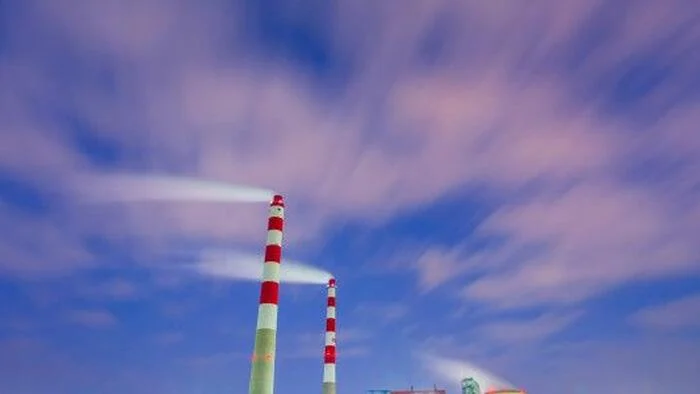
China has officially broken ground on a groundbreaking hybridized energy production and storage facility, a project poised to redefine the landscape of global energy technology and grid stability. Located in Shandong province, this revolutionary plant will integrate molten salt thermal energy storage with a supercritical carbon dioxide (sCO2) power generation system, marking a significant departure from conventional steam-based power cycles. The Ruitan demonstration project aims to dramatically reduce energy waste, enhance the stability of the local power grid, and serve as a crucial blueprint for next-generation energy and storage systems, with potential applications extending to advanced nuclear reactors and even extraterrestrial power infrastructure.
The Ruitan Project: A Hybrid Energy Breakthrough
Construction of the Ruitan facility commenced last week in Yantai, within eastern China’s Shandong province, on the site of the existing Bajiao coal-fired power station. This strategic co-location underscores a broader trend in China to repurpose existing energy infrastructure for cleaner, more efficient technologies. The project is anticipated to be fully operational by next year, establishing it as the world’s first operational plant of its kind. The initial phase of the Ruitan project will feature a 50-megawatt (MW) supercritical CO2 power unit, complemented by a substantial 100-MW molten salt energy storage system.
The operational principle of the Ruitan plant is elegantly designed to maximize efficiency and flexibility. During periods of low electricity demand, the facility will capture surplus energy from the adjacent coal plant. This energy will be stored as thermal energy within a molten salt reactor, which acts as a vast thermal battery. When electricity demand peaks, the stored thermal energy from the molten salt will be leveraged to drive the supercritical CO2 unit. Unlike traditional power plants that use steam to spin turbines, this innovative system employs carbon dioxide under specific high-temperature and high-pressure conditions, where it exists in a supercritical state, behaving simultaneously as both a liquid and a gas. This supercritical CO2 then efficiently drives a turbine in a closed-loop system to generate electricity. This dual-functionality — storing excess energy and dispatching it during critical demand — positions Ruitan as a vital asset for modern grids increasingly reliant on intermittent renewable sources.
Unpacking the Technology: Supercritical Carbon Dioxide Power Cycles
The adoption of supercritical carbon dioxide in power generation represents a significant leap forward from conventional steam-Rankine cycles. In its supercritical state, CO2 exhibits unique thermophysical properties that make it an exceptionally efficient working fluid. It achieves a density similar to a liquid while maintaining the viscosity and diffusivity of a gas, enabling it to transfer heat and energy with remarkable effectiveness. The sCO2 power cycle, typically a Brayton cycle, operates at much higher temperatures and pressures than steam turbines, often exceeding 500-600°C and pressures over 200 atmospheres. This allows for significantly higher thermodynamic efficiencies, with sCO2 cycles theoretically capable of reaching efficiencies upwards of 50%, compared to the 35-40% typical of modern steam plants.
The advantages of sCO2 units are manifold and critical for the future of energy production. As reported by the South China Morning Post, these plants are considerably smaller than traditional steam-based units, requiring a reduced physical footprint for the same power output. This compactness is a major benefit for land-constrained regions and could simplify plant construction. Furthermore, sCO2 systems boast a crucial environmental advantage: they do not require water for cooling in the same quantities as steam plants. This water independence is particularly valuable in arid or water-stressed regions, where conventional thermal power generation places significant strain on local water resources. The closed-loop nature of the sCO2 system also inherently leads to fewer carbon emissions per unit of electricity generated, contributing to cleaner energy production. Beyond these environmental benefits, sCO2 power plants are highly adjustable and more agile, allowing for rapid ramp-up and ramp-down times, which is essential for balancing fluctuating grid demands and integrating variable renewable energy sources like solar and wind. Their operational flexibility makes them ideal candidates for hybrid systems like Ruitan, which aim to provide stable, dispatchable power.
Molten Salt: The Backbone of Thermal Energy Storage
Molten salt thermal energy storage (MSTES) forms the other critical half of the Ruitan project’s innovative design. This technology has been successfully deployed in concentrated solar power (CSP) plants for decades, where it stores solar thermal energy at high temperatures. In the Ruitan context, molten salt acts as a medium to store excess heat generated from the coal plant or other sources. A typical molten salt mixture, often a eutectic blend of sodium nitrate, potassium nitrate, and lithium nitrate, can operate at temperatures ranging from 290°C to well over 500°C. This allows for the efficient storage of significant amounts of thermal energy.
The process involves pumping molten salt through heat exchangers, where it absorbs heat, increasing its temperature. This heated salt is then stored in insulated tanks. When power is needed, the hot salt is circulated back through another heat exchanger, transferring its stored heat to the supercritical CO2 system, which then drives the turbine. The cooled salt is returned to a cold storage tank, ready to absorb more heat. The primary benefit of MSTES, especially when compared to battery storage, is its capacity for long-duration energy storage. While batteries are excellent for short-to-medium duration power delivery, molten salt can store energy for hours or even days, making it an invaluable asset for bridging gaps in renewable energy supply and providing baseload-like dispatchable power. Its integration with existing thermal power infrastructure, as demonstrated by Ruitan’s co-location with a coal plant, showcases its versatility and potential for broader application in the energy transition.
Addressing Grid Instability and Energy Waste
The global push towards renewable energy, while critical for mitigating climate change, has introduced significant challenges to grid stability. Intermittent sources like solar and wind power are inherently unpredictable, as their output is dependent on weather conditions. This variability creates imbalances between electricity supply and demand, leading to grid instability, potential blackouts, and the curtailment of excess renewable energy that cannot be absorbed or stored. The Ruitan project directly addresses these challenges by offering a robust solution for energy storage and dispatch.
By capturing surplus energy during off-peak hours and storing it as thermal energy in molten salt, Ruitan effectively "banks" electricity that would otherwise be wasted. This stored energy can then be released on demand, providing a stable and reliable power supply during peak consumption times or when renewable output is low. This capability is known as providing "dispatchable power," a critical component for ensuring grid reliability in a high-renewable energy future. The agility of the supercritical CO2 system further enhances this capability, allowing for rapid adjustments to power output in response to real-time grid needs. This hybrid approach represents a sophisticated strategy to limit energy waste, optimize the utilization of both conventional and renewable energy sources, and ultimately stabilize the power grid, paving the way for a more resilient and efficient energy infrastructure.

China’s Ascendancy in Clean Energy Innovation
The Ruitan project is not an isolated development but rather a testament to China’s overarching and assertive strategy in the clean energy sector. For years, China has been steadily cultivating the world’s largest and fastest-growing clean energy technology industry, marked by an astonishing pace of research and development. This strategic focus stems from a dual imperative: addressing severe domestic pollution issues resulting from decades of coal-intensive industrialization, and recognizing the immense economic and geopolitical advantages of leading the global energy transition.
The statistical evidence of China’s dominance is compelling. In 2000, Chinese companies accounted for approximately 5 percent of the world’s clean energy patent applications. By 2022, this figure had skyrocketed to an astounding 75 percent, according to a report by the New York Times. This exponential growth reflects a national commitment to innovation, backed by substantial government investment and a highly skilled workforce. As the New York Times noted in an August 2025 report, China, once often accused of merely replicating foreign technologies, now stands as a primary driver of major contributions that are fundamentally shifting the world away from fossil fuels.
This aggressive investment and innovation strategy has allowed China to rapidly establish itself as what has been termed the world’s first "electrostate." Between 2019 and 2025, China’s investment in clean energy surpassed that of the rest of the world combined, contributing more than half of the $1.1 trillion invested globally. To put this into perspective, the United States, despite being the world’s largest economy, saw a comparatively modest $236 billion in clean energy investing during the same period. This unparalleled level of investment has not only propelled China to the forefront of clean energy manufacturing but has also granted it unprecedented reach and leverage in global clean energy markets. The extreme concentration of clean energy manufacturing and development within China means that many nations worldwide are now significantly reliant on Chinese technologies and supply chains to achieve their own clean energy objectives and build out their renewable infrastructure. This reliance underscores a profound shift in global energy dynamics, where technological leadership translates directly into geopolitical influence and economic power.
Global Implications and Geopolitical Undercurrents
The rapid ascent of China in clean energy, exemplified by projects like Ruitan, has significant global implications and has naturally fueled geopolitical competition, particularly with the United States. While China is aggressively pushing forward with innovative energy solutions, the United States, in some aspects, appears to be moving in a different direction, particularly concerning energy storage supply chains.
In an attempt to reduce U.S. markets’ dependence on Chinese clean energy supply chains, the Trump administration recently implemented a ban on using Chinese-made batteries in utility-scale energy storage systems. This policy, while ostensibly aimed at bolstering domestic manufacturing and supply chain resilience, has created considerable uncertainty and challenges for U.S. developers. The vague wording of the executive order has left many developers in limbo, unsure of compliance requirements and the long-term implications for their projects. More critically, by barring U.S. companies from purchasing often more affordable and readily available Chinese-made batteries, this policy risks kneecapping capacity additions in the short term. Industry analysts have voiced concerns that such measures, while well-intentioned for national security, could inadvertently slow down the clean energy transition in the U.S. by increasing costs and delaying project deployments, thereby widening the technological and deployment gap with China.
The broader picture highlights a growing tension between global collaboration on climate goals and national interests in economic competitiveness and energy security. While the Ruitan project’s specific technology – molten salt storage combined with sCO2 power – may not directly compete with battery storage for all applications, it is a crucial piece of a diversified, "all-of-the-above" approach to energy technology that Beijing is aggressively pursuing. This comprehensive strategy, encompassing various forms of renewable generation, advanced storage, and grid management, has allowed China to establish what is likely to be a lasting energy dominance on a global scale. The Ruitan plant, therefore, is not just an engineering marvel but a symbol of China’s strategic foresight and its determination to lead the world in defining the next generation of energy systems.
Beyond Terrestrial Grids: Future Frontiers
The innovative supercritical CO2 technology being showcased at Ruitan holds promise far beyond terrestrial power grids. Its inherent advantages — compactness, high efficiency, and water independence — make it a compelling candidate for applications in some of the most challenging environments imaginable.
One significant area of future application lies in the nuclear power sector. Advanced nuclear reactor designs, particularly Small Modular Reactors (SMRs) and Generation IV reactors, are actively exploring sCO2 power cycles as a more efficient and compact alternative to traditional steam cycles. The higher operating temperatures of many advanced reactors align well with the optimal conditions for sCO2, potentially leading to higher power output per unit of fuel and a smaller physical footprint for nuclear power plants. This synergy could revolutionize nuclear energy, making it more competitive, safer, and easier to deploy in various locations.
Even more futuristically, the technology holds potential for applications in space exploration. The original article alludes to its use on "the moon." For lunar bases or other extraterrestrial outposts, energy generation systems must be incredibly compact, robust, and capable of operating without relying on local water resources, which are scarce or non-existent. An sCO2 system, with its closed-loop design, high efficiency, and minimal material requirements for a given power output, could provide a stable and reliable power source for long-term human presence in space. Its ability to perform effectively in extreme temperature variations and vacuum conditions makes it a highly attractive option for powering lunar habitats, scientific instruments, and resource extraction operations.
The Ruitan demonstration project, therefore, serves not only as a critical step in China’s domestic energy transition but also as a harbinger of a future where energy systems are more integrated, efficient, and adaptable to a wider range of global and even extraterrestrial demands. It underscores a fundamental shift in technological leadership and innovation, with profound implications for how the world will generate, store, and consume energy in the decades to come.

