
BEIJING – In a significant rhetorical shift, Chinese President Xi Jinping has signaled a proactive approach to managing the complex relationship with the United States, declaring that the "Thucydides Trap can be overcome." This statement, made upon his arrival at the White House for a summit with U.S. President Donald Trump on Thursday, according to Beijing’s official readout, marks a notable evolution from his previous framing of merely "avoiding" the historical phenomenon. The invocation of this academic concept, popularized by Harvard professor Graham Allison, underscores China’s strategic messaging amidst heightened global scrutiny of the world’s two largest economies and their trajectory.
The Genesis of the Thucydides Trap: A Historical Imperative
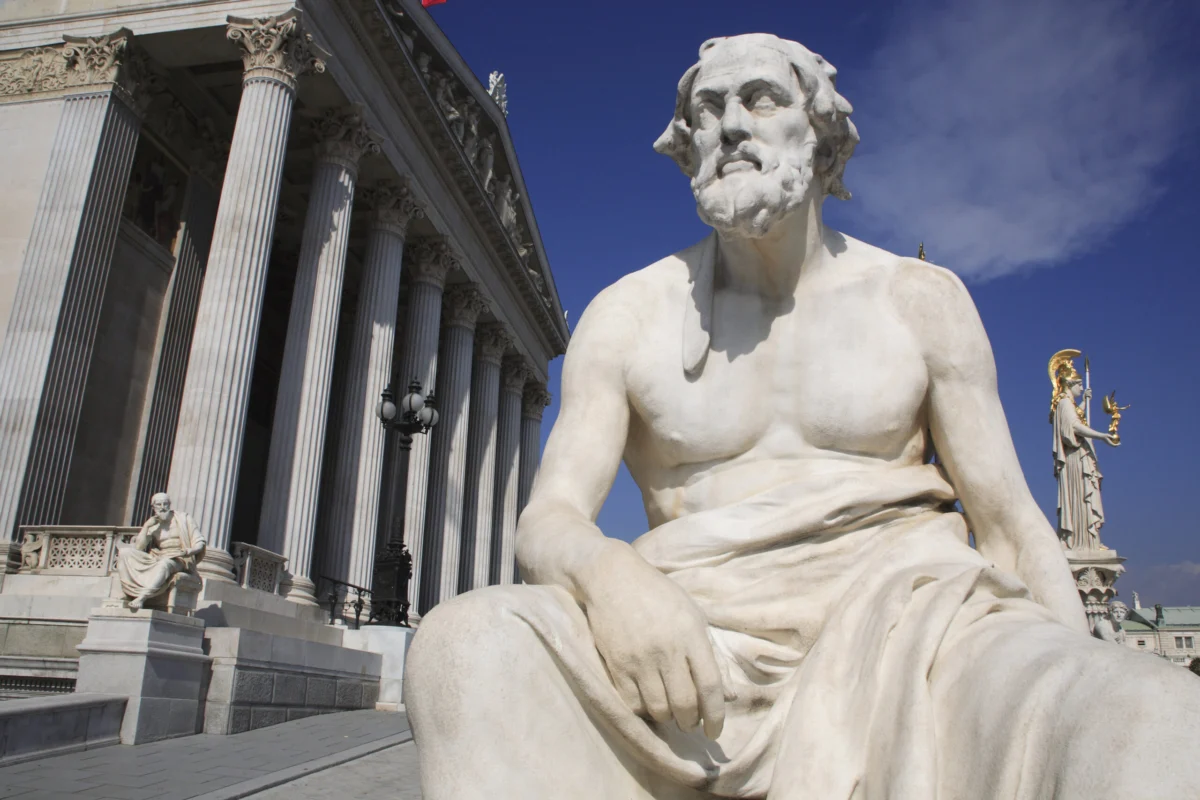
The Thucydides Trap, a term that has permeated geopolitical discourse in recent years, draws its origins from the writings of the ancient Athenian general and historian Thucydides. In his seminal work, History of the Peloponnesian War, Thucydides meticulously chronicled the protracted and devastating conflict between the established power, Sparta, and the rapidly ascending naval power, Athens, in the 5th century BCE. Thucydides famously posited that "What made war inevitable was the growth of Athenian power and the fear which this caused in Sparta." This core insight forms the bedrock of Allison’s modern interpretation: when a rising power threatens to displace a ruling power, war often becomes the tragic outcome.
Graham Allison, a distinguished professor at Harvard’s Kennedy School, brought the concept to contemporary relevance in the early 2010s, particularly through his 2017 book, Destined for War: Can America and China Escape Thucydides’s Trap? Allison’s research identified 16 historical instances over the past 500 years where a rising power challenged a ruling power; in 12 of these cases, the outcome was war. Notable historical parallels often cited include the German Empire’s challenge to British hegemony prior to World War I, and arguably, the Cold War rivalry between the United States and the Soviet Union, though the latter did not result in direct great-power conflict.
Allison’s engagement with Chinese leadership is well-documented. He has met President Xi Jinping on multiple occasions and has visited China numerous times, including for a World Economic Forum event in June 2026. As the founding dean of Harvard’s Kennedy School, an institution that for decades trained many of China’s government officials, Allison’s ideas have found a receptive audience within Beijing’s strategic circles. This academic connection highlights a deliberate engagement by Chinese leadership with Western strategic thought, seeking frameworks to understand and shape its interactions with the global order.
Xi Jinping’s Evolving Rhetoric: From "Avoid" to "Overcome"
President Xi Jinping first publicly referenced the Thucydides Trap in a rare interview published by HuffPost in 2014, stating, "We all need to work together to avoid the Thucydides Trap — destructive tensions between an emerging power and established powers, or between established powers themselves." This earlier framing emphasized a collaborative effort to steer clear of a predetermined path to conflict, suggesting a cautious awareness of the historical precedent.
The recent declaration that the trap "can be overcome" represents a significant shift in tone and implication. It suggests a more confident and proactive stance from Beijing, implying that while the historical dynamic is acknowledged, it is not an insurmountable destiny. Instead, it posits that through deliberate policy choices, strategic communication, and perhaps a redefinition of global power dynamics, the inherent tensions between a rising China and a ruling United States can be managed and transcended without descending into armed conflict. This revised rhetoric aligns with China’s broader narrative of advocating for a "new type of great power relations" characterized by mutual respect, win-win cooperation, and non-confrontation, even amidst intense competition.
Context of U.S.-China Relations: A Decade of Volatility
The summit between President Xi Jinping and President Donald Trump takes place against a backdrop of complex and often fraught U.S.-China relations. Over the past decade, the relationship has evolved from one of strategic engagement and economic interdependence to what many now describe as "strategic competition." Key areas of tension include:
- Trade and Economics: Persistent trade imbalances, allegations of intellectual property theft, forced technology transfer, and tariff disputes have been central. The U.S. has often accused China of unfair trade practices, while China has criticized U.S. protectionism.
- Technology: Competition in critical technologies such as 5G, artificial intelligence, and semiconductors has intensified, with the U.S. imposing restrictions on Chinese tech giants like Huawei and ZTE, citing national security concerns.
- Geopolitical Influence: Rivalry extends to the South China Sea, where China’s extensive territorial claims and militarization of artificial islands have been challenged by the U.S. and its allies through freedom of navigation operations.
- Human Rights: The U.S. has consistently raised concerns over human rights issues in Xinjiang, Hong Kong, and Tibet, leading to sanctions against Chinese officials and entities.
- Taiwan: Perhaps the most sensitive issue, Taiwan remains a potential flashpoint. Beijing views Taiwan as an integral part of "one China" and reserves the right to use force to achieve unification, while the U.S. maintains "strategic ambiguity" and provides defensive arms to the island.
President Xi’s state visit to the U.S. this week was his first in 11 years, underscoring the significance of the high-level dialogue in an era defined by geopolitical turbulence. His last visit in 2015 was met with considerable pomp and focused heavily on economic ties, albeit with underlying tensions already present. A state media article following that visit notably observed Xi’s interest in the Thucydides Trap, reflecting his view that it is the "major powers’ suspicion of each other, rather than any sense of inevitability," that leads to conflict. This earlier commentary laid the groundwork for his current, more assertive stance on overcoming the trap.
The Recent Summit: Dialogue Amidst Tensions
The summit at the White House provided a crucial platform for direct engagement between the leaders of the world’s two largest economies. While specific details of the private conversations remain largely undisclosed, the Chinese side’s official readout highlighted Xi’s emphasis on "peaceful coexistence" and the possibility of "healthy" competition without confrontation. "It should be a race of catching up with one another, not a wrestle in which one either wins or loses," Xi reportedly stated, advocating for improved crisis communication and prevention mechanisms between the two countries’ militaries.
These remarks suggest a desire from Beijing to establish clear boundaries for competition, aiming to prevent economic or technological rivalry from escalating into military conflict. For China, navigating this complex relationship is paramount to its continued economic development and its aspiration to play a more prominent role on the global stage.
In contrast, President Trump’s public comments upon Xi’s arrival were more general, emphasizing the importance of overall collaboration. The U.S. administration has typically framed its China policy around the concept of "responsible competition," seeking to challenge what it perceives as China’s unfair practices while identifying areas for cooperation where national interests align. However, the U.S. has maintained a firm stance on issues like trade, technology, and human rights, often employing a combination of diplomatic pressure and economic sanctions.
Expert Perspectives and Interpretations
The Chinese leader’s nuanced articulation of overcoming the Thucydides Trap has drawn considerable attention from international relations scholars and policy analysts. Cui Shoujun, a professor at Renmin University of China’s School of International Studies, described the establishment of a "bottom line – competing intensely without military conflict – as the ‘most significant political outcome’ of the summit." Translated by CNBC, Cui added that this "injected certainty into the volatile bilateral relationship."
From a Western perspective, some analysts might view Xi’s statement as a strategic signal, a diplomatic maneuver to reassure the international community while China continues its assertive rise. Others might interpret it as a genuine expression of China’s preferred path, reflecting a leadership acutely aware of the historical precedents and eager to avoid the catastrophic costs of great-power conflict. The phrase "overcome" implies a conscious effort, a policy choice, rather than a passive avoidance, suggesting China believes it has the agency and perhaps the wisdom to chart a different course.
However, skepticism remains in some quarters, particularly in Washington, where there is a strong bipartisan consensus that China represents a significant strategic challenge. Concerns persist regarding China’s military modernization, its expansionist claims in the South China Sea, and its assertive diplomatic posture. For these observers, rhetoric alone is insufficient; concrete actions that demonstrate a commitment to international norms and peaceful resolution of disputes would be necessary to truly "overcome" the historical trap.
Taiwan: A Persistent Flashpoint
Despite the emphasis on managing competition, the issue of Taiwan remains a highly volatile flashpoint, underscoring the persistent challenges in U.S.-China relations. According to Beijing’s readout of the talks, President Xi Jinping directly called on the U.S. to "oppose ‘Taiwan independence.’" This unequivocal demand highlights the centrality of Taiwan to China’s core national interests and its "one China" principle.
The United States has long adhered to its "One China" policy, which acknowledges Beijing’s claim over Taiwan but also maintains robust unofficial relations with the democratic self-governing island. U.S. policy of "strategic ambiguity" deliberately leaves open the question of whether it would intervene militarily if China were to attack Taiwan. However, in recent years, U.S. arms sales to Taiwan and high-level official visits have increased, signaling a growing commitment to Taiwan’s defense and deepening Beijing’s concerns.
The absence of specific public comments from President Trump on Taiwan around this particular summit, despite Xi’s direct challenge, can be interpreted in various ways. It could reflect a deliberate effort to keep the summit focused on broader competition management, or it could be a strategic silence. Regardless, Taiwan remains a critical test of whether the U.S. and China can indeed "overcome" historical traps, as any miscalculation or escalation around the island could have devastating regional and global consequences.
Broader Implications for Global Stability
The U.S.-China relationship is arguably the most consequential bilateral relationship in the 21st century, with profound implications for global stability, economic prosperity, and the future of international governance. Xi Jinping’s declaration of overcoming the Thucydides Trap, coupled with the commitment to "healthy competition," suggests a potential pathway towards a managed rivalry rather than an inevitable clash.
Should both nations genuinely commit to this framework, it could lead to:
- Enhanced Crisis Management: Improved military-to-military communication channels and de-escalation protocols could reduce the risk of accidental conflict in contested regions like the South China Sea or the Taiwan Strait.
- Predictable Economic Environment: A clearer understanding of competitive boundaries might reduce the uncertainty that has plagued global trade and supply chains amidst tariff wars and technology restrictions.
- Cooperation on Global Challenges: While competing, there might still be avenues for cooperation on shared global challenges such as climate change, pandemics, and nuclear non-proliferation, where common interests transcend geopolitical rivalry.
However, the path is fraught with challenges. Deep ideological differences, competing visions for the international order, and unresolved territorial disputes mean that even "healthy" competition will be intense. The rhetoric of "overcoming" the trap must be consistently backed by actions that demonstrate restraint, adherence to international law, and a genuine commitment to peaceful resolution of disputes.
Looking Ahead: The Path of Strategic Competition
The summit, and President Xi’s significant rhetorical pivot, mark a critical moment in the ongoing evolution of U.S.-China relations. It suggests a shared recognition, at least at the rhetorical level, that the world cannot afford a catastrophic conflict between its two most powerful nations. The challenge now lies in translating this aspiration into concrete policy and diplomatic action.
The coming years will test the sincerity and effectiveness of both Washington and Beijing in managing their strategic competition. Whether the Thucydides Trap can truly be "overcome" will depend not just on the words exchanged at high-level summits, but on the daily decisions made across a spectrum of issues, from trade and technology to human rights and regional security, ultimately shaping the geopolitical landscape for decades to come.

