
As the United States gears up for another pivotal election, the national economic conversation has once again taken center stage, characterized by intense debate and, frequently, a significant disconnect between objective data and political messaging. In an environment where every data point is weaponized for partisan advantage, understanding the true state of the economy and dissecting the often-simplified narratives presented by political candidates becomes paramount for an informed citizenry. This article aims to cut through the rhetoric, presenting a fact-based analysis of the economic realities and common misconceptions propagated during election cycles, particularly focusing on the dynamics between the Harris and Trump campaigns.
The Current Economic Landscape: A Data-Driven Overview
The US economy, emerging from the unprecedented challenges of the COVID-19 pandemic, presents a complex picture of resilience and persistent public anxiety. Official indicators paint a largely robust picture. The Bureau of Economic Analysis (BEA) reported a strong Gross Domestic Product (GDP) growth rate in recent quarters, signaling sustained economic activity. Concurrently, the labor market has demonstrated remarkable strength, with unemployment rates consistently hovering near historic lows, often below 4%. The Bureau of Labor Statistics (BLS) frequently highlights robust job creation figures, indicating a healthy demand for labor across various sectors.
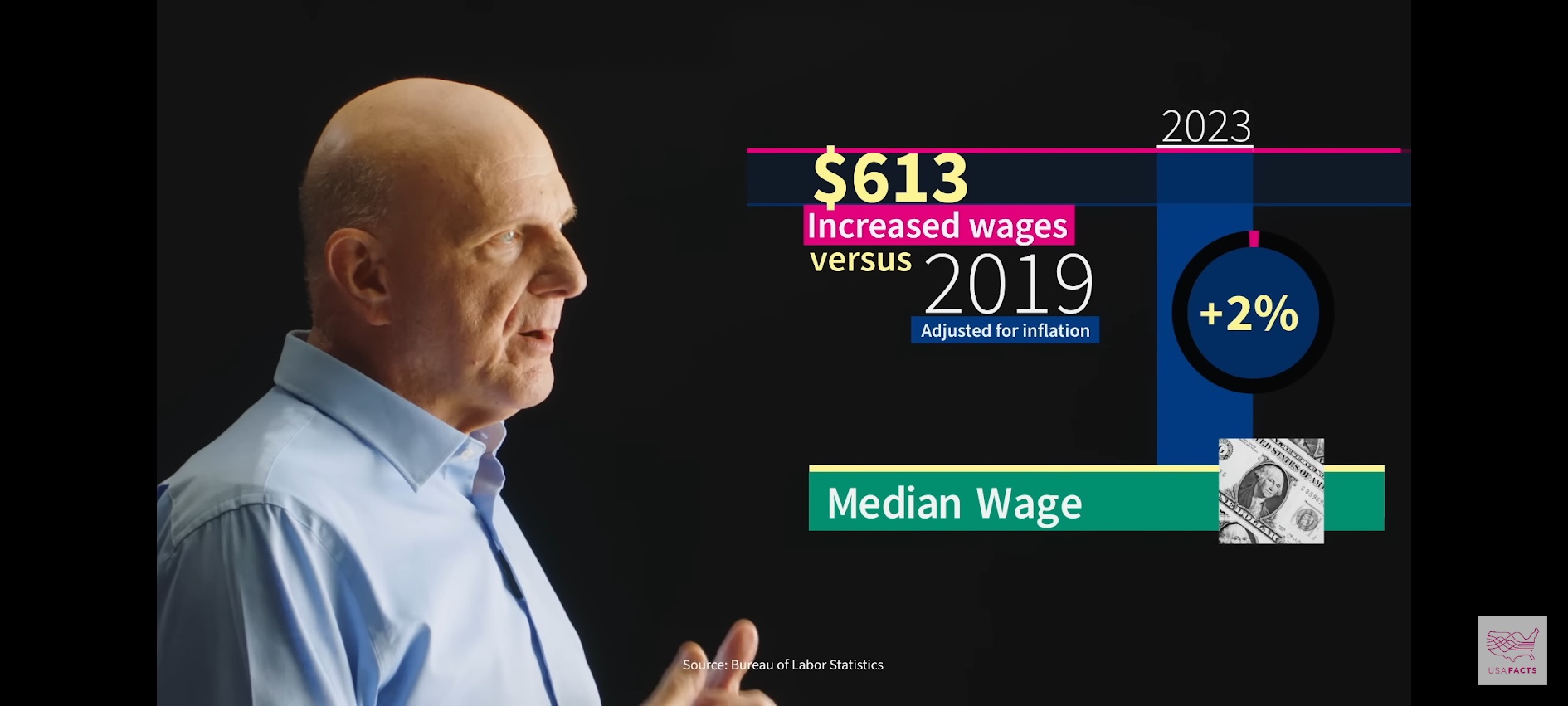
Wage growth has also been a notable feature of the post-pandemic recovery. While initially lagging behind inflation, recent data suggests that real wages – wages adjusted for inflation – have begun to outpace price increases. Since 2019, aggregate wage increases have surpassed the cumulative inflation rate, meaning that, on average, American workers’ purchasing power has increased. For instance, while overall prices might have risen by approximately 19% over this period, average wages have seen an increase closer to 21%, according to various economic analyses. This indicates that the average American is, in fact, better off financially than before the recent inflationary period, despite the pervasive narrative to the contrary.
Inflation, which surged significantly in 2021-2022 due to a confluence of supply chain disruptions, elevated consumer demand fueled by government stimulus, and historically low interest rates, has largely receded. The Consumer Price Index (CPI) and Personal Consumption Expenditures (PCE) price index, the Federal Reserve’s preferred inflation gauge, have both moved steadily downwards, approaching the Fed’s target of 2%. As of recent reports, inflation rates are comfortably within the low single digits, a testament to the Federal Reserve’s aggressive monetary policy tightening. This period of higher inflation, while challenging, was a predictable outcome of an economy running "hot" – strong demand outstripping supply – and the subsequent interest rate hikes were a necessary corrective measure to cool demand and stabilize prices.
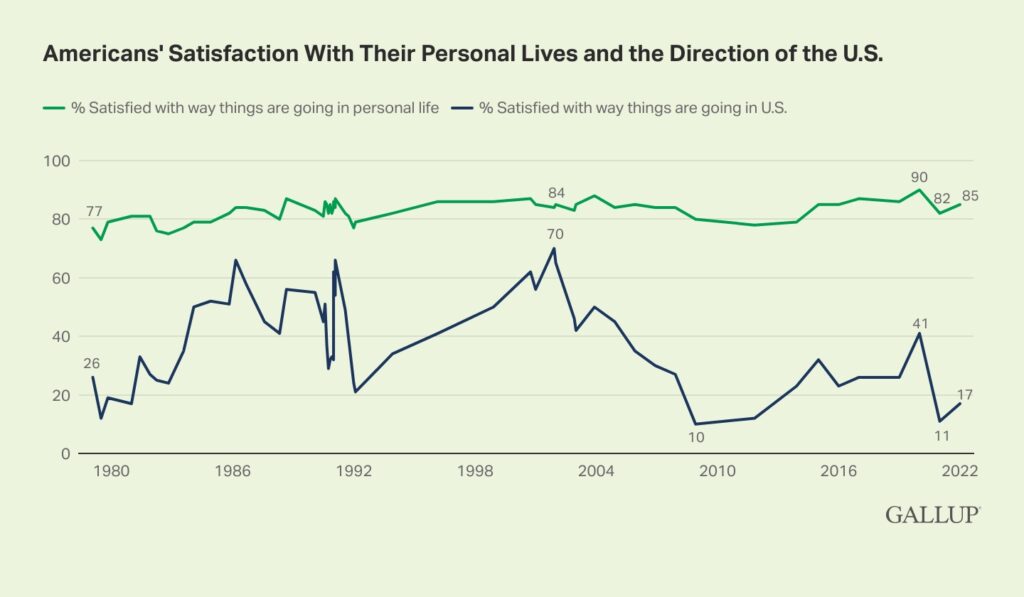
However, this positive statistical outlook often clashes with public sentiment. A recent Gallup poll vividly illustrates this dichotomy: while a significant majority of Americans (around 85%) report being personally satisfied with their current financial situation, a stark minority (only 17%) believe the national economy is performing well. This paradoxical perception suggests a profound influence of external narratives, particularly those amplified by political campaigns and social media, overriding individual experiences and objective economic indicators. This "widespread wrongness," as some economists term it, underscores the vulnerability of public opinion to selective framing and misinformation, highlighting a critical challenge for democratic discourse.

Deconstructing Political Economic Narratives: Six Common Misconceptions
In the heat of an election, political strategists often simplify complex economic realities into digestible, emotionally resonant soundbites. This simplification frequently leads to the propagation of several enduring myths that misrepresent the true drivers of economic performance and the actual levers of governmental control.
Myth 1: The President as Economic Overlord
One of the most persistent political fictions is the notion that a sitting president single-handedly controls the nation’s vast economy. When economic conditions are favorable, the incumbent party claims credit; when they are unfavorable, the opposition assigns blame. In reality, the US economy is a gargantuan, complex, and largely free-market system that operates far beyond the direct command of any single individual, including the President. With a GDP representing approximately 25% of the global economy, the US is deeply intertwined with international markets and global events, from geopolitical shifts to technological innovations and commodity price fluctuations.
Economic cycles of boom and bust are primarily driven by market forces, investor sentiment, consumer behavior, and global trends. Periods of "irrational exuberance," such as the housing boom of the mid-2000s, often lead to subsequent corrections marked by fear and pessimism, like the 2008 financial crisis. While presidential administrations can influence economic conditions through fiscal policies (taxation, spending) and regulatory frameworks, the effects of these policies are often delayed, diffuse, and subject to numerous unpredictable variables. As many economists attest, attributing short-term economic fluctuations directly to a president’s actions is an oversimplification, akin to a ship’s captain claiming credit for the ocean’s tides while merely adjusting the rudder. The ship of state is vast, and its course is charted by countless forces.
Myth 2: Presidential Control Over Interest Rates
Another prevalent misconception, frequently exploited during elections, is the idea that the President can unilaterally dictate interest rates. Candidates often express sympathy for homeowners facing high mortgage rates or consumers burdened by credit card debt, promising to "fight" to bring rates down. This rhetoric directly undermines the fundamental principle of central bank independence.
In the United States, monetary policy, including the setting of the federal funds rate which influences broader interest rates, is the purview of the Federal Reserve (the "Fed"). The Fed is designed to operate as an independent body, insulated from short-term political pressures, to ensure it can make decisions based on economic data and its dual mandate of maximizing employment and maintaining price stability. Its tools—adjusting the federal funds rate, quantitative easing, or tightening—act as the economy’s "gas and brake pedals," managing inflation and stimulating growth as needed. Political interference in central bank decisions, as seen in countries like Argentina, often leads to economic instability, hyperinflation, and a loss of investor confidence. Attempts by politicians to bully or co-opt the Federal Reserve are dangerous, as they threaten the very mechanism designed to safeguard economic stability.
Myth 3: Inflation’s Grip and Political Solutions
The recent inflationary period has provided fertile ground for political grandstanding, with candidates frequently lamenting the "hardship" caused by rising prices and promising to "magically reverse" them. While inflation certainly impacted household budgets, the narrative often omits crucial context and misrepresents the nature of price changes.
The post-COVID inflation spike was a complex phenomenon, primarily driven by a unique combination of factors: severe supply chain disruptions due to factory closures and remote work, coupled with robust consumer demand fueled by substantial government stimulus packages and accommodative monetary policy. These factors created an imbalance that pushed prices upwards. However, as noted earlier, these imbalances have largely corrected, with inflation returning to near-target levels. More importantly, real wage growth has outpaced inflation since 2019, meaning that for most Americans, their earnings have grown more than the cost of living. To suggest that "higher wages and prices" automatically equate to a "bad economy" is a fundamental misrepresentation of economic health, particularly when real purchasing power is increasing.
Furthermore, the notion of "greedflation," where corporations are blamed for raising prices solely to "hoard profits," has been a popular but largely unsubstantiated political talking point. While businesses certainly seek to maximize profits, competitive markets typically limit their ability to arbitrarily raise prices without losing market share. In-depth analyses, such as those conducted by NPR on the grocery sector, have consistently shown that corporate profit margins, particularly in highly competitive industries, did not see a "windfall" during the inflationary period. Instead, increased costs were often passed on to consumers, reflecting genuine supply-side pressures. Politicians promising to "bring prices back down" often fail to explain how, beyond potentially causing deflation (a far more damaging economic condition) or implementing price controls that distort markets and create shortages.
Myth 4: Presidential Power Over Housing Affordability
Housing affordability has emerged as a critical concern, with both house prices and rents having risen significantly faster than general inflation and wages over the past decade. Despite a rise in interest rates, which typically cools housing demand and prices, the market remains tight in many areas, creating a "double whammy" of high prices and high borrowing costs for prospective buyers.
The political solutions often proposed—such as subsidies for first-time homebuyers or schemes to artificially reduce interest rates—are, ironically, likely to exacerbate the problem. These demand-side interventions inject more purchasing power into an already constrained market, further bidding up prices without addressing the root cause. The consensus among housing economists and urban planners is clear: the fundamental issue is a chronic undersupply of housing. Solutions lie not in federal subsidies but in local and state-level policy reforms that facilitate increased construction. These include streamlining and accelerating permitting processes, revising outdated and expensive building codes, reforming restrictive zoning laws (e.g., eliminating single-family-only zoning, minimum lot sizes, setback requirements, and excessive parking mandates), and curbing the power of NIMBY (Not In My Backyard) groups who often block development. These systemic changes could significantly reduce construction costs and boost supply, making housing more affordable in the long term, a task largely outside the direct control of the President.
Myth 5: Gasoline Prices and the Political Battleground
Gasoline prices have long been a perennial political talking point, despite their diminishing economic relevance. Politicians frequently express outrage over "high" gas prices, blaming the opposing party and promising relief. However, a closer look reveals several critical facts.
First, when adjusted for inflation, gasoline prices today ($3-4 per gallon range) are remarkably similar to what they were in the 1950s. While daily fluctuations can be jarring, the long-term trend indicates relative stability in real terms. Second, for the average American household, gasoline expenses constitute a relatively small portion of disposable income—around 2.5%. The broader costs of vehicle ownership (depreciation, insurance, maintenance, financing) far outweigh the cost of fuel, a reality often overlooked in the political discourse.
Third, and perhaps most significantly, gasoline is increasingly becoming an "antique fuel" for a bygone era. The rapid advancement and adoption of electric vehicles (EVs) have made gasoline-powered cars increasingly obsolete for many consumers. Used EVs are now often cheaper than comparable used internal combustion engine vehicles, and new EV models are increasingly competitive on price, offering substantial savings on fuel and maintenance. Yet, the political debate continues to focus on the price of a diminishing commodity, akin to debating the price of Kodak film or typewriters in the digital age. This fixation diverts attention from the broader energy transition and the economic benefits of shifting to cleaner, more efficient transportation.
Myth 6: The Economy as the Ultimate Worry
Perhaps the most profound misconception perpetuated by political discourse is the idea that the economy, and the relentless pursuit of more wealth, should be the primary concern of society. While hard work and economic progress are valuable, the United States has, by most measures, surpassed the point of "economic sufficiency" decades ago. The complaints of the American middle class about "hard times" often resemble "overfed people at a buffet wishing they could just have one more flavor of donuts," as one commentator put it.
While income and wealth inequality are legitimate concerns that warrant progressive tax policies and social safety nets to foster a more equitable, peaceful, and happy society, the correlation between ever-increasing wealth and personal happiness diminishes sharply beyond a certain point of basic needs fulfillment. Research consistently shows that beyond a comfortable living standard, additional money contributes little to overall well-being. True "enough" is often defined less by a paycheck and more by one’s mindset, personal relationships, health, and a collection of life skills. If politicians genuinely prioritized happiness and well-being, their platforms might advocate for principles of financial independence, conscious consumption, and community engagement—a "Mustachian" approach—rather than pandering to specific interest groups or promoting a relentless pursuit of material accumulation.
The Role of Misinformation and Media Literacy
The pervasive nature of economic misinformation in political discourse is amplified by the current media landscape, particularly social media. Echo chambers and algorithmic biases often reinforce existing beliefs, making it difficult for factual information to penetrate. This environment necessitates a heightened degree of media literacy and critical thinking from the electorate. Resources like Steve Ballmer’s "USA Facts" initiative, which aims to present objective data without political spin, represent a valuable antidote to this problem. Such efforts are crucial for fostering a more informed public discourse and enabling voters to make decisions based on evidence rather than emotional appeals.
Conclusion
In an election year, the temptation for politicians to simplify complex economic issues, assign undue blame or credit, and pander to public anxieties is immense. However, for an electorate to make sound decisions, it is imperative to look beyond the political rhetoric and engage with the underlying economic realities. Understanding that the President’s influence on the economy is limited, that the Federal Reserve independently controls monetary policy, that inflation has largely stabilized with real wages rising, that housing affordability is a supply-side issue, and that gasoline prices are a relatively minor concern in the broader economic picture, empowers voters to critically evaluate campaign promises. Ultimately, casting an informed vote means recognizing the often-vast chasm between political narratives and the data-driven truth, then tuning back into one’s personal "circle of control" until the next electoral cycle.

