
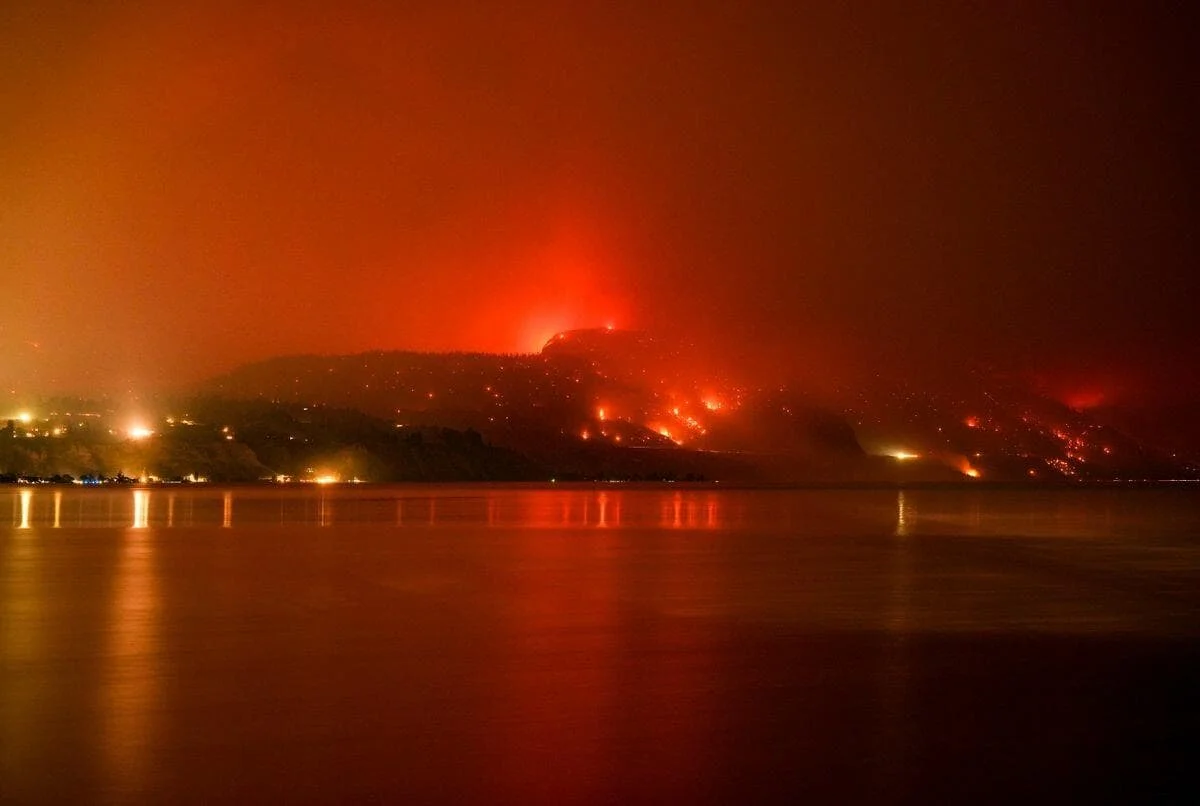
Wildfires burning across the western United States and Canada continued to threaten communities on Sunday, August 9, 2026, leaving thousands of residents displaced and others watching closely for possible evacuation orders. While some evacuees waited anxiously to learn whether their homes had survived the relentless inferno, firefighters worked tirelessly to contain several major blazes across the region, battling challenging conditions exacerbated by prolonged drought and extreme heat. The escalating crisis has highlighted the increasing vulnerability of communities to climate-driven disasters, prompting urgent calls for enhanced mitigation and preparedness strategies across North America.
British Columbia Grapples with Unprecedented Evacuations
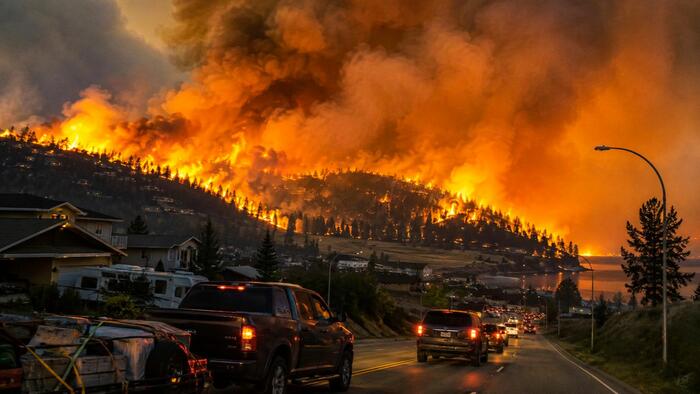
In western Canada, the situation reached critical levels as more than 20,000 people were forced to flee communities along Okanagan Lake in British Columbia over the weekend. A fast-moving wildfire, later identified as the Bald Range fire, rapidly destroyed homes and prompted dramatic aircraft rescues, with helicopters and fixed-wing aircraft working around the clock to pluck residents from immediate danger zones. The scale of the displacement has put immense strain on emergency services and local infrastructure, as evacuees sought refuge in reception centers in nearby towns like Penticton.
The Bald Range fire, first reported on Friday evening, August 7, 2026, near Summerland, quickly escalated due to high winds and parched conditions. By Saturday, August 8, the blaze had nearly doubled in size overnight, expanding to threaten thousands of properties. Anette Boulet, a resident of Summerland, a community of approximately 12,000 people along Okanagan Lake, recounted her harrowing escape. She and her family departed their home around 4:30 a.m. Saturday as thick smoke enveloped their neighborhood and flames approached nearby ridges. "You couldn’t see barely. It was, it was just dark, and the ridge, the ridge of fire just coming towards you," Boulet said after evacuating to a center in Penticton. "There’s no words to express it. The fear."
The human cost of the fires became tragically clear later on Sunday when the Royal Canadian Mounted Police confirmed the death of an 80-year-old woman. She died while attempting to escape the wildfire that prompted widespread evacuations throughout the Okanagan Lake region, underscoring the immediate and deadly threat posed by the rapidly advancing flames. In addition to the evacuations in Summerland, the Bald Range fire forced roughly 8,000 people to leave their homes in and around nearby Peachland, another popular community on Okanagan Lake.
Official Response and Federal Aid in British Columbia
In response to the rapidly worsening fire conditions, British Columbia declared a provincial state of emergency on Saturday, August 8, 2026. This critical declaration mobilized additional provincial resources and provided greater flexibility for emergency management officials to deploy personnel and equipment, coordinate evacuations, and manage access to affected areas. Eleanor Olszewski, Canada’s Minister of Emergency Management and Community Resilience, announced on Sunday that she had approved British Columbia’s request for federal assistance. This crucial support includes resources for shelter, temporary accommodations for displaced residents, and additional firefighting assets, demonstrating a coordinated national effort to combat the crisis. The Canadian Armed Forces were also placed on standby, ready to provide logistical and operational support if required, particularly for evacuation efforts and maintaining essential services in affected regions.
Eastern Washington Battles Persistent Blazes
Across the border in Washington state, firefighters continued "mop-up operations" on Sunday along containment lines surrounding three significant wildfires in the Spokane area. These fires had been burning for more than a week, creating a prolonged period of anxiety and destruction for local communities. The incident management team reported that none of the fires were expanding, offering a tentative sense of relief after a week of intense and destructive fire activity. However, the damage was already extensive, with the fires collectively damaging or destroying an estimated 920 structures. This figure includes homes, businesses, and essential infrastructure, signaling a significant and prolonged recovery effort ahead for affected communities.
Laurie Allen, a long-time resident of Nine Mile Falls, a community north of Spokane, had evacuated her home the previous weekend as flames encroached. She fled with her husband, their dog, and two kittens. Although roads into her neighborhood remained closed on Sunday, Allen received hopeful news from a friend that her home and several others nearby were still standing, albeit covered in a thick layer of ash. "I’ve been here 65 years. It’s never happened," Allen remarked, reflecting on the unprecedented nature of the fires. "We didn’t think about anything but grabbing our animals and leaving. But now it’s affected so many of our friends and family around. So it’s pretty dang devastating."
Adding a disturbing element to the Spokane crisis, authorities arrested and charged a man earlier in the week with intentionally setting the largest of the three Spokane-area fires. This development has sparked outrage and further highlighted the complex challenges faced by fire response teams, who must contend not only with natural ignition sources but also with human-caused fires, some of which are deliberate acts.
Communities like Malden, a small rural town located approximately 35 miles south of Spokane, found themselves once again on high alert. Residents were urged to evacuate immediately on Saturday as conditions worsened. By Sunday, officials had lowered the evacuation level, transitioning to a "Level 2: Be Set" order, instructing residents to remain prepared to leave quickly if conditions changed. John Goyke, whose company operates Malden’s water system under contract and who also serves as mayor of nearby Rosalia, noted the temporary reprieve: "The wind is fairly calm. The fire is not progressing." He added that social media was being actively used to keep residents informed. Malden residents had been asked to conserve water to ensure supplies remained available for critical firefighting operations, with the town’s fire department trucking additional water in from Rosalia. The renewed wildfire threat carries particular significance for Malden, as the town was largely destroyed by a devastating wildfire in 2020, which razed its fire station, post office, city hall, and library, making this current threat a painful reminder of past trauma.
Tragedy in Utah: Two Pilots Lost in Aerial Firefighting
The wildfire response turned deadly elsewhere in the West when two helicopter pilots were killed in Utah. Their aircraft crashed on Friday morning, August 7, 2026, while they were engaged in fighting a fire in Fishlake National Forest. Emergency crews faced immense challenges in reaching the crash site due to active fire conditions and the steep, rugged terrain. It wasn’t until Saturday that responders were able to access the area and confirm the pilots’ deaths. Sevier County Sheriff Nathan Curtis described the perilous conditions encountered by his teams. "When we first got there we could see two different plumes of smoke, one from the crash site, one from an active fire coming towards us," Curtis stated, highlighting the dual dangers of the crash and the advancing wildfire. The National Transportation Safety Board (NTSB) has launched a full investigation into the cause of the helicopter crash, a standard procedure for aviation incidents, to determine contributing factors and prevent future tragedies.
A Season of Extremes: Underlying Factors and Broader Context
The current wildfire crisis in Western North America is not an isolated event but rather part of a disturbing trend of increasingly severe and prolonged fire seasons. The year 2026 has, like several preceding years, been characterized by a confluence of meteorological and environmental factors that create ideal conditions for large, destructive fires.
- Persistent Drought: Many regions across the Western US and Canada have experienced multi-year drought conditions, leaving forests and wildlands exceptionally dry and primed to burn. These dry fuel conditions mean fires ignite more easily and spread more rapidly and intensely.
- Record-Breaking Heatwaves: The summer of 2026 has seen multiple heatwaves, pushing temperatures well above average. Higher temperatures desiccate vegetation further and increase the rate at which fires grow.
- Climate Change: Scientific consensus attributes the growing intensity and frequency of these extreme weather events, including droughts and heatwaves, to human-induced climate change. A warmer climate extends the fire season, increases fuel dryness, and promotes more volatile fire behavior.
- Wildland-Urban Interface (WUI): The continuous expansion of human settlements into previously undeveloped wildland areas (the WUI) places more homes and communities directly in harm’s way. This interface makes evacuations more complex and firefighting efforts more dangerous, as resources are diverted to protect structures rather than solely containing the fire’s perimeter.
Chronology of Crisis (August 2026)
- August 3, 2026: Spokane-area wildfires intensify, prompting initial evacuations and widespread concern.
- August 7, 2026 (Friday morning): Helicopter crashes in Fishlake National Forest, Utah, killing two pilots battling a wildfire.
- August 7, 2026 (Friday evening): Bald Range wildfire first reported near Summerland, British Columbia.
- August 8, 2026 (Saturday morning): Bald Range fire significantly expands overnight, forcing mass evacuations in Summerland and Peachland. British Columbia declares a provincial state of emergency.
- August 8, 2026 (Saturday): Emergency crews reach Utah crash site, confirming pilots’ deaths. Malden, Washington, issues immediate evacuation orders.
- August 9, 2026 (Sunday): Wildfires continue to threaten communities across Western US and Canada. Over 20,000 evacuated in BC. Federal assistance approved for British Columbia. Spokane-area fires undergo "mop-up operations" but significant damage remains. 80-year-old woman dies escaping BC wildfire.
Human Toll and Community Resilience
The psychological and social impact of these wildfires extends far beyond the immediate destruction of property. Displaced residents face immense uncertainty, trauma, and the daunting task of rebuilding their lives, often with little left but memories. The experience of fleeing a fast-approaching fire, as described by Anette Boulet, leaves indelible scars of fear and loss. Communities like Malden, which have endured previous fire devastations, demonstrate remarkable resilience but also carry the heavy burden of repeated trauma. The loss of an 80-year-old woman in British Columbia serves as a stark reminder of the extreme dangers faced by vulnerable populations during such crises. Firefighters, too, endure immense physical and mental strain, working long hours in dangerous conditions, a reality tragically underscored by the deaths of the two pilots in Utah. Support systems for mental health and long-term recovery are becoming increasingly vital components of disaster response.
Looking Ahead: Mitigation, Adaptation, and Policy Implications
The ongoing crisis underscores the urgent need for comprehensive strategies to address the growing threat of wildfires.
- Enhanced Prevention: This includes stricter regulations on outdoor burning, public awareness campaigns, and proactive forest management techniques such as prescribed burns and fuel reduction projects to reduce the amount of combustible material in forests.
- Improved Early Detection and Response: Investing in advanced satellite monitoring, drone technology, and rapid deployment forces can help detect and suppress fires before they grow out of control.
- Community Preparedness: Promoting "FireSmart" principles in communities, such as creating defensible space around homes and using fire-resistant building materials, can significantly reduce property loss. Regular evacuation drills and robust communication systems are also crucial.
- Cross-Border Cooperation: The interconnected nature of these ecosystems and weather patterns necessitates strong cross-border cooperation between Canadian and US agencies, sharing resources, intelligence, and best practices.
- Climate Action: Ultimately, addressing the root causes of climate change through emissions reductions and global cooperation remains critical to mitigating the long-term trend of escalating wildfire seasons.
As firefighters across the U.S. and Canada continue working to contain the blazes, displaced residents face an uncertain return home. Communities already scarred by previous wildfires are once again confronting the growing dangers posed by fast-moving fires, highlighting a critical juncture in how North America manages and adapts to the profound challenges of a changing climate. The collective efforts in the coming weeks and months will determine not only the immediate fate of countless homes and ecosystems but also shape the future resilience of these vulnerable regions against increasingly frequent and intense wildfire events.

