

Asset management firm VanEck has issued a strong critique of Metaplanet’s executive compensation structure, asserting that despite recent adjustments, the Bitcoin treasury company’s efforts to mitigate shareholder dilution remain insufficient. VanEck’s assessment places Metaplanet in the lowest compensation category, deeming its structure "Bad," and highlights significant discrepancies when compared to industry peers. This evaluation comes at a critical juncture for Metaplanet, a prominent holder of Bitcoin, as it navigates investor scrutiny regarding its capital allocation and management incentives.
VanEck’s Scathing Assessment of Metaplanet’s Compensation
In a comprehensive report released on Friday, VanEck meticulously examined the executive compensation practices of the ten largest digital asset treasury companies. Within this analysis, Metaplanet’s compensation framework stood out for its deviation from established norms. VanEck identified Metaplanet’s equity plan as representing 14.7% of its fully diluted shares, with officer exposure amounting to 8.2%. These figures are starkly higher than the industry average, with Metaplanet’s officer exposure being approximately ten times the 0.8% average observed across the other nine firms analyzed. Furthermore, Metaplanet’s overall equity plan is nearly four times the peer average, prompting VanEck’s critical designation.
To illustrate the contrast, VanEck pointed to Strategy, the largest corporate Bitcoin holder, as an example of a well-aligned compensation structure. Strategy’s equity plan accounts for 2% of its fully diluted shares, with officer exposure at a modest 0.5%. VanEck rated Strategy’s compensation as "Good," emphasizing its fixed equity reserve and the requirement for shareholder approval on any plan increases. This benchmark highlights the perceived disparity in how Metaplanet incentivizes its management relative to shareholder interests.
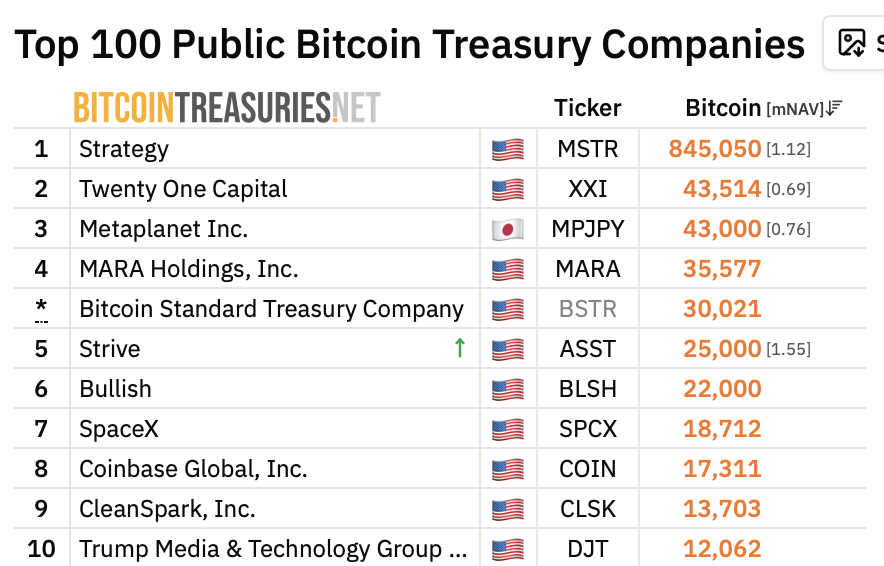
Metaplanet, a Japanese company, has established itself as a significant player in the digital asset space, currently ranking as the third-largest publicly traded corporate Bitcoin holder, boasting an impressive 43,000 BTC according to data from BitcoinTreasuries.net. Its strategic decision to accumulate Bitcoin has positioned it prominently, but this accumulation has also become a focal point for discussions surrounding its financial management and executive remuneration.
A Troubled History: Bitcoin Purchases and Executive Option Pool Expansion
The roots of VanEck’s concerns appear to be deeply intertwined with Metaplanet’s past compensation practices, particularly those that facilitated the expansion of its executive option pool in tandem with its Bitcoin acquisition strategy. Historically, Metaplanet’s compensation structure allowed its option pool to grow automatically as the company issued new shares to fund its Bitcoin purchases. This mechanism, designed perhaps to attract and retain talent in a burgeoning industry, inadvertently led to a substantial increase in potential dilution for existing shareholders.

According to VanEck’s analysis, this automatic adjustment mechanism caused the option pool to balloon from an initial 46 million shares to a staggering 319.5 million shares. This represented an addition of approximately 273 million potential shares, a figure that naturally raised red flags among investors concerned about the erosion of their ownership stake.
The significant expansion of the executive stock pool did not go unnoticed by Metaplanet’s shareholder base. In the past, this move drew considerable criticism, with some shareholders vocally urging the company to retract the additional potential shares generated by this adjustment mechanism. The backlash underscored a growing sentiment that the alignment between management incentives and shareholder value was becoming increasingly precarious.
Metaplanet’s Response and VanEck’s Lingering Doubts
In response to the mounting shareholder pressure and criticism, Metaplanet took steps to address the controversial compensation structure. In August, the company formally ended the automatic adjustment mechanism that had fueled the pool’s expansion. Subsequently, in September, Metaplanet announced a significant reduction in its overall executive stock pool, cutting it by 41% from 319.5 million shares down to 188.2 million shares.
While these actions represent a clear effort by Metaplanet to rectify the situation and appease shareholder concerns, VanEck maintains that these measures still "fall well short of the mark." The asset manager’s report argues that the revised compensation structure, despite the cuts, does not sufficiently realign management interests with those of the investors. The core of VanEck’s argument rests on the persistent high percentage of equity allocated to executives and the lingering effects of past dilutions.
VanEck’s Recommendations for Improved Alignment
VanEck’s report outlines specific recommendations for Metaplanet to bridge the gap in executive compensation alignment. Firstly, the firm strongly urges Metaplanet to reverse the approximately 273 million-share expansion that was created by the now-defunct adjustment clause. This would effectively claw back the shares that were automatically added and not directly tied to performance or shareholder approval.
Secondly, VanEck proposes that Metaplanet replace the remaining rights within the executive compensation plan with a new structure that requires explicit shareholder approval. This would ensure greater transparency and democratic oversight in future compensation decisions.
Furthermore, VanEck highlights the reality that unless past grants are clawed back, a substantial portion of the dilution has already been effectively realized. This suggests that the impact on existing shareholders from the previously expanded pool may be irreversible, even with current adjustments.
Beyond these immediate actions, VanEck also recommended that Metaplanet adopt a more performance-driven approach to executive compensation. Specifically, the firm suggested tying remuneration to key metrics such as "Bitcoin per fully diluted share." This metric would directly link executive rewards to the company’s core asset and the value it delivers on a per-share basis, thereby fostering a more direct alignment with shareholder interests. Additionally, VanEck advocated for the implementation of a formal written grant-timing policy, which would bring greater clarity and predictability to the process of awarding stock options.
Broader Implications for Bitcoin Treasury Companies
The ongoing scrutiny of Metaplanet’s executive compensation by a prominent asset manager like VanEck underscores a broader trend within the digital asset industry. As companies like Metaplanet increasingly position themselves as institutional holders of Bitcoin, they are coming under the same rigorous analysis and governance standards expected of traditional financial entities.
The emphasis on shareholder dilution and executive alignment is not unique to Metaplanet but is a critical concern for any company where management’s equity stake can significantly impact the value of existing shareholders’ investments. The case of Metaplanet highlights the potential pitfalls of compensation structures that are not carefully designed to balance incentivizing management with protecting shareholder value, especially in rapidly evolving and often volatile markets like cryptocurrencies.
The transparency and governance practices of Bitcoin treasury companies are becoming increasingly important for institutional investors. Firms like VanEck are playing a crucial role in setting benchmarks and advocating for best practices, which can ultimately lead to a more mature and sustainable digital asset ecosystem. The outcome of Metaplanet’s efforts to address these concerns will likely serve as a case study for other companies in the sector, influencing how they structure their own executive compensation and engage with their shareholder base. As the digital asset landscape continues to mature, the spotlight on corporate governance and shareholder rights is set to intensify, making alignment between management and investors a paramount consideration for long-term success.

