

The traditional Vermont county fair, long a staple of New England’s agricultural and social calendar, has emerged as a critical venue for practical financial education as parents seek to navigate the complexities of modern consumerism with their children. Recent observations from family financial experts and practitioners, including the founders of the prominent personal finance platform Frugalwoods, indicate that these events provide a unique, high-stakes environment for children as young as five and seven to engage with the concepts of earning, spending, and debt management. By transforming the "panorama of consumerism" found at midways and exhibit halls into a structured pedagogical tool, parents are addressing a growing need for early financial literacy in an increasingly digital and abstract economy.
The Framework of Early Financial Pedagogy
At the core of this educational movement is a structured "family money philosophy" designed to demystify the adult world of commerce. This philosophy operates on a clear demarcation between essential needs and discretionary wants. Under this framework, parents assume full responsibility for fundamental requirements—including shelter, healthcare, clothing, and nutritious food—as well as the costs of admission to educational and cultural venues like museums and fairs. However, the responsibility for "extras" or "discretionary items" is shifted entirely to the children.

This shift creates an immediate and tangible link between labor and consumption. In the case of the Frugalwoods family, whose children are aged five and seven, the discretionary category includes special treats outside of regular meals, souvenirs from gift shops, and supplemental books from school fairs. By establishing these boundaries, parents create a controlled environment where children must make choices based on limited resources, a fundamental principle of economics that is often obscured in modern, credit-heavy households.
Chronology of Financial Development: From Labor to Debt
The progression of financial literacy in early childhood typically follows a specific chronology, beginning with the understanding of labor as the source of capital. To facilitate this, many families implement a chore-based compensation system. Unlike routine household contributions—such as cleaning one’s own room or clearing the dinner table—which are viewed as unpaid responsibilities of being part of a family unit, "paid chores" are defined as tasks that provide a broader benefit to the household.
Current data from these practical applications show a diverse list of age-appropriate tasks, including:

- Organizing common areas (e.g., kitchen cabinets or mudrooms).
- Seasonal maintenance (e.g., stacking wood, raking leaves, or weeding gardens).
- Waste management (e.g., emptying household trash and recycling).
- Vehicle upkeep (e.g., vacuuming the family car).
Compensation is typically set at "fair market value," and notably, some parents allow for the negotiation of "chore bundles" or lump-sum contracts. For instance, a seven-year-old might negotiate a $10 fee for a comprehensive reorganization of kitchen drawers—a task that requires significant time, attention to detail, and organizational skill. This introduces the concept of professional negotiation and value-based pricing at a formative age.
The Case Study of the Inflatable Unicorn: A Lesson in Debt
One of the most significant milestones in early financial education occurs when a child’s desires exceed their available capital. A documented incident at a Vermont county fair involving a seven-year-old, pseudonymously referred to as "Kidwoods," serves as a poignant example of the "debt lesson."
During the event, the child identified a desired item—a $13 inflatable unicorn—but only possessed $9 in earned capital. The parents opted to provide a $4 loan to cover the deficit, under the strict condition that the debt be "worked off" through mandatory chores upon returning home. The subsequent realization by the child—that working to pay for an item already in one’s possession is "not fun" and feels like "getting nothing"—provided a visceral understanding of interest and the psychological burden of debt that abstract explanations often fail to convey.
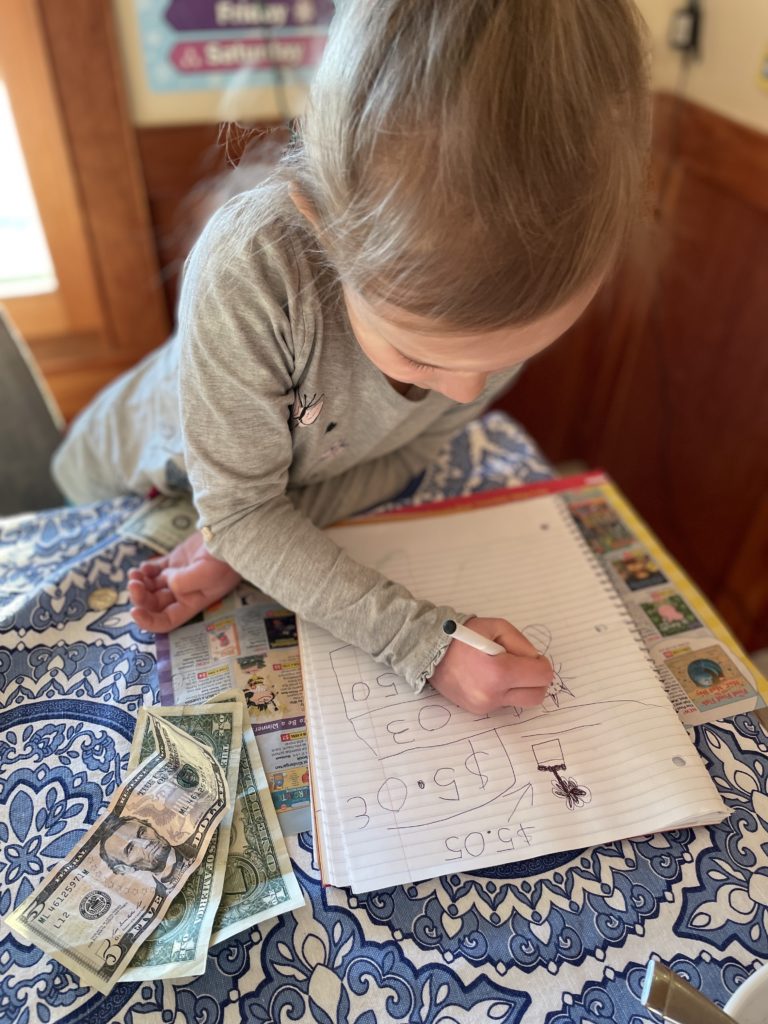
According to financial educators, this "natural consequence" approach is more effective than simple prohibition. It allows the child to experience the "pain of payment" and the reality of future-income-commitment, which are central to avoiding predatory lending and consumer debt traps in adulthood.
Supporting Data: The State of Youth Financial Literacy
The push for home-based financial education is supported by broader trends in national financial literacy. According to a 2022 study by T. Rowe Price, approximately 64% of parents have some hesitation when it regarding talking to their children about money, yet 82% of parents agree that they are the primary influence on their children’s financial habits.
Furthermore, research from the FINRA Investor Education Foundation suggests that individuals who are exposed to financial concepts in childhood are significantly more likely to have higher credit scores and lower rates of delinquency as adults. The "scaffolded" approach used in Vermont—starting with counting physical currency and progressing to debt management—aligns with developmental psychology recommendations that advocate for concrete, tangible experiences before moving to abstract concepts like compound interest or stock market investing.

Consumerism and the Psychology of Marketing to Children
The "annoying instances of kid-directed consumerism" cited by parents at fairs and through school programs like the Scholastic Book Fair are not incidental; they are the result of sophisticated marketing strategies. Industry data suggests that children under the age of 12 influence over $500 billion in annual household spending in the United States.
By requiring children to use their own earned funds for these marketed items, parents create a buffer against impulse spending. It forces the child to perform a rudimentary cost-benefit analysis. For example, when children at a farm-to-table pizza event were informed they had to pay for their own $7 desserts, they transitioned from individual consumers to collaborative planners. They negotiated to split the cost and the portion of the dessert, thereby practicing both resource management and social cooperation.
Broader Impact and Future Implications
The ultimate goal of these early interventions is to demystify money, stripping away the emotional baggage of status, anxiety, and self-worth often attached to wealth. Educators argue that viewing money as a "tool"—no different from water, sleep, or safety—allows children to develop a healthier relationship with personal finance.

The next phase of this educational trajectory involves the introduction of "The Bank of Parental Units," a conceptual savings vehicle where parents pay a high rate of interest on their children’s saved capital. This is designed to teach the "advantage of saving" and the concept of passive income.
The implications of this movement are significant. As the economy moves further toward digital transactions—where the "swiping of a card" feels disconnected from the depletion of resources—the insistence on physical wallets, cash counting, and manual labor provides a necessary grounding.
Conclusion and Official Perspective
While some critics argue that children should be shielded from the "stresses" of money, proponents of early literacy argue that silence is a disservice. "Kids don’t go around thinking about the fact that adults are paid to do their jobs," one practitioner noted. "By breaking down the equation—that groceries represent hours worked—we remove the mystery and the anxiety."

As the Vermont fair season concludes, the lessons learned in the barns and on the midways will likely serve as the foundation for a lifetime of fiscal responsibility. The transition from "cuddling cows" to "calculating costs" represents a shift in parenting that prioritizes agency, independence, and a realistic understanding of the global marketplace. For these Vermont families, the county fair is no longer just a weekend of entertainment; it is an essential classroom for the next generation of economically literate citizens.

