

The Thames family of Vermont, known publicly for their advocacy of financial independence and sustainable living, has released a comprehensive financial report for May, detailing a total expenditure of $4,641.49. This report serves as a case study in "strategic frugality," a lifestyle model that prioritizes high-value investments in education and long-term utility while minimizing costs through the second-hand market and technological optimization. A central highlight of the month’s narrative is the literacy milestone of their eldest child, who has transitioned to reading J.R.R. Tolkien’s The Hobbit aloud to her father, marking the culmination of a multi-year pedagogical strategy designed to foster a sophisticated command of the English language.

Longitudinal Literacy Strategy and the "Hobbit" Milestone
The introduction of The Hobbit into the family’s daily routine is not an isolated event but the result of a deliberate, tiered reading program. According to the family’s records, the literacy journey for their eldest daughter, referred to as "Kidwoods," followed a specific chronological progression. The curriculum began with the Fern Hollow series by John Patience, which introduced foundational narrative structures. This was followed by the Redwall series by Brian Jacques, a collection known for its complex vocabulary and epic themes, which served as a bridge to the high-fantasy genre.
The current phase involves the child reading The Hobbit aloud to her father, a practice that began as a first-grade assignment and has since evolved into a daily ritual. Educators and literacy experts often cite reading aloud as a critical tool for linguistic development. For the Thames family, this practice allows for real-time tracking of phonetic progress, ensures the internalization of context, and provides a platform for discussing complex moral themes. Despite initial concerns regarding the age-appropriateness of the material for a seven-year-old, the family reports that the text has facilitated significant discussions regarding interpersonal behavior and ethical decision-making within the story’s framework.

In a rare departure from their standard procurement model—which favors libraries and yard sales—the family purchased a new, illustrated, hardcover edition of the Tolkien classic. This $22.78 expenditure was classified as a "legacy gift," intended to symbolize the importance of the literary milestone.
The Economics of Second-Hand Procurement in Vermont
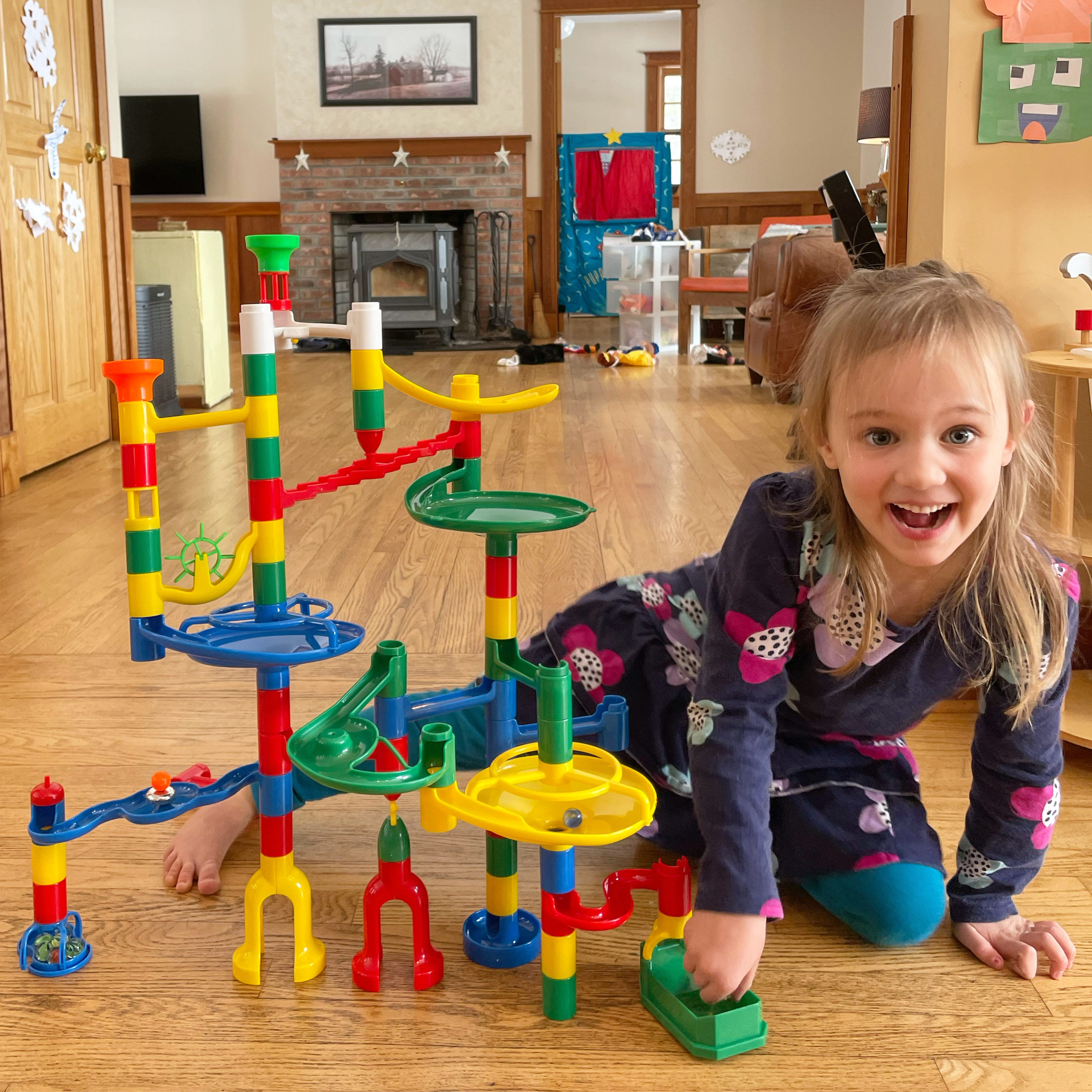
The arrival of May marks the commencement of the yard sale and thrift store season in Vermont, a period the Thames family utilizes to secure the vast majority of their physical assets. Their procurement strategy is rooted in the belief that "used goods" offer benefits that extend far beyond simple monetary savings.
Psychological and Environmental Benefits of the Used Market
Analysis of the family’s consumer behavior suggests several non-monetary advantages to their "buy used" philosophy:
- Reduction of Decision Fatigue: Drawing on psychological research, such as that popularized by NPR and Barry Schwartz, the family posits that the limited selection available in second-hand markets reduces the "paradox of choice," thereby increasing overall life satisfaction.
- Environmental Stewardship: By participating in the circular economy, the family avoids the carbon footprint associated with the manufacturing and shipping of new products.
- The Endowment Effect: Buying used reduces the psychological burden of ownership. When items are acquired at a fraction of their retail cost, there is less anxiety regarding their potential damage or loss, a factor particularly relevant in households with young children.
During the month of May, the family allocated $100 in cash for garage sales and spent $62.89 at thrift stores. These funds were used to acquire clothing for the children, household decor, and bicycles. This "kismet-based" shopping model relies on the availability of local goods rather than the instant gratification of e-commerce.

Detailed Expenditure Analysis for May
The total spend of $4,641.49 reflects a blend of fixed living costs, seasonal maintenance, and strategic investments in the family’s homestead.
Core Living Expenses
The largest single category was groceries, totaling $879.72. This was followed by $493.81 spent at restaurants and $118.54 at coffee shops. The family views these "discretionary" spends as intentional choices made possible by savings in other areas. For example, by utilizing a Mobile Virtual Network Operator (MVNO) for their telecommunications, they paid only $28.24 for two cellular lines—a cost significantly lower than the national average for major carrier plans.

Infrastructure and Maintenance
As residents of rural Vermont, the family invested heavily in homestead maintenance during the spring thaw:
- Vegetation Management: A battery-powered string trimmer ($293.15) and a pole saw attachment ($126.94) were purchased to manage invasive growth and prune fruit trees.
- Home Repairs: Expenditures included $57.88 for plumbing tools (a new sillcock) and $17.71 for replacement cabinet hinges, which the family noted require frequent replacement due to the wear and tear of a household with young children.
- Solar Integration: The family’s electric bill was $36.59, representing the base fee for remaining grid-tied. Their primary energy needs are met by an on-site solar array, an investment that significantly reduces long-term utility overhead.
Healthcare and Education
The family maintains a high-deductible health plan through the Affordable Care Act, with a monthly premium of $41.74. Dental care is managed out-of-pocket, with a $114 expenditure this month for a routine cleaning. Additionally, $420 was allocated for preschool tuition, a cost that is expected to phase out as the younger child nears primary school age.

Financial Optimization and Passive Income Streams
A key component of the Thames’ financial model is the optimization of every dollar spent. This is achieved through three primary mechanisms:
1. Cash-Back Incentives
By routing $4,081.76 of their monthly spending through a 2% cash-back rewards credit card, the family earned $81.64 in May. While seemingly modest, this represents a 2% "discount" on all standard living expenses, which compounds over the fiscal year.

2. High-Yield Capital Management
The family advocates for the use of high-yield savings accounts (HYSA) over traditional low-interest banking. At current market rates of approximately 4%, a $5,000 balance generates $200 in annual interest. The family emphasizes that failing to utilize these accounts results in the erosion of purchasing power due to inflation.
3. Systematic Tracking
To maintain a holistic view of their net worth, investments, and spending, the family utilizes automated tools like Empower (formerly Personal Capital). This allows for data-driven decision-making and ensures that capital is allocated toward long-term goals rather than impulsive consumption.

Official Response and Philosophy of "Value-Based Spending"
Elizabeth Thames, acting as a financial consultant for her audience, maintains that money management is a tool for enabling a specific lifestyle rather than an end in itself. "I help people figure out how to make their money enable them to live the life they want," Thames stated in her report.
The family’s philosophy rejects the notion of "frugality as deprivation." Instead, they argue that by saving on "commoditized" goods—such as second-hand clothes, bikes, and cell phone service—they can afford to spend on "experiential" goods, such as lunches with friends, high-quality tools for their land, and specific educational resources.

Broader Implications and Market Trends
The Thames report reflects broader socio-economic shifts in the United States. The rise of the "Buy Nothing" movement and the increasing popularity of MVNOs suggest a growing consumer interest in decoupling lifestyle quality from high-cost brand loyalty. Furthermore, the emphasis on early childhood literacy and the parental involvement in the "reading aloud" phase aligns with educational research suggesting that such interventions are among the most effective ways to ensure long-term academic success.
As the "yard sale season" continues into the summer months, the Thames family’s data suggests that a rural, sustainable lifestyle is not only financially viable but provides a unique framework for family development and environmental responsibility. Their May report stands as a testament to the idea that financial independence is achieved not through a single large action, but through the cumulative effect of small, intentional choices.

