
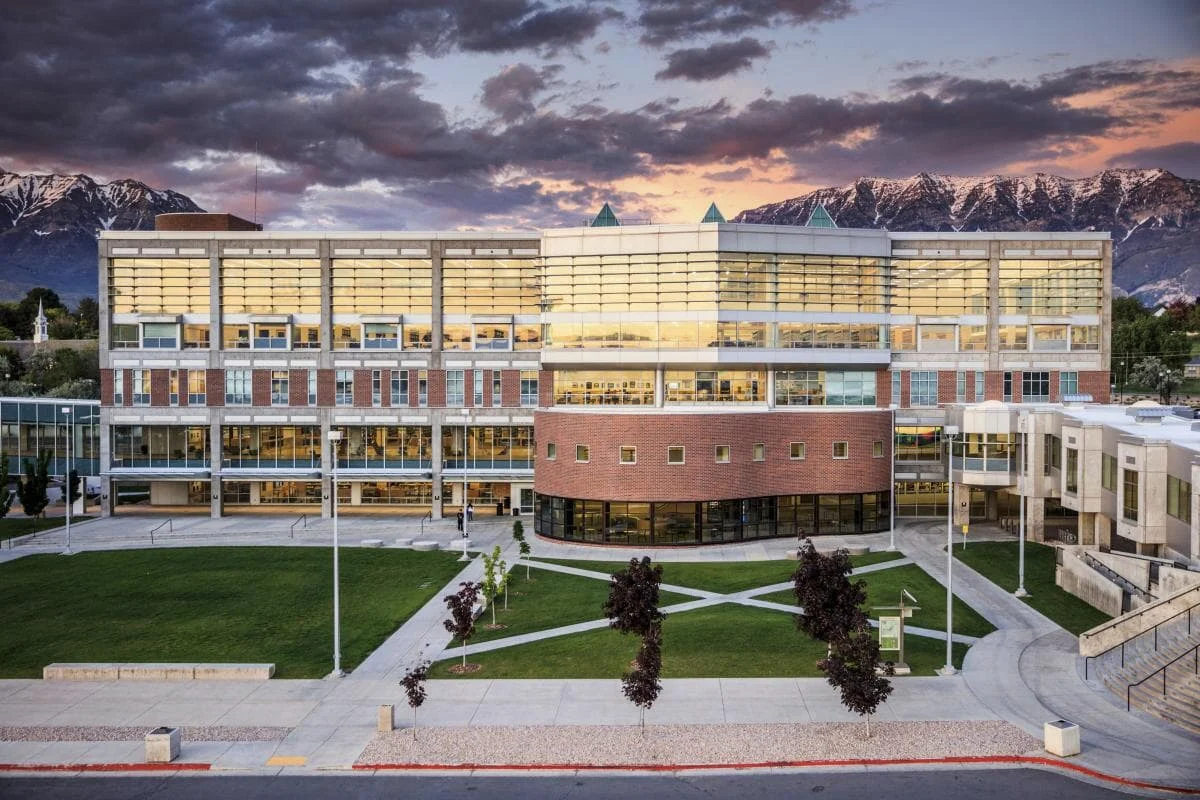
Newly uncovered public records reveal a stark internal dissonance at Utah Valley University (UVU) in the aftermath of Charlie Kirk’s assassination on its campus. Despite the university’s swift public pronouncements advocating for civility, open dialogue, and free expression, a significant tranche of emails and text messages obtained by Judicial Watch indicates that several faculty members communicated intensely hostile sentiments regarding Kirk to university administrators, including then-President Astrid S. Tuminez. These communications, spanning the weeks and months following the tragic September 10, 2025, event, express disdain for Kirk’s views, regret over his campus presence, and even threats of resignation should his memory be honored, directly challenging the institution’s stated commitment to balanced discourse.
The Public Records Revelation: A Glimpse into Internal Dissent
The 133 pages of internal communications, obtained through a Utah Government Records Access and Management Act (GRAMA) request by the conservative watchdog group Judicial Watch, offer an unvarnished look at the internal climate within UVU’s faculty. These documents, primarily emails directed to President Tuminez and other senior administrators, expose a palpable tension between the university’s public-facing narrative of healing and dialogue and the private, often vehement, objections voiced by some of its academic staff. Tom Fitton, President of Judicial Watch, highlighted this dichotomy, stating, "These records reveal that, even as Utah Valley University publicly called for free expression and civil discourse, some faculty members were making hateful and vicious comments about him, objecting to his invitation to campus, and threatening to leave if his memory were honored." The release of these records has ignited further debate about academic freedom, institutional neutrality, and the responsibilities of universities in fostering an environment of respectful, albeit challenging, intellectual exchange.
Chronology of a Tragedy and Its Aftermath
The timeline surrounding the events at Utah Valley University illustrates a rapid sequence of profound shock, public response, internal dissent, and emerging legal challenges.
The Assassination of Charlie Kirk: September 10, 2025
Charlie Kirk, the prominent founder of Turning Point USA (TPUSA), a conservative youth organization, was tragically assassinated on the UVU campus while initiating a nationwide campus speaking tour. Kirk’s visits to university campuses often generated controversy, drawing both fervent supporters and vocal protestors due to his outspoken conservative viewpoints on various social and political issues. His presence at UVU was part of a broader strategy to engage young audiences in discussions often perceived as challenging to prevailing campus orthodoxies. The circumstances of his death – described in a later legal filing as a "rooftop shooter" targeting an "outdoor event in the quad surrounded by tall buildings and other elevated observation platforms" – underscore the gravity and premeditated nature of the incident, sending shockwaves through the university community and across the nation.
UVU’s Immediate Public Response
In the immediate aftermath of the assassination, UVU administrators moved quickly to address the crisis, emphasizing a commitment to core academic values. The university issued public statements advocating for civility, respectful disagreement, and the fundamental right to freedom of speech. President Tuminez, in particular, framed the tragedy as a moment for institutional introspection, asking, "What is this moment asking of us? Of UVU? Of the nation?" These public declarations aimed to guide the university community through a period of profound grief and potential division, seeking to reaffirm UVU’s role as a marketplace of ideas where diverse perspectives could be exchanged, even if challenging.
The Genesis of "Our Better Selves for a Better America"
Just nine days after the assassination, on September 19, 2025, a proposal emerged from an undisclosed individual, redacted in the Judicial Watch release, advocating for a new university initiative. This individual pitched a fundraising drive titled "Our Better Selves for a Better America," aiming to raise $1 million for a project focused on civil dialogue, conflict navigation, and peacemaking. The proposal detailed an initial pledge of $100,000 and an ambitious goal to secure the remaining $900,000 swiftly.
UVU embraced this concept wholeheartedly, launching "Our Better Selves for a Better America" as an official presidential initiative. The university’s webpage dedicated to the program articulates its purpose, stating: "The killing of Charlie Kirk on September 10, 2025, was a grievous tragedy that reverberated through the Utah Valley University (UVU) community and nation. It challenged civility, respectful disagreement, and freedom of speech – core freedoms written in the United States Constitution." The initiative was positioned as a constructive response to the tragedy, designed to reinforce foundational principles of democratic discourse within the university and beyond.
Unveiling Faculty Sentiment: The Hostile Emails
Despite the university’s outward embrace of civility and dialogue, the internal correspondence reveals a different narrative, one of deep-seated animosity toward Kirk and his ideology among some faculty members.
The September 22, 2025 Email: Framing Kirk as a "Threat"
Less than two weeks after the assassination, on September 22, 2025, a UVU instructor sent a scathing email to President Tuminez, articulating profound disapproval of Charlie Kirk. The instructor framed Kirk not as a proponent of free speech, but as a direct threat to the university’s educational mission and its students. The email asserted that Kirk "appealed to the worst of us," and "spoke his prejudices openly, not to test free speech, but to shape minds." It further alleged that Kirk "targeted impressionable youth, feeding on their fears and anxieties."
The instructor’s message continued with a stark condemnation of Kirk’s message: "The hidden message in his rants was clear: hate is natural, and to resist it is to deny who you are. Hate masquerading as justice is nothing of the sort. True justice seeks fairness, accountability, and protection for all, while hate targets, divides, and destroys…." The email concluded with a forceful warning against any form of remembrance: "That is why we must resist any effort to memorialize him or turn him into an icon…. Charlie Kirk did not stand for civility, compassion, or truth. There was nothing civil about him." The instructor’s closing admonition, "to memorialize him would be a grave mistake," underscored a clear desire to prevent any posthumous recognition of Kirk on campus.

The November 4, 2025 Email: Threats of Exodus Over a Memorial
The sentiment escalated further in an email dated November 4, 2025, signed simply as a "faculty member." This communication expressed deep distress over the aftermath of the shooting and particular difficulty comprehending any support or mourning for Kirk. The faculty member wrote, "I’ve had a hard time dealing with the aftermath of the shooting on our campus, and in particular, I cannot understand how people could support or mourn someone who was so divisive and spewed such vituperation in his ‘debates.’ I regret that he was invited to UVU at all, and wish you had rethought the decision to allow him a forum on our campus."
This faculty member then directly addressed the contentious issue of a proposed campus memorial for Kirk, linking it to potential political repercussions and severe internal consequences. The email warned administrators about the "enormous power" of the Utah legislature and explicitly predicted a mass faculty exodus if UVU were to honor Kirk. "Should a memorial to him be erected on our campus, I fear you will lose many faculty members, including myself," the email stated. The message culminated in an ultimatum framed as a matter of principle: "I would not work at a university that supports Charlie Kirk’s ideals in any way." This stark declaration highlighted the depth of opposition and the potential for significant faculty turnover should the university choose to memorialize Kirk.
The Chasm Between Public Stance and Private Dissent
The revelations from these emails expose a significant chasm between UVU’s publicly articulated commitment to free expression and civility and the private sentiments held by some of its faculty. While the administration worked to project an image of unity and a dedication to constructive dialogue in the wake of an unprecedented tragedy, a segment of its academic staff communicated a visceral rejection of the very principles the university claimed to uphold in its response.
This internal contradiction presents a formidable challenge for university leadership. Administrators are tasked with balancing the constitutional right to free speech, ensuring campus safety, and fostering an inclusive academic environment, all while navigating intense political polarization and managing internal dissent. The emails suggest that for some faculty, Kirk’s speech crossed a line from legitimate, albeit controversial, expression into what they perceived as harmful rhetoric that undermined the university’s mission. This perception directly clashed with the broader institutional message that sought to frame the assassination as an attack on free speech itself, rather than a commentary on the content of the speaker’s message.
Broader Context: Free Speech on Campus
The events at UVU, and the subsequent revelations, resonate with a national debate surrounding free speech, academic freedom, and the role of universities in hosting controversial speakers. Campuses across the United States have increasingly become battlegrounds for ideological clashes, with institutions often struggling to define the boundaries between protected speech and what some consider hate speech or harmful rhetoric. The assassination of Charlie Kirk, an extreme and tragic manifestation of this tension, amplified these existing pressures at UVU.
Universities are traditionally seen as bastions of intellectual inquiry and open discourse, where a wide range of ideas, including those that are unpopular or challenging, should be debated. However, this ideal is frequently tested by faculty, student, and community demands for spaces free from perceived harm or bigotry. The hostile emails from UVU faculty members illustrate this tension, demonstrating a strong belief that Kirk’s presence and message were detrimental to the educational environment, directly contradicting the principle of hosting diverse viewpoints. This ongoing struggle to balance competing values—freedom of expression versus the creation of an inclusive and safe environment—remains one of the most significant challenges for higher education institutions today.
Legal Ramifications: The Kirk Family’s Notice of Claim
Adding another layer of complexity to UVU’s predicament, Charlie Kirk’s family officially moved in September 2026 to put Utah Valley University and state officials on notice of their intent to sue. This notice of claim accuses the university of profound security failures that allegedly enabled Kirk’s assassination.
The notice, as reported by Michael Ruiz, asserted that UVU exhibited "stunning failures and reckless decisions" that "created a foreseeable danger to Charlie." Specifically, the family’s legal representation described the event setup as "placing a politically controversial figure like Charlie Kirk in an outdoor event in the quad surrounded by tall buildings and other elevated observation platforms is accurately described as walking him into a fishbowl." The document further contended that "Those decisions ultimately rendered Mr. Kirk helpless to the rooftop shooter in an assassination that could have been avoided had the UVU Parties only taken reasonable steps to plan and oversee a safe event, steps outlined below that have been standard practice for other universities hosting controversial speakers." This legal action shifts the focus from the ideological debates to the university’s operational responsibilities, raising serious questions about campus security protocols for high-profile, potentially controversial events. The lawsuit could have far-reaching implications for how universities plan and execute events involving contentious figures, potentially setting new precedents for institutional liability in the face of targeted violence.
Implications for Utah Valley University
The convergence of these internal revelations and external legal challenges places Utah Valley University in a precarious position. The Judicial Watch findings expose a significant internal struggle over its identity and values, particularly regarding its commitment to free expression. The faculty emails reveal a deeply divided institution, where the very principles the administration publicly espoused were privately challenged by its own academic staff. This internal conflict could impact faculty morale, recruitment, and the university’s overall academic reputation.
Simultaneously, the impending lawsuit from the Kirk family introduces a severe external threat, potentially forcing UVU to defend its security planning and decision-making processes in court. The financial and reputational costs of such litigation could be substantial. Beyond the immediate legal battle, the case could influence how universities nationwide approach event planning, security assessments, and liability for speakers who attract both significant attention and potential threats. UVU faces the monumental task of navigating these complex internal and external pressures while striving to uphold its educational mission and rebuild trust within its community and with the broader public.
In conclusion, the assassination of Charlie Kirk at Utah Valley University on September 10, 2025, initiated a cascading series of events that have profoundly tested the institution. The subsequent release of hostile faculty emails by Judicial Watch has laid bare internal ideological divisions that contradict the university’s public calls for civility and dialogue. These revelations, coupled with the Kirk family’s notice of intent to sue over alleged security failures, underscore the multifaceted challenges UVU faces. The tragic incident and its aftermath serve as a poignant case study in the ongoing national debate over free speech, campus safety, and the intricate responsibilities of higher education institutions in a deeply polarized society. The coming months will undoubtedly determine the long-term impact on UVU’s reputation, policies, and the very fabric of its academic community.

