
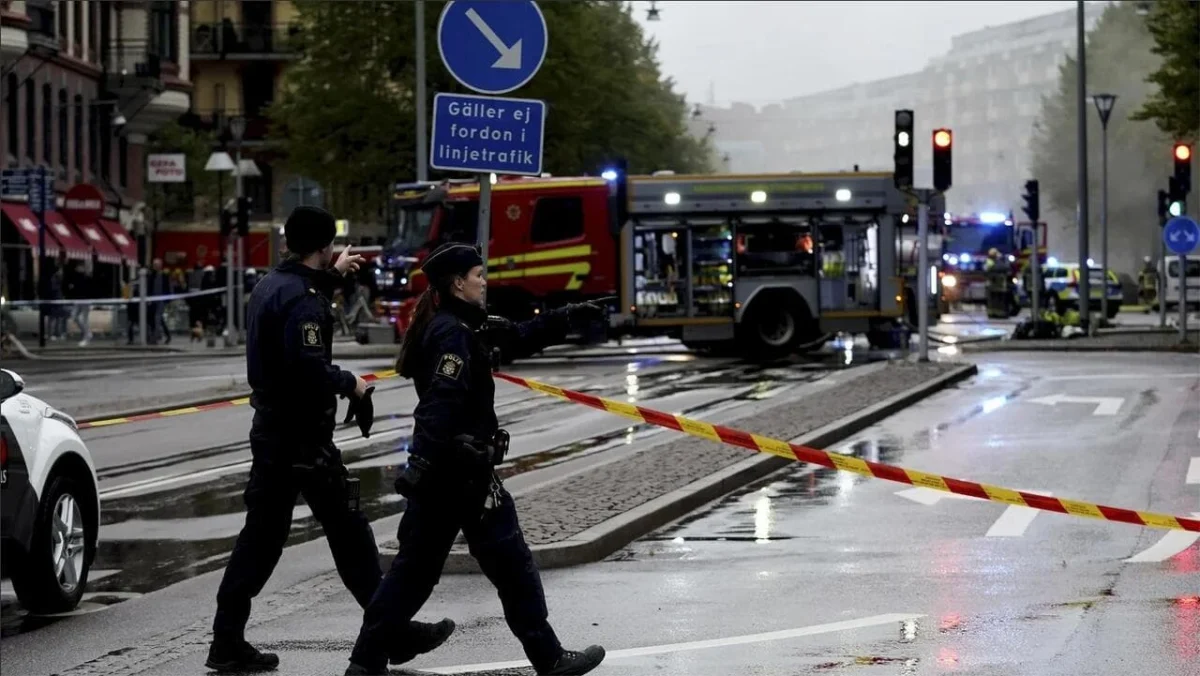
Uppsala, Sweden – While recent legislative changes and enhanced police tactics have demonstrably improved security in the Swedish city of Uppsala by curbing gang violence, a veteran police officer and local politician, Maria Rosander, warns that a more profound and insidious threat is emerging: the increasing "Islamization" and the proliferation of parallel social structures within Swedish society. Rosander, who also serves as a Sweden Democrat group leader in Uppsala, argues that this phenomenon poses a significant long-term challenge that could undermine the very fabric of the nation.
The Shifting Landscape of Crime in Uppsala
For years, Sweden, and particularly cities like Uppsala, grappled with an escalating wave of organized crime, characterized by an alarming rise in shootings, bombings, and gang-related violence. The period saw a significant increase in firearm incidents and fatalities, prompting widespread public concern and calls for drastic action. According to official statistics, Sweden experienced a concerning surge in fatal shootings, often linked to rival criminal gangs vying for control over drug markets and territories. In 2022, Sweden recorded 62 fatal shootings, a stark increase from previous years, marking it as an outlier compared to other Nordic countries. This context of heightened criminal activity underscores the severity of the challenge the country faced.
Against this backdrop, Maria Rosander, with 17 years of experience on the force, describes the current situation in Uppsala regarding gang-related crime as "like night and day" compared to the crisis levels of recent years. She credits a suite of robust political decisions and operational improvements for this turnaround. These include the implementation of tougher criminal sentences, a significant expansion of surveillance capabilities, enhanced cooperation between various police regions, and a greater reliance on covert investigative measures. Rosander highlights that these proactive strategies have enabled law enforcement to intercept suspected young gang recruits before they can carry out attacks, thereby preventing violence rather than merely reacting to it. This strategic shift reflects a broader national effort to reclaim public safety and disrupt criminal networks.
The visible improvement in street-level security, Rosander contends, serves as tangible proof that political will and decisive action can indeed reverse a decline in public order. "We have come to the conclusion that it is not profitable to be a criminal," she stated, indicating a successful deterrence strategy. This success, however, only addresses one facet of a multi-layered problem, as Rosander pivots to what she perceives as an even more critical, albeit less overt, danger.
A Deeper, More Insidious Threat: "Islamization" and Parallel Societies
Despite the advancements in tackling overt gang violence, Rosander posits that Sweden is now confronting a more fundamental challenge rooted in religious segregation and what she terms "Islamization." She asserts that this phenomenon is a significant contributor to the societal shifts currently observed, expressing absolute conviction in its pervasive influence. This perspective places her at the forefront of a contentious debate within Sweden and across Europe regarding immigration, integration, and cultural identity.
Rosander’s concerns extend beyond mere cultural differences, delving into what she identifies as the establishment of parallel social structures. These structures, she argues, operate outside or in defiance of Swedish laws and societal norms, creating enclaves where traditional Swedish values and legal frameworks are increasingly sidelined. The implications of such developments, she warns, are far-reaching, potentially eroding national cohesion and civic trust from within.
Manifestations of Parallel Structures
Rosander provides several specific examples to illustrate her concerns about these parallel structures and their impact on Swedish society:
Social Segregation and Cultural Clashes:
The Uppsala mosque, according to Rosander, stands as a potent symbol of this growing segregation. She characterizes it as a locus for honor-based oppression and the unequal treatment of men and women. Her observations from direct policing experience include instances where female officers are reportedly ignored or dismissed in favor of their male colleagues when engaging with individuals in heavily segregated areas. Furthermore, Rosander claims that girls in these communities are frequently kept away from public life and educational opportunities, limiting their exposure to broader Swedish society and hindering their personal development.
"We are letting Islamization creep in to the point where we will not be able to say no," Rosander warned, expressing a profound sense of urgency. She fears that the incremental nature of these changes makes them difficult to confront until they are deeply entrenched, leading to a situation where "society is being eaten from within." This stark imagery underscores her belief that the challenge is existential, threatening the core identity and functionality of Sweden as a unified nation.
Economic Disparities and Welfare Fraud Allegations:
Beyond social and cultural segregation, Rosander highlights significant concerns regarding alleged welfare abuse facilitated by these parallel structures. She describes a pattern where couples, while remaining married under Islamic law, register at separate addresses within the Swedish system. This allows them to illegitimately claim additional housing allowances and various social benefits, exploiting the welfare system designed to support individuals and families in need.
In such scenarios, Rosander details, "The woman receives housing allowance, extra allowance and an apartment for her children." Simultaneously, "The man also receives an apartment that he rents out illegally," further compounding the fraudulent activity. These practices not only defraud the state of significant resources but also undermine public trust in the welfare system, a cornerstone of the Swedish social model. The allegations point to a systemic exploitation that is difficult to detect and combat using conventional methods, as it leverages cultural practices to circumvent administrative controls.
Organized Crime and Clan Networks:
Rosander further warns that foreign criminal gang networks are deeply entrenched within Uppsala’s vulnerable districts. She explicitly states, "We absolutely have gang structures in our society," and differentiates these from traditional Swedish criminal elements. Her observations suggest that these are not merely opportunistic groups but rather highly organized entities with sophisticated operations.
"It’s classic mafia," she declares, drawing a direct parallel between these foreign groups and established organized crime syndicates. "I see clan and mafia as basically the same thing." This comparison highlights the hierarchical, loyalty-based, and often violent nature of these networks. She notes that extended families repeatedly appear in criminal investigations, indicating a familial or clan-based structure that fosters loyalty and secrecy, making infiltration and prosecution exceedingly difficult. Reports of business owners being forced to pay protection money in these areas further solidify her claims of mafia-like extortion rackets. Rosander explicitly clarifies, "It’s not the Swedes. These are foreign groups that have connections to organized crime and networks," and emphatically concludes, "It is not Swedish youth who commit these crimes." This distinction is crucial to her argument, framing the issue as an external imposition rather than an internal failing of Swedish youth.
Policy Prescriptions and Controversial Proposals
In response to these perceived threats, Rosander advocates for a series of stringent and often controversial policy changes. Her proposals reflect a fundamental shift from integration to a more demanding model of assimilation, designed to reinforce Swedish cultural norms and legal supremacy.
Foremost among her recommendations is an immediate halt to the construction of new mosques in Sweden. This proposal directly challenges principles of religious freedom but aligns with her view that mosques symbolize and perpetuate segregation. She also calls for strict restrictions on the wearing of niqabs and burqas in public spaces, arguing that these garments hinder social cohesion and communication. Extending this, Rosander advocates for a ban on children wearing Islamic veils, emphasizing the importance of protecting children from what she views as restrictive cultural practices.
Rosander explicitly rejects the language and philosophy of integration, arguing that it has proven insufficient. "I think we should talk about assimilation," she states, advocating for a policy where newcomers are expected to fully adopt Swedish culture, language, and societal norms rather than maintaining separate cultural and social systems. She criticizes multilingual municipal information, arguing that it removes incentives for new arrivals to learn Swedish, thereby impeding their full participation in society.
To combat the alleged infiltration of parallel structures into public institutions, Rosander calls for stricter background checks for sensitive public-sector positions. She argues that clan loyalty can override loyalty to Swedish institutions, posing a risk to national security and administrative integrity. Furthermore, she criticizes Uppsala Municipality for allegedly failing to scrutinize the foreign funding of Muslim associations and mosque projects. "If you can’t account for 100 percent where the money comes from, it should never be opened," she asserts, highlighting concerns about transparency and potential external influence.
Finally, Rosander strongly supports an active remigration policy, believing it is "necessary" for Sweden’s future. She proposes that Uppsala establish a dedicated municipal unit to focus on illegal residence, improper settlement, and the misuse of public housing. This unit would actively work to identify and address individuals residing illegally or exploiting the system, reflecting a more muscular approach to immigration enforcement.
Broader Context: Sweden’s Integration Challenges
Rosander’s stark warnings resonate within a broader national and European debate about the challenges of immigration and integration. Sweden, long lauded for its humanitarian policies and open-door approach to asylum seekers, has in recent years faced increasing scrutiny over its integration outcomes. The country experienced a significant demographic shift, particularly following the 2015 refugee crisis, which saw a large influx of asylum seekers. This period placed immense strain on social services, housing, and the labor market.
The concept of "vulnerable areas" (often referred to as "no-go zones" in more sensationalist discourse) has become a recurring theme in Swedish public debate. These areas, characterized by high unemployment, social exclusion, and sometimes elevated crime rates, are often home to large immigrant populations. While the term "no-go zone" is widely disputed and often deemed misleading by authorities, the underlying challenges of parallel societies, honor crimes, and difficulties in law enforcement presence have been acknowledged by various Swedish agencies and political figures. The rise of the Sweden Democrats, a party with roots in anti-immigration sentiment, to become the second-largest political force in the country, reflects a significant shift in public opinion and political discourse concerning these issues. Their growing influence has pushed traditionally centrist parties to adopt tougher stances on crime and immigration, aligning with some of Rosander’s proposed policies.
Reactions and Counterarguments
Rosander’s outspoken views, particularly her use of terms like "Islamization" and calls for "assimilation" and "remigration," are highly polarizing. While they find support among those concerned about national identity and social cohesion, they are often met with strong condemnation from human rights organizations, multicultural advocates, and many liberal political factions. Critics often argue that such rhetoric can fuel xenophobia and discrimination, undermining efforts to build an inclusive society.
Statements advocating for a halt to mosque construction or bans on religious attire, for example, are frequently challenged on grounds of religious freedom and individual rights. Opponents would likely argue that such measures infringe upon fundamental democratic principles and risk alienating minority communities further, potentially exacerbating social divides rather than healing them. The concept of "assimilation" itself is debated, with many advocating for "integration" – where newcomers maintain aspects of their cultural identity while actively participating in the broader society – as a more humane and effective approach. Furthermore, allegations of widespread welfare fraud and criminal clan networks, while serious, often require robust, evidence-based responses that avoid broad generalizations about entire communities. Community leaders and civil society organizations working with immigrant populations often emphasize the positive contributions of newcomers and highlight the importance of addressing root causes of social exclusion, such as lack of economic opportunity and discrimination, rather than focusing solely on cultural or religious differences.
Implications for Swedish Society and Policy
Maria Rosander’s comprehensive warning underscores the profound and multifaceted challenges currently confronting Sweden. Her analysis, while controversial, highlights a growing tension between traditional Swedish values of openness and equality, and the perceived pressures arising from rapid demographic and cultural shifts. If her assessment gains wider traction, it could significantly impact future policy debates, particularly concerning immigration, integration, and law enforcement.
The call for "assimilation" rather than "integration" represents a fundamental ideological shift that could lead to more restrictive immigration policies, stricter requirements for citizenship, and a re-evaluation of multicultural initiatives. Policies such as active remigration, enhanced surveillance, and stricter controls on religious institutions would represent a significant departure from Sweden’s post-war liberal consensus. Such measures could also have significant implications for Sweden’s international image and its adherence to human rights conventions.
Ultimately, Rosander’s intervention forces an uncomfortable but perhaps necessary conversation about the future direction of Swedish society. She believes that Sweden’s success in reducing gang crime proves that cultural decline can be reversed, but only if politicians are willing to confront these "uncomfortable realities" directly. "As a Swede, I should not have to change my life and start deviating from things that we in Sweden have always done just to suit someone else," she concluded, articulating a sentiment that resonates with a segment of the population grappling with rapid societal transformation. The debate she ignites will undoubtedly shape Sweden’s identity and policy landscape for years to come, navigating the complex interplay between national sovereignty, cultural preservation, and the rights of all residents.

