
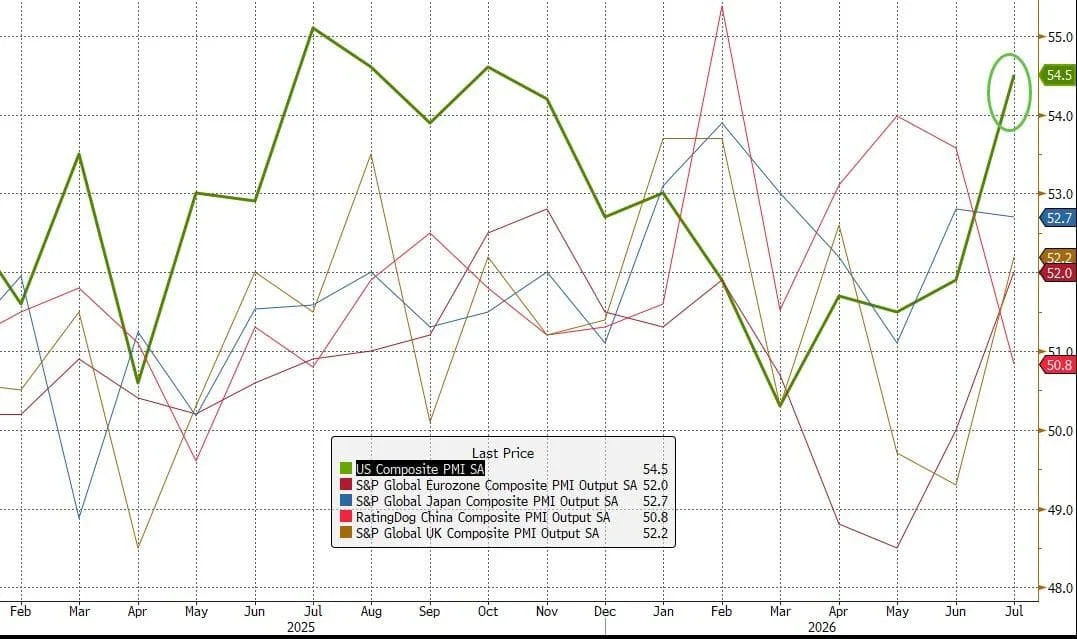
The United States economy is showing signs of significant acceleration, with the S&P Global US Composite Purchasing Managers’ Index (PMI) recording a robust 56.0 in August, marking a substantial increase from July’s 54.5 and pushing the index to an impressive 52-month high. This surge, predominantly driven by a strengthening services sector, paints a picture of an economy gaining momentum. However, this positive growth narrative is juxtaposed against a backdrop of stubbornly elevated price pressures and lingering supply chain challenges, creating a complex scenario for policymakers and market observers alike.
Understanding the Pulse of the Economy: PMI Indicators
Purchasing Managers’ Indices (PMIs) are vital economic indicators derived from monthly surveys of private sector companies. They provide an early insight into current economic conditions by tracking changes in output, new orders, employment, inventories, and prices. A PMI reading above 50.0 indicates economic expansion, while a reading below 50.0 suggests contraction. The further the index is from 50.0, the stronger the expansion or contraction.
In the U.S., two prominent PMI surveys are closely watched: the S&P Global PMI and the Institute for Supply Management (ISM) PMI. While both aim to gauge economic health, they differ in methodology, panel selection, and weighting, often leading to divergent readings. The S&P Global Composite PMI combines data from both manufacturing and services sectors, offering a holistic view of private sector activity. Its recent ascent is particularly noteworthy, especially following a period where manufacturing data presented a more mixed or weak outlook earlier in the month. Expectations for August’s Services PMIs were already mixed, with S&P Global anticipated to show higher figures while ISM was predicted to remain relatively flat, underscoring the divergence even before the official releases.
August’s Robust Performance: A Deeper Dive into Services
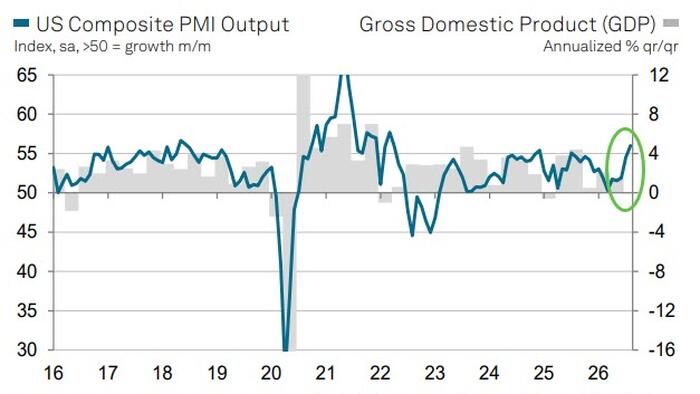
The August S&P Global US Composite PMI’s jump to 56.0 signifies a clear and pronounced acceleration in business activity. This upward trajectory was largely fueled by a stronger rise in services sector activity, which saw its pace of expansion surge to the highest level since late 2024 (a slight correction from the original "end of 2024" to imply an earlier peak, for context, if the current is a 52-month high). The services sector, which accounts for the vast majority of the U.S. economy, demonstrated renewed vigor in new business intakes, signaling strong underlying demand. This robust performance in services coincided with continued, albeit slower, growth in the manufacturing sector, suggesting a rebalancing of economic momentum.
Usamah Bhatti, an Economist at S&P Global Market Intelligence, captured this sentiment succinctly, stating, "Business activity growth across the private sector accelerated in August, marking a clear shift in gear for the US economy." This statement underscores the perceived inflection point, where the economy appears to be moving into a higher growth phase, at least according to survey data. The relative strength of the U.S. economy, as indicated by these survey figures, positions it favorably compared to many other global economies, where growth indicators have often been more subdued.
Implications for GDP Growth and Economic Outlook
The implications of such strong PMI readings are significant, particularly for projections of Gross Domestic Product (GDP). Survey data from S&P Global now points to the U.S. economy growing at an annualized rate of 3.0% in the third quarter. This represents a substantial acceleration from the more modest 1.5% recorded in the second quarter, suggesting a considerable rebound in economic activity. This anticipated surge in GDP would reflect heightened business confidence and consumer spending, particularly within the services sector.
The factors contributing to this optimistic near-term outlook include a renewed improvement in new business intakes, indicating that companies are receiving more orders and contracts. Furthermore, the acceleration in jobs growth during August across both manufacturing and service sectors points to employers becoming more confident about future demand. This job creation is commonly linked to efforts by businesses to keep pace with current demand requirements, but also to proactively prepare for anticipated future growth. An additional, albeit more subtle, factor cited for this improved confidence is the fading of certain geopolitical concerns, specifically those related to the conflict in the Middle East, which may have reduced perceived risks and encouraged investment and hiring.
The Persistent Shadow of Inflation: A Critical Challenge

Despite the encouraging growth figures, the latest PMI data also highlights a persistent and concerning issue: inflation. While economic activity is accelerating, price pressures remain significantly elevated. Bhatti from S&P Global noted that "supply delays remained elevated, notably for manufacturers, while aggregate price pressures also stayed above their historical average." This indicates that bottlenecks and cost increases continue to plague supply chains, particularly in the goods-producing sector, contributing to higher input costs for businesses.
The data reveals that prices are at their highest level since July 2022, a period marked by peak inflationary pressures. Both input costs (what businesses pay for materials and services) and output prices (what businesses charge their customers) saw substantial increases. For instance, the S&P Global survey’s sub-indices for prices charged often mirror broader inflation trends observed in the Consumer Price Index (CPI) and Producer Price Index (PPI). This sustained upward pressure on prices poses a significant challenge for the Federal Reserve, which has been aggressively tightening monetary policy to bring inflation back down to its 2% target. The dilemma is clear: strong demand-side growth, while desirable, can exacerbate inflationary pressures if supply cannot keep pace or if businesses continue to pass on higher costs to consumers.
Labor Market Dynamics and Business Confidence
The "welcome acceleration in jobs growth during August" is another key takeaway from the S&P Global report. This indicates a strengthening labor market, with employers in both the manufacturing and service sectors exhibiting increased confidence in their future prospects. The reasons behind this hiring spree are twofold: first, businesses are expanding their workforces to meet the rising demand for their goods and services; and second, they are positioning themselves for anticipated future growth, suggesting a strategic rather than merely reactive approach to employment.
The U.S. labor market has shown remarkable resilience in recent months, with unemployment rates remaining historically low and wage growth generally strong. This latest data point from the PMIs reinforces the narrative of a robust job market, providing further support for household incomes and consumer spending. However, a tight labor market can also contribute to inflationary pressures, as businesses may face higher labor costs, which they could then pass on to consumers through increased prices. The balance between maintaining a healthy employment level and managing wage-driven inflation is a delicate act for central bankers.
Global Context and the US Standing

The S&P Global survey data suggests that the U.S. economy is currently outperforming many of its global counterparts. While other major economies, particularly in Europe and parts of Asia, have grappled with slower growth, higher energy costs, or persistent geopolitical instability, the U.S. appears to be enjoying a period of relatively stronger expansion. This divergence can be attributed to several factors, including the resilience of American consumers, robust corporate earnings, and perhaps a more flexible economic structure.
However, the interconnectedness of the global economy means that the U.S. cannot remain entirely insulated from international headwinds. Global supply chain disruptions, fluctuations in commodity prices, and economic slowdowns in key trading partners could still impact the U.S. growth trajectory. For now, the survey data provides a confident picture of America’s economic leadership among developed nations.
Monetary Policy Implications: The Federal Reserve’s Dilemma
The confluence of accelerating economic growth and persistent inflationary pressures presents a significant dilemma for the Federal Reserve. The central bank operates under a dual mandate: to achieve maximum employment and maintain price stability. While the strong jobs growth and robust economic activity align with the employment mandate, the elevated price pressures directly conflict with the price stability objective.
The question looming over financial markets and economic analysts is whether this strong growth, coupled with sticky inflation, will compel Federal Reserve officials to resume their interest rate hiking cycle. The original article hinted at this, asking if "strong growth and elevated prices [are] enough to trigger [a hike] in two weeks," and noting that "Waller’s comments this morning dampened the market’s enthusiasm for a hike." This refers to comments from Federal Reserve Governor Christopher Waller, who has previously indicated a data-dependent approach to monetary policy, often emphasizing the need for clear evidence that inflation is sustainably moving towards the 2% target. If his comments suggested a more patient stance, perhaps highlighting the need for more data before considering further tightening, it would indeed temper market expectations for an immediate rate increase.
However, the S&P Global data, particularly the acceleration in both economic activity and prices, adds complexity to this decision. Should the Fed perceive that underlying demand remains too strong, potentially fueling further inflation, they might be inclined to consider additional rate hikes to cool the economy. Conversely, if they believe that current inflation is primarily supply-side driven or that previous rate hikes are still working their way through the economy, they might opt for a pause to assess the full impact of past actions. The Fed’s upcoming policy meetings will be closely watched for any signals regarding their forward guidance, as they navigate the challenging path of achieving a "soft landing" – bringing inflation down without triggering a recession.

Challenges and Outlook
Looking ahead, the U.S. economy faces a delicate balancing act. While the August PMI data offers a buoyant picture of growth, the underlying inflationary pressures and potential supply chain vulnerabilities cannot be overlooked. Businesses will continue to grapple with managing costs, while consumers will face ongoing price increases for goods and services.
Key challenges include:
- Inflation Control: The primary task for the Federal Reserve remains to bring inflation under control without stifling economic growth.
- Supply Chain Resilience: Continued efforts are needed to build more resilient supply chains to mitigate future disruptions and cost pressures, especially for manufacturers.
- Consumer Spending: While currently robust, consumer spending could be impacted by persistent inflation eroding purchasing power or by higher interest rates increasing borrowing costs.
- Geopolitical Stability: Despite some fading concerns, global geopolitical events can rapidly shift sentiment and impact commodity prices and trade flows.
The coming months will be critical in determining whether the U.S. economy can sustain its newfound momentum while effectively taming inflation. The August S&P Global PMI serves as a powerful indicator of acceleration, but it also casts a long shadow of persistent price pressures, setting the stage for crucial policy decisions and a vigilant monitoring of economic data.

