
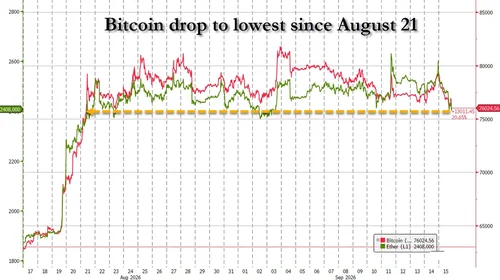
The United States Senate on Tuesday delivered a significant blow to the burgeoning digital asset industry, failing to advance the Digital Asset Market Clarity Act (H.R. 3633). The vote, held at approximately 2:15 p.m. ET, was a pivotal moment, marking the first floor test of comprehensive crypto market-structure legislation in the chamber. Far from a vote on final passage, the proceedings aimed only to invoke cloture on the motion to proceed, essentially deciding whether debate on the landmark bill could even begin. The answer was a resounding no, with 50 senators voting against opening debate and 49 voting in favor.
The outcome effectively freezes the legislative effort to establish a clear regulatory framework for digital assets, leaving the industry in a state of prolonged uncertainty with little time remaining on the legislative calendar before the critical midterm elections. The required 60 votes to overcome a filibuster and move to debate proved insurmountable, underscoring deep partisan divisions and internal disagreements within both parties on how best to approach the complex world of cryptocurrency.
A Bipartisan Effort Derailed
The vote revealed a stark partisan divide, with every Democrat present casting a vote against the measure. Compounding the challenge for proponents, three Republican senators — Susan Collins of Maine, Josh Hawley of Missouri, and Jerry Moran of Kansas — also voted against advancing the bill, further highlighting the nuanced opposition that transcended typical party lines. With Republicans holding 53 seats, the bill’s advocates needed to secure at least seven Democratic votes, and more if GOP members defected due to concerns over banking interests or law enforcement implications. They ultimately failed to garner any Democratic support, and indeed, lost three from their own ranks.
The Digital Asset Market Clarity Act, often referred to simply as the Clarity Act, represents the market-structure half of a broader crypto legal framework that Congress initiated last year. It was designed to complement the GENIUS Act, which focused on stablecoin regulations. At its core, the Clarity Act sought to establish a crucial jurisdictional line, delineating which digital assets would be regulated as commodities under the Commodity Futures Trading Commission (CFTC) and which would fall under the purview of the Securities and Exchange Commission (SEC). This distinction is vital for providing legal certainty to developers, investors, and businesses operating in the crypto space.
Beyond this jurisdictional split, the bill aimed to introduce a federal registration regime for spot trading platforms for the first time, a move intended to bring greater oversight and consumer protection to a largely unregulated segment of the market. Furthermore, it laid out statutory terms for self-custody of digital assets, defined parameters for noncustodial software, and addressed the contentious issue of rewards on stablecoin balances. The bill had cleared the House of Representatives in July 2025 with significant bipartisan support, including 78 Democrats, and subsequently underwent a year of extensive rewrites and negotiations within the Senate.
The Long Road to Senate Consideration
The journey of the Clarity Act through Congress illustrates the inherent difficulties in legislating for a rapidly evolving technological and financial sector. Following its passage in the House, where it garnered 294 votes to 134, the bill moved to the Senate. In May 2026, the Senate Banking Committee reported a version of the bill favorably, with a 15-9 vote. Notably, at the committee stage, two Democrats, Ruben Gallego of Arizona and Angela Alsobrooks of Maryland, had joined Republicans in supporting the measure. This early bipartisan cooperation had fueled optimism that a broader floor coalition could be forged.
However, Tuesday’s cloture vote shattered this hope. Both Senators Gallego and Alsobrooks ultimately voted no on cloture, indicating that the consensus achieved in committee did not translate to the full chamber. This shift underscores the intensified scrutiny and political maneuvering that often accompanies major legislative initiatives as they approach a floor vote, particularly on issues as complex and contentious as digital asset regulation. The first procedural hurdle ultimately became the final one for the 2026 legislative session, effectively pushing comprehensive crypto market-structure reform into an uncertain future.
The Final 48 Hours: A Deal Collapsed
The rapid unraveling of the Clarity Act in the final 48 hours leading up to the vote paints a clear picture of the deep-seated disagreements that proved insurmountable. On Sunday night, Senate Republicans, led by key figures such as Senator Cynthia Lummis of Wyoming, Banking Committee Chair Tim Scott of South Carolina, and Agriculture Committee Chair John Boozman of Arkansas, released what they characterized as their "last, best and final" text. They asserted that this revised draft incorporated no fewer than 126 substantive changes specifically requested by Democrats.
The Republican package included new ethics language, reportedly modeled on a proposal from Senators Tillis and Gallego, as well as crucial edits to the Blockchain Regulatory Certainty Act (BRCA) designed to protect noncustodial developers. It also featured Agriculture Committee guardrails on affiliate trading and tribal gaming, and a Treasury "circuit breaker" mechanism intended to alleviate concerns from traditional banks regarding stablecoin yield potentially draining community bank deposits. Senator Lummis was unequivocal in her message, suggesting Democrats had received their demands and should now "take yes for an answer."
However, Democrats did not concur. Late Monday, they submitted a counteroffer, indicating that significant differences remained. According to sources familiar with the negotiations, while Democrats reportedly did not re-open the stablecoin-yield dispute — an issue described as primarily a "Republican-only" problem by some — they pressed for more stringent provisions on ethics. Their demands included stricter rules concerning large crypto holdings by high-ranking officials (the president, vice president, members of Congress, judges) and their dependent children, as well as tighter restrictions on paid crypto promotions.
Furthermore, Democrats sought a narrower interpretation of the BRCA, explicitly stating that it would not modify criminal law, and demanded more robust Ag-title rules governing exchanges and conflicts of interest. Senators Mark Warner of Virginia, Ruben Gallego of Arizona, and Raphael Warnock of Georgia reportedly indicated that the White House-approved ethics language still required further refinement. Senator Elizabeth Warren of Massachusetts went a step further, expressing concerns that the proposed enforcement design granted too much control to a future Trump administration and contained loopholes that could accommodate existing presidential crypto interests.
Republicans swiftly rejected this counteroffer on Tuesday morning. Jeff Naft, a spokesperson for the Senate Banking Committee, stated, "In response to a significant step in their direction, Democrats have chosen to move the goalposts again. Yet we are hearing the same unreasonable asks and the same refusal to take yes for an answer. The final text is public." Senator Lummis’s office echoed this sentiment, remarking that the Democratic paper "looks identical to their opening position at the start of recess." Patrick Witt, Executive Director of the White House Crypto Council, had already signaled the diminishing room for maneuver on Monday, telling Crypto In America that any remaining changes would be "punctuation at this point or technical changes," firmly viewing the Republican proposal as a "best and final offer."
Three Unresolved Fights at the Heart of the Collapse
The failure to bridge the gap on three core issues ultimately sealed the Clarity Act’s fate:
-
Ethics and Political Accountability: This emerged as the primary political sticking point. Democrats consistently pushed for comprehensive restrictions on significant crypto holdings by the president, vice president, members of Congress, federal judges, and their immediate families, alongside robust limitations on paid crypto promotions. While Republicans incorporated language they claimed aligned with the Tillis-Gallego framework and granted state attorneys general a role in enforcement, critics argued that the provisions still left substantial gaps. These alleged gaps were particularly concerning regarding existing ventures potentially tied to the Trump family and the perceived excessive discretion granted to the Justice Department in enforcement. For Senator Warren and others, these issues were disqualifying. Notably, several key Democratic negotiators who had spent months shaping the bill—Senators Kirsten Gillibrand, Mark Warner, Cory Booker, Raphael Warnock, Ruben Gallego, Angela Alsobrooks, and Catherine Cortez Masto—all ultimately voted no on cloture, as reported by Eleanor Terrett of Crypto In America.
-
Developer Protections and the Future of Decentralized Finance (DeFi): The language surrounding the Blockchain Regulatory Certainty Act (BRCA) was intended to shield noncustodial software developers from onerous money-transmitter registration requirements, a critical aspect for fostering innovation in the decentralized finance (DeFi) space. Senator Catherine Cortez Masto of Nevada had been a leading Democratic voice in this debate. Republicans had already removed explicit criminal safe harbors to address her concerns. However, her camp still sought to narrow the provision further and include a specific sentence affirming that nothing within it would alter existing criminal law. Industry stakeholders and Republican negotiators viewed this as a "second move of the goalposts," arguing it undermined the carefully crafted compromises.

-
Banks, Stablecoin Yields, and Financial Stability Concerns: The banking sector mounted a significant offensive against the bill’s provisions regarding stablecoin yields. Eight prominent banking trade groups, including the American Bankers Association and the Independent Community Bankers of America, publicly criticized the newly proposed "circuit breaker" mechanism. They contended it was "not a safeguard at all" because it would activate only after deposits had already begun to leave community banks, rather than preventing such outflows. These groups advocated for tighter bans on interest-like payments on stablecoin balances, arguing that such offerings could siphon deposits away from traditional financial institutions. The White House Council of Economic Advisers (CEA) countered this narrative, publishing an analysis suggesting "no meaningful relationship between stablecoin growth and community bank deposit flight." Witt accused the banks of acting in bad faith, stating, "If you oppose the Clarity Act because you just hate crypto, that’s fine. Just say that." This particular dispute also created fissures within the Republican ranks. Senator John Curtis of Utah, for instance, indicated he would vote to proceed but would oppose final passage. Senators John Cornyn of Texas and Susan Collins of Maine expressed public indecision leading up to the vote, with Collins specifically citing concerns about community-bank deposits and labeling the bill a "moving target." Senators Rand Paul of Kentucky and Josh Hawley of Missouri were widely anticipated to oppose the bill on its substance. Even Senate Minority Leader Mitch McConnell of Kentucky, returning to the floor after a three-month absence, indicated he would "do my best to be present for tough votes," a statement that emphasized presence but offered no guarantee of securing the crucial 60 votes.
What the Bill Would Have Achieved and the Path Forward
Had it advanced, the Digital Asset Market Clarity Act would have represented a monumental step toward establishing regulatory clarity for the U.S. digital asset market. As market-structure legislation, it aimed to build upon the foundation laid by the GENIUS Act on stablecoins, providing a clear division of oversight between the SEC and the CFTC. This jurisdictional clarity was designed to prevent securities laws from being circumvented by the mere re-labeling of tokens. It also sought to establish clear rules for trading platforms and enshrine a statutory floor under self-custody and noncustodial development, crucial for fostering innovation while protecting consumers.
Supporters from major financial institutions and crypto firms alike, including BlackRock, Fidelity, Schwab, Goldman Sachs, and Coinbase, argued that without such a durable statute, the industry would remain subject to piecemeal, agency-by-agency enforcement, stifling growth and driving innovation overseas. Conversely, opponents maintained that the draft legislation inadequately addressed conflicts of interest, illicit finance risks, and the competitive threat to traditional bank deposits.
Majority Leader John Thune framed Tuesday’s vote as the "next logical step" after the GENIUS Act, while Senator Scott described it as the day "everyone [had] to put their cards on the table." Indeed, they did, but the table ultimately lacked the 60 cards necessary to proceed.
While a cloture vote on a motion to proceed is not, by Senate rules, a definitive funeral for a bill—leadership retains the option to refile, amendments can be rewritten, and a lame-duck session technically remains—the practical realities of the legislative calendar are grim. The House has already canceled late-September legislative weeks. The Senate faces a brief September window, followed by an October campaign recess leading into the midterms. The post-election lame-duck session, if it materializes, will be entirely defined by the midterm results, making any complex, contentious legislation an extreme long shot. Prediction markets, such as Polymarket and Kalshi, had already repriced the bill’s passage-this-year contracts into the high teens to mid-30s in the hours before the vote, reflecting the low probability of success. Analysts at TD Cowen and Capital Alpha offered similar bleak odds.
Should the 119th Congress fail to pass the Clarity Act, the next Congress would be compelled to start anew, drafting a fresh bill. In the interim, federal agencies like the SEC and CFTC will continue to shape policy through enforcement actions and rulemaking, leaving the digital asset industry in a precarious state, caught between a House-passed statute and a Senate unable to even begin debate.
Patrick Witt’s observation on Monday—that the vote would be "a political calculation, not a policy calculation"—proved prescient. The policy text, the culmination of over 600 pages and a year of negotiations, was ultimately overshadowed by the intractable political forces of ethics debates, banking lobby concerns, and the relentless ticking clock of a midterm election year. In the end, politics prevailed, leaving the U.S. digital asset market in continued regulatory limbo.

