
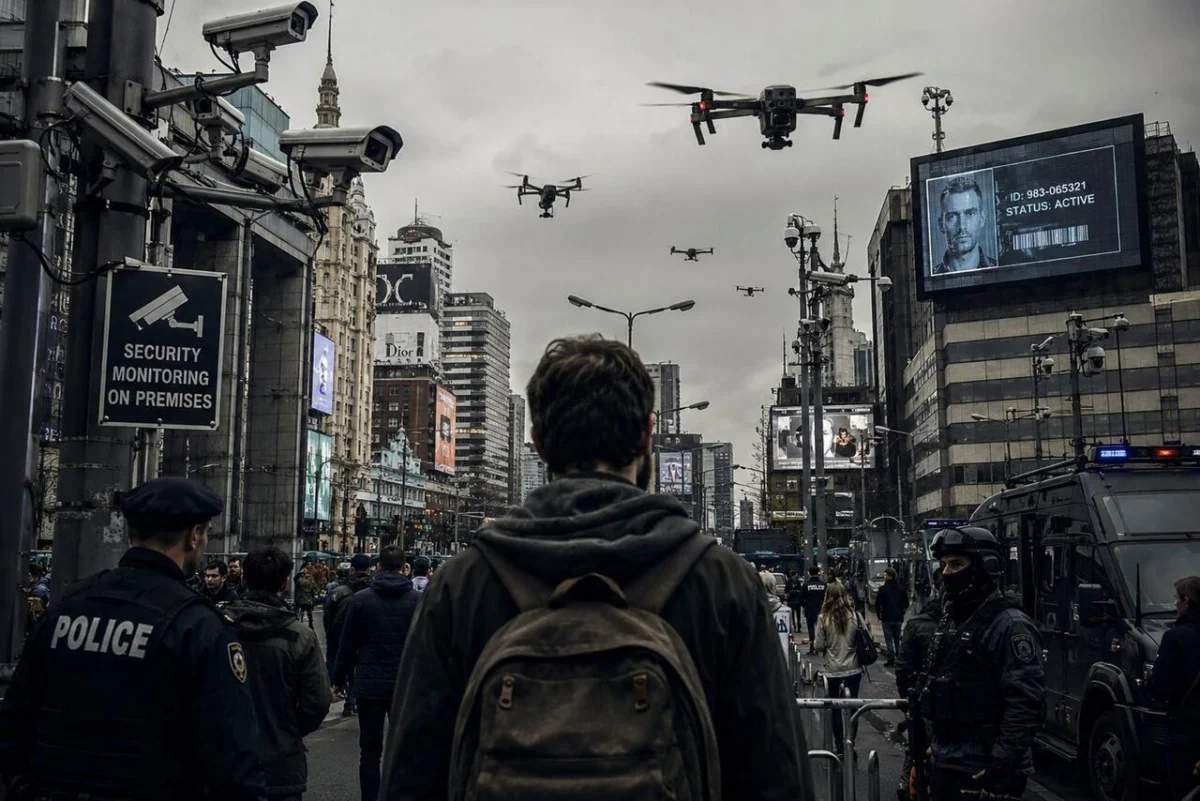
A profound, yet largely unannounced, transformation has reshaped the fabric of society, quietly re-writing the parameters of public and private life. This shift, often described by those who observe it as "The Great Normalization," involves the subtle integration of pervasive surveillance and heightened security measures into everyday environments, to the point where they are no longer perceived as extraordinary. An extensive investigation, drawing on observations from retired police officers, private security professionals, emergency responders, and ordinary citizens across diverse geographies, reveals a consistent pattern: changes that arrived incrementally—one camera, one drone, one security contract, one "temporary" emergency measure at a time—have collectively rendered extraordinary security indistinguishable from ordinary life. This phenomenon is not an overt militarization in the traditional sense, but rather an administrative, technological, and commercial evolution that merits careful examination, not to romanticize a bygone era, but to understand the present.
The Unseen Transformation: A Decade of Incremental Change
The human mind is remarkably adept at adapting to new realities, often failing to register gradual shifts until a retrospective comparison reveals the extent of the change. This psychological phenomenon explains why many individuals might insist that nothing fundamental has altered, even as their physical surroundings become increasingly populated by advanced surveillance technologies. Unlike historical turning points marked by explosive events or dramatic declarations, this societal reordering has advanced through thousands of small, seemingly reasonable decisions. Each installation of a new camera, each deployment of a drone, each adoption of automated license plate readers (ALPRs), biometric scanners, or predictive security systems, appeared justified in isolation. Yet, viewed collectively over the past decade or more, these developments trace a continuous trajectory toward an environment of permanent vigilance.
The origins of this shift can be traced to several intertwined factors that gained prominence in the early 21st century. The post-9/11 era instilled a heightened sense of security vulnerability, prompting governments and private entities alike to invest more heavily in protective measures. Simultaneously, rapid advancements in digital technology made surveillance infrastructure increasingly affordable and powerful. The proliferation of high-resolution cameras, sophisticated data analytics, and artificial intelligence capabilities lowered the barriers to widespread adoption. This was further fueled by the ubiquitous spread of internet connectivity and personal smart devices, creating a digital ecosystem ripe for data collection.
Drivers of the Surveillance Society: Technology, Commerce, and Public Demand
The quiet militarization of civilian spaces is predominantly administrative, technological, and commercial, rather than overtly governmental. It emerges through a complex interplay of forces. Private security companies secure contracts, insurance providers impose stringent requirements on businesses, municipalities invest in expansive surveillance infrastructure, and breakthroughs in artificial intelligence continuously enhance monitoring capabilities. Crucially, a significant portion of the public has demonstrated a growing willingness to exchange greater visibility and data sharing for perceived increases in safety and convenience.
The global market for security and surveillance technologies underscores this trend. The video surveillance market alone was valued at approximately $45 billion in 2020 and is projected to reach over $100 billion by 2030, reflecting a compound annual growth rate exceeding 10%. This growth is not solely driven by government spending but heavily by private sector investment. Businesses, from small hardware stores to large retail chains, are increasingly integrating sophisticated security systems to combat rising retail theft and reduce liability risks. Residential communities, spurred by concerns over property crime, invest in automated gates, private patrols, and networked doorbell cameras.
This burgeoning "surveillance economy" operates on the principle that data is a valuable commodity. While government surveillance often garners significant public attention, the vast majority of information collected today originates from private entities. Shopping habits, travel routines, online purchases, vehicle movements, loyalty programs, smart home devices, delivery services, and mobile applications all contribute to an increasingly detailed digital profile of individuals. This data is often gathered not out of specific interest in any single person, but because aggregated behavioral data holds immense commercial value for targeted marketing, risk assessment, and operational optimization. Cybersecurity analysts frequently use the analogy of dropping puzzle pieces onto a table: individually, they reveal little, but collectively, a comprehensive picture emerges without any single entity intentionally assembling it.
The Psychological Landscape: Normalizing Constant Observation
Perhaps the most striking aspect of this evolution is the speed and ease with which human beings adapt to constant observation. Psychological research consistently demonstrates that people rapidly normalize environmental changes once they become familiar. A newly installed security camera, initially a topic of conversation or curiosity, quickly fades into the background, becoming as unremarkable as a light pole or a street sign. The security guard at the supermarket entrance, once a novel sight, eventually blends into the peripheral vision of daily routine. Drones hovering over community festivals, once unusual, become part of the expected soundscape after repeated appearances. This familiarity breeds acceptance, often far more effectively than any direct persuasion ever could.
This psychological normalization has profound, albeit subtle, effects on human behavior. Sociologists have long argued that visibility influences conduct, leading people to instinctively modify their actions when they believe they are being watched. This "chilling effect" may manifest as individuals spending less time lingering in certain locations, becoming more cautious about spontaneous interactions, or unconsciously adapting their routines in environments where cameras, sensors, and digital records are omnipresent. These behavioral adjustments typically occur without conscious reflection, making their cumulative significance difficult to recognize.
The anecdotes from long-serving professionals resonate deeply with this observation. A retired emergency management coordinator, reflecting on a career spanning over three decades, noted the stark contrast between the past and present. "When I started," he recounted, "the only people carrying radios and wearing body armor were police officers responding to emergencies. Now look around." A casual observation of a typical shopping center parking lot today confirms his point: private security personnel in ballistic vests, cameras on nearly every light pole, delivery vehicles with multiple recording systems, police drones deployed for routine tasks, and automated barriers controlling access to residential developments. The precise moment these features became ordinary is elusive because their arrival was incremental, not instantaneous.
From Public Safety to Pervasive Monitoring: A Decentralized Network
The notion that privacy diminishes only when an active observer is watching is increasingly outdated. Modern surveillance is often passive, with information collected first because storage is inexpensive and processing power abundant, rather than because it has immediate utility. The true value might only be realized later, if circumstances necessitate a search of the archives. This reversal – from collecting information for an existing need to collecting it for potential future usefulness – represents a significant but under-discussed shift in contemporary security philosophy.
Crucially, this expanded surveillance infrastructure extends far beyond government institutions. It is a decentralized architecture, with vast segments owned and operated by private corporations, residential associations, logistics companies, retailers, hospitals, universities, and individual homeowners. A person traversing just a few miles through an ordinary town might appear on hundreds of independently operated cameras. While no single system possesses a complete overview of an individual’s activities, their collective output generates an extraordinarily detailed, cross-referenced record of movement, timing, and behavior that would have been unimaginable just a generation ago.
This decentralized network creates a new challenge for oversight and accountability. Unlike a centralized government surveillance system, which might be subject to specific laws and public scrutiny, the fragmented nature of private surveillance makes it difficult to track, regulate, or even fully comprehend its scope. Each entity justifies its systems based on specific, legitimate needs – a retailer for loss prevention, a navigation app for traffic data, an insurance company for risk assessment, a homeowner for property protection. Yet, the aggregation of these individual objectives forms a comprehensive digital ecosystem capable of reconstructing daily routines with startling accuracy.
The Role of Emerging Technologies: Drones, AI, and Predictive Analytics
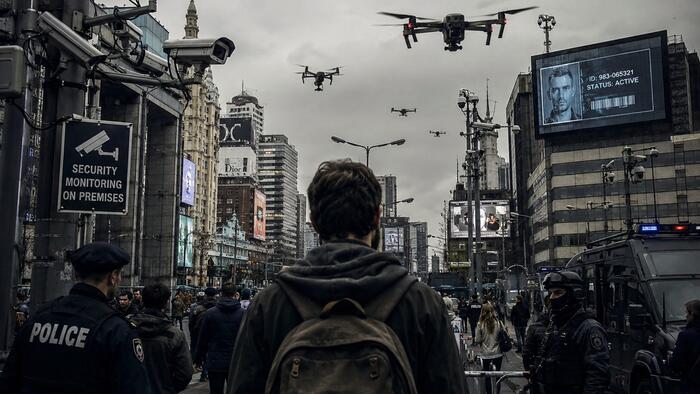
The integration of advanced technologies like drones, artificial intelligence, and predictive analytics has further propelled this quiet revolution. Drones, once primarily military tools, have seamlessly integrated into civilian life. Fire departments use them for wildfire monitoring, search-and-rescue teams locate missing persons, utility companies inspect infrastructure, and police departments reconstruct accident scenes with unprecedented speed. These applications are undeniably beneficial and often life-saving. However, a device capable of locating a lost child is equally capable of observing neighborhoods from perspectives previously unimaginable to the general public. Ten years ago, a drone overhead would have drawn curious stares; today, it often elicits little more than a glance and the recognition of a familiar whir.
Artificial intelligence, initially confined to research labs, now underpins many surveillance systems, from facial recognition software at airports to algorithms that analyze behavioral patterns in public spaces. Predictive analytics, a subset of AI, aims to anticipate potential threats or incidents based on historical data and real-time feeds. While promising enhanced safety, these technologies raise significant ethical questions concerning data privacy, algorithmic bias, and the potential for preemptive policing to infringe on civil liberties.
The Privatization of Security: A Growing Industry
The increasing visibility of armed security personnel in civilian spaces is another defining feature of this transformation. Not long ago, an armed guard outside a supermarket would have indicated an unusual event. Today, in many urban and suburban areas, shoppers routinely pass individuals in ballistic vests, body cameras, and duty belts with little more than a passing glance. Private security has evolved into a multi-billion dollar industry, taking on roles once almost exclusively within the domain of public law enforcement. Hospitals, universities, residential complexes, and retail chains now employ highly trained personnel, often equipped with capabilities mirroring those of police, to respond to incidents and manage threats before public authorities arrive.
This shift is rarely ideological but pragmatic. Rising crime rates, liability concerns, public safety staffing shortages, and the unpredictable nature of modern emergencies have convinced many institutions that relying solely on external assistance is no longer sufficient. Preparedness has transitioned from an optional precaution to a fundamental business requirement. As one former security director explained, "We’re not preparing for society to collapse. We’re preparing for the possibility that one day won’t be ordinary." This nuanced perspective highlights a response to a world where low-probability, high-impact events have become a constant consideration.
The Paradox of Voluntary Visibility: The Data We Share
While much public discourse focuses on external surveillance, an equally significant, and perhaps more potent, aspect of this new reality is the vast amount of information individuals voluntarily disclose. Modern life, driven by convenience, inherently leaves a digital trail. Smartphones track movement, online purchases reveal preferences, streaming services record interests, fitness watches monitor physical activity, connected vehicles collect operational data, and social media platforms encourage the broadcasting of daily lives. Rarely is this information coerced; more often, it is willingly exchanged for speed, personalization, entertainment, or efficiency.
This self-disclosure creates a unique paradox. Individuals concerned about privacy might overlook the extraordinary detail they publish themselves. A photograph celebrating a new purchase can reveal the layout of a home. A vacation post signals an empty house. A casual video filmed in a backyard can expose security cameras, valuable tools, or predictable routines. Individually, these details seem insignificant. Collectively, they construct an incredibly comprehensive portrait of a household or an individual’s habits. As a cybersecurity consultant once demonstrated by compiling detailed personal information from publicly available social media posts, "You introduced yourselves before I walked in." This underscores that in the modern information environment, ordinary human behavior can be a greater vulnerability than sophisticated hacking.
Navigating the New Normal: Challenges and Responsibilities
The critical question facing society is whether this pervasive surveillance represents an unavoidable adaptation to a more complex world or a gradual acceptance of monitoring levels that previous generations would have deemed excessive. The answer is likely multifaceted. Proponents point to tangible benefits: solved crimes, rescued children, coordinated disaster responses, protected infrastructure. Civil liberties advocates, conversely, highlight the erosion of anonymity, the commercialization of personal data, and the historical tendency for "temporary" emergency measures to become permanent fixtures. Both perspectives hold validity, making a balanced conversation inherently difficult.
History offers few examples of societies willingly dismantling security technologies once they are normalized. Metal detectors, temporary surveillance programs, and expanded databases tend to persist and grow. Institutions naturally prefer retaining capabilities over surrendering them. From an operational standpoint, this is rational; from a civic perspective, it raises fundamental questions about proportionality, accountability, and the limits of observation in a free society.
As one constitutional scholar observed, "The debate usually begins too late. By the time people start asking whether a technology should exist, it has already become indispensable." This recurring pattern applies to smartphones, social media, AI, and drones alike. Widespread adoption consistently outpaces public reflection, leading to polarized debates that often fail to produce genuine understanding. The challenge is not choosing between absolute security and absolute privacy—neither has ever truly existed—but rather preserving both principles as technological capabilities expand faster than legal, ethical, and cultural norms can adapt.
The greatest danger lies not in surveillance itself, but in intellectual complacency. When citizens cease to question why new systems are introduced, who controls them, how information is stored, or what safeguards exist against misuse, public oversight quietly erodes. Democracies depend on informed citizens capable of distinguishing reasonable security measures from unnecessary excess. This responsibility cannot be fully delegated; it ultimately rests with the society that either accepts or questions these transformations.
Conclusion: An Evolving Social Contract
The most profound historical transformations rarely announce themselves with fanfare. They unfold through ordinary mornings, routine errands, software updates, budget approvals, and countless administrative decisions that, individually, appear insignificant. There was no single declaration that civilian life had entered an era of persistent observation, nor legislation mandating comfort with drones or armed private security. The transition occurred through accumulation, a series of responses to genuine concerns and practical problems, collectively reshaping the expectations of an entire generation.
Reflecting on this landscape, it becomes clear that for individuals committed to resilience, the evolving environment demands not paranoia or political tribalism, but literacy. This means understanding how security systems function, where technology genuinely enhances public safety, where personal privacy warrants thoughtful protection, and how digital habits increasingly influence real-world resilience. True preparedness has never been about hiding from society; it is about understanding reality before reality forces that understanding upon you.
Information has become infrastructure. Visibility has become currency. Observation has become routine. These developments do not automatically signal a decline in freedom, but neither should they pass without thoughtful, continuous examination. Free societies remain free not by rejecting technological progress, but by persistently asking difficult questions long after the technology has become commonplace, ensuring that the systems they build continue to serve the public interest.

