
Mr. Money Mustache, a prominent figure in the Financial Independence, Retire Early (FIRE) movement, recently concluded a two-year "spending experiment" that challenged his long-held frugality, yet ultimately affirmed his underlying financial discipline. Initiated in 2023 with the controversial purchase of a Tesla Model Y, the experiment aimed to consciously increase discretionary spending and embrace an "abundance mindset" after years of rigorous saving. Despite engaging in significantly more travel, dining, and leisure activities, a recent comprehensive budget review revealed that his annual expenditures remained remarkably contained, rising from approximately $20,000 to around $30,000, a level still comfortably supported by a modest investment portfolio and well below his substantial nest egg.
The Genesis of a Paradigm Shift: Embracing Abundance
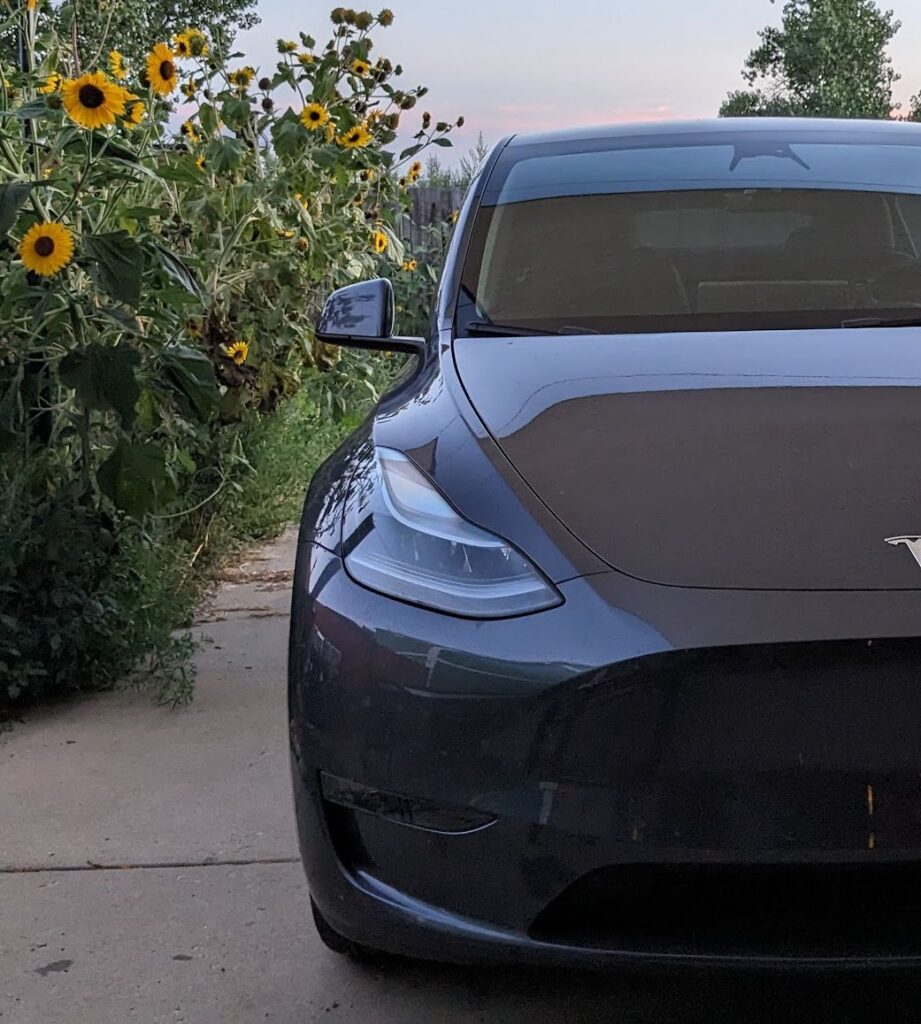
For nearly two decades, Mr. Money Mustache, whose real name is Pete Adeney, has been an influential voice advocating for extreme frugality, high savings rates, and early retirement through his widely-read blog. His philosophy has inspired countless individuals to scrutinize their expenses, optimize their lifestyles, and accelerate their journey to financial independence. Therefore, his April 2023 announcement, detailed in a blog post titled "Why Buy a Model Y?", came as a surprise, and for some, a challenge to his established credibility among his "faithful" followers. The post outlined his deliberate decision to purchase a new Tesla as the inaugural step in a broader program to "try" spending more money, shifting from an intensely frugal approach to one that actively sought a greater sense of financial abundance.
At the time, Adeney reflected on this shift as an evolution, characterizing himself as an "enlightened middle-aged Badass, adjusting habits and realigning myself at the snap of my fingers. Onward to the next forty-eight years of the Good Life!" This internal monologue, later shared with his audience, underscored a conscious pivot from a mindset of optimization through reduction to one of optimization through strategic enjoyment of his accumulated wealth. The core idea was to test the boundaries of his financial freedom, exploring whether increased spending could genuinely enhance his quality of life without jeopardizing his long-term security.
Two Years of Elevated Living: A Chronicle of Conscious Spending
The two years following the Tesla purchase unfolded as a period of deliberate engagement with a more abundant lifestyle. Adeney embarked on a series of experiences that contrasted sharply with his previously documented frugal habits. Travel became a significant component of this experiment, with itineraries planned not for cost-efficiency but for enjoyment and convenience. He reported booking hotels based on their "niceness" rather than their "cheapness," and opting for "reduced torture" seats on airplanes, a clear departure from the bare-bones travel often associated with the FIRE ethos.

Culturally, Adeney, often accompanied by his young adult son, immersed himself in a variety of entertainment experiences. Highlights included attending numerous late-night Electronic Dance Music (EDM) concerts and visiting three distinct Meowwolf immersive art venues. One notable excursion involved a Christmas Day road trip from his winter residence in Tempe, Arizona, to Las Vegas, specifically to experience a Meowwolf installation, illustrating a willingness to spend on unique, memorable events.
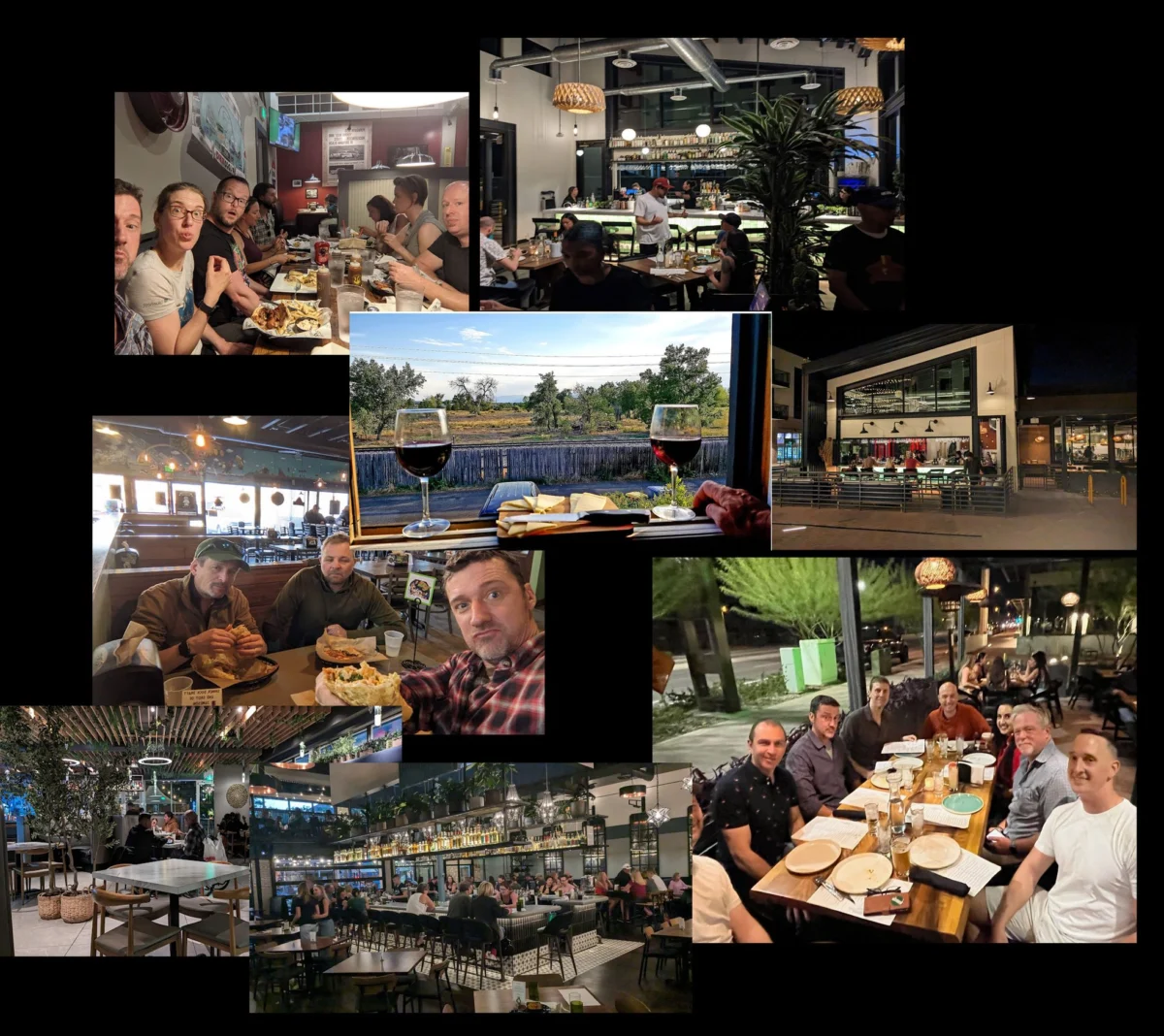
His culinary habits also reflected this shift. Dining out in "stylish restaurants" became a more regular occurrence, indicating a move beyond purely functional eating. Furthermore, his grocery shopping expanded to include Whole Foods, a retailer known for its higher prices, alongside his usual cost-effective choices like Sam’s Club and Costco, for which he maintained memberships at both warehouse stores. This flexibility in grocery sourcing underscored a relaxed attitude towards minor price differentials in favor of convenience or specific product preferences.
Beyond structured activities, Adeney emphasized the newfound freedom in his schedule, particularly as a single individual for much of the year. This allowed for spontaneous meet-ups with friends, explorations of new places, and forging new connections as opportunities arose. He described this period as a "year of adventurous transition," perceiving it as having a greater impact and duration than a mere twelve months, due to the richness of his experiences. This conscious shift represented a practical application of his wealth to enhance personal freedom and social engagement.
The Unexpected Revelation: A Detailed Budget Analysis
Despite the perceived "flashy spending," Adeney admitted to delaying a formal accounting of his expenditures, assuming his budget had indeed "crept back into full American Consumer territory." His enjoyment of the experiences outweighed the immediate concern for financial reconciliation. The catalyst for a detailed review came recently during an informal coaching session with a friend, where both decided to tally their past year’s spending for comparison.
The subsequent process of meticulously categorizing transactions into a spreadsheet and calculating the totals yielded a "surprising" outcome. While an increase in overall spending was evident, particularly in travel-related categories, the "big-picture effect was still pretty minimal." His annual spending, depending on how certain items like the car and business expenses were accounted for, had risen from approximately $20,000 to roughly $30,000. This figure notably excludes the implicit subsidy of a fully paid-off home.
Crucially, this revised spending level of $30,000 annually remains well within the bounds of sustainable withdrawal rates for a $1 million investment nest egg, a benchmark often cited within the FIRE community. Given that Adeney’s actual investment portfolio significantly exceeds this figure, especially after recent years of "crazy economic growth and the never-ending stock market rally," his expenditures are still considerably "under budget." He reflected positively on this outcome, expressing happiness that despite "failing" to genuinely elevate his spending to levels typically associated with substantial wealth, the "abundance mindset" had genuinely brought him more enjoyment. This unexpected result has further emboldened him to continue exploring "more life experiments in the coming years."
A Deep Dive into the 2024 Budget Categories
A detailed breakdown of the spending provides further insight into Mr. Money Mustache’s financial landscape:
| Category | From Personal Card | From Business Card | Total | Details |
|---|---|---|---|---|
| Groceries | $5,465.56 | $494.83 | $5,960.39 | Covers expenses for himself, his young adult son (about half the time), and various guests, reflecting a balanced approach to food sourcing. |
| Restaurants | $2,145.11 | $98.48 | $2,243.59 | Designated for "special fun" and experiences rather than mere sustenance, highlighting discretionary spending on social and culinary enjoyment. |
| Travel | $3,982.00 | $2,176.77 | $6,158.77 | A significant increase in this category, encompassing both personal trips and business-related travel to events like Camp Fi and other professional conferences, underscoring a commitment to networking and community engagement. |
| Utilities | $1,909.51 | $0 | $1,909.51 | Standard household expenses. |
| Amazon/House | $949.64 | $2,604.46 | $3,554.10 | Approximately 75% of the business card portion is attributed to construction materials for clients, often friends, which are subsequently reimbursed, indicating a blend of personal and project-based expenditures. |
| Booze | $250.67 | $0 | $250.67 | Allocated for wine and other beverages primarily for entertaining guests, reflecting a social component. |
| Healthcare | $813.20 | $2,723.46 | $3,536.66 | Managed through a combination of Sedera Health Sharing and a Direct Primary Care (DPC) subscription. This includes costs for advanced blood tests for screening and educational purposes, demonstrating a proactive health management strategy. |
| Automobile | $2,191.68 | $233.53 | $2,425.21 | Primarily covers car insurance and registration, with an acknowledgment that depreciation, a significant cost for vehicle ownership, is not included in this figure. |
| Phone+Internet | $1,410.56 | $1,410.56 | Includes a $50 monthly Gigabit Internet service and a Google Fi mobile plan costing $25-30 per month plus tax, reflecting efficient utility management. | |
| Property Taxes | $2,577.30 | $2,577.30 | Noted as "surprisingly reasonable" given the $500,000-$600,000 valuation of properties in his neighborhood, highlighting favorable local tax rates. | |
| Total | $20,284.67 | $9,742.09 | $30,026.76 |
Comparing these figures to his 2019 spending report, the overall increase is modest, especially considering the inflationary pressures observed in recent years, particularly in 2022. While travel and discretionary "fun" expenses saw an uptick, spending on home renovations decreased, partly due to his increased time away from home. Healthcare costs, primarily for his proactive approach, represent a new expenditure compared to 2019 when he was self-insured.
The Power of Eliminated Housing Costs
A critical factor underpinning Mr. Money Mustache’s ability to maintain a low overall budget, even with increased discretionary spending, is the complete absence of housing costs. Having paid off his home many years ago, he incurs no mortgage payments. Furthermore, his DIY approach to home maintenance means he avoids expenses for services like lawn mowing, plumbing, tree pruning, or general handyman work. This self-sufficiency significantly reduces one of the largest financial burdens for most households.
While acknowledging that taking out a large mortgage at the historically low 3% interest rates available in 2021 and investing the principal in stock index funds might have yielded a higher financial return—potentially almost doubling his capital—Adeney prioritizes the "peace of mind" derived from being debt-free. This emotional benefit, he argues, is a valuable use of money. An additional, often overlooked benefit of his paid-off home strategy is the avoidance of house insurance premiums, which he estimates saves him another $2,000 per year, effectively boosting the return on his home payoff decision.
A Proactive Approach to Healthcare
Mr. Money Mustache’s healthcare strategy is another area of significant divergence from conventional approaches. He attributes his low medical expenses primarily to "good health and good luck," having avoided major medical issues. However, he maintains two layers of proactive healthcare support that he considers "the ultimate version of health insurance." This includes a membership with a top-tier Direct Primary Care (DPC) medical clinic, costing $107 per month, which offers personalized support and zero deductible for most typical medical needs. Supplementing this is a high-deductible plan ($201 per month) through Sedera, a health sharing organization, which provides protection against larger medical bills should his good fortune wane.
The combined cost of $308 per month is notably less than the cheapest Bronze plan typically offered in standard health insurance markets. This integrated approach grants him direct access to primary care without traditional insurance hurdles while providing a safety net for catastrophic events. He candidly admits that his expertise in medical needs and health insurance is limited due to his minimal engagement with the conventional system, but he underscores that his highest life priority is "arranging my days for maximum health to give me the best chance of keeping it this way."
Optimizing Life: Happiness, Persistent Problems, and Future Horizons
Drawing from a principle discussed in his 2019 article on the "Optimization Council," Adeney continually asks himself how to improve and make the most of his good fortune. This principle posits that "fixing your persistent problems is more effective than just doubling down on things that are already good in your life." He asserts that many aspects of his life—family, friends, relationships, health, food, and daily activities—are already "as good as I could imagine," requiring no immediate improvement.
His primary "annoyance" and a persistent problem he has identified is "physical chaos," stemming from his space-intensive hobbies like construction and music. His current home, which includes a relatively small 2-car, 440-square-foot garage, is "basically maxed out," leading to a desire for a workshop space of approximately 1,000 square feet. However, his deep affection for his current residence—its views, neighbors, and established community—makes him reluctant to relocate. Consequently, he continues to "optimize what I’ve got" unless an ideal opportunity for a larger space arises within his immediate vicinity.
Looking further ahead, the concept of a "mountain compound" complete with cliffs and a stream remains on his "maybe" list, an aspiration visually represented by an AI-generated image he shared. Yet, this ambition is tempered by a pragmatic assessment of his already "overbooked with joyful things" schedule. His existing house and the HQ Coworking space he co-manages present extensive to-do lists. He questions whether adding another property to his portfolio would genuinely enhance his happiness, adhering to a philosophy that major new commitments should ideally replace existing ones, such as selling his current home or the coworking space.

Broader Implications and Outlook for the FIRE Community
Mr. Money Mustache’s two-year spending experiment offers valuable insights not only for his personal life but also for the broader FIRE community. It demonstrates that a deeply ingrained habit of financial discipline, cultivated over decades, can persist even when consciously attempting to loosen the purse strings. His "failure" to significantly escalate spending highlights that true abundance, for him, is not necessarily about extravagant consumption but about the freedom to pursue enriching experiences and maintain high-quality social connections without financial stress.
The experiment reaffirms the profound impact of eliminating major fixed costs, particularly housing, on long-term financial stability and discretionary spending capacity. It also showcases a pragmatic and proactive approach to healthcare, blending direct primary care with health-sharing principles as a potentially cost-effective alternative to traditional insurance. As Adeney looks forward to 2025, he expresses extreme excitement to "blaze into 2025 with loads abundance and piles of challenging stuff on my to-do list," wishing his readers the same. His journey continues to evolve, prompting his audience to reflect on their own balance between "stinginess versus abundance mentality, and fulfillment versus longing in life."
Market Note: Tesla and Electric Vehicle Incentives
A temporary note of interest for potential electric vehicle buyers, especially those considering models like the Tesla Model Y or Model 3: there are rumors circulating that the $7,500 EV tax credit may be discontinued with an upcoming presidential transition. This could make the current period one of the most opportune times to purchase these vehicles. Both new and used Tesla prices are reportedly at record lows. Individuals can potentially secure an additional $1,000 discount on a new purchase by utilizing a referral code from an existing owner.
FTC Compliance Note: Mr. Money Mustache utilizes referral links for certain products, meaning his blog may earn a commission if these links are used. This disclosure is consistent with standard affiliate marketing practices.

