
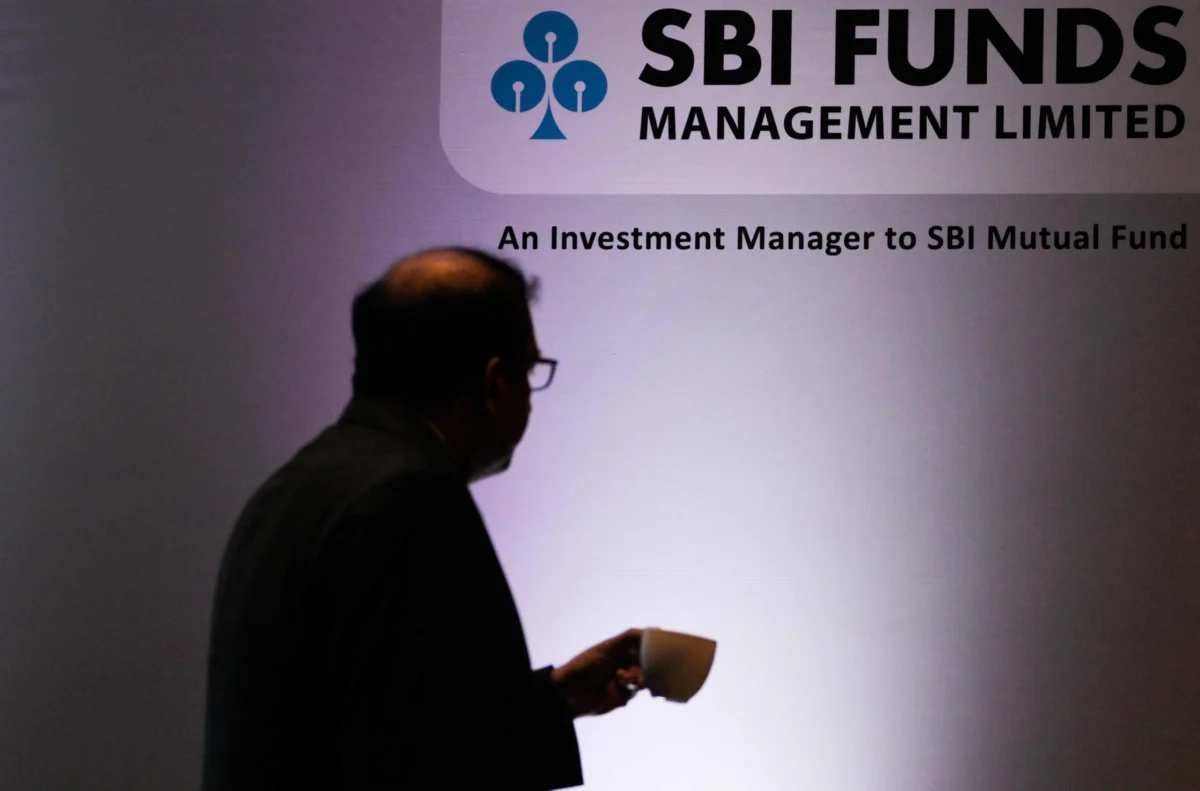
India’s financial landscape witnessed a significant surge in investor confidence this week as SBI Fund Management Ltd., the nation’s largest asset management company, successfully closed its initial public offering (IPO), garnering an overwhelming 2.97 trillion rupees ($30.7 billion) in bids. This remarkable oversubscription, for an issue aiming to raise 97.9 billion rupees ($1 billion), marks the biggest public market offering in India this year and serves as a powerful testament to the robust liquidity presently available in the market, setting a promising precedent for several much larger issues anticipated later in 2026.
A Landmark Public Offering and Unprecedented Demand
The IPO of SBI Fund Management, a prominent joint venture between the venerable State Bank of India (SBI) and Europe’s Amundi Group, officially closed on Thursday, July 9, 2026, following a period of intense investor interest. The issue was oversubscribed an extraordinary 41.6 times overall, a figure largely driven by the enthusiastic participation of institutional investors. The portion specifically reserved for Qualified Institutional Buyers (QIBs) saw an astonishing subscription rate of 140 times, indicating deep institutional trust and significant capital deployment. A substantial majority of these bids emanated from domestic institutional players, including major banks, insurance companies, and mutual funds, underscoring the strength of India’s internal financial system. In contrast, participation from retail investors, while still robust, was relatively more measured, with their allocated portion being subscribed 3.6 times. This divergence highlights a strategic preference among large institutions for long-term growth assets, particularly in a market leader like SBI Fund Management.
SBI Fund Management: A Market Behemoth Poised for Growth
As India’s largest asset management company, SBI Fund Management holds a dominant position in the country’s rapidly expanding financial services sector. As of March 2026, the company boasted an impressive 29.5 trillion rupees ($395 billion) in assets under management (AUM), a figure that underscores its scale, reach, and influence across various investment vehicles, from equity and debt funds to hybrid products. The successful IPO of such a significant entity is not merely a fundraising exercise but a strategic move to unlock value, enhance corporate governance, and potentially fuel further expansion in a competitive market. The joint venture structure with Amundi Group, one of Europe’s largest asset managers, provides SBI Fund Management with access to global best practices, advanced risk management strategies, and a broader international network, further cementing its leadership position.
Navigating Geopolitical Headwinds and Market Dynamics in Early 2026
The resounding success of the SBI Fund Management IPO is particularly noteworthy given the challenging global and domestic economic backdrop that characterized the first half of 2026. While India had previously earned the distinction of being the most prolific IPO market globally over the preceding two years, recording the highest number of listings, activity had noticeably subdued during January to June 2026. This slowdown was largely attributable to a confluence of adverse factors.
Foremost among these was the escalation of geopolitical tensions, specifically the Iran war, which led to a significant spike in global energy prices. As a major oil importer, India’s economy was particularly vulnerable to these price shocks, leading to increased inflationary pressures and squeezing domestic consumption, which traditionally forms a strong pillar of India’s growth story. This external shock, coupled with a global investment rally towards Artificial Intelligence (AI) stocks – an industry where India, despite its robust IT sector, currently lacks global champions – diverted significant capital away from emerging markets.
Consequently, the Indian benchmark indices experienced a period of contraction. Since the start of the year, the Sensex, a bellwether of India’s stock market, had shed over 9.4% of its value, positioning it among the worst-performing large stock markets globally. The broader Nifty 50 index also registered a decline of 7.9% during the same period. This period of market weakness and subdued investor sentiment cast a shadow over new public offerings, making the success of SBI Fund Management even more remarkable.
The Resurgence of India’s Capital Market: A Post-Ceasefire Recovery
A turning point for the Indian markets emerged in June, following a much-anticipated ceasefire between Iran and the U.S. This de-escalation of geopolitical tensions had an immediate positive impact on global oil prices, which began to stabilize, easing inflationary pressures and boosting investor confidence. The partial recovery in the Indian market post-ceasefire encouraged companies that had previously deferred their fundraising plans to re-evaluate their strategies and announce new public issues. The SBI Fund Management IPO, therefore, represents one of the first major tests of this renewed market sentiment, and its overwhelming success validates the recovery trajectory.
Market analysts, including those from Mumbai-based IPO intelligence firm Prime Database, had cautiously anticipated a resurgence, but the sheer scale of the SBI Fund Management oversubscription has exceeded many expectations, signaling a deeper reservoir of liquidity and investor appetite than previously assumed. This event is seen as a critical indicator, providing crucial momentum for the broader market.
Paving the Way for Mega IPOs: NSE and Jio Platforms
The robust institutional interest witnessed in the SBI Fund Management IPO is particularly good news for two of India’s most anticipated mega public issues slated for later in 2026: the National Stock Exchange (NSE) and Jio Platforms. Both companies are expected to hit the market with offerings estimated to raise more than $3 billion each, according to Prime Database.
The National Stock Exchange, India’s largest stock bourse by trading volume, is a critical piece of the country’s financial infrastructure. Its IPO is expected to attract significant interest from both domestic and international investors looking to gain exposure to the underlying growth of India’s capital markets. Similarly, Jio Platforms, the digital and telecommunications arm of Reliance Industries, is a powerhouse in India’s digital transformation, encompassing wireless telecommunications, broadband, digital services, and cutting-edge technology ventures. Given its vast subscriber base and ambitious expansion plans, Jio Platforms’ IPO is poised to be one of the largest and most closely watched listings in India’s history. The strong performance of SBI Fund Management’s IPO is likely to translate into heightened investor enthusiasm and potentially more aggressive bidding for these upcoming giants.
Expert Insights and Market Sentiment
Inferred statements from market participants suggest a widespread sense of optimism. An unnamed senior executive from SBI Fund Management might have commented, "We are incredibly pleased with the overwhelming response to our IPO. It reflects not only the strength of our brand and business model but also the deep trust investors place in the long-term growth story of India’s financial sector. This success empowers us to further our mission of wealth creation for millions."
Similarly, an analyst from a leading investment bank, speaking on condition of anonymity, might have noted, "The QIB subscription figures for SBI Fund Management are a clear indication that institutional investors are sitting on substantial dry powder and are keen to deploy capital into quality assets. The perceived dip in H1 2026 was more a pause due to external shocks rather than a fundamental shift in India’s investment appeal. This IPO has opened the floodgates, particularly for well-managed, market-leading companies."
Regulatory bodies might also infer a positive outlook. A spokesperson for the Securities and Exchange Board of India (SEBI) might have implicitly highlighted the resilience of India’s capital markets, stating, "The robust participation in recent public issues underscores the depth and maturity of the Indian capital market, reaffirming its role in facilitating capital formation and economic growth."
Broader Economic Implications and Future Outlook
The success of the SBI Fund Management IPO carries significant broader economic implications. It signals a resurgence in investor confidence, which is crucial for capital formation and sustained economic growth. A vibrant IPO market allows companies to raise the necessary capital for expansion, innovation, and job creation. The influx of nearly $31 billion in bids for a $1 billion offering showcases the immense liquidity available, a positive indicator for future investments across various sectors.
This event could catalyze a broader wave of fundraising activity. Projections suggest that stock market offerings worth an estimated $50 billion could flood the Indian markets this year, provided the positive momentum holds. This potential surge in capital raising could provide a much-needed boost to the Indian economy, stimulating investment and accelerating recovery from the earlier slowdown.
Moreover, a buoyant IPO market enhances India’s attractiveness as an investment destination for foreign institutional investors (FIIs). The ability of the market to absorb large offerings, even after a period of volatility, demonstrates its underlying strength and resilience. This could lead to increased FII inflows, further strengthening the rupee and bolstering foreign exchange reserves.
Key Risks on the Horizon
Despite the current wave of optimism, certain risks remain pertinent. The continuation or re-escalation of the Iran war, for instance, remains a key geopolitical risk that could disrupt global oil supplies, trigger energy price spikes, and once again impact India’s economic stability. Global macroeconomic headwinds, including potential interest rate hikes by major central banks or a slowdown in global economic growth, could also dampen investor sentiment. Furthermore, while domestic liquidity is strong, any significant outflow of foreign capital due to external factors could also pose challenges.
Investors will be keeping a particularly close watch on the listing of SBI Fund Management next week. Strong post-IPO gains, often referred to as ‘listing pops,’ would further increase appetite for new issues, reinforcing the positive feedback loop and encouraging more companies to tap the public markets. Conversely, a subdued or negative listing performance, though less likely given the oversubscription, could temper enthusiasm. However, with SBI Funds being India’s largest asset management company, its intrinsic value and long-term growth prospects are expected to provide a strong foundation for its market debut. The overwhelming demand for its shares is a clear vote of confidence in its future, setting a powerful precedent for India’s capital markets in the year ahead.

