
As the United States enters another election cycle, economic issues invariably take center stage, becoming a primary battleground for candidates vying for public office. The current political discourse surrounding the economy, however, often diverges sharply from established economic indicators, leading to a significant gap between public perception and actual economic performance. This article aims to clarify common economic misconceptions propagated during election campaigns, offering a fact-based analysis of the nation’s financial health and the true levers of economic influence.
The Paradox of Perception: A Strong Economy Misunderstood
One of the most striking aspects of the current economic debate is the widespread public belief in a "bad economy," despite robust underlying data. While incumbent administrations frequently highlight positive trends, opposing candidates often frame the economic situation negatively to sway undecided voters. For instance, recent data indicates that the U.S. economy is currently experiencing a period of significant strength. The unemployment rate has reached historic lows, consistently hovering near its lowest levels in decades, signifying a tight labor market with ample job opportunities. Gross Domestic Product (GDP) has shown steady growth, reflecting increased economic activity and productivity.
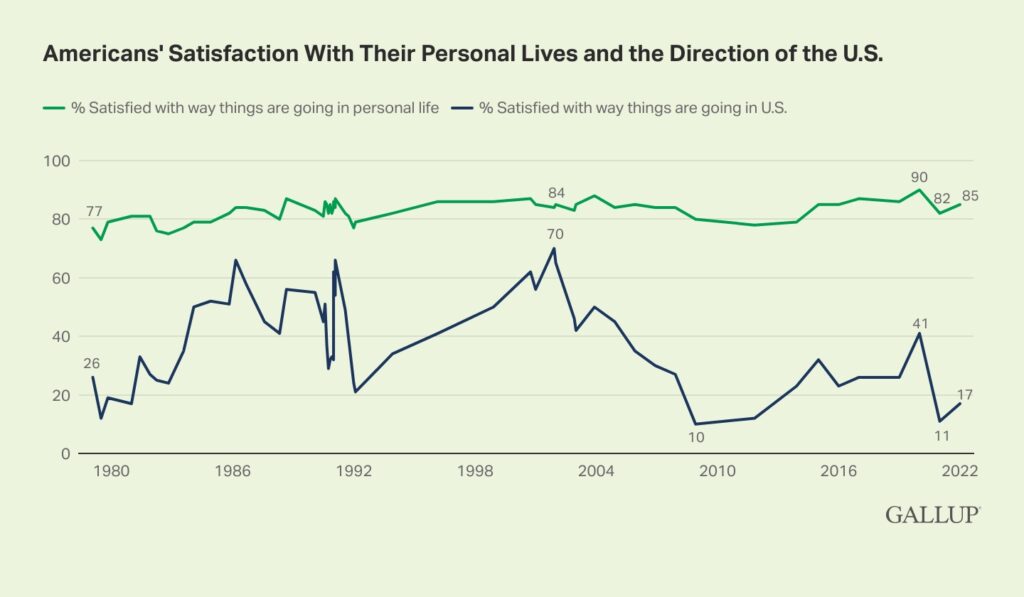
Yet, public sentiment, as evidenced by polls such as a recent Gallup survey, reveals a different story. The poll indicated that a substantial majority of Americans, approximately 85%, reported doing well personally. However, a stark contrast emerged when asked about the national economy, with only 17% believing the overall economy was performing well. This disconnect is mathematically incongruous: if the vast majority of individuals are experiencing personal financial stability or improvement, it logically follows that the broader economic environment enabling this widespread prosperity must be robust. This divergence between personal experience and national perception is a critical area where political rhetoric and misinformation, particularly amplified by social media, appear to exert considerable influence.
Inflation, Wages, and the Cost of Living: Unpacking the Numbers
A key point of contention in recent economic discussions has been inflation. Following the COVID-19 pandemic, the U.S. experienced a period of elevated inflation, driven by a confluence of factors including supply chain disruptions, increased consumer demand fueled by government stimulus, and historically low interest rates. This period saw a rapid rise in the cost of goods and services, leading to concerns about diminishing purchasing power.

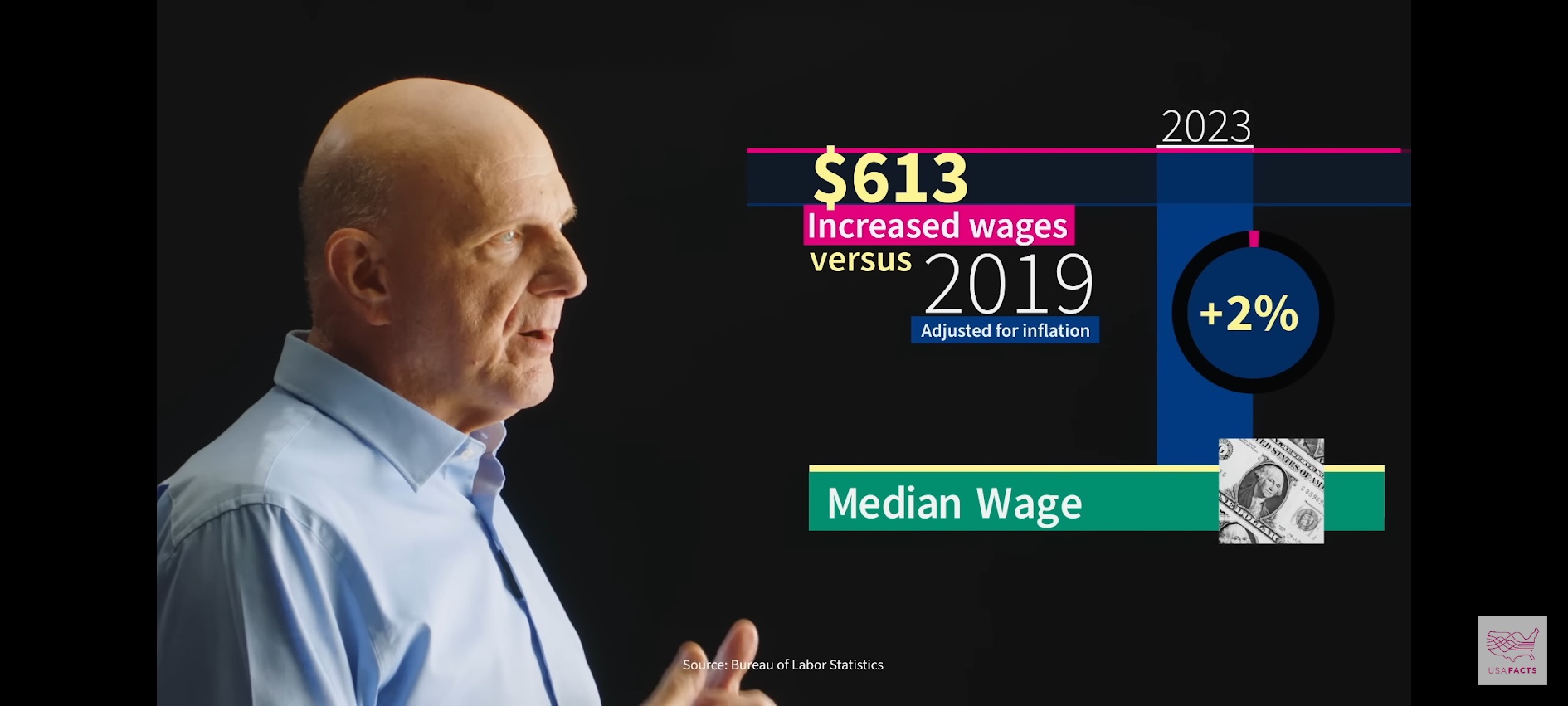
However, current data from sources like the Bureau of Labor Statistics indicate that inflation has largely stabilized, returning to levels near the Federal Reserve’s target of 2.4%. More importantly, an analysis of wage growth relative to inflation reveals a crucial nuance often overlooked in political debates. Since 2019, while overall consumer prices have risen by approximately 19%, average wages have increased by a more substantial 21%. This means that, on average, American workers have seen their real wages (wages adjusted for inflation) increase, leaving them financially better off than before the inflationary spike.
Despite these figures, political narratives frequently continue to portray inflation as an ongoing crisis, with candidates promising to "bring prices back down." This rhetoric often fails to acknowledge the positive impact of wage growth, effectively equating "higher wages and prices" with a "bad economy," a simplification that misrepresents the complex interplay of economic forces. Another common political tactic is to blame "greedy corporations" for price increases, attributing inflation solely to profit-seeking motives. While businesses operate to generate profit, economic analyses, such as those conducted by NPR on the grocery sector, often demonstrate that market competition typically prevents widespread "greedflation" and that profit margins have not necessarily seen windfall increases during periods of inflation.
The Illusion of Control: Presidential Power vs. Economic Reality
A pervasive myth in election years is the notion that the President directly controls the national economy. When a recession occurs, the opposition party invariably assigns blame to the incumbent. Conversely, a booming economy often leads the sitting president to claim credit for its success. In reality, the U.S. economy, a colossal and largely free market system representing approximately 26% of global economic activity, is far too vast and complex for any single individual, including the President, to exert direct, overarching control or even significant short-term influence.
The U.S. economy functions as a massive engine driven by countless individual decisions, technological advancements, global trade dynamics, and market forces. While governmental policies, such as tax rates, regulatory frameworks, and fiscal spending, do play a role, their effects are often delayed, indirect, and subject to numerous unpredictable variables. Economic cycles of boom and bust are more commonly influenced by inherent market dynamics, such as periods of irrational exuberance followed by fear and pessimism, exemplified by the 2007 housing boom and subsequent 2008 financial crisis. Presidents and their administrations can steer the "rudder" of this giant ship, but the economy’s short-term trajectory is heavily influenced by global events and domestic market sentiment, much like a ship navigating ocean waves and storms.
The Federal Reserve’s Mandate: Interest Rates and Independence
Another area of frequent political misrepresentation concerns interest rates. Candidates often express sympathy for middle-class Americans grappling with higher borrowing costs for credit cards, car loans, and mortgages, promising to "fight" to lower rates. Some even suggest direct presidential intervention or control over the Federal Reserve. This stance fundamentally misunderstands the role and independence of the Federal Reserve.
The Federal Reserve (the "Fed") is the independent central bank of the United States, tasked with a dual mandate: achieving maximum employment and maintaining price stability (i.e., controlling inflation). To fulfill this mandate, the Fed uses monetary policy tools, primarily adjusting the federal funds rate, which influences broader interest rates. When the economy slows and unemployment rises, the Fed may cut interest rates to stimulate borrowing, investment, and job creation. Conversely, when the economy overheats and inflation accelerates, the Fed raises rates to cool demand and curb price increases.
Entrusting monetary policy to a sitting president would introduce extreme political bias and short-term thinking, potentially destabilizing the economy (as seen in some countries where central bank independence is compromised). The Fed’s independence is crucial for making objective, data-driven decisions that serve the long-term economic health of the nation, free from immediate electoral pressures.
Housing Market Dynamics: Beyond Presidential Influence
The rising cost of housing, both for purchase and rent, has become a pressing concern over the past decade, outpacing general inflation and wage growth. While rising interest rates are intended to cool the housing market by increasing borrowing costs, their impact on reducing actual home prices has been slower than anticipated, creating a "double whammy" for prospective buyers: higher prices and higher mortgage costs.
Political proposals to address housing affordability often include demand-side interventions, such as subsidies for first-time homebuyers or schemes to artificially reduce interest rates. However, many economic experts argue that such measures, while seemingly beneficial, can exacerbate the problem by stimulating demand without addressing the fundamental issue: insufficient housing supply.
The true solution to rising housing costs lies primarily in increasing the supply of housing. This involves tackling systemic barriers to construction, such as slow and expensive permitting processes, overly onerous building codes, restrictive suburban-style zoning laws (e.g., minimum lot sizes, setback requirements, mandatory parking rules), and NIMBYism ("Not In My Backyard") attitudes that allow local residents to block new developments. Reforming these policies could significantly reduce construction costs and accelerate the pace of new home building, providing a long-term, sustainable solution to affordability.
Gasoline Prices: A Fading Political Football
Gasoline prices have historically been a reliable political talking point, with candidates frequently blaming incumbents for "high" prices and promising relief. However, an objective look at the data reveals several key facts. First, on an inflation-adjusted basis, gasoline prices in the U.S. have remained relatively consistent, hovering in the $3-4 per gallon range in today’s dollars, comparable to prices in 1950.
Second, despite perceptions, gasoline constitutes a relatively small portion of the average American household’s budget. Even with large, less fuel-efficient vehicles, households typically spend around 2.5% of their disposable income on gasoline. This figure is often dwarfed by other vehicle-related expenses, such as depreciation, insurance, and maintenance, which are frequently overlooked in the focus on fuel costs.
Third, the relevance of gasoline as a major economic concern is diminishing rapidly with the accelerating adoption of electric vehicles (EVs). Used EVs are now often available at prices competitive with or even below comparable used gasoline-powered cars, and new EV models are increasingly offering better value. EVs provide benefits such as lower operating costs (no gasoline, reduced maintenance), superior performance, and a quieter driving experience. The continued political emphasis on gasoline prices, therefore, increasingly appears anachronistic, akin to debating the price of obsolete technologies like Kodak film or typewriters in a digital age.
Beyond "More": Redefining Economic Well-being
Perhaps the most profound misconception propagated by political discourse is the idea that the economy, and the relentless pursuit of more wealth, should be a primary source of national anxiety. While economic stability and growth are important, the United States, as a highly developed nation, surpassed the point of providing "enough" for its middle class decades ago. The incessant focus on incremental economic gains can be likened to "overfed people at a buffet wishing they could just have one more flavor of donuts."
While acknowledging issues like income and wealth inequality, which do require attention through progressive taxation to foster a more equitable and peaceful society, it is also important to recognize that beyond a certain threshold, additional wealth does not necessarily correlate with increased happiness or well-being. This suggests that true societal improvement might come not just from economic growth, but from a shift in mindset and a focus on intrinsic factors such like individual financial literacy, life skills, and a clear understanding of what constitutes "enough." If politicians genuinely prioritized national happiness and well-being, their rhetoric might shift from pandering to specific economic grievances to promoting principles of sustainable living, prudent financial management, and a focus on quality of life over material accumulation.
The Pervasiveness of Misinformation
The consistent misalignment between economic data and public perception highlights a critical challenge in modern democracy: the spread of misinformation. In an era dominated by social media, narratives, irrespective of their factual basis, can quickly gain traction and influence public opinion. This makes it difficult for citizens to make informed decisions, not only about their personal finances but also about their votes. When economic discussions are driven by emotional appeals rather than sound data, the potential for counterproductive policy choices increases, ultimately impacting the nation’s long-term financial health.
Implications for Voters and Policy
The implications of this pervasive economic misinformation are significant. For voters, it means navigating a landscape where political promises often exploit anxieties rather than offering realistic solutions grounded in economic principles. For policymakers, it can lead to pressure to enact short-sighted, popular measures that may undermine long-term stability or exacerbate existing problems, rather than addressing root causes with evidence-based strategies.
In an ideal scenario, the political process would be an arena for sharing accurate information and debating effective policies. However, the reality is often that winning an election takes precedence over proposing what is objectively best for the country. Therefore, for an informed citizenry, the task becomes to cast votes for the party or candidate whose broader vision aligns with their values, while maintaining a critical perspective on the economic rhetoric, and then refocusing on aspects within their personal "circle of control" until the next election cycle.
Conclusion: Informed Citizenship in an Election Cycle
The ongoing U.S. election year underscores the enduring challenge of separating economic fact from political fiction. While candidates naturally seek to leverage economic conditions for electoral gain, a critical analysis of the data reveals a more nuanced and often more positive picture than frequently portrayed. Understanding the true drivers of economic trends, the limited direct influence of the presidency, and the independent role of institutions like the Federal Reserve is crucial for informed citizenship. By focusing on verifiable data and recognizing the political motivations behind certain economic narratives, citizens can better navigate the complexities of election cycles and make decisions rooted in reality rather than rhetoric.

