

The recent colossal data breach, exposing over 153 million U.S. and Canadian driver’s licenses, has illuminated a stark reality: the safest place for a copy of your identity document is nowhere at all. These leaked credentials, reportedly originating from an identity verification provider, surfaced on a dark web service known as Nexus, alongside a vast collection of other stolen identity and travel documents. This incident serves as a chilling reminder of the pervasive vulnerabilities within our current digital identity infrastructure.
The escalating threat landscape was further underscored this week by the revelation that fintech firm Revolut had fallen victim to a sophisticated phishing attack. A hacker, posing as a legitimate entity, successfully tricked the company into divulging extensive sensitive customer data, including copies of passports and verification selfies. The perpetrator is now systematically leaking the identification documents of 680 customers onto the web, demanding a ransom of 10,000 Bitcoin. This audacious act highlights the direct and devastating consequences of compromised personal data.
The irony of these events is profound. Know Your Customer (KYC) processes, a cornerstone of modern financial regulation, are ostensibly designed to fortify financial systems by rigorously establishing customer identities and mitigating illicit activities. However, the prevalent implementation of KYC often necessitates companies to amass and retain vast repositories of sensitive personal information. This practice inadvertently transforms these organizations into lucrative “honeypots” for cybercriminals, creating a centralized target for data theft.
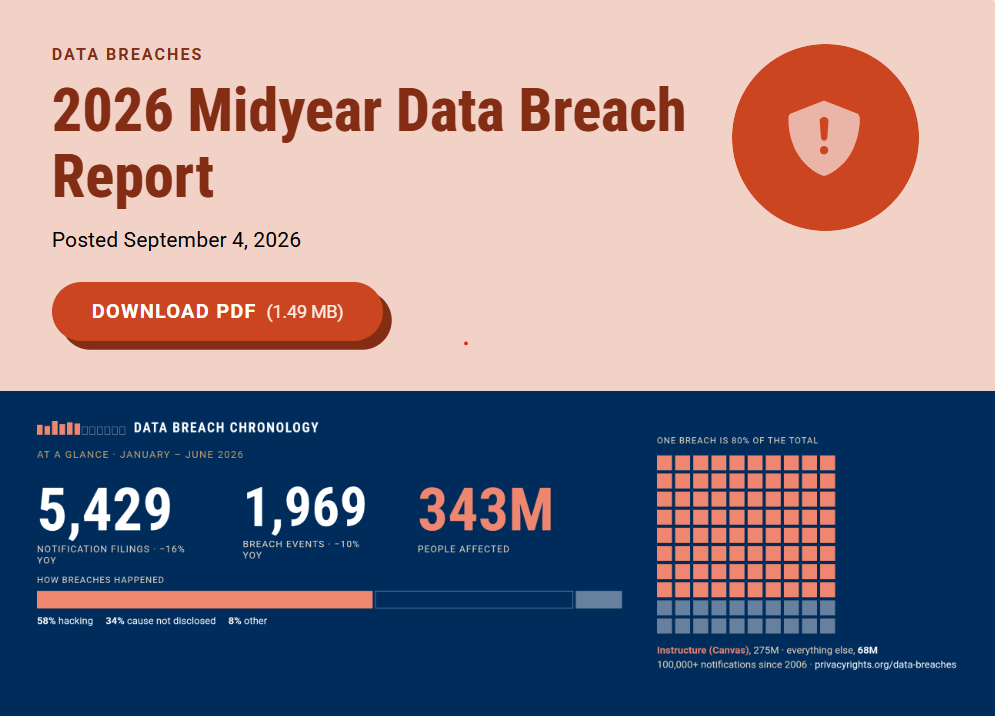
The scale of the problem is becoming increasingly difficult to ignore. In the first half of 2026 alone, data breaches in the United States affected an estimated 343 million individuals, according to a report by the Privacy Rights Clearinghouse. This alarming figure underscores the systemic nature of data insecurity. Compounding this frustration is the existence of technological solutions that could significantly mitigate these risks. For instance, zero-knowledge proofs offer a method to verify an individual’s identity without requiring the storage of their actual identity documents.
Efrat Fenigson, a vocal advocate for privacy and a respected voice on KYC matters, including her role as host of the "You’re The Voice" podcast, commented on the persistent reliance on outdated data storage practices. "When regulators continue to mandate a model that guarantees these outcomes – while the technology to verify without storing already exists – it raises a red flag," Fenigson stated. "It implies a lack of rational thinking and a genuine will to solve problems." The question lingers: how many more data breaches and subsequent identity thefts will it take before a fundamental shift in regulatory approach and industry practice occurs?

The Genesis of KYC: Collection Over Verification
The prevailing architecture of current KYC systems is largely predicated on the assumption that financial institutions must physically or digitally inspect customers’ passports or driver’s licenses, extract relevant data points, and then securely store documented evidence of these checks. This approach, while intended to ensure compliance, has inadvertently spawned a sprawling ecosystem comprising identity providers, databases, third-party vendors, and intricate compliance systems. Each entity within this network independently stores separate collections of an individual’s KYC data, creating myriad potential points of failure.
This fragmented and redundant storage model presents a significant security vulnerability. Every additional copy of sensitive personal data increases the attack surface, providing cybercriminals with more opportunities to exploit weaknesses. Hackers are continually evolving their tactics, devising increasingly sophisticated methods to gain unauthorized access.
The recent Revolut incident serves as a stark illustration of this vulnerability. The hacker’s ability to impersonate a legitimate Italian law enforcement address to request KYC data highlights the potential for social engineering and exploitation of established communication channels. Lyudmyla Kozlovska, President of the Open Dialogue Foundation, pointed out on X (formerly Twitter) that under certain EU laws, financial institutions like Revolut may have little recourse but to comply with such requests, with refusal carrying the risk of substantial fines. "EU AML law imposes no verification duty on the bank and provides no meaningful mechanism to check who is really behind an authenticated state request," Kozlovska stated. "Refusal to answer carries fines in the millions. In practice, verification is impossible." This situation underscores the complex interplay between security protocols and regulatory mandates.
Susie Violet Ward, Director and Co-founder of Bitcoin Policy UK, emphasized the critical distinction between verifying identity and surrendering it. "We need to stop treating identity verification and surrendering your identity as though they are the same thing," Ward articulated. She argues that if an organization’s sole requirement is to confirm an individual is over 18, it should not necessitate the collection and permanent storage of additional, highly sensitive details such as a full name, address, exact date of birth, and a digital copy of the relevant identification document. "The irony is that KYC is designed to make systems safer, but the way we currently implement it can create an entirely different security problem," Ward added. "You can reset a password after a breach, but you cannot reset your identity in the same way."
The Dawn of Privacy-Preserving Verification: Zero-Knowledge Proofs
For proponents of decentralized technologies and privacy-centric solutions, the obvious and increasingly viable alternative lies in the adoption of zero-knowledge proofs (ZKPs). ZKPs are a sophisticated cryptographic method that allows one party to prove the truth of a statement to another party without revealing any information beyond the validity of the statement itself.
Imagine a scenario where a user needs to prove they are over 18 years of age to access a service. With ZKPs, an individual could utilize a secure mobile application to generate a cryptographic proof confirming their age eligibility, without ever disclosing their exact birth date or submitting a scanned image of their driver’s license. This technology fundamentally shifts the paradigm from data collection and storage to secure, verifiable attestations.
Evin McMullen, CEO and co-founder of Billions Network, a company specializing in privacy-preserving digital identity and ZK solutions, confirmed the maturity of this technology. "The technology works and is in production today, across thousands of applications and regulated institutions," McMullen stated. "What holds it back is that the entire compliance stack was built around collecting and storing copies of documents." She further elaborated that the primary barrier has never been the technology itself, but rather the entrenched rules, incentives, and existing infrastructure that have been built around older, more data-intensive processes. "This is a governance and standards problem wearing a technology costume," McMullen concluded.
Obstacles to Widespread Adoption: Regulation and Inertia
Despite the evident benefits of ZKPs, their widespread deployment in financial KYC processes faces significant hurdles. The European Union, recognizing the potential of this technology, is actively integrating ZK capabilities into its digital identity frameworks. The EU’s digital identity and age verification systems are being designed to incorporate privacy-preserving age verification, enabling users to confirm their age without divulging their full identity or precise date of birth. Furthermore, the EU’s Digital Identity Wallet is being developed to support "selective disclosure," allowing users to share only the specific information required for a given transaction.
However, the question remains: why isn’t this technology being adopted more broadly for financial KYC applications? According to McMullen, the primary obstacles are rooted in regulatory interpretation and a lack of comprehensive understanding within compliance departments. "The most common blocker is that compliance teams conflate ‘we saw the ID’ with ‘we must keep the ID,’ so they over-collect to be safe," she explained. This tendency to err on the side of caution, by hoarding data, stems from a deep-seated institutional inertia.
Another significant challenge is interoperability. For cryptographic proofs to be effective, the relying party must be able to verify the proof independently, without needing to query the original issuer. This necessitates the establishment of shared standards and protocols, a process that, while achievable, is often complex and time-consuming.
The Nuances of ZK Technology and KYC
It is crucial to acknowledge that while ZKPs offer a powerful solution for privacy-preserving identity verification, they do not magically eliminate all privacy or security concerns associated with KYC. Fenigson rightly points out that the context in which a ZKP is generated and utilized is equally important. "The incentives point toward control, not privacy," Fenigson observed. "Zero-knowledge proofs let someone prove a fact, like being over 18 or not on a sanctions list. What’s missing is what that proof gets bound to. Right now, it’s usually bound to an account inside someone else’s database."
This highlights a critical distinction: the ultimate control over the generated credential. If a user creates a privacy-preserving proof, but that proof is intrinsically linked to an account managed by a third-party database, the user remains dependent on a centralized intermediary. True decentralization and user control would involve proofs that are not tied to a specific provider’s infrastructure.

Re-evaluating Regulatory Frameworks: A Path Forward
A closer examination of existing regulations reveals that in many jurisdictions, the rules do not explicitly mandate the permanent storage of raw identity document images. The Financial Action Task Force (FATF), a key international standard-setter for anti-money laundering and counter-terrorist financing, provides guidance that explicitly considers how digital identity systems can be used for customer due diligence, rather than solely relying on physical documents. The FATF’s recommendations operate on a risk-based framework, allowing individual countries to translate these principles into their specific legal and regulatory systems.
"In many regimes, the rule is that you must verify identity and retain records of that verification, not that you must keep the raw document image forever," McMullen stated. This suggests that a cryptographically verifiable attestation, accompanied by a record confirming that the relevant verification check was performed, could suffice to meet regulatory requirements without necessitating the creation and storage of a permanent copy of the original ID.
However, the prevailing ambiguity in these regulations often leads institutions to default to the most conservative approach: retaining all collected data. Compliance teams, seeking to avoid any potential scrutiny from auditors or examiners, opt for over-collection as a perceived safeguard. This cautiousness, while understandable from a risk-management perspective, perpetuates the cycle of data hoarding.
As Susie Violet Ward aptly put it, "There is an instinct in regulation that more information means more control and therefore more safety." This ingrained mindset is unlikely to shift unless regulatory frameworks are explicitly amended to acknowledge and accommodate the capabilities of technologies like zero-knowledge proofs. While no system can guarantee absolute perfection, the adoption of ZK technology offers a significant improvement by fundamentally reducing the need to collect and retain vast quantities of highly sensitive personal information. As McMullen powerfully concluded, "You cannot lose what you never held." The path forward demands a re-evaluation of current practices, a willingness to embrace innovation, and a regulatory environment that supports privacy-preserving identity solutions.

