
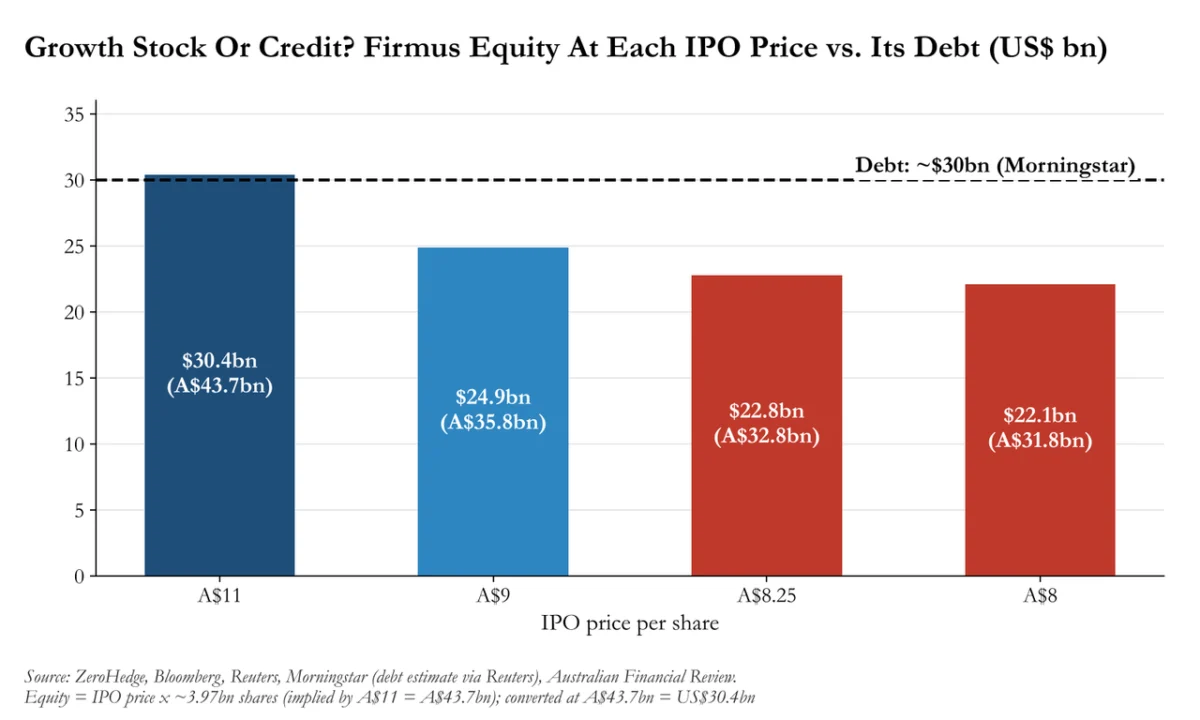
The promising narrative of an AI-driven data center boom is facing a harsh reality check as Australian operator Firmus’s ambitious Initial Public Offering (IPO) encountered significant headwinds, leading to the closure of its bookbuild without clear pricing indications. This development, first reported by Bloomberg, marks the second major data center listing to falter within weeks, raising critical questions about the sustainability of current valuations and the financing models underpinning the burgeoning artificial intelligence infrastructure sector. The struggle of Firmus to secure investor confidence, characterized by a substantial price cut and a polarizing reception, underscores a growing skepticism among public markets toward highly leveraged, speculative AI infrastructure ventures, reminiscent of prior warnings that the "data center dream is turning into a nightmare."
A Troubled Trajectory: The Firmus IPO’s Tumultuous Path
Firmus, a company with roots in Bitcoin mining established in 2019, had rapidly repositioned itself as a key player in the AI data center landscape. Its journey to an IPO was marked by a dramatic escalation in valuation over a mere six months, culminating in an attempt to list as one of Australia’s largest public offerings. In February, the company secured a substantial $10 billion debt package from prominent investors like Blackstone and Coatue, signaling strong institutional backing for its ambitious expansion plans. By April, a Coatue-led funding round had valued Firmus at $5.5 billion. The valuation nearly doubled to $10.5 billion by August, following a $2 billion investment round that included industry titan Nvidia, alongside existing backers Coatue, Blackstone, and Jane Street. This rapid appreciation reflected the intense private market enthusiasm for companies poised to capitalize on the AI revolution.
This meteoric rise set the stage for an IPO targeting as much as $5.5 billion at A$11 per share, which would have implied an eye-watering market capitalization of A$43.7 billion ($30.4 billion USD). Such a valuation represented a near threefold increase from its private valuation just two months prior, a pace that immediately raised eyebrows among seasoned market observers. The initial bookbuild, initially touted as "oversubscribed" and pulled forward from Friday to Thursday due to "early indications of demand," quickly unraveled. Overnight, the optimistic A$11 per share target evaporated, replaced by frantic efforts to salvage the deal at a drastically reduced price. Reports from the Australian Financial Review, via Reuters Breakingviews, indicated that Firmus was "scrambling" to maintain a floor at A$8.25, after cutting the price to as low as A$8 – a substantial 25% markdown from its initial aspirations.

The abrupt shift from high demand to a desperate price cut highlighted a profound disconnect between the private market’s enthusiasm and the public market’s rigorous scrutiny. As Jun Bei Liu, a portfolio manager at Ten Cap, succinctly put it on Bloomberg TV, "I’ve never seen an IPO so polarizing. There was a lot of international investor interest, however, when it comes to the crunch, the demand seems like it isn’t there when they were asked to put up the capital that’s required." This sentiment captures the essence of the challenge: while the allure of AI infrastructure remains potent, investors are increasingly unwilling to commit substantial capital without solid fundamentals and reasonable valuations, especially in a tightening monetary environment.
Operational Realities Versus Lofty Projections
A closer examination of Firmus’s operational profile reveals a significant gap between its ambitious vision and its current tangible assets. The company has reportedly constructed only 42 megawatts (MW) of data center capacity, a meager 4% of its projected pipeline of approximately 1 gigawatt (GW). This disparity is critical in the capital-intensive data center industry, where tangible assets and contracted revenue are paramount for de-risking investments. To put this in perspective, a 1GW data center would be among the largest in the world, requiring immense land, power, and construction resources, typically over many years. Firmus’s current operational footprint is dwarfed by its future ambitions.
Furthermore, the company recently pivoted its strategic focus from a largely domestic partnership with CDC Data Centres towards expansion in Malaysia and Indonesia, aiming to serve hyperscalers such as OpenAI and Meta. While this geographical shift aligns with the growing demand for AI compute capacity in Southeast Asia, it also introduces new complexities and execution risks associated with international expansion, regulatory environments, and supply chain management.
Financial forecasts within the draft prospectus painted a less than rosy picture, projecting a $77 million loss in the first half of fiscal year 2027. Crucially, the prospectus provided no financial forecasts beyond June 2027, a significant red flag for institutional investors accustomed to long-term visibility and predictable cash flows in large-scale infrastructure projects. This lack of forward guidance, coupled with the minimal existing capacity and the aggressive valuation, fueled considerable skepticism among Australian fund managers. Lochlan Halloway of Morningstar identified signs of a "boom phase" driven by the "wild increase in valuation in such a short period of time." Merlon’s Kirit Hara stated that his firm’s process "prevents us from effectively buying into, kind of, the hopes and dreams," while Katana’s Romano Sala Tenna admitted struggling with "the fundamental arithmetic." Joseph Koh of Blackwattle, who opted not to bid, summarized the prevailing sentiment: "There are so many unknowns."

The Controversial "EV+1/EBIT+2" Valuation Metric Under Scrutiny
In an attempt to justify its soaring valuation, Firmus reportedly leaned on an unconventional and highly scrutinized valuation tool: "EV+1/EBIT+2." This metric, as explained by Reuters Breakingviews’ Antony Currie, seeks to capture the future potential of data center developers by taking the enterprise value using the net debt the company is projected to have in 12 months (EV+1) and dividing it by the earnings before interest and taxes (EBIT) it hopes to generate two years from now (EBIT+2).
The underlying rationale for this novel approach stems from the unique economics of data center development. These projects typically involve funding up to 90% of construction costs through debt, with the expectation that revenue generation can commence within a year of development. Therefore, proponents argue, traditional valuation methods based on current financials, such as Price-to-Earnings or Enterprise Value-to-EBITDA multiples, would not adequately capture the latent value of assets under construction. However, the inherent flexibility and forward-looking nature of EV+1/EBIT+2 make it highly susceptible to manipulation. Capex assumptions can be inflated to artificially boost enterprise value, and any delays in securing permits, equipment, power, or water can push back revenue generation, turning "EV+1" into "+2" or "+3," and delaying "EBIT+2" to "+3," "+4," or even beyond.
Such a "creative" valuation metric, heavily reliant on optimistic projections and future assumptions rather than current operational performance or contracted revenues, struck many institutional investors as indicative of a speculative bubble. In a market increasingly sensitive to risk and demanding robust financial models, presenting "vibes" as a credible investment highlight for a multi-billion dollar IPO proved to be a critical misstep. The recent declaration of "force majeure" by Oracle’s massive Project Jupiter data center and delays at its 1.3GW Wisconsin "Lighthouse" campus underscore the very real risks associated with such long-dated and complex infrastructure projects, making the "+1" in Firmus’s metric appear exceptionally optimistic. The reliance on a denominator two years in the future for an asset class touted as "mature" further highlighted the speculative nature of the offering.
Investor Caution and the Shadow of Circular Financing

Beyond the aggressive valuation, several structural elements of the Firmus IPO further spooked potential investors. The company planned to allocate approximately half of the IPO shares to "selected existing strategic and financial investors," a list that prominently included Nvidia, Coatue, Blackstone, and Jane Street. This significant portion reserved for pre-existing backers, rather than being primarily directed at new public investors, suggested a potential desire by current holders to monetize their investments. Simultaneously, pre-IPO holders were reportedly permitted to sell up to 20% of their stakes from day one of trading. This significant "overhang" of existing shareholder participation and potential immediate selling created an atmosphere of caution, suggesting that early investors were seeking an exit rather than a long-term commitment from new public shareholders. This can signal a lack of confidence in future growth at the IPO price.
Compounding these concerns was the explicit use of IPO proceeds. A portion of the funds raised was earmarked to finance Firmus’s purchases of Nvidia GPUs for its first project in Batam, Indonesia, developed in partnership with Singapore’s DayOne. This arrangement created a circular financing loop: Nvidia invests in Firmus, Firmus then raises capital from its backers (including Nvidia indirectly through the IPO structure), and a significant portion of that capital flows directly back to Nvidia for chip purchases. While such arrangements can demonstrate strategic alignment, when embedded within an IPO structure seeking public capital, they can raise questions about the true independence of the deal and the ultimate beneficiaries of the funds. This type of circular flow, while not unprecedented in tech, is typically seen in smaller, private rounds, not multi-billion dollar public listings, potentially blurring lines of transparency.
The syndicate of joint lead managers for the IPO included major investment banks like Bank of America, JPMorgan, Morgan Stanley, and Morgans. The absence of independent sell-side research on the deal from these prominent institutions further underscored the tight-knit nature of the offering and potentially limited objective analysis available to broader market participants, who often rely on such reports for due diligence.
When Equity Becomes a Credit Problem: The Debt Burden
The most alarming aspect of Firmus’s IPO debacle, and one with far-reaching implications, is the sheer scale of its debt relative to its equity. Morningstar estimates Firmus’s total debt at approximately $30 billion, a staggering figure roughly six times its own projected earnings. At the initial aspirational IPO price of A$11, the equity was valued at about $30.4 billion, implying a roughly one-to-one ratio of equity to debt. However, with the price cut to A$8.25, and assuming a consistent share count, the equity valuation plummeted to approximately A$33 billion, or about $23 billion USD. At A$8, it further drops to $22 billion.

This means that at the reduced prices the bankers were desperately trying to defend, the public shareholders’ stake would be worth $7 billion to $8 billion less than what Firmus already owes its lenders, even before the stock commenced trading. As one market observer noted, "At that point an AI data centre stops being a growth stock and starts being a credit." This effectively transforms what was presented as a high-growth equity opportunity into a highly leveraged credit instrument. For new equity investors, this means they would be taking on significant risk in a company where bondholders hold a dominant position, and any operational misstep could swiftly erode their already precarious stake.
This precarious debt situation arises at a particularly challenging moment for the broader AI credit market. Recent weeks have seen considerable strain, with Oracle bond yields and credit default swaps hitting record highs, SpaceX bonds reaching new all-time lows, and the bond supporting Meta’s Hyperion data center (Project Beignet) similarly struggling. Paramount’s credit default swaps are trading at levels last seen during the 2008 financial crisis, indicating a systemic tightening of credit conditions across various tech and infrastructure sectors.
Compounding these domestic credit market pressures is the macro-economic environment. The 10-year U.S. Treasury yields recently soared to 5.36%, a 24-year high. Such elevated interest rates significantly increase the cost of servicing Firmus’s estimated $30 billion debt pile, further eroding its financial flexibility and making its path to profitability even more challenging. The combination of high debt, limited operational assets, aggressive valuation, and a rising interest rate environment creates a perfect storm for companies like Firmus.
The Broader Landscape: A Series of Stumbles for AI Infrastructure IPOs
Firmus’s struggles are not isolated; they represent a significant pattern emerging in the AI infrastructure funding landscape. Just three weeks prior, SoftBank-backed SB Energy, a developer of massive data centers, postponed the marketing of its own IPO. This delay stemmed from additional questions from the U.S. Securities and Exchange Commission (SEC) and substantial pushback from investors regarding its proposed $60 billion valuation. Critics also highlighted SB Energy’s heavy dependence on a single customer, OpenAI, for its revenue streams. Nvidia, a major beneficiary of the AI boom, had agreed to guarantee up to $105 billion to help OpenAI lease SB Energy’s Ohio data center, while simultaneously investing $1.5 billion directly into SB Energy. This intricate web of interdependencies, much like Firmus’s circular financing, raised questions about the true market demand and the robustness of the business model.

The delays at SB Energy, coupled with challenges faced by Oracle’s Project Jupiter (a 4.5GW facility whose loans are trading below 90 cents on the dollar due to major delays) and the 1.3GW Wisconsin "Lighthouse" campus, suggest a systemic issue within the mega-data center development space. These projects, critical for OpenAI’s "Stargate" initiative, are encountering significant timeline and funding uncertainties, potentially jeopardizing the AI giant’s own expansion plans.
Despite these setbacks, the pipeline of companies seeking to capitalize on the

