
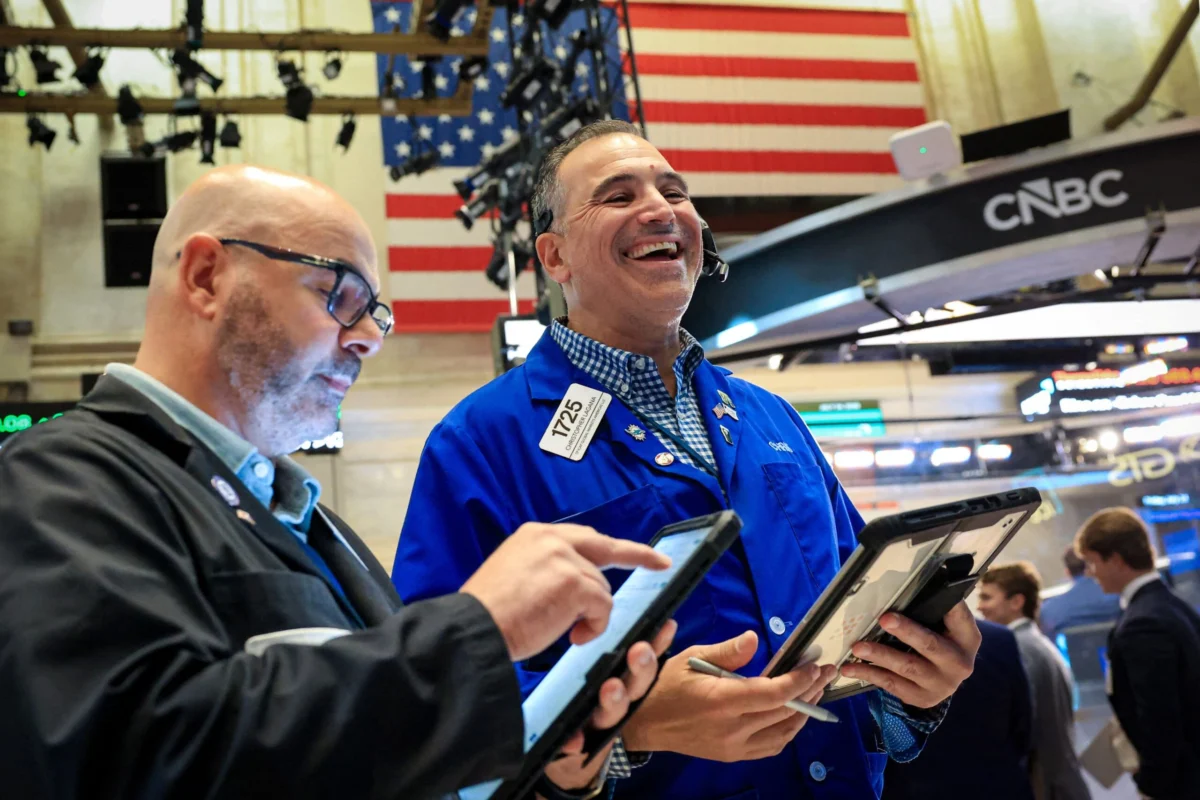
Monday, October 12, 2026, marks a significant milestone for the financial markets, as the current bull market celebrates its fourth anniversary. Since its nadir on October 12, 2022, the S&P 500 index has experienced an extraordinary ascent, climbing nearly 120% to reach new record highs. This remarkable rally has been largely attributed to Wall Street’s profound confidence in the disruptive and transformative power of artificial intelligence (AI), which has reshaped investment landscapes and driven unprecedented growth in select technology sectors.
The Genesis of a Resilient Rally: October 2022 to Present
The genesis of this bull market can be traced back to the closing low of October 12, 2022. This period followed a challenging environment characterized by escalating inflation, aggressive interest rate hikes by the Federal Reserve, and lingering supply chain disruptions post-pandemic. Investors were grappling with fears of an impending recession, and the S&P 500 had endured a significant correction throughout 2022. However, beneath this apprehension, a nascent technological revolution was brewing.
The turning point for market sentiment arrived swiftly with the public release of OpenAI’s ChatGPT in late 2022. This groundbreaking AI chatbot immediately captivated global attention, demonstrating the practical and accessible potential of generative AI. The release ignited a fervor among investors, sparking an intense "AI trade" as capital flowed into companies perceived to be at the forefront of this technological paradigm shift. The market quickly recognized the vast implications of AI, from enhancing productivity and innovation across industries to creating entirely new economic ecosystems.
The AI Catalyst: Fueling Unprecedented Growth
The investment narrative quickly coalesced around the concept of "picks and shovels" – companies that provide the foundational hardware, software, and infrastructure necessary for the AI revolution. These enterprises, often supplying the core components for AI development and deployment, witnessed their valuations soar to unprecedented stratospheres. The market’s insatiable hunger for AI-related assets propelled these stocks to the forefront of the rally, creating a concentrated surge in value.
Nvidia, once primarily known for its high-performance graphics cards integral to gaming and professional visualization, rapidly emerged as the quintessential poster child for the AI revolution. Its specialized Graphics Processing Units (GPUs) proved indispensable for training and deploying complex AI models, establishing Nvidia as a critical enabler of the AI boom. The company’s market capitalization reflected this pivotal role, crossing the monumental $1 trillion threshold for the first time in 2023. This ascent continued unabated, with Nvidia reaching an approximate $5.5 trillion valuation by the time of this anniversary, underscoring the immense scale of investor conviction in its future.
Another significant beneficiary, Micron Technology, a leading producer of memory and storage solutions, also saw its fortunes dramatically altered by the AI surge. As AI models demand increasingly vast amounts of data processing and storage, Micron’s offerings became essential. The company achieved its own milestone in May of the current year, surpassing a $1 trillion market capitalization for the first time, further illustrating the broad impact of the AI build-out on key semiconductor players. These individual corporate successes have been instrumental in driving the overall market’s performance, particularly within the technology-heavy S&P 500.
Navigating the "Wall of Worry": Economic Headwinds and Market Resilience
The bull market’s four-year run has not been without its formidable challenges. Throughout this period, the market has consistently climbed what analysts often refer to as a "wall of worry," demonstrating remarkable resilience in the face of persistent economic headwinds. These concerns have included ongoing fears of elevated inflation, which necessitated continued monetary tightening by central banks globally, leading to surging bond yields. The specter of a more hawkish Federal Reserve, committed to bringing inflation down to its target, has frequently cast a shadow over investor sentiment, raising borrowing costs and potentially dampening economic growth.
Despite these macro-economic pressures, the S&P 500 recently topped 7,800 for the first time just last week, maintaining its position near record highs. A significant factor contributing to this resilience is the index’s heavy allocation towards technology stocks. Approximately 40% of the broader S&P 500 index is now comprised of technology companies, meaning the strong performance of AI-driven tech giants disproportionately influences the overall index’s trajectory. This concentration, while a source of strength during the AI boom, also raises questions about market breadth and sustainability.
Technical Indicators: Analyzing Market Duration and Breadth
As the bull market enters its fifth year, investors and analysts are increasingly scrutinizing technical indicators to gauge its potential longevity. According to Ari Wald, Head of Technical Analysis at Oppenheimer, the current bull market stands as the sixth longest of 24 cycles recorded since 1932. This places it in a historically extended category, prompting closer examination of its remaining runway.
Wald’s analysis suggests that, based on historical data, the median time remaining before a bull market cycle reaches its peak has been approximately 13 months. This statistical observation implies that 2027 could potentially represent the final leg of the current extraordinary run. However, Wald also tempers this outlook with a note of optimism, highlighting that the median fifth-year return for such extended bull markets has historically been a robust 21%. This suggests that even if the market is approaching a peak, there could still be substantial gains for investors to realize in the near term.
A more immediate concern for market health revolves around market breadth, which has shown signs of deterioration. Market breadth refers to the number of individual stocks participating in a market rally. A broad rally, where many stocks across various sectors are advancing, is generally considered healthier and more sustainable than a narrow one, where only a few large-cap companies are driving the index higher. In September of the current year, a significant warning signal emerged: 75% of stocks within the S&P 500 closed in negative territory. This stark divergence indicates that while the headline index continued its ascent, the majority of its constituent companies were struggling.
This phenomenon is often attributed to the "flight to quality" or "mega-cap safety" trade, where the threat of higher interest rates and economic uncertainty prompts investors to consolidate their capital into a few well-established, highly liquid mega-cap companies. Such a narrow market advance raises concerns about underlying economic health and the sustainability of the overall rally.
Small-cap stocks, often seen as a bellwether for broader economic activity and risk appetite, have particularly suffered during this period of narrowing breadth. Oppenheimer’s Wald closely monitors the Russell 2000 index, which tracks small-cap companies, specifically observing its interaction with its 200-day moving average. A sustained test or break below this key technical level could signal weakening market conditions beyond the mega-cap tech leaders. Wald emphasizes, "In our view, relative weakness remains a warning, not an opportunity, until stronger market conditions can be reestablished." This perspective suggests that while the largest companies may continue to perform, the overall market’s health could be compromised if participation remains limited.
Earnings Outlook and Sectoral Rotations
The ongoing third-quarter earnings reporting season is expected to be strong, with many companies projected to post solid financial results. However, a prevailing concern among analysts is whether these strong earnings will be sufficient to lift stock prices, especially given the already elevated expectations embedded in current valuations. For many of the high-flying tech companies, significant growth is not just anticipated but priced in, meaning that even strong results might not surprise the market enough to trigger further substantial gains.
The technology sector, which has been the primary engine of the bull market, faces particular scrutiny. Deutsche Bank strategist Parag Thatte has expressed caution, suggesting that the rotation into technology stocks may now be "overdone." He argues that the risk-reward profile for investing in these high-valuation tech names no longer appears as favorable as it once did. This perspective implies that while the underlying growth story for AI remains robust, the current market pricing might not offer sufficient upside potential to justify the inherent risks, potentially signaling a need for diversification or a rotation into other, less celebrated sectors.
Expert Perspectives on Sustainability and Future Trajectories
Despite the emerging concerns regarding market breadth and valuations, many investors and strategists maintain an optimistic outlook on the stock market’s continued performance. The resilience demonstrated over the past four years is often cited as evidence of strong fundamental earnings growth, underpinned by the ongoing AI build-out and its broader economic implications. However, the path to outperformance is anticipated to become increasingly nuanced.
Adam Parker, founder of Trivariate Research, articulated a key strategy for the evolving market landscape: "In order to outperform, investors need a combination of owning stocks that grow fast and don’t miss – which remains our mantra." This highlights the critical importance of identifying companies with genuine, sustainable growth trajectories that consistently meet or exceed market expectations. In an environment where overall market gains may become more selective, the ability to pick individual winners will be paramount. Parker further reinforced a positive stance, stating, "We continue to think that the US stock market will perform well."
This sentiment reflects a belief that the foundational technological shifts driven by AI are powerful enough to sustain market momentum, even if the pace and breadth of the rally adjust. The transformation brought about by AI is not merely a cyclical trend but a fundamental re-engineering of industries, promising long-term productivity gains and new avenues for economic expansion.
Broader Implications and Investor Strategies
The four-year anniversary of this bull market serves as a moment for reflection on its drivers and a forward-looking assessment of its sustainability. The concentrated nature of the rally, heavily reliant on a few mega-cap technology stocks, implies that future market performance may diverge significantly between different segments of the economy. While the S&P 500 has soared, many smaller companies and traditional industries have experienced more muted or even negative returns, indicating an uneven distribution of economic benefits and investment enthusiasm.
For investors, this environment necessitates a nuanced approach. A strategy purely focused on passive index tracking may continue to benefit from the outperformance of the largest tech companies, but active management aimed at identifying value outside the immediate AI "picks and shovels" could become increasingly rewarding. Diversification across sectors and market capitalizations, coupled with a vigilant eye on fundamental valuations and earnings growth, will be crucial. The potential for a "soft landing" for the economy, where inflation is tamed without triggering a deep recession, remains a key factor that could either extend the rally or introduce new volatility.
Conclusion: A Glimpse into the Future
As the bull market enters its fifth year, it stands as a testament to the transformative power of technological innovation, particularly artificial intelligence. Its remarkable 120% surge since October 2022 underscores a period of extraordinary wealth creation, largely concentrated in the hands of AI enablers and beneficiaries. While technical indicators and market breadth concerns suggest that the path ahead may become more challenging, with 2027 potentially marking the final leg of this cycle, the enduring strength of fundamental earnings and the ongoing AI revolution continue to fuel optimism.
The market’s ability to climb a wall of worry, from inflation and rising rates to geopolitical tensions, speaks to its underlying resilience and adaptability. However, as the rally matures, investors face a more selective landscape where identifying true growth drivers and managing risk will be paramount. The bull market’s anniversary is not just a celebration of past gains, but a critical juncture for assessing the forces that will shape its future, demanding careful navigation from all market participants.

