
A burgeoning debate is unfolding across the United Kingdom concerning the management and accessibility of its cherished national parks and rural landscapes. At its heart lies the tension between universal access and targeted inclusion initiatives, particularly those organized around specific ethnic or religious identities. This discussion has been brought to the fore by several high-profile partnerships and specialized outdoor groups, leading to questions about fairness, equality, and the very definition of a "common" public space. The core contention, articulated by various commentators, revolves around a perceived double standard: while identity-specific groups for minority communities are increasingly supported and publicized, a hypothetical "whites-only" equivalent would likely face widespread condemnation and official scrutiny.
The Push for Inclusivity: National Initiatives and Partnerships
In recent years, several initiatives have emerged with the stated aim of making the British countryside more accessible and welcoming to diverse communities. These programs often seek to address historical and cultural barriers that some minority groups report experiencing in traditional outdoor settings.
National Trust’s Engagement with Muslim Hikers
One prominent example involves the National Trust, a conservation charity dedicated to preserving historic places and green spaces. The Trust has fostered a multi-year partnership with Muslim Hikers, a group founded by Haroon Mota, to organize specific events within national parks. These events include Ramadan walks and overnight retreats, notably held at Ilam Park in the Peak District. The National Trust’s own promotional channels have highlighted these collaborations, inviting participants to "Enjoy the beautiful Peak District on a Ramadan walk with the Muslim Hikers."
These specialized weekends are designed to accommodate the religious practices of participants, featuring guided hikes alongside congregational prayers, iftar (the evening meal breaking the fast during Ramadan), night prayers, and suhoor (the pre-dawn meal). For these retreats, facilities such as YHA Ilam Hall, located on National Trust land, have been exclusively booked for the group. Haroon Mota, the founder of Muslim Hikers, articulated the rationale behind these initiatives, stating, "It’s about showing our communities that these places are for us too." This sentiment reflects a broader goal of increasing representation and a sense of belonging for communities that may not traditionally view the countryside as "their space."
Emergence of Identity-Specific Outdoor Groups
Beyond large institutional partnerships, a number of independent walking and outdoor clubs have formed with explicit identity-based criteria for membership. These groups often aim to create safe and affirming spaces for their members, addressing perceived barriers or discomforts in broader, more heterogeneous outdoor contexts.
One such organization is Peaks of Colour, which describes itself as "a Peak District-based walking club by and for people of colour only." Evie Muir, the founder of Peaks of Colour, has publicly stated that the club’s objective is to "reclaim space in the outdoors." The group emphasizes healing, community, joy, and nature connectedness over mere physical fitness, and while allies are encouraged to donate, participation in the walks themselves is reserved for people of colour. This model is predicated on the idea that shared identity can foster a unique sense of community and address specific needs or experiences that may not be met in mixed-group settings.
Similarly, Wanderers of Colour organized a climbing festival in the Peak District, promoted as "Europe’s only climbing festival by and for Black and people of colour." These events underscore a trend towards creating affinity groups where participants share not only an interest in outdoor activities but also a common racial or ethnic background, seeking to build community and confidence within those specific demographic parameters.
Policy Directives and Official Justifications
The rise of these identity-specific initiatives is not occurring in a vacuum; it is frequently underpinned by government reports, policy recommendations, and statements from leading figures within national conservation bodies. These official perspectives often highlight a perceived lack of diversity and inclusivity within the UK’s green spaces and advocate for proactive measures to address this.
Government Reports and Recommendations
A 2022 report from the Department for Environment, Food & Rural Affairs (DEFRA) critically examined the existing rural facilities and their cultural alignment. The report noted that these facilities often served "white English culture," specifically citing "traditional pubs, which have limited food options and cater to people who have a drinking culture." It concluded that this environment could make Muslims from Pakistani and Bangladeshi backgrounds feel unwelcome. The suggested solution, as interpreted by some, was not merely adaptation of existing offerings but a more fundamental "rewritten menu" for the countryside experience.
This DEFRA report built upon earlier findings, such as Julian Glover’s 2019 review of national parks. Glover’s review characterized national parks as "an exclusive, mainly white, mainly middle-class club" and a "’white’ environment" that risked becoming "irrelevant to the country that actually exists." These government-commissioned analyses provide a significant policy impetus for the initiatives seen today, framing the issue as one of systemic exclusion rather than individual choice.
National Trust’s Stance on Accessibility
Hilary McGrady, the Director-General of the National Trust, has publicly articulated the organization’s official line on inclusivity. Speaking on LBC in March, McGrady acknowledged that ethnic minorities often do not feel the countryside is "a place for them." She elaborated on potential reasons, stating, "They don’t necessarily know ‘what am I meant to wear, how do I behave? What’s a countryside code? I’ve never heard of it’."
McGrady cited research indicating this sentiment, concluding, "So we accept that and we have to respond… because the National Trust is here for everyone." This position suggests that the Trust views cultural and informational barriers as significant impediments to participation, necessitating tailored outreach and programming to ensure that its mandate of serving "everyone" is truly met. The argument is that while Britain’s national parks are legally open to anyone, practical and cultural barriers can effectively limit access for certain groups, and that public bodies have a responsibility to actively dismantle these.
Regional Landscape Strategies
These national directives have trickled down into the strategies of regional bodies managing protected areas, such as National Landscapes (formerly Areas of Outstanding Natural Beauty, AONBs). The Chilterns National Landscape, for instance, pledged specific outreach to Muslim communities from Luton and committed to marketing materials in "community languages." The Malvern Hills National Landscape noted a difference in preferences, observing that "most white English users value the solitude" of the countryside, while "ethnic minority people" often prefer "social company," implying a need for different types of recreational offerings. Nidderdale National Landscape, in turn, vowed to develop a "more diverse cultural interpretation of the countryside." These regional commitments reflect a concerted effort to adapt local management and engagement strategies to align with the broader national agenda of diversifying countryside users. A February headline in The Telegraph, stating a drive to make the countryside "less white," encapsulates the perceived goal of these collective efforts.
Further reinforcing this perspective, in 2024, the Wildlife and Countryside Link, an umbrella organization for environmental charities, informed an all-party parliamentary group that "Cultural barriers reflect that in the UK, it is White British cultural values that have been embedded into the design and management of green spaces." They went on to assert that "racist colonial legacies continue to frame nature in the UK as a ‘white space’." This framing suggests a belief among some organizations that the very infrastructure and ethos of countryside management are inherently biased and require fundamental change.
The Debate: Universality vs. Targeted Inclusion
While the stated intentions behind these initiatives are to promote inclusivity and address historical imbalances, they have simultaneously ignited a fervent debate about the principles of universal access, equality, and the potential for division within public spaces.
Concerns Over a Perceived Double Standard
A central point of contention, as highlighted by critics, is the perceived double standard regarding identity-based segregation. The argument posits that if a "whites-only" weekend ramble or climbing festival were organized on public land, it would almost certainly be met with outrage, treated as a "hate incident," and potentially trigger a police inquiry. Yet, similar initiatives explicitly catering "by and for people of colour only" or "Muslim-only" are not only tolerated but actively supported and promoted by official bodies like the National Trust.
This disparity raises questions about the application of equality principles. Critics argue that true inclusion should mean open access for all, irrespective of background, without creating separate categories or excluding any group based on identity. They contend that while addressing historical disadvantage is important, doing so through exclusionary practices, even if aimed at a majority group, risks undermining the very concept of shared public spaces and fostering a sense of resentment. The sentiment is that the hills, traditionally seen as a space "common to all," are being "carved up by identity," departing from the vision of universal human needs for nature, as articulated by National Trust founder Octavia Hill.
Historical Context: The Right to Roam
The historical struggle for access to the British countryside provides crucial context for this debate. Events like the 1932 Kinder Scout trespass in the Peak District were pivotal in establishing the "right to roam" – the legal right for people to walk over certain types of private land, particularly moorland, mountains, and commons. This historic movement championed the idea that the countryside should be accessible to everyone, irrespective of social class or land ownership.
From this perspective, the current emphasis on identity-specific programming can be seen in two contrasting ways. For proponents, it’s an extension of the right to roam, ensuring that cultural and social barriers don’t negate legal access for certain communities. For critics, it’s a deviation from the spirit of universal access, replacing a class-based struggle for commonality with an identity-based division that risks fragmenting the public experience of nature. The "new version" of access, as framed by critics, seeks "branded weekends, race-gated clubs, faith residentials on Trust land, and a countryside redesigned because Defra decided ‘white English culture’ was the defect."
Foundational Principles of Public Land Access
The National Trust, founded in 1895, was established with a mission to preserve and protect places of natural beauty and historical interest "for the benefit of the nation." Octavia Hill, one of its founders, famously wrote that "the need of quiet, the need of air and… the sight of sky and of things growing seem human needs, common to all." This foundational ethos emphasizes shared humanity and universal access to nature’s benefits. The current debate challenges how this universal principle is reconciled with targeted efforts to address specific group experiences. Critics argue that actively sorting walkers "by race and creed" and subsequently labeling the "native remainder colonial" runs counter to this original vision of commonality.
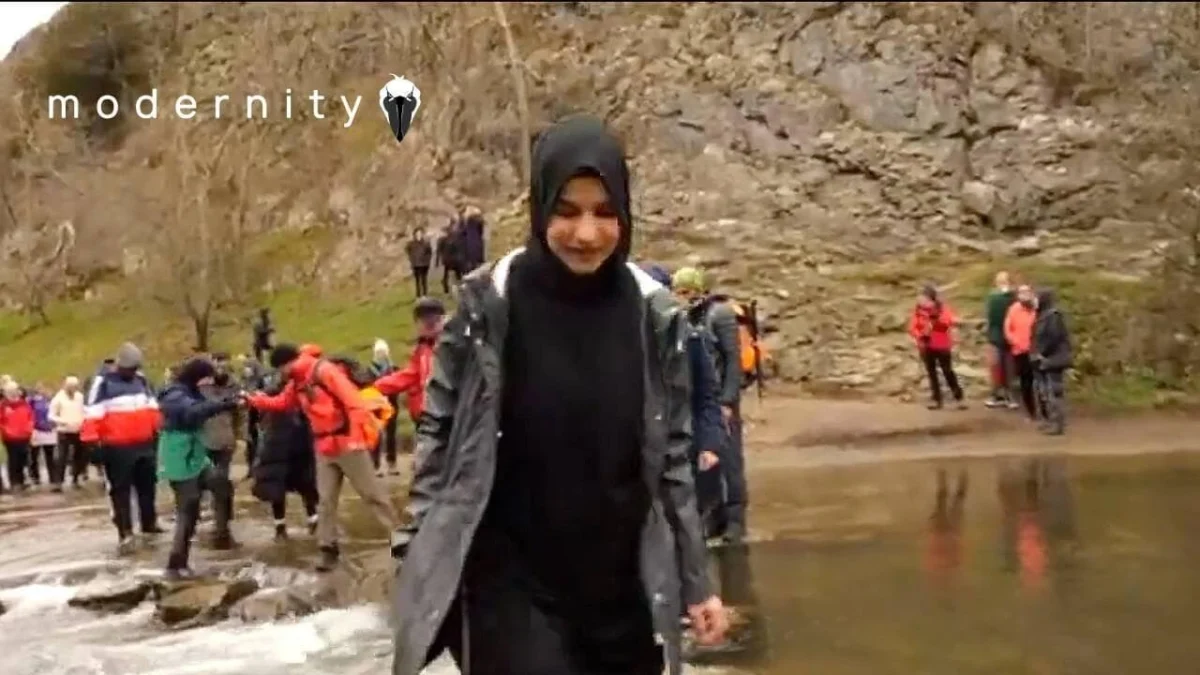
The Guardian writer John Harris, for example, recently praised the changing demographics on Peak District paths, noting the common sight of "women in their 20s wearing hijabs picnicked on giant rocks." He described country walking as previously "one of the most monoculturally white pursuits there is," and viewed the new scene as "a wonderful rejection of the right’s monotone vision of England." This perspective highlights the cultural shift and the embrace of a more visibly diverse countryside by some, seeing it as progress.
Broader Implications for UK Countryside Management
The ongoing discussion about identity and inclusion in national parks extends beyond specific walking groups, touching upon broader legal, social, and environmental implications for how the UK’s natural heritage is managed.
Navigating Equality Legislation
The legal framework for equality in the UK, primarily the Equality Act 2010, prohibits discrimination based on protected characteristics such as race, religion, and sex. However, the Act also includes provisions for "positive action," which allows organizations to take proportionate steps to address disadvantage, meet particular needs, or encourage participation from groups with low representation. The initiatives described, such as "by and for people of colour only" groups or "Muslim-only" events, are typically justified under these positive action provisions, aiming to counteract perceived historical exclusion or create environments where specific cultural or religious needs can be met. The legality and ethical implications of such "positive action" measures, particularly when they involve explicit exclusion of majority groups, remain a complex and often contested area of law and public policy. The proportionality and necessity of these measures are often scrutinized.
Impact on Social Cohesion and Cultural Identity
The debate also raises questions about its impact on social cohesion and the evolving understanding of British cultural identity. Proponents argue that by making national parks welcoming to all segments of society, these initiatives strengthen social cohesion by fostering a shared sense of ownership and belonging. They believe that if certain communities feel excluded from national treasures, it can lead to alienation. Conversely, critics express concern that explicitly separating groups by race or religion, even with good intentions, could inadvertently lead to further fragmentation of society rather than integration. They worry that it reifies differences rather than emphasizing commonalities, potentially undermining the idea of a shared national identity and heritage.
Addressing Environmental Challenges: The Fly-Tipping Conundrum
Amidst this intense focus on identity and access, some commentators highlight other pressing issues facing the British countryside, such as environmental degradation. The original article draws a stark contrast between the "reports fuss over clothing, dogs and menus" and the increasing problem of fly-tipping. In November, a massive fly-tip on the River Cherwell near Kidlington was reported, piling waste an estimated 20 feet deep and 500 feet long. Similarly, in January, farmer Katie Davies discovered a "river of rubbish" down Bwlch Mountain in Treorchy, describing the mess as "devastating" and something that "keeps me up at night."
Natural Resources Wales has unequivocally labeled fly-tipping as "a serious crime," noting that over 70 percent of incidents involve household waste illegally moved by unlicensed carriers. While not directly causally linked to the identity debate, the inclusion of these examples suggests a critique that while national bodies are heavily investing in social engineering and cultural reinterpretation of the countryside, fundamental environmental threats like fly-tipping are receiving comparatively less attention or effective action. This juxtaposition implicitly questions the prioritization of resources and focus in countryside management, arguing that the health and integrity of the landscape itself should be a paramount concern for all users, regardless of background.
The evolving discourse surrounding UK national parks underscores a complex societal negotiation. It is a dialogue that seeks to balance the historical mandate of universal access with contemporary demands for targeted inclusion, all while navigating the nuances of equality legislation, cultural sensitivity, and the fundamental preservation of these vital natural spaces for generations to come. The resolution of these tensions will undoubtedly shape the future character and accessibility of the British countryside.

