
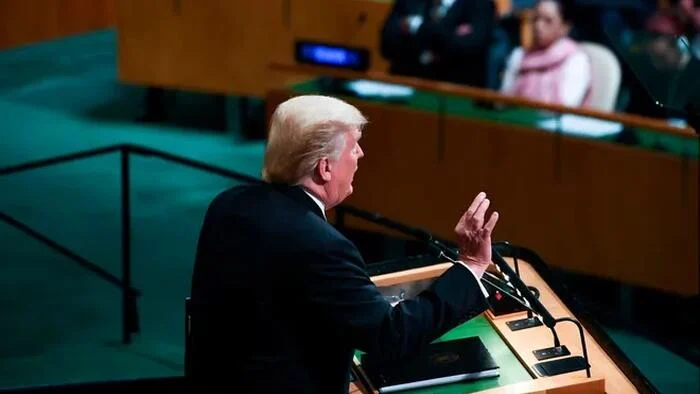
President Donald Trump is poised to deliver a highly anticipated address to the United Nations General Assembly (UNGA) today, scheduled for 9:55 AM Eastern Time, or approximately 10:00 AM. The speech is expected to be a pivotal moment in global diplomacy, setting the tone for the United States’ foreign policy agenda and its engagement with critical international challenges. Key themes anticipated include a forceful stance on the ongoing "Iran war" and the paramount importance of preventing Iran from acquiring a nuclear weapon, a sentiment reiterated by UN Ambassador Mike Waltz. Beyond the immediate crisis in the Middle East, President Trump is also slated to touch upon broader foreign policy initiatives, including his comprehensive 20-point peace plan for Gaza and recent impactful U.S. actions closer to home in the Western Hemisphere, signaling a wide-ranging articulation of the administration’s "America First" doctrine on the global stage.
The annual gathering of world leaders at the United Nations General Assembly in New York City serves as a crucial platform for heads of state to articulate their national interests, forge alliances, and address pressing global issues. This year’s session has been particularly charged, with numerous geopolitical flashpoints demanding international attention. Against this backdrop, President Trump’s speech is not merely a formality but a strategic communication designed to project American strength and resolve, both to allies seeking reassurance and to adversaries requiring clear red lines. The global community will be scrutinizing every word, seeking clues about the future direction of U.S. foreign policy and its commitment to multilateral frameworks. The President’s appearance at the UNGA, often a stage for calls for global cooperation, is expected to reaffirm his administration’s transactional approach to international relations, emphasizing bilateral deals and national sovereignty over multilateral institutions where he perceives them to be inefficient or detrimental to U.S. interests.
The Looming Shadow of Iran: A Central Focus
The "Iran war" and the imperative of ensuring Tehran never possesses a nuclear weapon stand as the undeniable centerpiece of President Trump’s anticipated remarks. This emphasis comes amid escalating tensions in the Middle East, characterized by a complex interplay of sanctions, proxy conflicts, and rhetorical brinkmanship that has defined much of the administration’s tenure. Since the United States withdrew from the Joint Comprehensive Plan of Action (JCPOA), commonly known as the Iran nuclear deal, the Trump administration has pursued a strategy of "maximum pressure," aiming to compel Iran to negotiate a new, more comprehensive agreement addressing its nuclear program, ballistic missile development, and regional destabilizing activities. This strategy has involved reimposing and expanding economic sanctions, targeting key sectors of Iran’s economy, particularly its oil exports, which have reportedly seen significant reductions, impacting the nation’s revenue streams. Estimates suggest that Iran’s oil exports have plummeted by over 80% since the re-imposition of sanctions, severely crippling its economy and limiting its capacity to fund regional proxies.
The term "Iran war" as used by Ambassador Waltz encapsulates not necessarily a direct military confrontation, but rather the multifaceted struggle encompassing economic warfare, cyber operations, and heightened regional proxy conflicts involving various state and non-state actors. The administration views Iran’s nuclear ambitions as an existential threat to regional and global stability, asserting that a nuclear-armed Iran would fundamentally alter the balance of power and potentially trigger a dangerous arms race in the Middle East. President Trump’s speech is expected to reinforce this steadfast position, outlining the consequences of continued Iranian defiance while perhaps offering a path forward under strict conditions. This steadfast stance is a core tenet of the administration’s Middle East policy, which also includes bolstering security ties with Gulf allies and Israel, who share concerns about Iran’s regional influence.
Prospects for Diplomacy Amidst Tensions
A question of paramount importance, resonating deeply across diplomatic circles, is whether the United States will engage in direct diplomacy with Iranian officials on the sidelines of the UNGA. The potential for such a high-level encounter has fueled speculation, given the intense animosity and lack of direct communication between Washington and Tehran for an extended period. Secretary of State Marco Rubio addressed this possibility, indicating the White House’s openness to dialogue. "We’re open to that," Rubio stated during an appearance on NBC’s "Today" show Tuesday morning. "I don’t think anything is scheduled at this point, but we’re certainly open to something like that, especially if it has the prospects of leading to something positive and ultimately achieving the goal of what this is all about." He reiterated the administration’s non-negotiable red line: "And that is the fact that Iran can never have a nuclear weapon. They just simply can’t."
Rubio’s comments suggest a nuanced approach, balancing an unwavering commitment to denuclearization with a pragmatic willingness to explore diplomatic avenues, provided they offer a tangible path towards the stated objective. This stance is consistent with past remarks from the administration, which has often stated a desire for a deal but under terms vastly different from the JCPOA, which it criticized as being too lenient and temporary. Any direct engagement would mark a significant shift in diplomatic posture and could potentially de-escalate regional tensions, though the hurdles to a breakthrough remain formidable, given the profound distrust and fundamental disagreements between the two nations on a range of issues, including Iran’s ballistic missile program and its support for regional militias. The international community, including European allies who have sought to preserve aspects of the JCPOA and de-escalate the situation, would likely welcome any genuine movement towards dialogue, viewing it as a critical step toward preventing wider conflict. However, the deep ideological chasm and years of mutual recrimination mean that any progress would likely be incremental and fraught with challenges.
A Busy Schedule: Arctic Security and Bilateral Engagements
Beyond the high-stakes rhetoric concerning Iran, President Trump’s day at the UNGA is packed with significant diplomatic engagements, underscoring the breadth of his administration’s global focus. A senior White House official previewed the speech by stating that the President "will include many of the issues, frankly neglected by past administrations, that he’s not going to kick the can on," indicating a proactive and assertive approach to long-standing global challenges. This suggests a determination to tackle issues that previous administrations might have deferred or approached with less directness, aligning with the "America First" ethos of decisive action.
Following his address, President Trump is slated to participate in a pivotal signing ceremony alongside the leaders of Greenland and Denmark. This agreement, which the President has characterized as granting the U.S. "total control" over the Arctic island’s security, represents a significant development in Arctic geopolitics. Both Greenland and Denmark, the sovereign nation that owns the self-governed island, have framed the agreement as a measure to strengthen security in the strategically vital Arctic region. However, the terms of the agreement will require ratification by their respective parliaments before coming into effect, signaling a need for domestic political consensus and thorough legislative review in both Copenhagen and Nuuk.
The United States’ heightened interest in Greenland is not new, with previous reports indicating the administration’s strategic consideration of purchasing the island. This latest agreement underscores the growing geopolitical importance of the Arctic, a region increasingly seen as a future frontier for resource extraction, shipping lanes, and military positioning. With melting ice caps opening new maritime routes and access to vast untapped natural resources—estimated to include 13% of the world’s undiscovered oil and 30% of its undiscovered gas—the Arctic has become a focal point of competition among global powers, including Russia and China, both of whom have expanded their presence and activities in the region. The agreement with Denmark and Greenland solidifies the U.S.’s strategic footprint in the High North, aiming to bolster its defense capabilities and influence in a rapidly evolving geopolitical landscape. Analysts suggest this move is intended to counter the increasing assertiveness of other nations in the Arctic and secure critical access points for defense and commerce, thereby enhancing U.S. national security and economic interests in a region often described as the "new geopolitical frontier."
Reshaping the World: Broader Foreign Policy Themes
The Fox News tweet, cited in the original article, further elucidates the President’s overarching message: "President Trump’s UN speech to make the case for how he uses America’s power to confront Iran, cartel violence and other threats, reshaping the world to help the US." This statement encapsulates the "America First" philosophy, which seeks to prioritize American interests in all foreign policy decisions, often through a transactional lens. The mention of "cartel violence" hints at a focus on issues related to border security, transnational crime, and regional stability in the Western Hemisphere, aligning with the preview of addressing "recent US actions closer to home." This could involve discussions on efforts to combat drug trafficking, address migration challenges, or support democratic transitions in troubled nations within Latin America, all framed within the context of safeguarding American security and prosperity. For instance, recent U.S. initiatives have included increased intelligence sharing with partner nations in Central and South America and targeted sanctions against individuals and organizations involved in illicit activities, demonstrating a commitment to securing the U.S. southern border and combating organized crime networks.
Middle East Engagements: Gulf Allies and Yemen Crisis
President Trump’s busy schedule also includes crucial direct engagement with officials from Washington’s Gulf allies on the sidelines of the UNGA. These meetings occur at a moment of profound wartime uncertainty gripping the entire region, particularly in the context of the expanding conflict in Yemen. The administration has maintained a delicate balance between supporting its regional partners, such as Saudi Arabia and the UAE, and avoiding direct military entanglement in protracted conflicts. Trump’s prior warnings of potentially "hitting Iran again" or striking a deal "at any time" reflect a strategy of maintaining options, keeping both adversaries and allies guessing about the next move. This approach aims to exert pressure while retaining the flexibility to pursue diplomatic breakthroughs if deemed advantageous.
The conflict in Yemen has escalated significantly, with Gulf leaders expressing acute anxiety over the expanding war with the Houthi movement. Recent reports indicate that the Saudi-led coalition has faced rapid setbacks over the last two weeks, impacting critical overland oil transit routes. A particularly damaging drone attack on the East-West pipeline underscored the Houthis’ growing capability and the vulnerability of Saudi energy infrastructure. Riyadh is reportedly seeking urgent military assistance from its international partners to reverse these losses and protect its vital interests, including air defense systems and enhanced intelligence capabilities. While President Trump has thus far resisted directly joining the expanded conflict, preferring to limit U.S. involvement to logistical and intelligence support, the bilateral meetings with Gulf allies will undoubtedly involve discussions on how the U.S. can best support its partners without being drawn into a deeper military quagmire, potentially through increased arms sales, intelligence sharing, or defensive weapons deployments. The stakes for regional stability and global energy markets are exceptionally high, with any further disruption to oil transit routes having the potential to send shockwaves through the global economy.
Economic Diplomacy: Awaiting China’s Rare Earth Offer
Later in the week, investors and global policymakers will closely monitor President Trump’s meeting with his Chinese counterpart, Xi Jinping. This highly anticipated encounter comes amidst ongoing trade tensions and strategic competition between the world’s two largest economies. Bloomberg News has reported that Beijing is expected to offer additional rare earth export licenses as a "bargaining chip" at the summit. Rare earth elements are crucial components in a vast array of high-tech products, from smartphones and electric vehicles to advanced military equipment. China currently dominates the global supply chain for these critical minerals, controlling an estimated 80% of global refined rare earth production, giving it significant leverage in trade negotiations.
This potential offer from Beijing signals a strategic move to ease trade frictions, even if temporarily, by addressing a key concern for the U.S. industrial and defense sectors, which are heavily reliant on these materials. The U.S. has been actively seeking to diversify its rare earth supply chains to reduce reliance on China, making any concession on this front a notable development. The meeting with President Xi will not only shape the immediate future of the U.S.-China trade relationship, potentially leading to a partial agreement or a further de-escalation of tariffs, but also have broader implications for global supply chains, technological competition, and geopolitical stability. A positive outcome could lead to a de-escalation of the trade war and renewed efforts to find common ground on other contentious issues, while a failure to reach an understanding could further deepen the economic and strategic rift, exacerbating global economic uncertainties.
Conclusion: High Stakes in a Fragmented World
President Trump’s address and subsequent engagements at the UN General Assembly represent a concentrated effort to project American leadership and reshape global dynamics in line with his administration’s priorities. From confronting Iran’s nuclear ambitions and asserting U.S. influence in the Arctic to navigating complex regional conflicts in the Middle East and engaging in high-stakes economic diplomacy with China, the day’s events underscore a multifaceted and often unconventional approach to foreign policy. The world watches keenly, aware that the outcomes of these discussions and declarations will have profound implications for international peace, security, and economic stability in an increasingly fragmented and challenging global landscape. The emphasis on issues "neglected by past administrations" signals a commitment to tackling perceived shortcomings and asserting a distinctively American approach to global governance, driven by a desire to secure tangible benefits for the United States. The ripple effects of President Trump’s statements and diplomatic maneuvers today will undoubtedly resonate across continents for months to come, shaping geopolitical alliances and economic flows in a world grappling with numerous interconnected crises.

