

The global financial landscape has experienced an extraordinary surge in equity markets over the past several years, with the S&P 500 index serving as a prominent benchmark for this remarkable ascent. This index, a critical component of many retirement savings portfolios held in index funds, has appreciated by approximately 57 percent in just the last two years alone, and its value has more than doubled over the past five years. Such rapid growth has significantly altered the financial standing of many investors, potentially accelerating retirement timelines for some and prompting others, already retired, to reconsider their wealth management strategies. The central question arising from this sustained bullish trend is whether this growth reflects genuine economic and corporate expansion or if it signals the presence of a speculative bubble, particularly given the pervasive enthusiasm surrounding Artificial Intelligence (AI).
The Current Market Anomaly: A Closer Look at Valuations

The substantial increase in market capitalization raises valid concerns among investors regarding the sustainability of current valuations and the potential for future volatility. A common query, reflective of broader market sentiment, centers on whether the market’s current trajectory, fueled by AI hype, renders it unusually susceptible to a significant downturn, with subsequent impacts on long-term financial planning. To address these concerns, it is imperative to dissect the fundamental principles of stock valuation and analyze the unique dynamics of the contemporary financial environment.
At its core, a stock represents an ownership stake in a company, entitling the holder to a portion of its future earnings and assets. This concept is analogous to owning a rental property, where the owner collects rent, covers expenses, and retains the profit. The value of such a property, or a stock, is theoretically derived from the present value of its anticipated future income stream. If the market price of rental properties rises significantly while the rental income remains stagnant, the profitability for a new investor diminishes. Similarly, in the stock market, the relationship between a company’s share price and its earnings per share is expressed by the Price-to-Earnings (P/E) ratio.
Consider an investment scenario: an initial investment of $100,000 in the S&P 500 in 2019, with dividends reinvested, would today be valued at approximately $256,960, representing a 157% gain. However, over the same period, the share of company earnings attributable to that $100,000 investment only increased from an estimated $5,290 to $7,540, a gain of merely 42%. This disparity indicates a significant expansion in the market’s P/E ratio, which has climbed from roughly 20 in 2019 to around 30 currently. Historically, the average P/E ratio for the S&P 500 has hovered closer to 15-20. A P/E ratio of 30 suggests that investors are willing to pay a premium for each dollar of earnings, implying expectations of accelerated future earnings growth or a general perception of lower risk. This elevated P/E ratio signals that while owning stocks remains profitable, the expected future returns, as a percentage of current portfolio value, are likely to be lower than during periods of more modest valuations.

The Driving Force: Earnings Expectations and the "Magnificent Seven"
The willingness of investors to pay higher valuations for stocks is often predicated on the expectation of robust future earnings growth. This principle is evident when positive news about an individual company—such as a new product launch or a significant market expansion—leads to an increase in its stock price. A historical example is the surge in Peloton’s stock during the initial phases of the COVID-19 pandemic, driven by an anticipated permanent shift towards home fitness, which subsequently normalized as economic conditions changed.
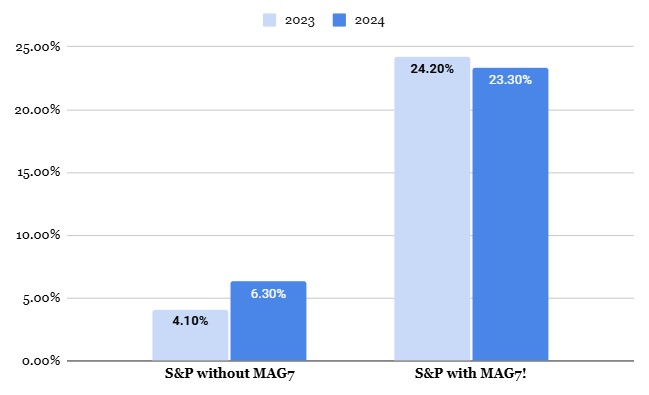
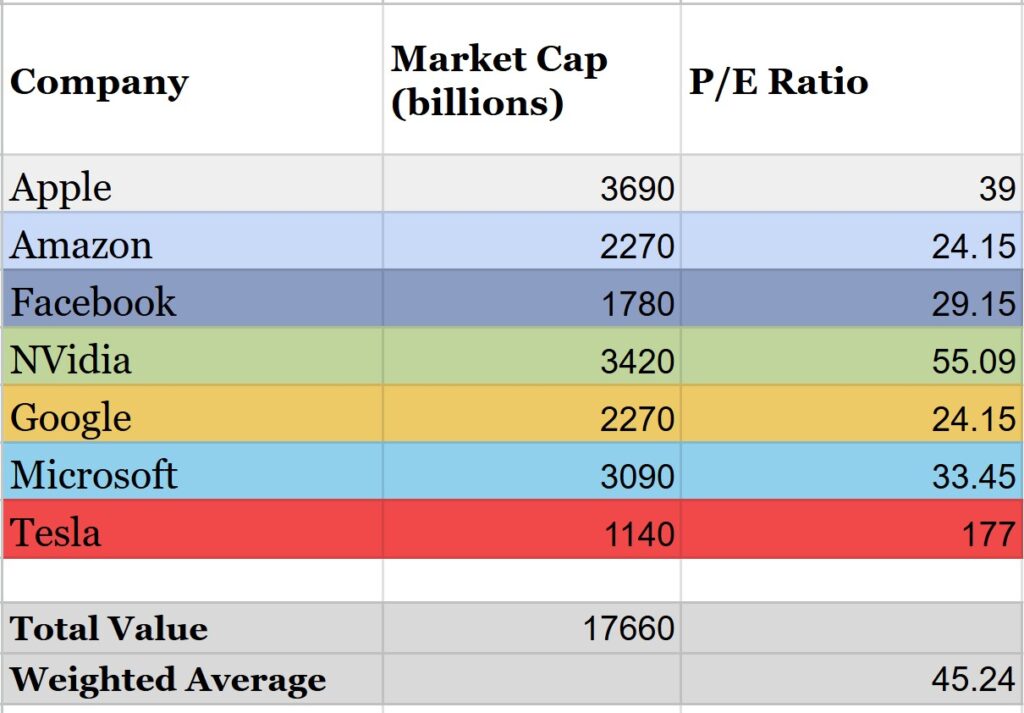
However, the current market surge is not uniformly distributed across the entire economy. A detailed analysis of the S&P 500 reveals a highly concentrated growth pattern. Approximately three-quarters of the recent market appreciation has been driven by just seven colossal technology companies, collectively dubbed the "Magnificent Seven": Apple, Nvidia, Microsoft, Amazon, Alphabet (Google), Meta Platforms (Facebook), and occasionally Tesla. These companies represent an unprecedented concentration of market power, collectively accounting for over 25% of the entire S&P 500’s market capitalization, a staggering $17.66 trillion. Their individual P/E ratios are significantly higher than the broader market average, with a weighted average P/E of around 45, reflecting aggressive growth expectations from investors.

Conversely, if these seven companies are excluded, the P/E ratio for the remaining 493 companies in the S&P 500 drops to a more modest, though still above-average, 20. This bifurcation indicates that while investors generally anticipate a healthy U.S. economy, their expectations for rapid, sustained growth are heavily skewed towards these dominant tech entities.
Artificial Intelligence: The Catalyst for Unprecedented Hype
The primary narrative fueling the extraordinary valuations of the Magnificent Seven, and indeed much of the broader tech sector, is the transformative potential of Artificial Intelligence. Recent breakthroughs in AI, particularly in generative AI and large language models, have astounded the business world by demonstrating human-like reasoning capabilities across a diverse range of applications. This rapid evolution has ignited a fervent belief that AI will usher in a new era of unprecedented productivity and corporate profitability.
The investment in AI infrastructure is monumental. Six of the Magnificent Seven companies are committing hundreds of billions of dollars to construct vast data centers housing supercomputers essential for AI development and deployment. The seventh, Nvidia, is a direct beneficiary of this spending, as it designs and manufactures the high-performance graphics processing units (GPUs) that are indispensable for AI computations. The immense demand for Nvidia’s chips has allowed it to command premium prices and ship products at an extraordinary scale.
Beyond the infrastructure layer, the ripple effects of AI are expected to permeate every industry. AI’s capabilities, ranging from analyzing complex legal documents and identifying code vulnerabilities to powering autonomous vehicles, diagnosing medical conditions, and accelerating drug discovery, are projected to redefine operational efficiencies and unlock new revenue streams. The overarching vision is one of an "infinite workforce" of highly intelligent AI entities operating at minimal cost, thereby removing historical constraints on human intelligence and labor and driving exponential economic growth.
While the exact timeline remains uncertain, many industry observers and investors share the conviction that these technological advancements are genuinely transformative. However, this conviction also raises critical questions about the realization of forecasted profits. Potential challenges include unforeseen cost overruns, intense competition among AI developers, regulatory hurdles, and even the complex societal implications of widespread job displacement due as increasingly sophisticated AI systems assume roles traditionally performed by humans. The concentration of wealth and power that could result from such a paradigm shift, as humorously depicted by the image of a single individual amassing immense wealth through AI, underscores the profound societal questions that accompany this technological revolution.
Historical Context and Economic Fundamentals
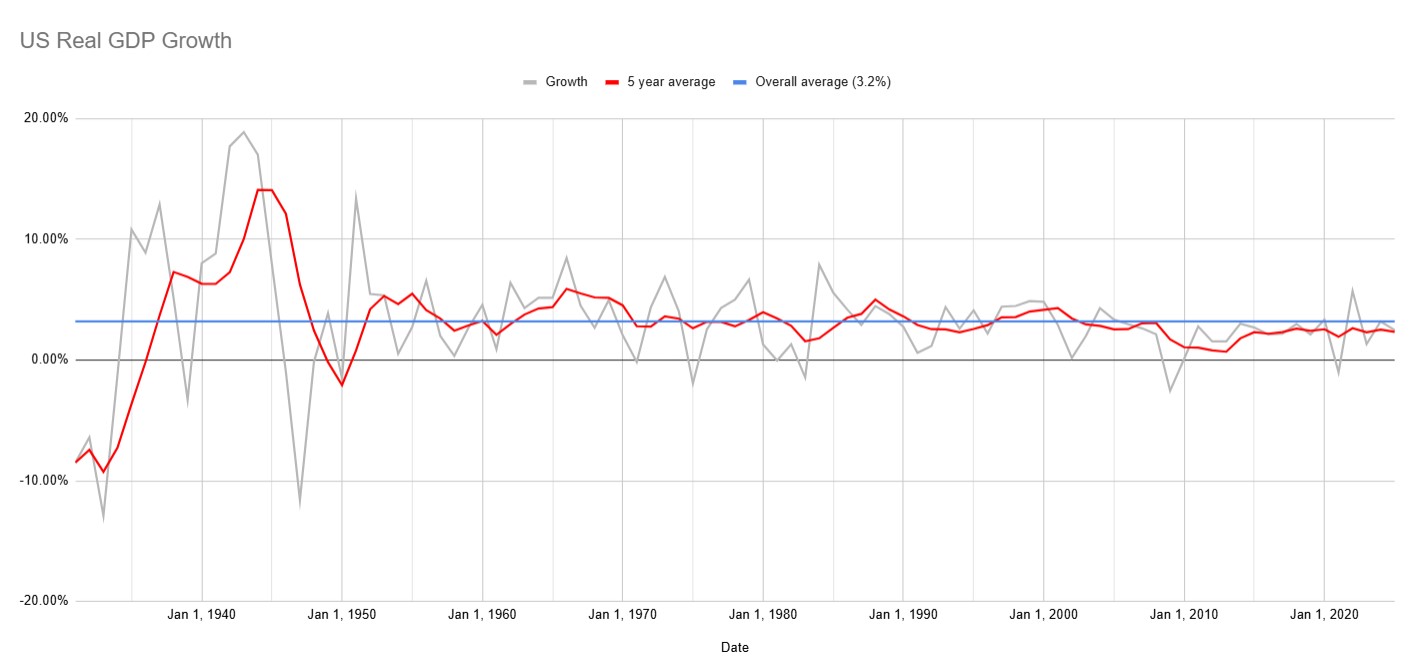
Despite the current market euphoria, historical economic data offers a grounding perspective. Over the long term, the U.S. economy has demonstrated a remarkably consistent real GDP growth rate, averaging approximately 3% annually after inflation, decade after decade. Interestingly, recent decades have seen a slightly slower average growth rate, which, in isolation, would typically suggest less justification for the current elevated stock market valuations.
Market history is replete with cycles of manias, panics, and crashes. The dot-com bubble of the late 1990s, for instance, saw tech stocks reach astronomical valuations based on speculative future growth, only to collapse dramatically. While the current AI narrative has substantive technological underpinnings, the rapid ascent of a few dominant players and the broad enthusiasm echo aspects of past speculative periods. It is crucial for investors to distinguish between genuine technological advancement and speculative overextension.

Expert Perspectives and Alternative Strategies
Navigating the current market requires a balanced perspective, drawing on insights from seasoned investors and financial institutions. Vanguard, a cornerstone of the index fund industry, issues annual 10-year annualized return projections. Their latest forecasts suggest that international stocks and even bonds are expected to outperform U.S. equities in the coming decade. This outlook is partly attributed to the lower P/E ratios observed in international markets (e.g., the Vanguard Total International Stock Index Fund ETF (VXUS) has a P/E ratio of approximately 15.9, nearly 50% lower than the S&P 500), making them appear "on sale" compared to their U.S. counterparts. However, it’s worth noting that Vanguard has made similar predictions in previous years that have yet to materialize, largely due to the sustained outperformance of U.S. tech companies and the concentration of AI innovation within the U.S.
The strategy of diversification, extending beyond U.S. equities to include international stocks and bonds, is a common approach to mitigate risk and potentially capture returns from different market segments. Robo-advisors like Betterment, which allocate investments across various asset classes and automatically rebalance, aim to achieve slightly higher risk-adjusted returns with reduced volatility. While a U.S.-only portfolio has historically outperformed diversified alternatives over the past decade, a balanced portfolio, such as Betterment’s core portfolio with a weighted average P/E of about 22, remains a prudent strategy for long-term investors who believe in the eventual rebalancing of global markets.
Warren Buffett, the renowned "Oracle of Omaha," offers another critical perspective. His recent statements and Berkshire Hathaway’s substantial cash reserves—amounting to $334 billion—signal a cautious stance on current market valuations. Berkshire Hathaway is not actively repurchasing its own shares, which it considers slightly overvalued at a P/E ratio averaging around 21 in recent years, reinforcing the sentiment that compelling investment opportunities are scarce in today’s market. This conservative approach from one of the world’s most successful investors underscores the perceived frothy nature of current valuations.
Beyond public equities, personal finance decisions like paying off a mortgage also warrant consideration. While conventionally, investing surplus cash in index funds with historically higher returns might be favored over rapid mortgage repayment, the current environment presents a more nuanced trade-off. With higher interest rates (e.g., a 7% mortgage), paying down debt offers a guaranteed return equivalent to that interest rate, making it a highly attractive, risk-free investment. This option can be particularly appealing for those seeking financial security and the psychological benefit of being mortgage-free, especially when projected stock market returns might be tempered by high valuations.
Conclusion: Long-Term Vision Amidst Short-Term Dynamics
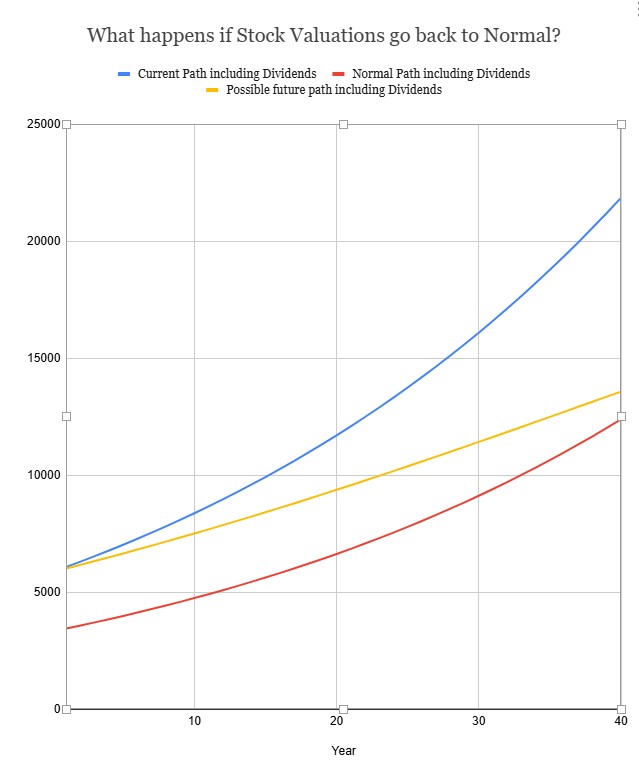
In conclusion, the current stock market boom, heavily influenced by the transformative potential of Artificial Intelligence and the concentrated growth of the Magnificent Seven, presents a complex picture for investors. While the long-term profitability of owning stocks remains a fundamental tenet of wealth creation, the elevated P/E ratios suggest that future returns, as a percentage of current investment, may be lower than historical averages. The prospect of occasional market corrections, or even significant crashes, remains a perpetual feature of financial markets.
However, attempting to time these market fluctuations by selling off investments in anticipation of a downturn and hoping to buy back at lower prices is a notoriously difficult and often losing strategy. The consistent, disciplined approach of continuous investment, diversification across asset classes and geographies, and a focus on long-term growth remains paramount. Even if future market valuations normalize, leading to a period of more modest growth, the underlying strength of economic expansion and corporate earnings will continue to drive wealth accumulation over time.
Investors are advised to maintain a diversified portfolio, review their risk tolerance, and consider the insights from expert analyses. While the allure of rapid gains from concentrated tech plays is strong, a balanced approach that includes international equities and fixed-income assets can provide resilience against market shifts. Ultimately, successful investing often involves detaching from the daily market noise and focusing on enduring financial principles. The truly guaranteed "market-beating returns" are often found not in frantic trading, but in the deliberate cultivation of a financially sound life, which includes prudent investment decisions, a clear understanding of personal financial goals, and the invaluable pursuit of well-being outside the realm of market fluctuations.

