
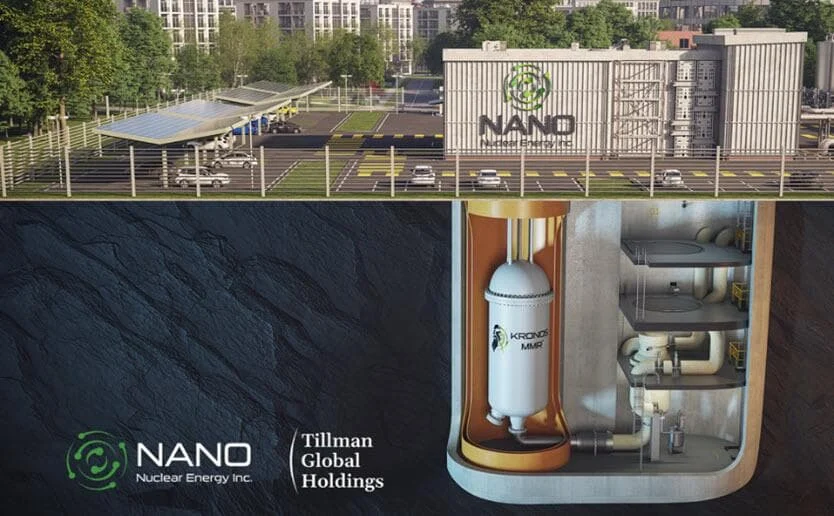
The escalating global AI supercycle, particularly the intense AI arms race between the United States and China, has brought to the forefront a critical and increasingly urgent challenge: the severe inadequacy of existing energy infrastructure to power the projected hundreds of Gigawatts required by an explosion of new data centers. This energy deficit, exacerbated by mounting grassroots opposition to data center construction across the US and a significant lag in domestic nuclear energy development compared to China, threatens to impede American technological leadership. However, a recent strategic commercial framework between Nano Nuclear Energy, a frontrunner in US modular reactor commercialization, and Tillman Digital Gateway, a global data center platform, signals a potential turning point, aiming to integrate advanced nuclear power into future AI industrial zones across the United States. This partnership, targeting the deployment of Nano Nuclear’s Kronos MMR Energy Systems, underscores a growing recognition within the tech and energy sectors that innovative, scalable, and sustainable power solutions are indispensable for the future of AI.
The AI Imperative and Geopolitical Stakes
The current era is defined by an unprecedented surge in artificial intelligence development, often referred to as the "AI supercycle." This technological revolution, characterized by exponentially increasing computational demands for training sophisticated models, running complex algorithms, and enabling real-time inference, is driving a massive expansion in data center infrastructure globally. These facilities, the literal engines of the AI age, consume prodigious amounts of electricity, often on a scale comparable to small cities. The demand for processing power is not merely an economic trend; it is a critical component of national security and geopolitical influence, particularly in the unfolding "AI arms race" between the United States and China. Both superpowers recognize that dominance in AI will dictate future economic prosperity, military capabilities, and global technological leadership.
However, the ambition to lead in AI is colliding head-on with a stark reality: the sheer physical constraints of energy supply. The United States, a primary arena for this data center build-out, is confronting a multifaceted energy crisis. On one hand, there is a burgeoning "not-in-my-backyard" (NIMBY) movement, with communities increasingly opposing the construction of new data centers due to concerns over noise pollution, vast land usage, significant water consumption for cooling, and strain on local power grids. On the other, and arguably more critical, is the systemic lag in deploying the necessary energy generation and transmission capacity to meet the projected demand. Estimates suggest that hundreds of gigawatts of new power will be needed to sustain the AI industry’s growth in the coming years, a figure that dwarfs current expansion plans for conventional energy sources.
The Looming US Energy Deficit and the Limitations of Current Solutions
The US electric grid, designed for a different era, is struggling to adapt to the sudden, immense, and geographically concentrated demand from AI data centers. While natural gas power plants have served as a crucial stopgap measure, providing a relatively quick-to-deploy and flexible energy source, their capacity for future build-out is rapidly approaching its maximum. This reliance on natural gas, while pragmatic in the short term, presents its own set of challenges, including price volatility, geopolitical supply risks, and growing environmental concerns regarding greenhouse gas emissions. Furthermore, connecting new large-scale generation to the grid and upgrading transmission lines is a notoriously slow, complex, and capital-intensive process, often taking a decade or more from conception to operation.
The gravity of this situation was highlighted in a previous analysis, which warned that "More Than Two-Thirds Of The Power Sought For US Data Centers Will Never Materialize." This dire projection stems from the confluence of insufficient new generation, grid congestion, and the aforementioned public opposition. Without a fundamental shift in energy strategy, the US risks creating a massive energy gap that could severely hinder the construction of future data centers, thereby stalling AI innovation and ceding ground to competitors. The implications extend beyond technological leadership, potentially impacting economic growth, job creation, and national security, as the foundational infrastructure for cutting-edge AI remains underdeveloped.
A Tale of Two Nuclear Strategies: US vs. China
A stark illustration of the divergent approaches to foundational energy infrastructure in the AI era can be seen in nuclear power development. As of a recent update in mid-2026, China is aggressively pursuing nuclear expansion, with an astonishing 37 nuclear reactors currently under construction. This monumental undertaking is part of China’s broader strategy to secure energy independence, reduce reliance on fossil fuels, and power its industrial and technological ambitions, including its burgeoning AI sector. The Chinese government’s centralized planning and substantial state investment enable rapid deployment, often bypassing many of the regulatory and public acceptance hurdles faced in Western nations.
In stark contrast, the United States currently has zero new nuclear reactors under construction. This reflects a decades-long stagnation in the US nuclear industry, a legacy of high construction costs, lengthy regulatory processes, public apprehension following incidents like Three Mile Island and Chernobyl, and the competitive pressures from cheaper fossil fuels and, more recently, renewables. While the US possesses the largest fleet of operational nuclear reactors globally, these are largely aging facilities, and the pipeline for new large-scale conventional reactors has effectively dried up. This disparity in nuclear build-out is not merely an energy statistic; it represents a significant strategic vulnerability for the US in the global AI race, as nuclear power offers a reliable, carbon-free, and high-density energy source perfectly suited for the continuous, immense demands of data centers.
Small Modular Reactors: A Promising Solution for the AI Age
Given the limitations of traditional energy sources and the protracted timelines for conventional nuclear plants, the focus of US energy strategists and technology companies has increasingly turned to advanced nuclear technologies, particularly Small Modular Reactors (SMRs). SMRs represent a paradigm shift in nuclear power generation. Unlike their colossal predecessors, SMRs are designed to be factory-fabricated, transportable, and deployed in smaller, scalable units, ranging from a few megawatts to a few hundred megawatts. This modularity offers several compelling advantages:
- Scalability: SMRs can be deployed incrementally to match demand growth, reducing initial capital expenditure and risk.
- Faster Deployment: Factory production and simplified designs promise significantly shorter construction times compared to large custom-built reactors.
- Enhanced Safety: Many SMR designs incorporate advanced passive safety features, relying on natural circulation and gravity rather than active pumps and human intervention, inherently improving safety profiles.
- Smaller Footprint: Their compact size makes them suitable for diverse locations, including industrial sites and remote areas, potentially mitigating some grassroots opposition.
- Economic Benefits: Standardized designs and factory production are expected to drive down costs, making nuclear power more economically competitive.
- Reliability: Like traditional nuclear, SMRs provide constant, dispatchable, carbon-free power, ideal for 24/7 operations like data centers.
The commercialization and widespread adoption of SMRs are viewed as a much more credible long-term energy source for the AI revolution in the US. They offer a pathway to deliver the necessary gigawatts of power in a timeframe and format that aligns with the rapid expansion plans of the tech industry, without the massive environmental footprint or intermittent nature of some renewable sources, or the carbon emissions of natural gas.
Nano Nuclear and Tillman Digital Gateway Forge a Strategic Alliance
Against this backdrop of immense energy demand and the strategic importance of advanced nuclear, the recent announcement of a strategic commercial framework between Nano Nuclear Energy and Tillman Digital Gateway is a significant development. Nano Nuclear Energy, recognized as a leader in the commercialization of US modular reactors, has signed a pivotal agreement with Tillman, a prominent global data center platform, to advance the future deployment of Nano Nuclear’s Kronos MMR Energy Systems across Tillman’s planned AI industrial zones in the United States.
This framework explicitly identifies Nano Nuclear as Tillman’s anticipated preferred nuclear technology provider. This designation is crucial, establishing a structured collaboration between the parties to evaluate, develop, and ultimately deploy nuclear generation opportunities across Tillman’s expanding US data center pipeline. The agreement also includes a parallel opportunity to explore expansion into certain international markets, indicating the global relevance of this power solution. The partnership leverages Tillman’s extensive experience in infrastructure development and its relationships with large-scale technology customers, combining it with Nano Nuclear’s specialized nuclear technology, regulatory licensing pathway, and deployment model.
Strategic Vision and Long-Term Objectives

The ambitious targets set within this framework underscore the scale of the energy challenge and the commitment of both companies to a nuclear-powered future for AI. The parties are targeting 2 Gigawatts (GW) or more of advanced nuclear capacity by the mid-2030s, with an even more substantial goal of 6 GW or more by 2040. These targets are, of course, subject to the successful negotiation of general and site-specific definitive agreements, securing customer commitments, arranging financing, obtaining regulatory approvals, and meeting other project requirements. Nevertheless, they represent a concrete, forward-looking plan to integrate advanced nuclear energy directly into the heart of AI infrastructure.
James Walker, CEO of NANO Nuclear Energy, succinctly articulated the core challenge, stating, "Power availability is becoming one of the defining constraints on the continued expansion of AI infrastructure, and addressing this challenge will require both near-term execution and long-term planning." This sentiment highlights the dual nature of the energy crisis: immediate needs coupled with a long-term strategic vision. Jay Yu, Founder and Chairman of NANO Nuclear Energy, further elaborated on the significance of the partnership: "For NANO Nuclear, this framework represents an important potential commercialization pathway that connects our technology with an anticipated multi-gigawatt-site pipeline of power demand. Importantly, the structure is intended to align both organizations around measurable project-development and commercial milestones as individual opportunities progress. We believe combining Tillman’s infrastructure-development capabilities with our nuclear technology, regulatory licensing pathway and deployment model can create a scalable foundation for future nuclear-powered AI infrastructure.”
Sachit Ahuja, Co-President of Tillman Global Holdings, emphasized the strategic foresight required for AI infrastructure: "Meeting the extraordinary power requirements of next-generation AI infrastructure requires us to plan not only for what our campuses need today, but for the resilient, scalable power architecture they will require for decades to come. We view NANO Nuclear as an emerging leader in advanced nuclear whose progress to date, commercially focused strategy and modular technology platform make it a compelling potential solution for our medium- and long-term power requirements. This framework combines Tillman’s infrastructure-development platform and relationships with large-scale technology customers and NANO Nuclear’s advanced nuclear capabilities, creating a pathway to benefit from the integration of nuclear generation into future Tillman campuses as our portfolio expands.” These statements collectively underline the critical importance of secure, scalable, and reliable power for sustained AI growth and the strategic role advanced nuclear is expected to play.
Broader Implications for the AI Landscape and Energy Future
While the 6 GW target by 2040 represents a significant commitment and a welcome start, it is crucial to place it in context. The estimated overall energy gap for US data center power builds is roughly 763 GW of uncommitted or unconfirmed energy. This means that while the Nano Nuclear-Tillman partnership is a vital step, it addresses only a fraction of the total projected demand. However, its significance lies not just in the gigawatts committed, but in its potential as a blueprint for future collaborations. It demonstrates a proactive, market-driven approach to addressing the energy crisis, showcasing how private sector innovation can lead the charge in adopting advanced nuclear solutions.
This partnership could catalyze similar long-term energy deals across the data center industry, prompting other major players to follow Tillman’s lead. The successful deployment of Kronos MMR Energy Systems could serve as a proof-of-concept, de-risking advanced nuclear for a broader market and potentially accelerating regulatory approvals and public acceptance.
From a national security perspective, diversifying the energy mix for critical AI infrastructure away from an over-reliance on natural gas and an aging grid is paramount. Secure, domestically produced nuclear energy enhances energy independence and resilience against geopolitical shocks or cyberattacks on the grid. Economically, ensuring a robust and sustainable power supply for AI data centers is essential for maintaining the US’s competitive edge in the global technology race, attracting investment, and fostering innovation. Environmentally, the adoption of advanced nuclear for data centers offers a carbon-free alternative to fossil fuels, aligning with broader climate goals while meeting intense power demands.
The regulatory environment remains a key hurdle. While SMRs promise faster deployment, navigating the Nuclear Regulatory Commission’s (NRC) stringent licensing processes can still be time-consuming. However, the modular nature and standardized designs of SMRs are intended to streamline this process over time, and partnerships like this may put additional pressure on regulators to adapt to the urgent needs of the AI industry.
In conclusion, the partnership between Nano Nuclear Energy and Tillman Digital Gateway marks a pivotal moment in the effort to bridge the widening energy gap for US AI infrastructure. It highlights the strategic necessity of advanced nuclear power in sustaining the AI supercycle and maintaining American leadership in the face of intense global competition, particularly from China. While the journey to fully power the AI revolution remains long and complex, this initiative provides a tangible, forward-looking pathway, demonstrating that with strategic vision and technological innovation, the monumental energy demands of the future can indeed be met. The success of such ventures will not only redefine the energy landscape but also shape the trajectory of artificial intelligence for decades to come.

