
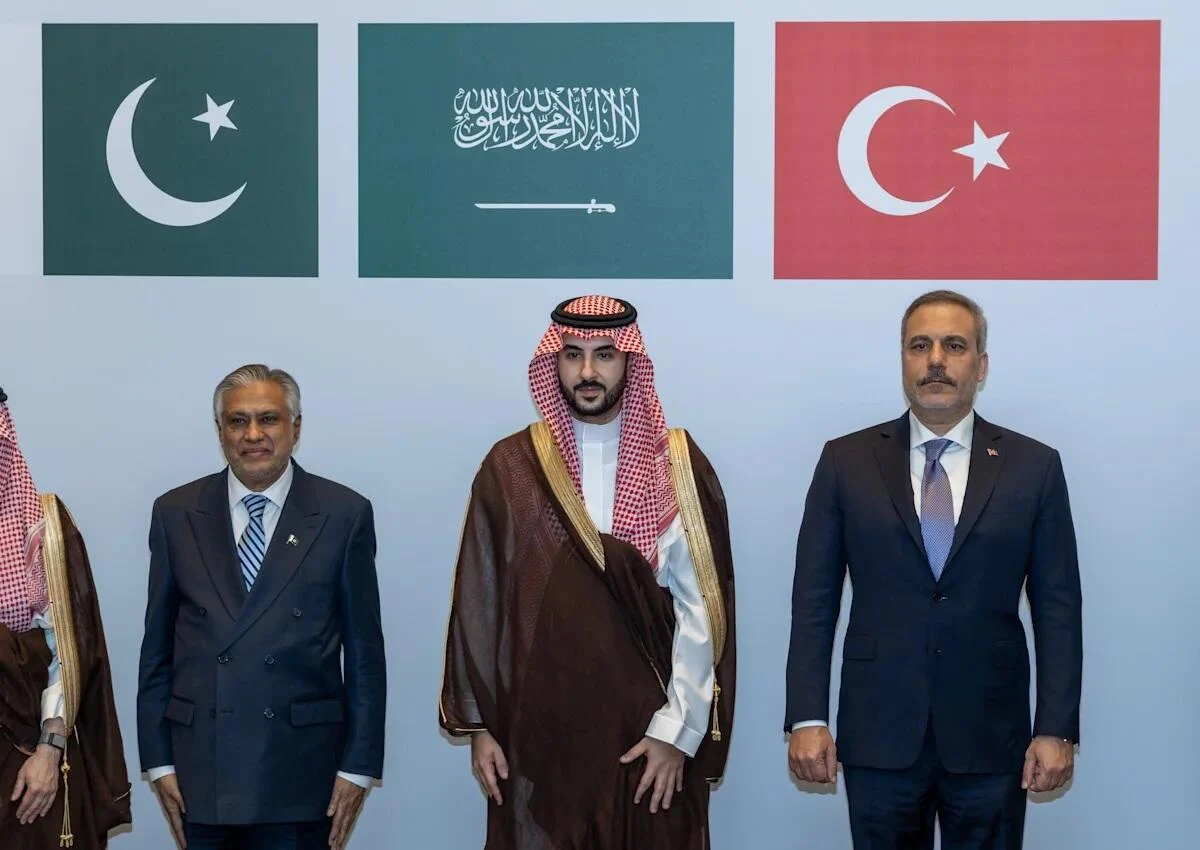
In a significant geopolitical development, the recently established Mecca Defense Pact, a trilateral military alliance between Saudi Arabia, Pakistan, and Turkey, has officially been declared in force. The activation follows an emergency meeting of foreign and defense ministers in Riyadh, where the allies agreed to immediately deploy Pakistani and Turkish forces to Saudi territory. This historic move, modeled on NATO’s Article 5, underscores a collective defense commitment triggered by what Saudi authorities describe as direct and escalating attacks from Yemen’s Houthi rebels, who are increasingly targeting critical Saudi civilian and energy infrastructure. The pact, formally signed in August, has rapidly moved from conceptualization to operational reality amidst a dramatic intensification of hostilities in the Yemen conflict, raising profound questions about regional stability and the future trajectory of the Middle East’s complex power dynamics.
Escalation in Yemen: The Catalyst for Collective Defense
The decision to activate the Mecca Defense Pact comes against a backdrop of severely heightened tensions in the protracted Yemeni civil war, which has seen a dramatic resurgence of "all-out war" between the Houthi-led Ansar Allah movement and the Saudi-led coalition. Since its formalization in August, the pact has gained unforeseen urgency due to a relentless series of Houthi missile and drone attacks deep within Saudi Arabia. These assaults have progressively shifted from military installations to vital civilian infrastructure, including international airports and crucial energy facilities, causing civilian casualties and significant disruption. Reports indicate that these attacks, often involving sophisticated drones and ballistic missiles, represent a qualitative escalation in Houthi capabilities and their willingness to strike at the heart of the Kingdom.
The conflict in Yemen, which began in late 2014 when Houthi rebels seized the capital Sana’a, morphed into a regional proxy war following the Saudi-led coalition’s intervention in March 2015. Ostensibly aimed at restoring the internationally recognized government of President Abdrabbuh Mansur Hadi, the intervention has since devolved into a devastating humanitarian crisis, with millions facing famine and displacement. The Houthis, who control large swathes of northern Yemen, including Sana’a, have consistently portrayed their attacks on Saudi Arabia as retaliatory measures against the coalition’s aerial bombardment and blockade. While the Saudi-led coalition maintains that Iran provides substantial material and technical support to the Houthis, Tehran denies direct military involvement, asserting its support is purely political.
A critical turning point that amplified the urgency for the pact’s activation was the alleged Houthi targeting of the Islamic holy site of Mecca last month. While the Houthis vehemently denied these claims, asserting their missile was aimed at a military base in Jeddah, the accusation resonated deeply within the Islamic world, further galvanizing support for Saudi Arabia’s defensive posture. Such an attack, regardless of its veracity, underscored the perceived existential threat to the Kingdom and its spiritual significance, pushing the collective defense mechanism to the forefront.
The Mecca Defense Pact: Genesis and Framework
The Mecca Defense Pact, while recently activated, has been under discussion for some time, reflecting a broader Saudi strategic objective to forge stronger regional security alliances. The official signing in August marked the culmination of these efforts, bringing together three significant Sunni-majority Muslim nations: Saudi Arabia, Pakistan, and Turkey. The alliance is explicitly modeled on NATO’s Article 5, which stipulates that an attack on one member state is considered an attack on all, thereby triggering a collective response. This principle of ‘collective defense’ forms the bedrock of the new pact, signifying a commitment to mutual military assistance in times of external aggression.
The alliance aims to bolster regional security, particularly in the face of perceived threats from state and non-state actors. For Saudi Arabia, the pact provides a crucial layer of external military support, supplementing its own formidable defense capabilities with forces from two militarily potent nations. For Pakistan, it reinforces long-standing strategic ties with Saudi Arabia, a key economic and religious ally, while potentially elevating its regional influence. For Turkey, the pact represents an opportunity to project power and influence in the Arabian Peninsula and the broader Middle East, aligning with its aspirations for a more prominent role in Islamic geopolitics, despite its complex and sometimes strained relations with Riyadh in the past. The shared Islamic identity of the member states is also a significant underlying factor, framing the alliance as a response to threats against the sanctity of Islamic holy sites and the security of Muslim lands.
Emergency Session and Deployment Directives
The Monday emergency meeting in Riyadh convened foreign and defense ministers from the three allied nations to deliberate on the escalating situation and formalize the pact’s operational phase. The urgency of the gathering reflected the gravity of the Houthi assaults, particularly those targeting civilian and energy infrastructure. Following intensive discussions, the top committee unanimously agreed to initiate the deployment of Pakistani and Turkish military forces to Saudi Arabian territory.
A joint statement subsequently released by Pakistan’s Foreign Office articulated the committee’s decision: "The Committee decided to move immediately to the practical implementation of the collective defense commitments and to take the necessary measures to provide the agreed military forces and capabilities and ensure their rapid deployment in the Kingdom, in accordance with the approved arrangements and the national legislation of the Parties." This declaration signifies a rapid transition from policy to action, underscoring the perceived immediacy of the threat.
Pakistani Defense Minister Khawaja Asif, speaking from Riyadh, offered a crucial clarification regarding the nature of Pakistan’s involvement. He stated to Geo News, "The forces of Turkiye and Pakistan are playing a supporting role. We are definitely involved in reconnaissance and such things, but the combat is practically being conducted by Saudi Arabia’s own forces, and they are the ones retaking those areas." This statement suggests an initial posture focused on defensive and intelligence-gathering roles rather than direct offensive combat operations within Yemen, at least for the Pakistani contingent. The operational details, however, remain under wraps, with Pakistani officials stressing "operational confidentiality" to the media.

Pakistan’s Enduring Military Footprint
Pakistan’s commitment to the Mecca Defense Pact is a continuation of a long-standing and robust military relationship with Saudi Arabia. For decades, Pakistan has maintained a significant military presence in the Kingdom, providing training, security, and advisory services to the Saudi armed forces. This historical cooperation has involved large contingents of Pakistani troops stationed in Saudi Arabia, contributing to border security and internal defense. The Pakistan Air Force has also routinely deployed fighter jets and support aircraft to the Kingdom for joint exercises and operational readiness.
This pre-existing footprint means that Pakistan’s current deployment under the Mecca Defense Pact builds upon an established foundation. The logistical challenges of deploying additional forces, personnel, and equipment are significantly mitigated by the existing infrastructure and familiarity between the two militaries. Pakistani forces are well-regarded for their professionalism and training, making them a valuable asset in bolstering Saudi Arabia’s defensive capabilities, particularly in areas like air defense, border security, and reconnaissance. Their involvement is likely to strengthen the Kingdom’s ability to deter and respond to aerial threats from Yemen, while freeing up Saudi forces for other operational requirements.
Turkey’s Emerging Role and Strategic Ambitions
Turkey’s participation, in contrast to Pakistan’s, marks a novel and strategically significant military engagement in Saudi Arabia. Unlike Pakistan, Turkey does not possess an existing official military footprint in the Kingdom. This implies a more complex and potentially lengthier deployment process, as Turkish parliamentary authorization is required for any large-scale overseas troop deployment. However, emerging reports suggest that Turkey is rapidly preparing to deploy troops, air defense systems, pilots, and aircraft to Saudi Arabia.
The scope of Turkey’s anticipated role, as indicated by these reports, would primarily focus on defending Saudi infrastructure, Riyadh, and the holy cities, while pointedly avoiding direct intervention in the Yemeni conflict. This nuanced approach suggests Turkey’s desire to assert its regional influence and demonstrate solidarity with a key Islamic ally without becoming directly embroiled in the highly contentious and protracted ground war in Yemen. Turkish air defense systems, potentially including advanced platforms, could significantly enhance Saudi Arabia’s layered air defense capabilities against ballistic missiles and drones. The deployment of Turkish pilots and aircraft would also add considerable aerial power, potentially contributing to surveillance, reconnaissance, and defensive air patrols.
Turkey’s involvement in the pact can be viewed through the lens of its broader foreign policy objectives, which seek to expand its strategic reach across the Middle East, North Africa, and the Eastern Mediterranean. While Ankara and Riyadh have experienced periods of diplomatic strain in recent years, particularly following the murder of Jamal Khashoggi, both nations have recently sought to mend ties, recognizing the mutual benefits of cooperation in a volatile region. This deployment signifies a significant step in that rapprochement and underscores a shared concern over regional security threats.
Broader Regional Implications and Challenges
The activation of the Mecca Defense Pact and the deployment of Pakistani and Turkish forces carry profound implications for the broader Middle East. Firstly, it undeniably elevates the stakes in the Yemen conflict. While the stated role for the external forces is primarily defensive and supportive, their presence fundamentally alters the geopolitical calculus. The prospect of highly trained and well-equipped Pakistani and Turkish troops and air assets operating in Saudi Arabia could serve as a more robust deterrent to Houthi aggression, potentially reducing the frequency or effectiveness of cross-border attacks. However, it also risks further entrenching the conflict, potentially prolonging a war that has already caused immense suffering.
Secondly, the pact’s activation will undoubtedly elicit strong reactions from Iran, which views Saudi Arabia as its primary regional rival and the Houthis as a key proxy in its regional strategy. Tehran is likely to interpret this new alliance and troop deployment as a direct challenge to its influence and a hardening of the anti-Iran bloc in the Gulf. This could lead to an escalation of proxy conflicts across the region, further destabilizing an already fragile geopolitical landscape. The strategic waterways, particularly the Bab al-Mandab Strait at the southern end of the Red Sea, which is crucial for global oil shipping, remain a point of extreme sensitivity, and any spillover of the conflict into these areas would have international repercussions.
Internationally, the United States and European powers will closely monitor these developments. While traditional allies of Saudi Arabia, they have also expressed concerns about the humanitarian crisis in Yemen and the regional implications of further military escalation. The UN, deeply involved in mediation efforts, will face renewed challenges in de-escalating tensions and achieving a political resolution.
Finally, the long-term effectiveness and sustainability of the Mecca Defense Pact remain to be seen. Challenges include ensuring seamless coordination among diverse military doctrines, overcoming potential logistical hurdles, and managing the political sensitivities inherent in such a multi-national deployment. The precise ‘red lines’ for Pakistani and Turkish involvement, particularly regarding any potential direct engagement in the Yemeni theater, will be crucial in determining whether the situation spirals into a wider regional conflagration or effectively de-escalates the immediate threat to Saudi Arabia. The pact’s activation marks a critical juncture, ushering in a new phase of regional security architecture that could reshape alliances and power dynamics for years to come.

