

The contemporary discussion surrounding human well-being and societal challenges frequently pivots on the concept of "The Comfort Crisis," a term popularized by author Michael Easter, whose work suggests that modern life’s pervasive ease has inadvertently become a significant detriment to physical and mental health. This profound idea, initially brought to wider attention through an episode of Dr. Peter Attia’s influential podcast, has resonated with many, including a prominent financial independence advocate, who identifies a strong alignment between Easter’s philosophy and the long-standing tenets of "Mustachianism" – a lifestyle emphasizing mindful consumption and the embracing of purposeful challenges.
The Genesis of an Idea: Unpacking "The Comfort Crisis"

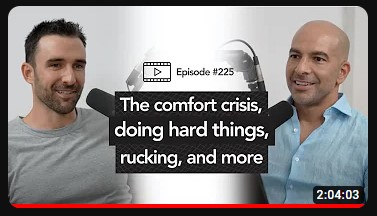
The journey to understanding this burgeoning crisis often begins with an unexpected encounter. For many, it was the "Peter Attia Drive" podcast, featuring an interview with Michael Easter, a former writer for Men’s Health magazine. Easter, whose personal history includes a battle with alcohol addiction and a familial predisposition to the affliction, brings a unique perspective to the discourse on comfort and hardship. His recovery from addiction, detailed within his acclaimed book The Comfort Crisis: Embrace Discomfort to Reclaim Your Wild, Happy, Healthy Self, provides a compelling backdrop for his exploration of how overindulgence in various forms of comfort can undermine human resilience and overall well-being.
Easter’s book is distinctive in its narrative structure, interweaving a demanding caribou hunting expedition in the remote Alaskan wilderness with scientific insights, psychological research, and cultural commentary. This dual approach allows readers to digest complex ideas through the lens of a visceral, real-world challenge, making the lessons more relatable and actionable. The central premise challenges conventional wisdom that equates progress with increasing ease, instead positing that an excess of comfort leads to a host of modern ailments, from chronic health issues to pervasive dissatisfaction. This perspective stands in stark contrast to mainstream narratives that often lament a "debt crisis" or "health crisis" as isolated problems, suggesting they are symptoms of a deeper, underlying issue: a societal overreliance on ease.
Scientific Underpinnings: Why Comfort Breeds Discontent

One of the most compelling arguments presented in The Comfort Crisis is rooted in human psychology and evolutionary biology: the innate tendency for humans to perpetually scan their environment for problems, regardless of how safe or idyllic that environment may be. Research cited in the book illustrates that as external threats diminish, the human brain doesn’t simply become more content; instead, it lowers its threshold for what constitutes a "problem." This phenomenon explains why individuals in highly comfortable settings may become disproportionately agitated by minor inconveniences, such as overgrown weeds in a suburban neighborhood or perceived social slights. The brain, accustomed to vigilance, reallocates its problem-solving capacity to trivial matters when genuine threats are absent.
This psychological adaptation has profound societal implications. It suggests that many of the seemingly intractable disputes and anxieties prevalent in modern society—from local community squabbles to national political polarization—may stem from an overabundance of comfort rather than a lack of resources or genuine hardship. Politicians, attuned to these manufactured grievances, may exploit them by creating "wedge issues" that further divide populations over matters that, in a less comfortable context, would be considered insignificant.
Conversely, environments of genuine hardship tend to foster resilience and a heightened appreciation for basic necessities. Interviews with individuals living in war zones, for instance, have revealed a remarkable capacity for adaptation and a pragmatic assessment of safety, often perceiving their environments as "safe enough" despite objective dangers. This adaptive principle is also observed in the economic sphere, where first-generation immigrants, accustomed to less comfortable conditions in their homelands, often exhibit greater drive and frugality, leading to wealth accumulation. Subsequent generations, growing up in more affluent environments, may become more susceptible to complacency and the erosion of wealth, having never developed the same resilience to scarcity.
The Therapeutic Power of Nature and Exertion
Beyond psychological insights, The Comfort Crisis delves into the tangible benefits of reconnecting with nature and embracing physical exertion. The book highlights the concept of "Tree Therapy," or shinrin-yoku, the Japanese practice of forest bathing, which has gained scientific backing for its ability to significantly boost mental and physical health. Studies have shown that even minimal exposure to natural elements, such as placing a single plant in a hospital room, can accelerate patient recovery. The immersive experience of a forest, therefore, offers a potent, readily accessible form of medicine, capable of reducing stress, improving mood, and enhancing overall vitality.
The human aversion to physical exertion is another critical area of focus. A striking statistic often cited is that only a minuscule percentage of people (reportedly as low as 2%) choose stairs over an escalator when both options are available. This ingrained preference for ease comes at an "insane cost" to public health. Sedentary lifestyles are directly linked to a proliferation of chronic diseases, including obesity, heart disease, diabetes, and mental health disorders. The book emphatically argues that consistent physical activity, particularly in natural settings and incorporating elements of heavy load-bearing or extreme exertion, is not merely beneficial but essential for human flourishing. These practices are not speculative alternative medicines but scientifically proven interventions that yield enormous, reproducible health benefits.

The implications are clear: instead of relying solely on exotic medical treatments for complex health issues, individuals and society should prioritize fundamental, uncomfortable practices. Maximizing daily outdoor time, engaging in heavy exertion (including strength training), minimizing sedentary behavior and driving, and reducing consumption of processed foods, sugar, and alcohol are presented as the primary "levers" for robust physical and mental health. While medical advice should always be followed, the book advocates for a proactive approach that addresses foundational human needs before seeking more specialized interventions. This perspective aligns with a broader philosophy that values the challenges inherent in a physically active, nature-connected life as integral to well-being.
A Real-World Experiment: Embracing Hardship in Colorado
The principles outlined in The Comfort Crisis often find their most potent validation in personal experience. One such recent account comes from a proponent of the financial independence movement, who embarked on a solo "Carpentourism" journey through Southwestern Colorado. This expedition, aimed at undertaking demanding construction projects (renovating a mini-resort and building a small cabin), served as an unplanned, real-time experiment in purposeful hardship.

The trip began with a series of minor but unsettling challenges: navigating a torrential rainstorm, incurring a traffic fine in a remote town, and sustaining a significant crack in a brand-new car windshield. While objectively small inconveniences for a retired individual, they momentarily disrupted the established comfort of a highly stable life. However, these initial setbacks were reframed as opportunities for learning and adaptation, rather than sources of prolonged stress, aligning with Easter’s teachings.
The journey continued with days of intense physical labor in a high-desert mountain environment. The work was demanding, battling scorching sun, a persistent "blizzard of tree pollen," and limited resources, including no indoor plumbing and a carefully managed water supply. Evenings involved transforming the vehicle into a makeshift bedroom, fostering a sense of isolation far from home. Yet, instead of succumbing to discomfort, the experience cultivated a profound sense of vitality and self-reliance. The participant reported feeling "more alive and more badass with each passing day," adapting to the role of a "feral forest man."
A notable interlude involved a paddleboarding excursion on the remote Lemon Reservoir. Deliberately forsaking modern conveniences like phones, the experience was marked by a stiff headwind and challenging conditions. This deliberate embrace of difficulty, inspired by the book’s message, transformed potential fear into exhilarating freedom. Paddling far from shore, then allowing the wind and waves to carry them back, evoked a serene state of being—a "jungle man" floating on cold blue water, free from the weight of possessions and plans. The absence of a camera, initially frustrating, ultimately deepened the sensory memory of a pristine meadow, forcing a more profound engagement with the present moment.

The culmination of this week of strenuous living and sparse provisions was a heightened appreciation for basic comforts. A sustained, healthy hunger, a natural human state often suppressed by constant access to food, made a subsequent burrito meal the "most delicious" and "immense" culinary experience. This simple pleasure underscored the book’s argument: effort amplifies reward, and hardship enriches appreciation.
Reimagining Wealth: Purposeful Hardship in the FIRE Philosophy
The insights from The Comfort Crisis hold particular relevance for communities focused on financial independence, such as the FIRE (Financial Independence, Retire Early) movement. While these communities are sometimes critiqued for their frugality and perceived aversion to spending, Easter’s work provides a framework for understanding that not all spending is created equal. The distinction lies between spending that merely increases comfort and spending that facilitates purposeful hardship and personal growth.

The admonition to "buy yourself better tools, not softer chairs" encapsulates this philosophy. Investments in experiences that challenge, educate, and build resilience—such as quality tools for manual labor, gear for outdoor adventures, or resources for skill development—are deemed more valuable than expenditures that simply add to passive comfort. True wealth, from this perspective, is not solely about accumulating financial assets or material possessions, but about cultivating the inner resources—resilience, adaptability, appreciation—that are often forged through overcoming difficulty.
This paradigm shift encourages individuals to actively seek out and integrate "uncomfortable" activities into their lives, even as their financial security allows for increasing ease. It suggests that while financial independence offers the freedom to choose, that choice should not invariably lead to a life devoid of challenge. Instead, it should empower individuals to intentionally design a life that incorporates meaningful struggles, fostering a deeper sense of purpose, accomplishment, and well-being.
Implications for Modern Living

The Comfort Crisis serves as a powerful call to re-evaluate the prevailing societal pursuit of ease and convenience. Its implications are far-reaching, touching upon individual health, community resilience, and even the fabric of political discourse. By understanding the human tendency to adapt our perception of "problems" to our environment, we can become more discerning consumers of information and more resilient citizens.
For individuals, the message is clear: embracing purposeful hardship—whether through outdoor adventure, physical labor, mindful fasting, or simply choosing the stairs—is a direct pathway to enhanced physical health, mental fortitude, and a more profound appreciation for life’s simple pleasures. It offers a counter-narrative to the pervasive marketing that promises happiness through effortless consumption.
For society, recognizing the "comfort crisis" can inform public health initiatives, educational strategies, and urban planning. Encouraging access to nature, promoting active lifestyles, and fostering a culture that values grit and perseverance over instant gratification could yield significant dividends in collective well-being. The ultimate message is one of empowerment: we are not passive victims of circumstance, but active agents capable of shaping our experiences and, in doing so, reclaiming our inherent capacity for resilience and joy in a world designed for ease.

