
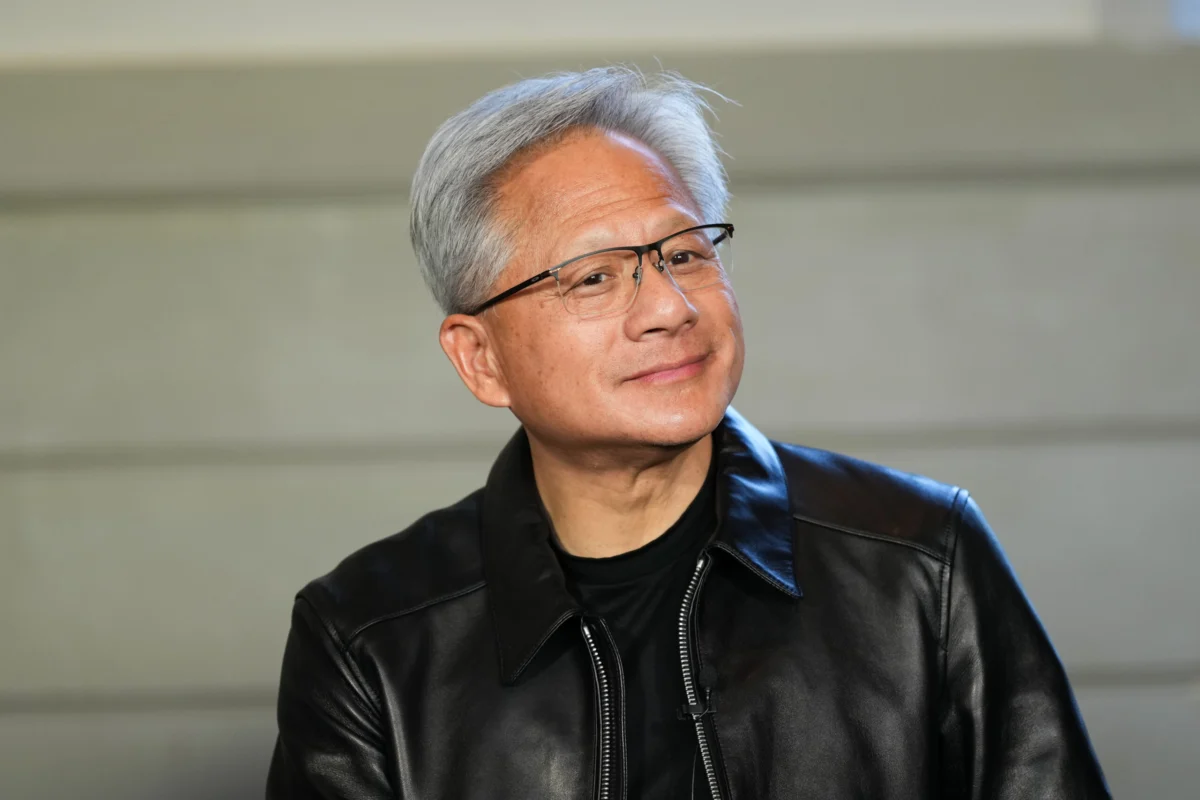
Jensen Huang, the highly influential Chief Executive Officer of Nvidia Corp., is currently the subject of an internal investigation by the company’s board of directors, following recent reports suggesting his involvement in an extramarital affair with a woman identified by U.S. intelligence officials as an agent for China’s Ministry of State Security. This revelation has sent ripples through the global technology sector and Washington D.C., raising significant questions about corporate security, executive vulnerability to foreign influence, and the broader implications for one of the world’s most critical semiconductor and artificial intelligence firms. The news triggered an immediate downturn in Nvidia’s stock, highlighting investor apprehension, even as prediction markets reflect a nuanced outlook on Huang’s long-term tenure.
The Allegations Unfold: A Chronology of Events
The saga began to publicly unfold in early November 2026, building upon earlier, more nascent whispers within intelligence circles. While Huang had been publicly seen as recently as Thursday, October 15, 2026, at the launch of the Sferical One AI supercomputer in Stockholm, Sweden—an event that underscored Nvidia’s continued innovation and global reach—the underlying intelligence concerns were already escalating.
On Sunday, November 8, 2026, details of the alleged affair became more concrete with a report from The New York Times, citing U.S. intelligence officials who identified the woman involved as a spy for the Chinese Ministry of State Security. The following day, Monday, November 9, 2026, Jensen Huang publicly admitted to the extramarital affair. This admission came concurrently with Nvidia’s board of directors announcing their formal investigation into the matter. The immediate market reaction was palpable, with shares of Nvidia plummeting more than 5% following the news, reflecting investor anxiety regarding leadership stability and potential national security repercussions.
The timeline of intelligence gathering leading up to these public disclosures remains largely classified, but sources close to the matter suggest that U.S. counterintelligence agencies had been monitoring the individual for several months, eventually linking her activities to China’s state security apparatus and identifying her alleged contact with Huang. The decision to make these findings public, even indirectly through media leaks, underscores the severity with which intelligence officials view potential compromises at the highest levels of critical technology companies.
Nvidia’s Strategic Importance and Leadership
Nvidia, under Jensen Huang’s visionary leadership, has grown into a colossus of the technology world, boasting a market capitalization that frequently places it among the top five most valuable companies globally. Its dominance in graphics processing units (GPUs) initially revolutionized gaming, but its strategic pivot and relentless innovation in AI chips have made it an indispensable architect of the modern artificial intelligence revolution. From advanced data centers powering generative AI models to autonomous vehicles, scientific research, and defense applications, Nvidia’s technology forms the backbone of critical infrastructure and future innovation. The company reported record revenues in its most recent fiscal quarters, driven largely by unprecedented demand for its H100 and upcoming B200 AI accelerators, solidifying its position as a gatekeeper to the future of computing.
Jensen Huang himself is not merely a CEO but a revered figure in Silicon Valley, often lauded for his strategic foresight, engineering acumen, and charismatic leadership. Co-founding Nvidia in 1993, he has steered the company through multiple technological shifts, consistently anticipating market trends and positioning Nvidia at the forefront. His public persona as a leather-jacket-clad visionary has become synonymous with Nvidia’s brand. The notion of his departure or a significant challenge to his authority has historically been considered remote, given his singular influence and the company’s sustained success. This context amplifies the shockwaves sent by the current investigation, as it challenges not only corporate governance but also the stability of a critical industry leader.
The Geopolitical Chessboard: U.S.-China Tech Rivalry
The allegations against Jensen Huang unfold against a backdrop of escalating geopolitical tensions, particularly the intense technological rivalry between the United States and China. Both nations are locked in a fierce competition for supremacy in critical technologies like artificial intelligence, advanced semiconductors, quantum computing, and biotechnology. The U.S. government has implemented stringent export controls and sanctions aimed at limiting China’s access to advanced chip technology, particularly those manufactured by companies like Nvidia, deeming them vital for national security. These measures are designed to hobble China’s military modernization efforts and prevent it from achieving technological parity.
In response, China has intensified its efforts to overcome these restrictions, reportedly employing a range of strategies including indigenous innovation, illicit procurement, and sophisticated espionage. The Ministry of State Security (MSS) is China’s primary civilian intelligence agency, renowned for its broad mandate encompassing foreign intelligence, counterintelligence, and political security. The MSS is known for targeting individuals in strategic industries, academia, and government, employing methods ranging from cyber espionage to human intelligence operations, including the cultivation of relationships through various means. The alleged targeting of a top U.S. tech CEO, particularly one at the helm of a company so central to AI development, would represent a significant escalatory step in this covert technological conflict, underscoring the lengths to which state actors might go to gain an advantage or compromise critical assets.
Corporate Governance Under Scrutiny
Nvidia’s board of directors, which typically comprises a mix of independent and executive members, faces a formidable challenge. Their decision to launch an investigation underscores the gravity of the situation. Such investigations are typically handled by a special committee of independent directors, often advised by external legal counsel and forensic experts, to ensure impartiality and thoroughness. The scope of their inquiry will likely extend beyond verifying the affair itself to assessing:
- Security Risks: Whether the relationship compromised company intellectual property, trade secrets, or strategic plans.
- National Security Implications: If any sensitive information related to U.S. export controls, defense contracts, or critical infrastructure was potentially exposed.
- Breach of Fiduciary Duty: Whether Huang’s conduct violated corporate policies, ethical standards, or his duties to shareholders.
- Reputational Damage: The extent of harm to Nvidia’s brand and investor confidence.
- Succession Planning: The need to evaluate leadership stability in the event of Huang’s departure.
The board’s statement emphasized the seriousness with which they are approaching the matter, signaling a commitment to transparency and accountability, even as the details of the investigation remain confidential. Analysts widely agree that the outcome of this investigation will have profound implications for Nvidia’s future trajectory and its standing with global governments and customers.
Investor Reaction and Market Sentiment
The immediate 5% drop in Nvidia’s stock on Monday following the news underscores the market’s sensitivity to leadership stability and potential geopolitical risks. For a company of Nvidia’s size and strategic importance, such a decline represents billions of dollars in lost market value. Investors are grappling with several uncertainties: the potential for a leadership vacuum, the reputational fallout, the possibility of heightened scrutiny from government regulators, and the ultimate impact on Nvidia’s ability to navigate the complex U.S.-China tech landscape.
However, the longer-term outlook, as reflected in various prediction markets, suggests a more tempered view on Huang’s immediate ousting. On platforms like Kalshi, a regulated prediction market, speculators placed only a 17% chance on Huang departing by 2027. This figure modestly rises to 30% by 2028 and 35% by 2029. Notably, the probability of his departure significantly increases to 75% by 2031. These odds, resolved using information from Bloomberg, indicate that while investors acknowledge the seriousness of the allegations, they might not anticipate an immediate, forced resignation or termination. This could be attributed to Huang’s irreplaceable role in Nvidia’s success, the complexity of the investigation, or a belief that the board might seek a more managed transition if such a decision is ultimately made.
Similarly, on Polymarket, another prominent prediction market, speculators assigned just one-in-four odds (25%) that Huang would resign or be forced out by the end of March 2027. These contracts are resolved based on official statements from the company or Huang himself. The discrepancy between the immediate stock drop and the prediction market odds suggests a market grappling with short-term panic versus longer-term strategic considerations. While the scandal creates immediate volatility, the deep-seated value of Nvidia’s technology and its entrenched market position might provide a degree of insulation against a swift, decisive change at the very top.
The Role of Prediction Markets
Prediction markets like Kalshi and Polymarket have emerged as intriguing barometers of collective sentiment, distinct from traditional stock markets. They allow individuals to bet on future events, with prices reflecting the crowd’s aggregated probability assessments. In this context, their insights into Huang’s tenure offer a unique perspective. The relatively low immediate odds of departure suggest that market participants might factor in the difficulty of replacing a CEO of Huang’s caliber, the time required for a thorough investigation, and the company’s potential desire to manage a crisis without precipitous action. The rising odds by 2031 could reflect a more natural succession timeline or a recognition that even if he weathers this storm, the long-term pressures on a CEO of a critical technology company will eventually lead to a transition. It’s important to note that while these markets can offer valuable aggregated insights, they are not infallible and can be influenced by sentiment and liquidity.
Potential Ramifications: National Security and Corporate Future
The implications of this investigation extend far beyond Nvidia’s boardroom. From a national security perspective, the alleged targeting of a key U.S. technology executive by a foreign intelligence service highlights a profound vulnerability. It underscores the need for enhanced counterintelligence measures and stricter vetting processes for leaders in industries critical to national defense and economic competitiveness. The U.S. government, particularly agencies involved in economic security and counterintelligence, will undoubtedly be watching this situation closely, potentially leading to increased regulatory scrutiny of tech companies and their executives.
For Nvidia, the path forward is fraught with challenges. Even if Huang is cleared of wrongdoing or retains his position, the reputational damage could be significant. Rebuilding trust with investors, government partners, and the public will be paramount. Any perceived laxity in internal security protocols or corporate governance could invite further criticism. Moreover, the focus on this scandal could divert management attention and resources away from crucial strategic initiatives at a time when competition in the AI and semiconductor space is intensifying.
Should the investigation lead to Huang’s departure, Nvidia would face the monumental task of finding a successor capable of matching his vision and leadership. While Nvidia has a strong executive team, Huang’s personal imprint on the company’s culture, strategy, and technological direction is arguably unparalleled. A leadership transition, especially under these circumstances, could introduce significant uncertainty and potentially impact product roadmaps, R&D investments, and market perception.
Looking Ahead: Nvidia’s Path Forward
As the investigation unfolds, the global technology community, governments, and investors will be closely monitoring developments. The outcome will not only determine the future of Jensen Huang at Nvidia but could also set precedents for how corporations and national security apparatuses address the increasingly sophisticated threats posed by state-sponsored espionage in the digital age. Nvidia’s ability to navigate this unprecedented crisis, maintain its innovative edge, and reassure stakeholders will be a defining moment in its storied history, with ramifications stretching across the entire landscape of advanced technology and international relations.

