

The financial world has experienced a dramatic and sudden shift, as interest rates, after more than a decade of hovering near historic lows, have surged to levels not seen in over twenty years. This profound change marks the end of an extended era of inexpensive capital and is now prompting widespread reevaluation among consumers, businesses, and investors regarding their financial strategies. The ramifications are far-reaching, impacting everything from mortgage affordability to corporate investment decisions and the overall economic outlook.
A Decades-Long Period of Ultra-Low Rates Concludes

For much of the past fourteen years, dating back to the aftermath of the 2008 global financial crisis and extending through the pandemic-induced economic shutdowns of 2020, central banks worldwide, particularly the U.S. Federal Reserve, maintained an accommodative monetary policy. This involved keeping benchmark interest rates, such as the Federal Funds Rate, at near-zero levels (e.g., 0-0.25%) and implementing large-scale asset purchase programs, often referred to as quantitative easing.
The primary objective of this policy was to stimulate economic growth, encourage borrowing and investment, and avert deflationary spirals. The strategy largely succeeded in fostering an environment of prosperity: mortgages became exceptionally affordable, fueling robust demand in the housing market and driving up property values. Businesses found capital readily available and inexpensive, leading to significant investment in new ventures, expansion, and job creation. This sustained period contributed to two decades of innovation, rising living standards, and generally stable economic expansion.
The Inevitable Rise of Inflation and the Fed’s Pivot
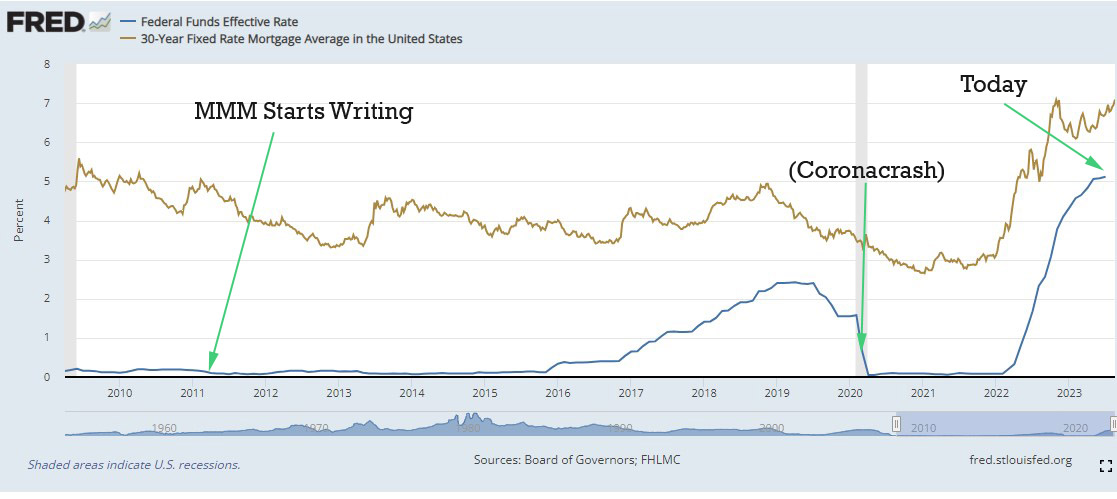
However, this prolonged period of easy money eventually contributed to inflationary pressures. Following the unprecedented fiscal and monetary stimulus deployed during the COVID-19 pandemic, coupled with persistent global supply chain disruptions and a surge in consumer demand, inflation began to accelerate at an alarming rate. By mid-2022, the Consumer Price Index (CPI) in the U.S. had reached a peak of 9.1% year-over-year, far exceeding the Federal Reserve’s target of 2%.
Recognizing the urgent need to stabilize prices and fulfill its dual mandate of maximum employment and price stability, the Federal Reserve initiated a historic and aggressive monetary tightening cycle. Beginning in March 2022, under the leadership of Chairman Jerome Powell, the central bank embarked on a series of rapid interest rate hikes. The Federal Funds Rate, which directly influences borrowing costs across the economy, was incrementally raised from its near-zero perch to a range of [e.g., 5.25-5.50%] by late 2023. This decisive action aimed to cool an overheated economy by making borrowing more expensive, thereby reducing demand and bringing inflation back under control.
Immediate Impacts on Financial Markets

The sudden tightening of monetary policy sent ripples through financial markets globally. The stock market, accustomed to an era of cheap money, experienced significant volatility. From its peak in early 2022, the overall U.S. market, as measured by indices like the S&P 500, saw a correction of approximately 10-15%. In a broader two-year span, from mid-2021 to mid-2023, equity markets largely remained flat, with any gains primarily attributable to dividend payments rather than capital appreciation. This revaluation reflects higher discount rates applied to future corporate earnings and a shift in investor preference towards less speculative, more value-oriented assets.
Conversely, the bond market and savings vehicles became significantly more attractive. Yields on U.S. Treasury bonds soared, with the 10-year Treasury yield reaching levels not seen in over a decade. For individual savers, high-yield savings accounts and money market funds began offering returns of 4.5% or more, a stark contrast to the sub-1% rates prevalent just a few years prior. This presented a new dilemma for investors: balancing the long-term growth potential of equities, which were effectively "on sale" following the market correction, against the newfound stability and competitive returns of fixed-income instruments.
The Transformed Housing Market

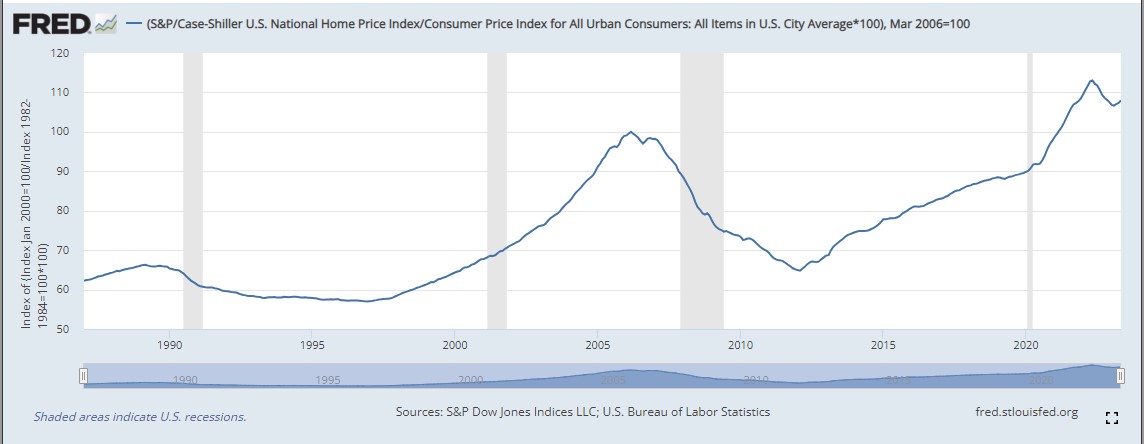
Perhaps the most palpable impact of rising interest rates has been felt in the housing market. Mortgage rates, which had dipped as low as 2.5-3.0% for a 30-year fixed loan during the pandemic, surged to over 7.5% by late 2023. This dramatic increase has fundamentally altered housing affordability.
To illustrate, consider a hypothetical $400,000 home with a 10% down payment ($40,000).
- At a 3.0% interest rate, the monthly principal and interest payment would be approximately $1,519.
- At a 7.5% interest rate, the same loan would entail a monthly payment of roughly $2,517.
This represents an increase of nearly $1,000 per month, or over 65%, for the same property, severely impacting purchasing power and effectively pricing many prospective buyers out of the market.
This shift is designed to cool an overheated housing sector, which had experienced unsustainable price growth. Higher mortgage rates are expected to:

- Reduce Buyer Demand: Fewer individuals can afford current prices, leading to a decrease in the pool of active buyers.
- Increase Inventory: As demand wanes, homes may stay on the market longer, gradually increasing the supply of available properties.
- Moderate Price Growth: The net effect is a stabilization or, in some regions, a decline in home prices.
However, the housing market also faces persistent supply-side challenges. Construction costs, influenced by labor shortages and material prices, remain elevated. Furthermore, restrictive zoning regulations and complex approval processes in many localities continue to impede new home construction, exacerbating existing housing shortages. While technological advancements have made some aspects of building more efficient, regulatory hurdles often counteract these gains, contributing to higher average prices.
Broader Economic Implications and Challenges
Beyond financial markets and housing, the rate hikes have broader economic ramifications. Corporations face higher borrowing costs, which can stifle investment in new projects, research and development, and expansion. Major tech companies, for instance, responded to the changing economic climate by implementing significant layoffs, with reports indicating tens of thousands of job cuts across the sector in 2022-2023. This scaling back of operations is a direct consequence of a less permissive capital environment.
The rapid increase in rates also exposed vulnerabilities in the banking sector, leading to a "miniature banking crisis" in early 2023. Several mid-sized U.S. banks, including Silicon Valley Bank and Signature Bank, collapsed due to a combination of rapid deposit outflows and significant unrealized losses on their bond portfolios, which had depreciated in value as interest rates rose. These events sparked concerns about broader financial stability, although swift action by regulators helped to contain the contagion.
Despite these challenges, the U.S. labor market has shown remarkable resilience. Unemployment rates have remained near 50-year lows (e.g., around 3.6-3.8% by late 2023), confounding many economists who anticipated a more significant slowdown. This strong employment picture, coupled with ongoing wage growth, complicates the Fed’s efforts to fully tame inflation without triggering a severe recession.
Future Outlook: What Lies Ahead for Rates and the Economy?
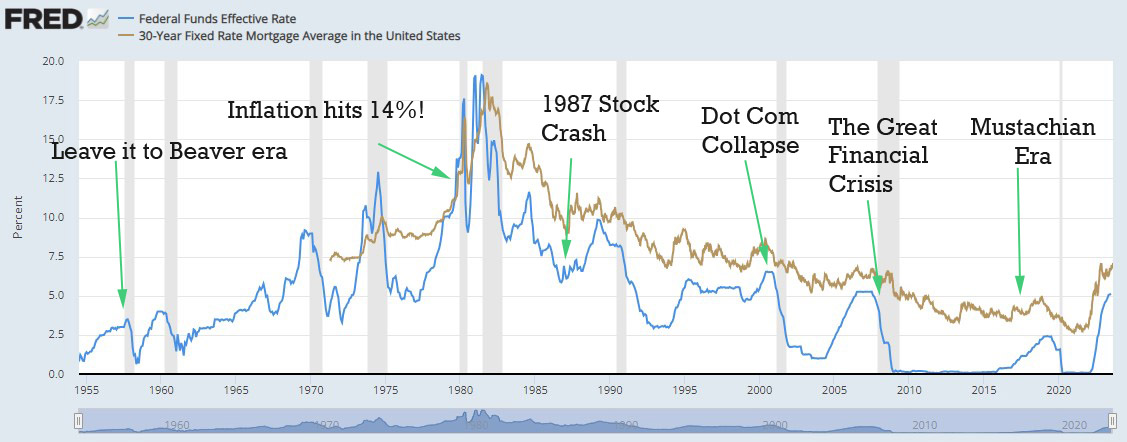
Predicting the future trajectory of interest rates and the economy remains a complex endeavor. A historical perspective reveals that current rates, while high compared to the post-2008 period, are closer to the long-term average. Examining a 70-year chart of interest rates shows significant fluctuations, with current levels falling within a "normal" range rather than representing an extreme high.
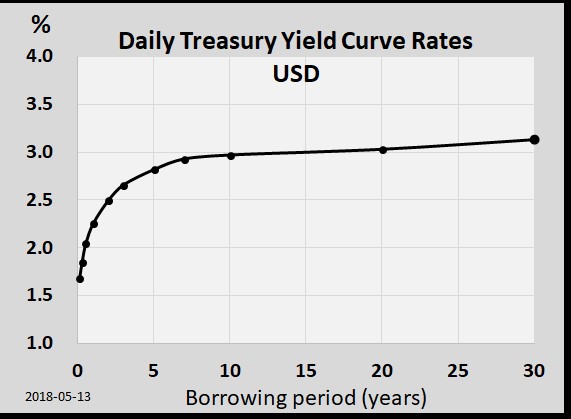
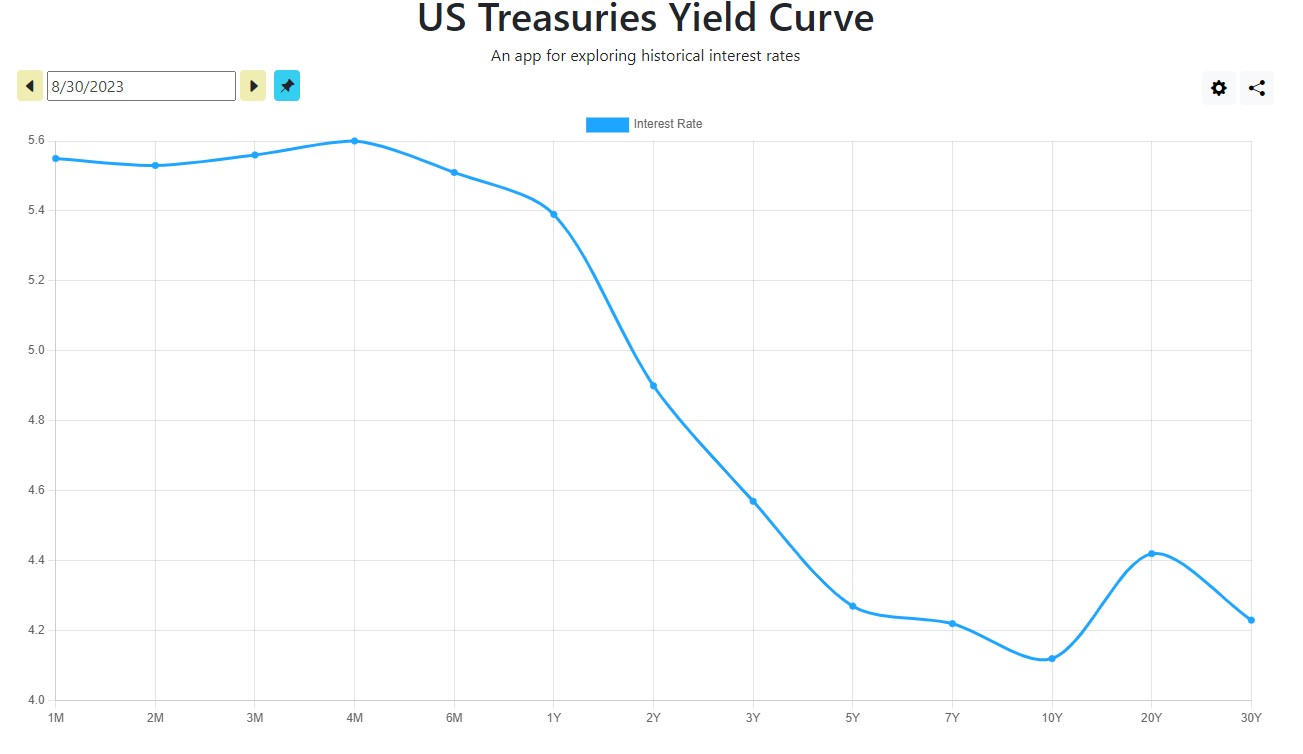
However, a critical indicator for future rate movements is the U.S. Treasury Yield Curve. Typically, lenders demand higher interest for locking up money for longer periods, resulting in an upward-sloping yield curve. Currently, the yield curve is inverted, meaning short-term Treasury bills offer higher yields than long-term bonds. For example, a 1-year Treasury might yield 5.4%, while a 10-year Treasury yields 4.05%.
An inverted yield curve is a historically reliable predictor of economic slowdowns or recessions. It has occurred 11 times in the past 75 years, accurately preceding a recession in 10 of those instances. This market signal suggests that bond investors collectively anticipate a future decline in interest rates, likely driven by a cooling economy and a potential pivot by the Federal Reserve towards easing monetary policy. Such a pivot would typically occur when inflation is demonstrably under control and unemployment begins to rise significantly.
Based on these market signals and economic forecasts, many analysts project that interest rates may begin to decline within the next 18-24 months. This potential easing of monetary policy is widely expected to coincide with, or be a response to, a broader economic slowdown.
Navigating the New Financial Environment
In this dynamic financial landscape, strategic financial planning becomes paramount. For individuals, maintaining a lean and sustainable lifestyle, prioritizing savings, and managing debt prudently are more crucial than ever. The ability to be financially prepared, whether through a robust emergency fund or by reducing outstanding debt, offers a position of strength and flexibility irrespective of interest rate fluctuations.
Long-term investment strategies, particularly in diversified index funds, remain foundational. Attempting to time market fluctuations is notoriously difficult and often leads to suboptimal outcomes. Instead, consistent investing, regardless of short-term market movements or interest rate shifts, has historically proven to be the most effective approach for wealth accumulation.
The ultimate takeaway from this period of significant change is the enduring importance of personal financial discipline. While external economic factors like interest rates and housing prices are largely beyond individual control, personal choices regarding earning, saving, and responsible consumption hold immense power. By focusing on these controllable elements, individuals can build resilience and navigate economic shifts, ensuring that broader market movements remain mere ripples rather than destabilizing waves.

