
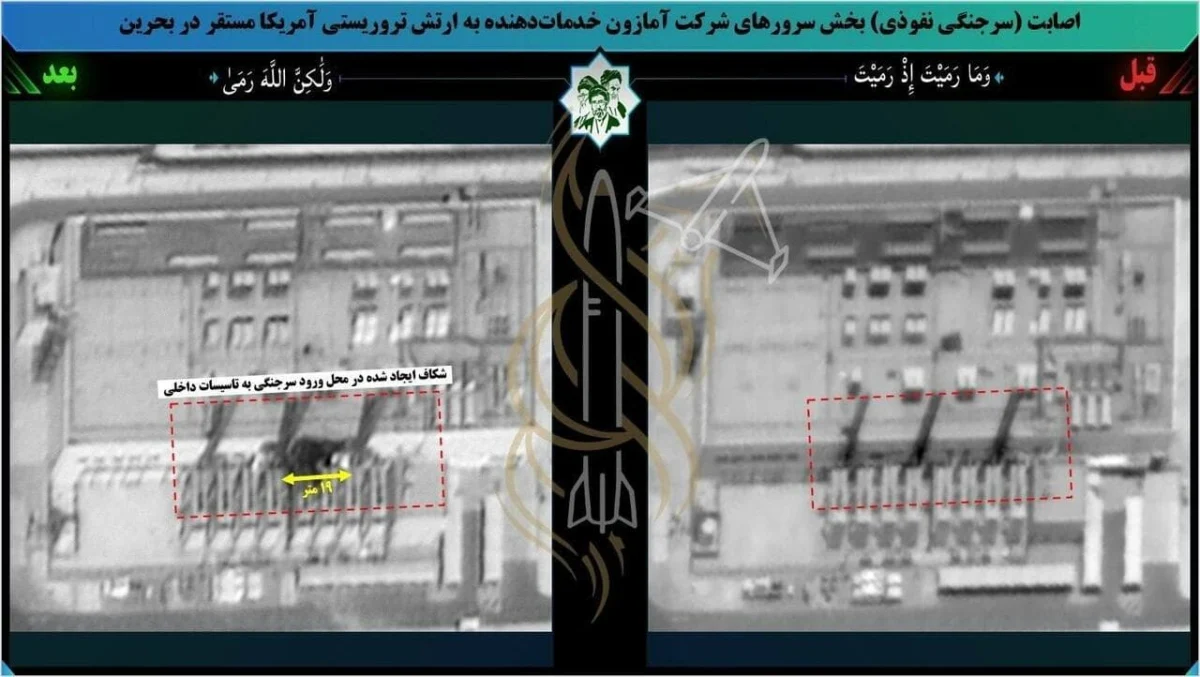
Amazon Web Services (AWS) has officially confirmed that it is unable to restore full access to its critical cloud-computing facility in Bahrain and one of its three primary data-hosting zones in the United Arab Emirates (UAE). The extensive damage, attributed to Iranian retaliatory strikes earlier this year, has been deemed beyond the capacity of AWS’s regional and multi-Availability Zone (AZ) services to withstand, marking a significant blow to the resilience of digital infrastructure in the Persian Gulf region. The pronouncement, reported by Reuters on September 15, underscores the escalating cyber-physical dimensions of geopolitical conflicts in West Asia and the profound implications for global technology companies operating in volatile areas.
The damage specifically impacted AWS’s infrastructure across multiple Availability Zones, which are isolated locations within a geographic region designed to ensure service continuity even if one site fails. In the UAE, resources and data exclusively housed within the zone labeled mec1-az2 have been rendered unrecoverable. While engineers continue their efforts to salvage data and restore services from the two other affected zones and across the wider Emirati region, the comprehensive nature of the destruction in mec1-az2 and the Bahraini facility suggests a direct and severe hit. This situation has led to prolonged outages, with significant ramifications for businesses and governmental entities relying on these crucial cloud services.
Chronology of Escalation and Impact
The genesis of these widespread outages can be traced back to a series of intense military escalations in March. At that time, the United States and Israel launched a coordinated assault on Iranian targets, provoking a swift and forceful response from Tehran. Iran retaliated with missile and drone salvos, targeting not only Israeli interests but also strategic sites within Gulf states known to host US military bases. These retaliatory strikes specifically targeted critical infrastructure, including facilities operated by major international technology firms.
AWS confirmed in the immediate aftermath of the March strikes that two of its facilities in the UAE had sustained direct hits. Concurrently, a drone strike near one of its Bahraini sites resulted in severe damage that effectively destroyed the underlying infrastructure. The company had initially advised most Bahrain-based customers to migrate their workloads to alternative AWS regions before the affected areas went completely offline in April. However, despite these proactive measures and extensive recovery efforts over several months, AWS has now conceded that all options for recovering remaining data and restoring services in the irrevocably damaged zones have been exhausted. This timeline highlights the extended period of assessment and attempted recovery, ultimately concluding with the sobering admission of irreparable loss.
The Strategic Importance of Cloud Infrastructure
The destruction of these AWS facilities brings into sharp focus the increasingly strategic role of cloud computing and artificial intelligence (AI) infrastructure in modern geopolitical conflicts. Once largely considered civilian assets, data centers and high-capacity computing systems are now recognized as dual-use technologies, indispensable for both economic development and military operations. In West Asia, these platforms have become integral to intelligence gathering, processing intercepted communications, analyzing surveillance data, and providing critical support for military operations, particularly in theaters such as Gaza and Iran.

Cloud platforms offer unparalleled capabilities for data storage, rapid processing, and scalable computing, making them vital for advanced military intelligence and operational logistics. The ability to collect, store, and analyze vast quantities of information in real-time is a cornerstone of contemporary warfare, enabling more precise targeting, improved situational awareness, and faster decision-making cycles. Consequently, nations like Iran have argued that data centers operated by US technology companies in the region are not merely commercial entities but strategic assets directly supporting US and Israeli aggression. From Tehran’s perspective, this reclassification renders them legitimate targets for military retaliation, blurring the lines between civilian infrastructure and military-economic targets.
Regional Responses and Future Resilience
The extensive damage to AWS infrastructure has prompted a critical re-evaluation of the resilience of the Gulf’s rapidly expanding cloud and AI sectors. The UAE, a regional hub for technological innovation and data services, has already initiated plans to "war-proof" its major AI data center projects. These revised strategies encompass a range of defensive measures, including decentralized site building to reduce single points of failure, the construction of underground facilities to offer protection against aerial attacks, and blast-resistant architectural designs. Furthermore, there are considerations to equip data centers with their own anti-air defense systems, a stark illustration of the perceived threat level and the lengths to which nations are willing to go to protect their digital backbone.
These defensive measures reflect a growing understanding that traditional security protocols are insufficient in an era where critical digital infrastructure is increasingly a target. The investment in such robust, military-grade protection for civilian data centers signals a paradigm shift in how countries in conflict-prone regions view and safeguard their technological assets. It also underscores the substantial financial and logistical challenges involved in ensuring business continuity and data integrity amidst heightened regional tensions.
The Weaponization of AI in West Asia
The broader context of these strikes involves the sophisticated weaponization of AI by both the United States and Israel across West Asian theaters. AI has become a central instrument in modern warfare, deeply embedded in how targets are selected, tracked, and engaged. Israel, in particular, has openly deployed advanced AI platforms to enhance its military capabilities, especially in operations against Palestinians.
Examples include automated targeting systems like "The Gospel," "Lavender," and "Where’s Daddy?" These systems are designed to harvest mass data, autonomously generate kill lists, and orchestrate systematic airstrikes and assassinations. Reports suggest that these AI-driven platforms have significantly accelerated the targeting process, allowing for a higher volume of strikes with reduced human oversight. This reliance on AI raises profound ethical questions regarding accountability, civilian casualties, and the dehumanization of warfare.
Furthermore, corporate infrastructure, such as Microsoft Azure, has been implicated in supporting these military endeavors. Reports indicate that Azure has stored massive caches of intercepted Palestinian communications, providing crucial data for Israeli military intelligence. The Israeli military has also expanded its use of AI-controlled drones for surveillance and targeted assassinations, demonstrating a comprehensive integration of AI into its operational framework. This blurring of lines between commercial tech giants and military operations further complicates the perception of "civilian" infrastructure in conflict zones.

The United States has also extensively utilized algorithmic warfare systems in the region. Palantir’s Maven project, for instance, has been deployed to process satellite, drone, and radar intelligence, leveraging machine learning to rapidly produce targeting recommendations against Iranian forces. This capability allows for the identification and designation of a vast number of targets in a remarkably short timeframe. A chilling example of this efficiency and its devastating consequences was observed during the war on Iran, where more than 1,000 targets were reportedly designated within the first 24 hours. One such designation led to a massacre at the Shajareh Tayyebeh elementary school in Minab, resulting in the deaths of at least 150 people, including 120 schoolchildren, highlighting the catastrophic human cost of AI-driven targeting systems.
Broader Implications and Future Outlook
The destruction of AWS infrastructure in Bahrain and the UAE carries significant broader implications. Economically, it represents substantial financial losses for AWS and its affected customers, disrupting supply chains, data flows, and business operations across various sectors. The incident also poses reputational risks for cloud service providers, challenging the perception of their resilience and reliability, especially for clients with stringent data security and business continuity requirements. For the affected Gulf nations, the incident could deter future foreign direct investment in critical technological sectors if the perceived risk of conflict-related damage remains high.
Geopolitically, the incident escalates the ongoing US-Iran proxy conflict into the digital and economic spheres. It sets a dangerous precedent, where critical civilian-operated data infrastructure can become a legitimate target in military engagements, potentially expanding the scope and intensity of future conflicts. This development necessitates a re-evaluation of international laws and norms regarding the protection of civilian infrastructure in wartime, particularly as technology becomes increasingly intertwined with national security.
The future outlook for cloud infrastructure in conflict-prone regions will likely involve a continuous arms race between offensive capabilities and defensive measures. Technology companies operating in these areas will face increased pressure to implement more robust security protocols, geographically diversify their data centers, and potentially partner with local governments on advanced defensive strategies. The incident serves as a stark reminder that in the interconnected world of the 21st century, even seemingly remote geopolitical tensions can have profound and lasting impacts on global digital ecosystems. The unrecoverable damage to AWS facilities in Bahrain and the UAE is not merely a technical setback but a potent symbol of the evolving nature of warfare and its far-reaching consequences.

