
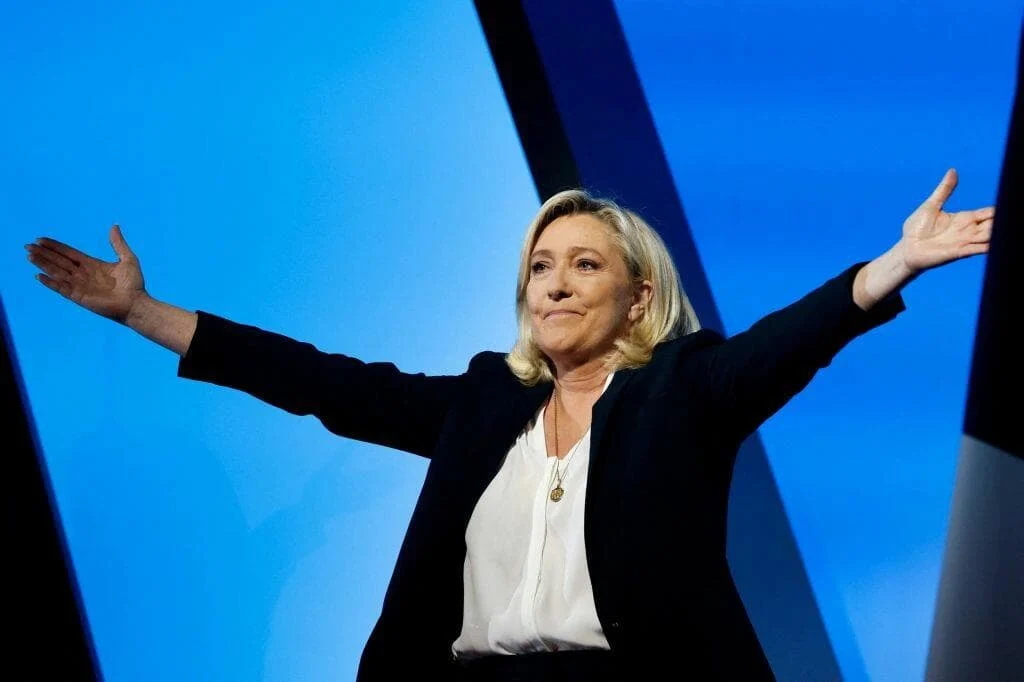
Marine Le Pen, leader of the National Rally, is projected to win France’s 2027 presidential election against every major rival currently being measured, according to a significant survey conducted by Elabe and published on August 29 for BFMTV and La Tribune Dimanche. This projection signals a potentially seismic shift in French politics, challenging the long-standing "republican front" that has historically united mainstream parties to prevent the far-right from ascending to the Élysée Palace. The survey results, which place Le Pen significantly ahead in the first round and victorious in all tested runoff scenarios, underscore a profound realignment of voter sentiment and a growing disillusionment with traditional political forces.
The Shifting Sands of French Presidential Politics
France’s presidential election operates under a two-round system designed to ensure a broad mandate for the head of state. The first round, tentatively scheduled for April 18, 2027, sees a crowded field of candidates vying for public support. Unless one candidate secures an absolute majority—a rare occurrence in modern French history—the top two contenders advance to a decisive second round, typically held two weeks later, around May 2. This structure historically forced voters to coalesce around a centrist or mainstream candidate in the second round to block the far-right, a phenomenon known as the front républicain. However, the Elabe poll indicates this historical safeguard is weakening, if not entirely eroding.
The Elabe survey positions Marine Le Pen with a commanding lead in the first round, garnering between 34% and 35.5% of the vote, depending on the specific configuration of opposing candidates. This figure places her far ahead of any other single contender, signaling a strong foundational support base that has solidified over successive election cycles. Crucially, the poll also projects her as the victor in every simulated second-round matchup, including against Édouard Philippe, who emerges as her closest potential rival from the mainstream. This consistent lead in runoff scenarios marks a significant departure from previous elections where Le Pen, despite strong first-round performances, ultimately failed to overcome the collective opposition in the final round.
This recent Elabe survey echoes the findings of a prior Nomura report, which similarly highlighted Le Pen’s substantial lead in the initial stages of the electoral race. Such consistent polling data from diverse sources lends considerable weight to the argument that France is on the cusp of a major political transformation, with the National Rally potentially breaking through the glass ceiling that has historically kept it from power.
The Scramble for Second Place: Mainstream Contenders and Their Challenges
While Marine Le Pen consolidates her position at the forefront, the rest of the political spectrum appears fragmented, with candidates battling fiercely for the coveted second spot that would grant them access to the runoff. Édouard Philippe, the former Prime Minister under Emmanuel Macron and leader of the Horizons party, currently stands as the most plausible face of the post-Macron center-right. The Elabe poll places him at approximately 17% in the first round when running unopposed by other major moderate figures. Philippe’s appeal lies in his perceived blend of experience, technocratic competence, and a more pragmatic, less ideologically charged approach compared to some of his potential rivals. His ability to attract both moderate conservatives and disaffected centrist voters will be crucial for his campaign.
On the far-left, Jean-Luc Mélenchon, leader of La France Insoumise (LFI), commands a significant but potentially stagnating share of the vote, projected at 14% to 14.5%. Mélenchon has consistently demonstrated an ability to mobilize a dedicated base, particularly younger voters and those in working-class areas. However, his summer momentum appears to have waned, and his challenge remains broadening his appeal beyond his core supporters and uniting the often-fractured French left. The emergence of Raphaël Glucksmann, a prominent figure from the Socialist Party and a strong pro-European voice, further complicates the left’s landscape. Glucksmann, now officially in the race, polls between 11.5% and 14%, potentially drawing votes from Mélenchon and other center-left candidates. His presence signifies an attempt to revitalize a more traditional social democratic platform.
Gabriel Attal, France’s current Prime Minister, represents another potential contender from the incumbent camp. While highly visible and generally popular, his presence in the presidential race primarily serves to further split the moderate vote, particularly within the broader Macronist movement. The fragmentation among centrist and left-leaning candidates highlights a critical vulnerability: the inability to consolidate opposition against Le Pen, thereby facilitating her path to the second round with an unassailable lead. The lack of a clear, unified challenger from the mainstream exacerbates the National Rally’s advantage and underscores the strategic challenges faced by traditional parties.
The Erosion of the Front Républicain
For generations, French presidential politics operated under the implicit assumption of a front républicain, a cross-party alliance in the second round aimed at preventing the far-right from acceding to the Élysée. This political convention was dramatically demonstrated in 2002 when Jacques Chirac secured a landslide victory against Marine Le Pen’s father, Jean-Marie Le Pen, with an overwhelming 82% of the vote to 18%. The principle held in 2017 and 2022, when Emmanuel Macron defeated Marine Le Pen, albeit with progressively narrower margins: 66% to 34% in 2017 and 58.5% to 41.5% in 2022. Each successive election saw the far-right gaining ground, indicating a gradual erosion of the republican front’s efficacy.
The latest Elabe poll suggests that this historical barrier is no longer automatic. Le Pen’s consistent lead in all tested runoff scenarios, even against a relatively strong opponent like Édouard Philippe (whom she leads by five points), signifies a paradigm shift. Several factors contribute to this erosion. Firstly, disillusionment with mainstream parties has deepened, fueled by economic anxieties, social divisions, and a perception of political elites being out of touch. Emmanuel Macron’s presidency, despite its reforms, has also faced significant opposition, particularly concerning pension reforms and cost-of-living issues, which may have inadvertently blurred traditional political lines and alienated segments of the electorate who might otherwise have supported a centrist candidate.
Secondly, Marine Le Pen’s persistent "de-demonization" strategy has played a crucial role. Since taking over from her father, she has worked to soften the party’s image, moderating some of its more extreme positions and focusing on issues such as purchasing power, national sovereignty, and security, which resonate with a broader electorate. While the core ideology remains distinct from mainstream parties, her efforts have made the National Rally more palatable to a wider range of voters who no longer see it as an existential threat to democratic values. The weakening of the front républicain is not merely a statistical anomaly but a reflection of deep-seated societal changes and a re-evaluation of political identities in France.
Le Pen’s Campaign Strategy and Policy Platform
Marine Le Pen’s potential surge in popularity can be attributed to a combination of strategic political maneuvering and a carefully crafted policy platform designed to appeal to a broad base of French voters. Her economic proposals, unveiled at the summer gathering of MEDEF (France’s main employers’ federation) at Roland-Garros on August 27, signal a pragmatic approach that seeks to balance populist demands with fiscal responsibility. She outlined a plan for €125 billion in savings, though specific details on where these cuts would be made were not fully elaborated in the initial announcement. Such a figure suggests a comprehensive overhaul of public spending, potentially targeting areas like administrative bureaucracy, international contributions, or certain social welfare programs.
A key element of her platform is a proposal to allow long-tenure workers to retire at 60 to 62 years of age, contrasting sharply with President Macron’s recent controversial pension reforms that raised the retirement age to 64. Le Pen’s proposal, costed at approximately €9 billion, is framed as a "societal choice" aimed at recognizing the contributions of those who have worked for many years and providing greater flexibility in retirement. This policy directly addresses a major source of public discontent and could resonate strongly with blue-collar workers and older voters who felt disenfranchised by Macron’s reforms.

Beyond economic policy, Le Pen continues to emphasize her core tenets of national sovereignty, controlled immigration, and a focus on domestic priorities ("France first"). While she has moved away from advocating for a "Frexit," her stance on strengthening national borders and prioritizing French citizens in areas like employment and social benefits remains central to her appeal. Her ability to articulate these themes in a more measured tone, coupled with her consistent presence in the political arena, has allowed her to normalize the National Rally’s image and broaden its electoral base.
Legal Challenges and Their Political Fallout
Marine Le Pen’s political trajectory has not been without significant obstacles, including persistent legal battles that have, paradoxically, at times bolstered her image among her supporters. On July 7, the Paris court of appeal upheld her embezzlement conviction in the European Parliament assistants case. This case revolved around allegations that National Front (now National Rally) MEPs used EU funds allocated for parliamentary assistants to pay for party staff in France.
While the conviction was upheld, the court notably shortened the ban on holding public office sufficiently for her to remain eligible to stand in the 2027 presidential election. However, it also imposed a year of house arrest with an electronic tag. This sentence has been a point of contention and a potential strategic challenge for her campaign. Her subsequent appeal to the Cour de Cassation, France’s highest court for civil and criminal matters, effectively freezes the sentence while she campaigns. The court has stated its aim to rule before the first round of the election.
The implications of this legal saga are multifaceted. A confirmed electronic tag, even if it does not legally disqualify her from the ballot, could significantly impact her ability to conduct a traditional presidential campaign, which relies heavily on public rallies, travel, and direct engagement with voters across the country. Le Pen herself has publicly stated that she "could not campaign tagged," suggesting the practical difficulties and the symbolic handicap such a restriction would impose. However, her party could strategically frame these legal troubles as "establishment efforts to throw her off track," portraying her as a "martyr" targeted by a hostile system. This narrative, if effectively deployed, could further galvanize her base and attract anti-establishment voters. In anticipation of potential campaigning restrictions, Jordan Bardella, the charismatic president of the National Rally, remains the party’s designated stand-in, capable of taking over campaign duties if necessary, ensuring continuity and a youthful public face for the party.
Economic Ramifications and Market Response
The prospect of a Marine Le Pen presidency, and the political uncertainty leading up to it, has not gone unnoticed by financial markets. French 10-year government bond yields have recently been near 4.1%, reaching their highest levels since late 2008, a period marked by the global financial crisis. This rise in yields indicates increased investor concern about France’s fiscal health and future economic trajectory.
A key indicator of this apprehension is the "spread" between French and German 10-year bond yields. The extra yield investors demand to hold French debt over the safer German Bunds has widened to approximately 80 basis points. This figure sits at the wider end of its 59-to-85 basis point range over the past year, signaling growing risk perception. The widening spread reflects a confluence of factors: a hung National Assembly, which has made governing difficult for President Macron’s centrist alliance; a government that has already stumbled on budget matters, leading to concerns about fiscal discipline; and the upcoming 2027 finance bill, due in October, which may struggle to pass in ordinary form given the fragmented political landscape.
Furthermore, France’s underlying fiscal health presents significant challenges. The deficit remains stubbornly near 5% of GDP, well above the Eurozone’s 3% stability pact limit. International Monetary Fund (IMF) debt figures are already projected around 118.5% of GDP for this year and are expected to surpass 120% by 2027. These figures, combined with the political uncertainty surrounding the next election, raise questions about France’s ability to manage its public finances effectively and maintain investor confidence.
A Le Pen presidency could introduce further market volatility due to potential shifts in economic policy. While her recent platform includes fiscal savings, her broader ideological stance, which favors protectionism and potentially greater state intervention, could be viewed with caution by international investors. Concerns about France’s relationship with the European Union under a National Rally government, even without a "Frexit" scenario, could also impact investor sentiment and France’s standing within the Eurozone, potentially leading to increased borrowing costs and a re-evaluation of credit ratings.
Broader Implications for France and Europe
The potential election of Marine Le Pen as France’s next president would represent a monumental shift not only for France but for the entire European Union and the broader international order. Domestically, it would mark the culmination of a decades-long struggle by the far-right to legitimize itself and seize power, fundamentally altering the country’s political landscape. Policies on immigration, national security, and social welfare would likely undergo significant changes, reflecting the National Rally’s core ideological tenets. The relationship between the executive and legislative branches could also become more fraught, especially if the National Assembly remains fragmented or deeply opposed to a Le Pen presidency.
For Europe, the implications are equally profound. France, as a founding member and one of the two pillars of the EU alongside Germany, plays a critical role in the bloc’s direction and stability. A Le Pen presidency, while unlikely to pursue an outright exit from the EU, would undoubtedly advocate for a more nationalist, less integrated Europe. This could involve renegotiating treaties, challenging the supremacy of European law, and curtailing France’s contributions to EU initiatives. Such actions would likely strain relations with Brussels and other member states, potentially undermining European cohesion and complicating collective responses to challenges like climate change, defense, and economic competitiveness.
The rise of a far-right leader in France could also embolden populist and nationalist movements across Europe, particularly ahead of crucial elections in other member states. It would challenge the established liberal democratic consensus and could reshape geopolitical alliances, given Le Pen’s historical skepticism towards NATO and her past favorable views towards Russia. The strategic partnership between France and Germany, a cornerstone of European integration, could also face unprecedented stress, leading to a period of uncertainty and re-evaluation for the entire continent. The traditional working rule of French politics—that Le Pen could reach the steps of the Élysée but not the door—appears to be nearing its expiration date, signaling an era where long-held political norms are being decisively broken.
Conclusion: A Nation at a Crossroads
The Elabe survey’s projections for the 2027 presidential election underscore that France stands at a critical juncture. The potential ascent of Marine Le Pen to the presidency, driven by a weakening front républicain and a fragmented opposition, signals a deep-seated desire for change among a significant portion of the electorate. This moment is a culmination of years of political evolution, economic pressures, and societal shifts that have eroded trust in traditional institutions and paved the way for a challenge to the established order. As France moves towards 2027, the political landscape is set for an unprecedented and potentially transformative electoral battle, with profound implications stretching far beyond its borders.

