

The annual county fair in Vermont serves as more than just a cultural milestone for local families; it has become a high-stakes environment for early childhood financial education. In a recent case study of a family residing in rural Vermont, parents of two children, aged five and seven, utilized the fair’s concentrated environment of consumerism to implement a rigorous "family money philosophy." This approach, which distinguishes between parental obligations and discretionary child spending, offers a blueprint for how experiential learning can be used to demystify complex economic concepts such as debt, labor value, and inflation for young children.
The Framework of the Family Money Philosophy
The foundation of the financial education model observed in this household is a clear demarcation between essential needs and discretionary wants. Under this system, the parents assume full financial responsibility for "needs," which are defined as clothing, shelter, healthcare, and educational materials. This also extends to family experiences, such as admission fees for museums and the county fair itself.

However, the children are required to finance "discretionary items" through their own earned capital. These items fall into three primary categories:
- Supplemental Food Items: While parents provide standard meals, any "extras," such as dessert at a restaurant or snacks at a fair, must be purchased by the child.
- Souvenirs and Trinkets: Admission to an event is covered, but any physical mementos, such as toys from a museum gift shop or prizes from a fair booth, are the child’s responsibility.
- Non-Essential Educational Media: While the parents maintain a home library stocked with books from public libraries and used sales, new purchases from venues like the Scholastic Book Fair require child-funded capital.
By establishing these boundaries, the parents move the abstract concept of "money" into a tangible reality where the child must make active choices about resource allocation.
The Domestic Labor Market and Chore-Based Compensation
To facilitate this spending, the family has established a domestic labor market where children can earn money through a tiered chore system. This system differentiates between "Daily Unpaid Work"—tasks required for the maintenance of the household—and "Paid Labor"—tasks that provide an additional service to the family unit.

Unpaid Maintenance Tasks:
These are tasks categorized as self-care or basic family contribution, including making beds, cleaning personal rooms, clearing the table after meals, and collecting eggs from the family’s chickens. The rationale behind the lack of compensation for these tasks is to instill a sense of communal responsibility.
Compensated Labor:
Paid chores are offered at what the parents describe as "fair market value," with room for negotiation. This introduces the children to the concept of labor contracts and performance-based pay. Current tasks include:
- Organizing Kitchen Infrastructure: A recent contract saw the seven-year-old negotiate a $10 lump sum for the total reorganization of kitchen cabinets and drawers.
- Waste Management: Emptying household trash cans and recycling.
- Sanitization: Scrubbing bathtubs and cleaning bathroom sinks.
- Laundry Services: While children put away their own laundry for free, they are compensated for processing and folding parental laundry.
- Automotive Maintenance: Vacuuming the interior of the family vehicle.
A critical component of this labor model is the "Completion Clause." Compensation is only rendered if the task is finished to a professional standard without significant adult intervention. For instance, if a child empties the trash but spills debris in the process, the task is not considered complete until the spill is remediated. This reinforces the relationship between quality of work and financial reward.
Case Study: The Inflatable Unicorn and the Psychology of Debt
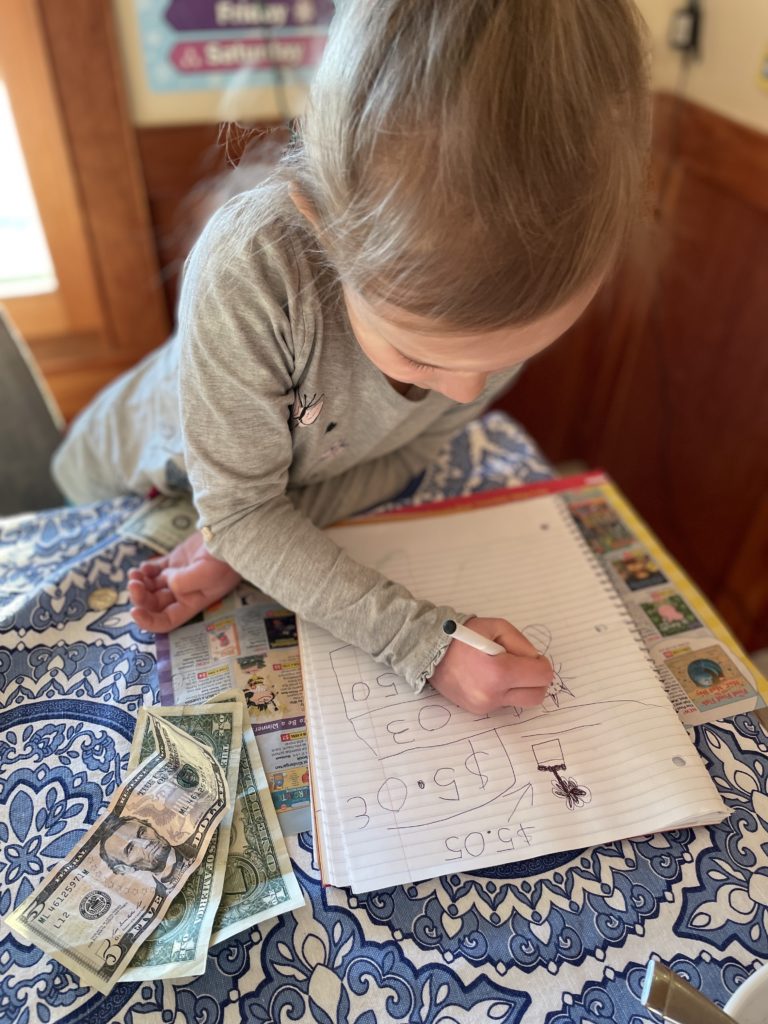
The most significant pedagogical moment in the family’s recent financial history occurred during the previous year’s county fair. The elder child, aged seven, sought to purchase an inflatable unicorn priced at $13. At the time, her liquid assets totaled only $9.
In a move designed to teach the "visceral reality" of credit, the parents allowed the child to go into debt, lending her the remaining $4 to complete the purchase. However, the terms of the loan were strict: all subsequent paid chores were no longer optional and carried no immediate reward until the $4 debt was serviced in full.
The child’s reaction to this arrangement provided a profound insight into early economic understanding. After an hour of mandatory labor, the child noted, "It is not fun to do chores to earn money for something I’ve already bought. This is a lot of work and I’m not getting anything!" This realization—that debt represents a claim on future labor and diminishes future freedom—is a concept many adults struggle to master. By allowing the child to experience the "debt trap" in a controlled environment with a low-stakes $4 loan, the parents successfully instilled a lasting aversion to over-leveraging personal finances.

Mathematical Application and Collaborative Spending
The financial education also extends into real-world mathematics. During summer visits to a local farm for pizza nights, the children decided to pool their resources to purchase a $7 dessert. This scenario required several layers of financial planning:
- Cost-Benefit Analysis: Determining if the $7 dessert was worth the labor hours required to earn it.
- Resource Sharing: The elder child initially paid the full amount but eventually argued for a cost-sharing model, as the younger child was consuming half the product.
- Denomination Mastery: Because $7 cannot be divided evenly into whole dollar amounts, the children had to engage with coin denominations (quarters, dimes, and nickels) to ensure an equitable split.
- Transaction Independence: The parents required the children to approach the counter, place the order, and execute the payment themselves, building confidence in commercial interactions.
Broader Impact and Educational Context
This "scaffolded" approach to financial literacy aligns with modern educational theories suggesting that children as young as five are capable of understanding basic economic principles if they are grounded in immediate experience. According to data from the Council for Economic Education (CEE), only 25 states currently require high school students to take a course in personal finance. The lack of standardized financial education in the U.S. school system places the burden of literacy on parents.
By demystifying the source of family funds—explaining that "Mama works and is paid money for her work, which is then used for groceries and clothes"—the parents remove the "magical" quality of money. It is no longer an infinite resource that appears from an ATM, but a finite tool derived from time and effort.

Experts in child psychology suggest that this level of transparency can actually reduce anxiety. When children understand the "how" and "why" of household spending, they feel more secure in the family’s stability. The goal is to view money not as a measure of self-worth or status, but as a neutral tool for achieving specific ends, much like water, sleep, or safety.
Future Implications: The Introduction of Interest
The family’s next phase of financial education involves moving beyond simple "earn and spend" cycles toward long-term capital appreciation. The parents plan to launch a "Bank of Parental Units," a domestic savings program that will pay interest on any money the children choose to save rather than spend.
This will introduce the concept of "compound interest"—what Albert Einstein famously called the eighth wonder of the world. By seeing their balance grow without additional labor, the children will begin to understand how capital can work on behalf of the owner. This transition from a labor-based income model to a capital-based growth model represents the final stage of basic financial literacy, preparing the children for adult concepts like retirement accounts and investment portfolios.

Conclusion
The Vermont case study demonstrates that financial literacy does not require complex software or large sums of money. Instead, it requires a consistent "family money philosophy," a willingness to let children fail in low-stakes environments, and the transparency to treat money as a practical tool. By the time these children reach adulthood, the lessons learned from the "inflatable unicorn debt" and the "kitchen cabinet contract" will likely have formed a robust foundation for responsible financial citizenship. As the parents noted, the objective is to move from counting coins to understanding the value of a dollar, ensuring the next generation is equipped to navigate an increasingly complex global economy.

