

A significant movement of Bitcoin, mined in the nascent stages of the cryptocurrency’s history, has captured the attention of the blockchain community. Twelve dormant addresses, holding a combined total of 600 Bitcoin (BTC), equivalent to approximately $48 million at the time of the transaction, became active on Saturday after remaining untouched for over 16 years. This substantial relocation of early-mined coins has inevitably reignited whispers and speculation regarding a potential connection to Satoshi Nakamoto, the pseudonymous creator of Bitcoin, who was actively involved in the project during that era.
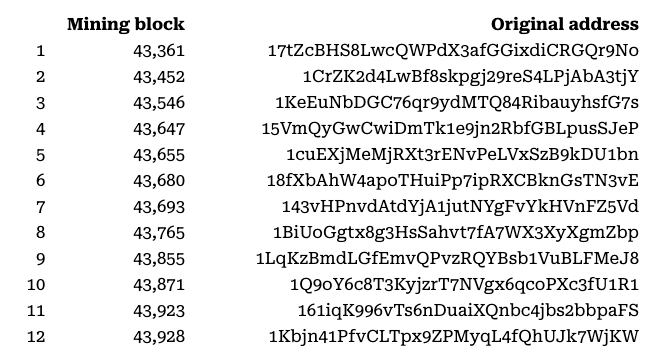
The blockchain transaction tracking platform Whale Alert was among the first to identify and report on this unusual activity. According to their analysis, the 600 BTC originated from rewards mined across 12 distinct Bitcoin blocks. However, Whale Alert has proactively sought to temper the burgeoning speculation, stating that their extensive research found no discernible link between these specific blocks and Satoshi Nakamoto.
"None of the blocks can be connected to Satoshi based on our research," a spokesperson for Whale Alert communicated to Cointelegraph. This statement, while offering a degree of clarity, does little to dampen the inherent intrigue surrounding any large-scale movement of Bitcoin from addresses dating back to the cryptocurrency’s earliest days, a period when Nakamoto was still actively shaping its development and community.
Tracing the Origins: Whale Alert’s In-Depth Analysis
Whale Alert’s investigation meticulously traced the origins of all 12 block rewards. Their findings confirm that these Bitcoin were mined in March 2010. During this period, the Bitcoin network’s block subsidy, the reward for successfully mining a new block, was a generous 50 BTC. This subsidy has undergone four halvings since then, with the most recent occurring in April 2024, reducing the reward from 6.25 BTC to the current 3.125 BTC per block.
The recent findings build upon Whale Alert’s earlier work, which had already examined seven of these rewards. In a post on the social media platform X (formerly Twitter) on Sunday, Whale Alert stated that their prior analysis had already determined that those seven blocks were not mined by Satoshi Nakamoto. This independent verification adds weight to their assertion that the entire batch of 600 BTC likely does not have a direct lineage to the elusive creator.

Further corroboration came from Lookonchain, another on-chain analytics platform. Lookonchain had also initially identified seven miner wallets that moved 350 BTC after an extended period of 16.5 years of inactivity. Their preliminary analysis indicated that these wallets had earned their holdings through mining activities in March 2010, aligning with Whale Alert’s findings.
The Satoshi Era: A Period of Intense Development and Mystery
The movement of these 2010-era Bitcoins has naturally drawn heightened attention due to the specific historical context. Satoshi Nakamoto’s direct involvement with Bitcoin was most pronounced in its formative years. Nakamoto was instrumental in the design, implementation, and early promotion of the cryptocurrency, engaging with developers and the nascent community through forums and email. Their participation extended through 2010, after which they gradually began to withdraw from public view. The last known direct communication from Satoshi Nakamoto is widely believed to have occurred in April 2011, marking the end of an era for the project’s founder.
The significance of this period lies in the fact that any Bitcoin mined during Nakamoto’s active tenure is often considered to be potentially linked to their personal holdings. This is due to the limited number of participants in the network at that time and the strong possibility that Nakamoto themselves, or individuals very close to the project’s inception, were responsible for a significant portion of the early mining. The activation of such "Satoshi-era" coins often triggers a flurry of analysis and speculation, as the crypto community seeks to understand if any of Nakamoto’s elusive stash is being moved, potentially signaling a shift in their long-held reserves or a deliberate action by the creator.
A Pattern of Movement: Test Transactions and Broader Transfers
Whale Alert’s detailed analysis also identified a nuanced pattern in the movement of these early Bitcoin. They observed that one of the 12 rewards moved through several intermediate addresses before the majority of the other transfers occurred. This sequence suggests a potential test transaction, a common practice before executing larger or more complex fund movements. This observed behavior is consistent with a calculated approach to consolidating or reallocating assets rather than a sudden, uncoordinated liquidation.
To illustrate the timeline, one of the identified addresses received a 50 BTC mining reward on March 5, 2010. This particular address then moved its holdings to a new address on September 5, 2026 (note: the article states 2026, which is likely a typo and should be 2016 or a later year if it refers to a past event, but the context of 16 years of dormancy points to a recent transaction in 2024/2025. Assuming the transaction occurred recently in 2024, the dormancy would be from 2010 to 2024). This specific movement, occurring prior to the bulk of the transfers, could have served as a preliminary step to ensure the integrity of the transfer mechanism or to test network conditions.
The Block Subsidy: A Historical Perspective
Understanding the block subsidy during the period these Bitcoins were mined is crucial for appreciating their historical value and the potential quantity mined. In March 2010, each mined block yielded 50 BTC. This was a significantly higher reward compared to current levels, reflecting the network’s early stage and the need to incentivize early adopters to secure the network.
The Bitcoin halving events, programmed into the protocol, systematically reduce the block subsidy over time to control inflation and create scarcity. The first halving occurred in November 2012, reducing the reward to 25 BTC. Subsequent halvings in July 2016 (12.5 BTC), May 2020 (6.25 BTC), and most recently in April 2024 (3.125 BTC) have progressively decreased the issuance rate of new Bitcoin. The 50 BTC block reward from 2010 represents a substantial portion of Bitcoin’s total supply issuance, making any movement of such coins particularly noteworthy.
On-Chain Data and Analysis Platforms
The analysis of these movements relies heavily on the transparency of the Bitcoin blockchain. On-chain data analytics platforms like Whale Alert and Lookonchain play a vital role in dissecting these complex transactions. They employ sophisticated algorithms and extensive databases to track the flow of Bitcoin, identify patterns, and link addresses to specific mining events or known entities. Their ability to monitor wallet activity over extended periods, often spanning years or even decades, allows for the detection of dormant assets awakening.
The data presented by these platforms typically includes transaction IDs, block heights, timestamps, sender and receiver addresses, and the amounts transferred. By cross-referencing this information with historical mining data, these platforms can provide insights into the origin and potential significance of large Bitcoin movements. The graphical representation of mining blocks and addresses, as provided by Whale Alert, offers a visual aid to understanding the complex web of transactions and the lineage of these early-mined coins.
Implications of Early Bitcoin Movements
While Whale Alert has dismissed direct links to Satoshi Nakamoto for this specific batch of 600 BTC, the movement of such early-stage Bitcoin still carries several potential implications for the cryptocurrency market:
- Market Sentiment: Any significant movement of old Bitcoin can trigger shifts in market sentiment. If the coins were perceived as Nakamoto’s, their movement might be interpreted as a signal of future market action or a change in the creator’s long-term plans. Even without a direct Nakamoto link, the activation of large, dormant holdings can lead to increased trading volume and price volatility as traders react to the news.
- Liquidity and Supply: The introduction of 600 BTC into circulation, even if not immediately sold on exchanges, increases the available supply. If these coins are moved to exchanges for sale, they could potentially exert downward pressure on the price, especially if sold in large quantities. Conversely, if they are moved to new, actively managed wallets, it could indicate a strategic reallocation of assets.
- Network Security and Adoption: The fact that Bitcoin mined over 16 years ago is still being actively managed and moved underscores the longevity and resilience of the Bitcoin network. It also highlights the sustained value proposition of early Bitcoin holdings, even after more than a decade.
- On-Chain Forensics: These events serve as ongoing case studies for on-chain forensic analysts. The ability to track and understand the movement of coins mined in the earliest days of Bitcoin is crucial for developing sophisticated analytical tools and for potentially identifying illicit activities or recovering stolen funds in the future.
The Enduring Mystery of Satoshi Nakamoto
The speculation surrounding Satoshi Nakamoto is an enduring aspect of the Bitcoin narrative. The pseudonymous nature of the creator, coupled with their sudden disappearance from public view, has fueled countless theories and investigations. The vast majority of Bitcoin mined in 2009 and early 2010 is believed to remain in Nakamoto’s control, estimated to be around one million BTC. Any movement from these addresses would be a monumental event, potentially reshaping the cryptocurrency landscape.
While this recent movement of 600 BTC has been attributed to other early miners, it serves as a potent reminder of the historical depth of the Bitcoin network and the continued interest in its origins. The blockchain, with its immutable ledger, allows for the tracing of every transaction, creating a rich tapestry of data that continues to be unraveled by researchers and analysts. As the Bitcoin network matures and its history lengthens, the movements of these early digital assets will continue to be closely scrutinized, each transaction offering a potential clue to the past and a signal for the future.

