
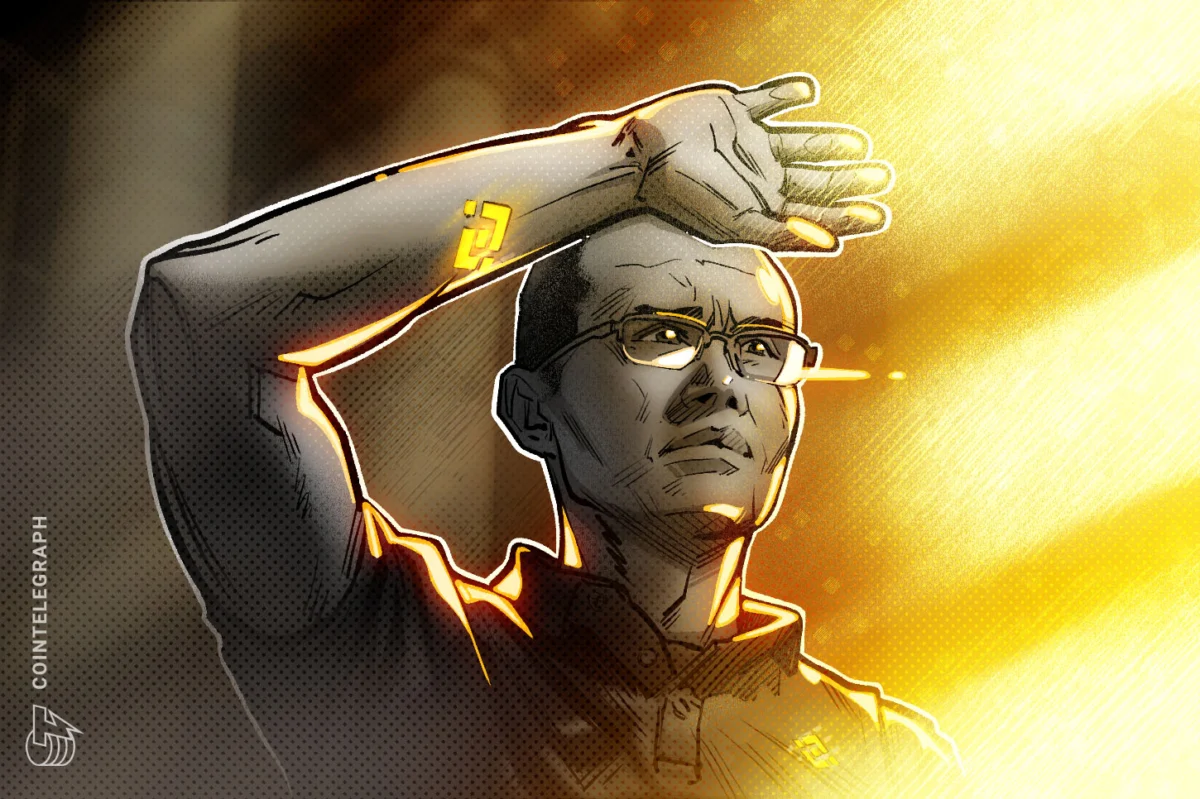
Constance Waing, the former Chief Operating Officer of the now-defunct cryptocurrency exchange FTX, has vociferously criticized Netflix’s portrayal of Binance founder Changpeng Zhao, widely known as "CZ," in its recent docudrama, The Altruists. Waing asserted on Wednesday during an episode of Cointelegraph’s "Chain Reaction" show on X Spaces that the series relies on harmful and racist stereotypes, specifically invoking tropes associated with the Asian mafia to depict Zhao.
"It’s very racist," Waing stated directly, her words echoing concerns that have begun to surface regarding the dramatization of the cryptocurrency industry’s tumultuous rise and fall. Her critique centers on a pivotal scene in the series that depicts FTX founder Sam Bankman-Fried and former Alameda Research CEO Caroline Ellison entering Zhao’s meeting through a back door. Waing interprets this visual as a deliberate attempt by the filmmakers to cast Zhao as an antagonist, a figure from the criminal underworld "trying to get these two innocent people into something bad."
The Altruists, which premiered on Thursday, endeavors to dramatize the meteoric ascent and catastrophic collapse of Bankman-Fried’s crypto empire. Bankman-Fried, once hailed as crypto’s golden boy, presided over FTX until its dramatic implosion in November 2022. The exchange’s downfall was triggered by a severe liquidity crisis, stemming from a massive run on customer deposits that exposed a multi-billion dollar shortfall, revealing deep-seated financial mismanagement and alleged fraud.
A Scene Under Fire: The Alleged "Front-Running" Depiction
The specific scene that has drawn the ire of Waing, Zhao, and others occurs in the fourth episode of The Altruists. In this dramatized account, Zhao’s character allegedly pressures Bankman-Fried and Ellison to grant Alameda Research advance access to FTX customer orders. The implication is that this access would allow Alameda to trade ahead of FTX’s retail clients, a practice known as "front-running," which is both unethical and potentially illegal.
This particular depiction has not only been challenged for its potential racist undertones but also for its factual accuracy. Changpeng Zhao himself was quick to voice his objections. He took to X (formerly Twitter) to call the scene "insane" and expressed concern about its potential to shape public perception negatively. His public questioning of the scene’s narrative intent underscores the gravity with which industry leaders view such portrayals.
The criticism did not stop with Zhao and Waing. Ethereum co-founder Vitalik Buterin also weighed in, criticizing the scene for what he perceived as an exaggerated portrayal of Zhao’s accent. Buterin, a prominent figure in the blockchain space, directly questioned whether the depiction was indeed racist, adding another layer of scrutiny to the series’ creative choices.
In an effort to address the mounting controversy and clarify the line between dramatization and reality, series creator Graham Moore penned an essay published in Vulture on Friday. Moore explicitly identified the scene in question as fictional. He stated, "there’s no evidence that CZ ever specifically pressured FTX to front-run." This admission by the creator himself lends significant weight to the claims that the scene was an embellishment, potentially driven by narrative expediency rather than factual reporting.
Waing’s Perspective: A Personal Account of Loss and Betrayal
Constance Waing’s criticism extends beyond the specific depiction of Zhao. Having watched The Altruists alongside former FTX and Alameda colleagues, she concluded that the series is "completely made up" in its broader narrative. She specifically took issue with the show’s portrayal of office parties, executive relationships, and her own personal response to the mounting problems within the exchange leading up to its collapse.
Waing offered a stark reminder of the devastating impact the FTX collapse had on its employees. She revealed that many FTX employees had kept all their savings on the exchange, only to lose everything when it failed. She recounted a particularly poignant anecdote about an employee in Hong Kong who was unable to afford a plane ticket home after the collapse, necessitating another colleague to purchase it for him. This personalizes the financial devastation wrought by the exchange’s failure, underscoring the human cost beyond the headlines and boardroom drama.
Following the collapse, Waing remained in the Bahamas, attempting to obtain answers and accountability from Sam Bankman-Fried. She described their final conversation before his extradition to the United States. "The only thing Sam told me was ‘I’m sorry, I fucked up,’" Waing recounted, highlighting the absence of any detailed explanation or strategy from Bankman-Fried. She stated that she received no further information beyond what Bankman-Fried had shared in public interviews and has had no contact with him or Caroline Ellison since that period.
The Legal Aftermath: Bankman-Fried, Ellison, and the Shadow of Fraud
The legal ramifications of the FTX collapse continue to cast a long shadow. Sam Bankman-Fried was convicted on seven counts of fraud and conspiracy in March 2024. He was subsequently sentenced to 25 years in prison, a severe penalty reflecting the scale of the financial crimes alleged.
Caroline Ellison, who played a key role as CEO of Alameda Research, a trading firm intricately linked to FTX, pleaded guilty to fraud charges in December 2022. Her cooperation with prosecutors was crucial in the case against Bankman-Fried, as she testified extensively against him. Ellison received a two-year prison sentence in September 2024, a sentence that reflects her cooperation and the gravity of her admitted involvement.
The legal outcomes for Bankman-Fried and Ellison serve as a stark reminder of the consequences of the alleged financial malfeasance that led to FTX’s downfall. The ongoing narrative surrounding these events, including fictionalized accounts like The Altruists, continues to be a subject of intense public interest and scrutiny.
Broader Context: The Rise and Fall of a Crypto Giant
The story of FTX and Sam Bankman-Fried is emblematic of the explosive growth and subsequent volatility that characterized the cryptocurrency market in the early 2020s. FTX, launched in 2019, quickly rose to prominence, becoming one of the largest cryptocurrency exchanges globally by trading volume. Bankman-Fried, a former physics major and quantitative trader, cultivated an image of brilliance and earnestness, positioning FTX as a responsible and innovative force in the burgeoning crypto space.
The exchange’s rapid expansion was fueled by aggressive marketing campaigns, including high-profile sponsorships and celebrity endorsements, and a seemingly unshakeable confidence in its business model. Bankman-Fried himself became a prominent figure in political lobbying, advocating for crypto regulation while simultaneously operating an exchange that would later be accused of widespread fraud.
The year 2022 marked a turning point for the crypto industry, with a series of market downturns and high-profile collapses. The failure of Terra (LUNA) and its stablecoin TerraUSD (UST) in May sent shockwaves through the market, leading to a liquidity crunch that impacted numerous crypto firms. It was within this increasingly precarious environment that the vulnerabilities within FTX and Alameda Research began to surface.
The unraveling of FTX accelerated in early November 2022, following a report by CoinDesk that detailed the close financial ties between FTX and Alameda Research. The report revealed that a significant portion of Alameda’s assets consisted of FTT, FTX’s native token, raising concerns about the exchange’s solvency and the potential for a conflict of interest. This revelation triggered a wave of customer withdrawals, overwhelming FTX’s reserves and leading to its eventual bankruptcy filing on November 11, 2022.
The collapse of FTX sent shockwaves not only through the cryptocurrency industry but also into the traditional financial world, raising serious questions about regulatory oversight and the inherent risks associated with digital assets. The subsequent investigations and legal proceedings have highlighted a complex web of alleged financial impropriety, including the commingling of customer funds and the use of those funds for speculative trading and personal enrichment.
Analyzing the Implications: Accuracy, Representation, and Public Perception
The controversy surrounding The Altruists raises critical questions about the responsibilities of media in depicting complex financial events and the individuals involved. While dramatizations are often granted creative license, the line between artistic interpretation and harmful stereotyping can become blurred, particularly when dealing with sensitive issues such as race and criminal activity.
Waing’s assertion of racism, supported by Buterin’s questioning of exaggerated accents, points to a potential pattern of misrepresentation that could reinforce negative biases against Asian individuals within the tech and finance sectors. The use of "Asian mafia" tropes, as Waing described, is particularly problematic, invoking historical stereotypes that have been used to marginalize and criminalize Asian communities for generations.
Furthermore, the debate over factual accuracy in the series, particularly the scene depicting Zhao pressuring Bankman-Fried to front-run customer orders, highlights the challenges of balancing dramatic narrative with historical truth. While Moore’s clarification that the scene is fictional is a crucial piece of information, the impact of such a scene on public perception, especially when presented within a seemingly factual docudrama, can be significant and lasting.
The broader implications of these portrayals extend to how the public understands the cryptocurrency industry. Sensationalized or inaccurate depictions can contribute to a climate of distrust and misunderstanding, potentially hindering constructive dialogue about the future of digital finance and its regulation. It underscores the need for media producers to engage in thorough research, consult with a diverse range of sources, and approach sensitive subject matter with a commitment to accuracy and ethical representation.
The criticism leveled against The Altruists serves as a reminder that while dramatizations can offer engaging narratives, they also carry a significant responsibility to reflect reality with nuance and integrity, avoiding the perpetuation of harmful stereotypes and misinformation. The ongoing discourse surrounding the series suggests that the crypto world, and its complex characters, remain fertile ground for storytelling, but the ethical considerations of such portrayals are as critical as ever.

